You've probably seen them a hundred times. That familiar duck on the park pond, the one with the glossy green head if it's a male, or the speckled brown one if it's a female. That's the mallard. Anas platyrhynchos. They're so common we often overlook them, but that's a mistake. Understanding the mallard duck is like getting the master key to waterfowl watching. They're the blueprint, the reference point. Once you know a mallard, you can start to see how all other ducks are similar or different. This isn't just about recognizing a green head. It's about knowing where to look, how to read their behavior, and appreciating the surprisingly complex life of the world's most widespread duck.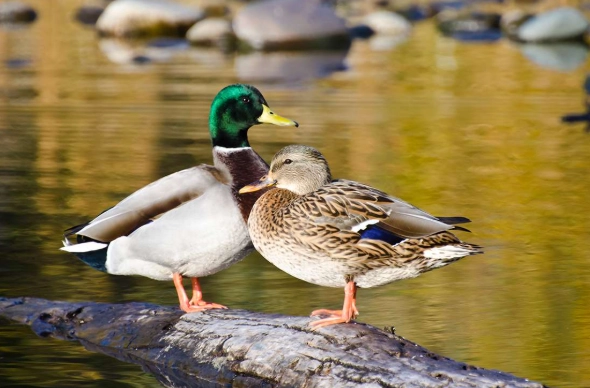
Quick Navigation
Where to See Mallard Ducks: Prime Locations and Habitats
Finding mallards isn't hard. The trick is finding them in interesting contexts. They are habitat generalists, which is a fancy way of saying they'll live almost anywhere with water.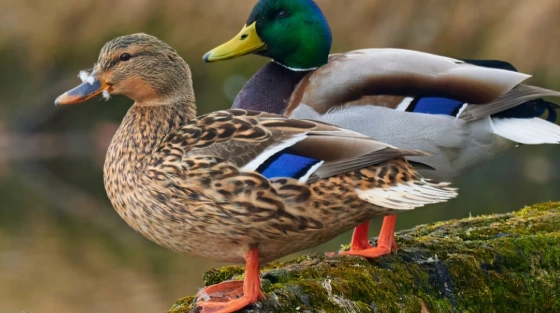
Your Local Park Pond is ground zero. I've spent countless hours at a small reservoir near my home. It's not glamorous, but it's a mallard hub year-round. They thrive in these semi-urban environments because of the lack of predators and, let's be honest, the easy food from well-meaning visitors. Central Park, any city with a riverwalk, suburban retention ponds—mallards are there.
Managed Wetlands and Wildlife Refuges are where you see mallards in a more natural, seasonal rhythm. Places like the Bosque del Apache National Wildlife Refuge in New Mexico or the Sacramento National Wildlife Refuge Complex in California see huge wintering populations. Here, they mix with other species—pintails, wigeon, shovelers—and you can observe larger flock behaviors and the drama of predation.
Then there are the Agricultural Fields and Flooded Timber. After breeding season, mallards often switch from protein-rich insects and aquatic invertebrates to carbohydrate-packed seeds. They'll loaf on a wetland during the day and fly out to feed in harvested corn or rice fields at dusk. This is classic "duck marsh" behavior. If you're near major flyways like the Mississippi or Central, this is the mallard's world from fall through spring.
How to Identify a Mallard Duck: A Step-by-Step Visual Guide
Let's break down the ID, because this is where most beginners get tripped up. They see a brown duck and think it's a female mallard. Often, it's not.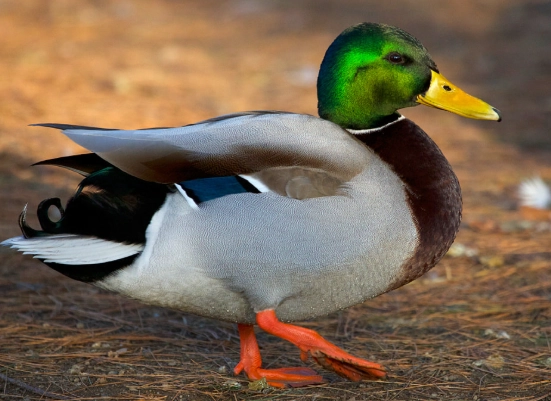
The Classic Drake (Male)
From late fall to early summer, the drake is unmistakable. That iridescent green head (which can look black in poor light) is the star. But look for the supporting cast: the narrow white collar that separates the green head from the rich, chestnut-brown chest. The sides and back are a soft, grayish color, and the rear end (the speculum) has black feathers bordered with white. His bill is a bright, uniform yellow. It's a crisp, clean look.
The Subtle Hen (Female)
The hen is all about camouflage. She's mottled brown and buff overall, perfect for disappearing into a reed bed while incubating eggs. The key feature is her orange-brown bill, which is usually mottled with dark blotches, unlike the drake's clean yellow. Look for a dark eye-line through a paler face. Her speculum is blue-purple, also bordered with white. This is the plumage you need to memorize, as it's similar to many other female dabbling ducks.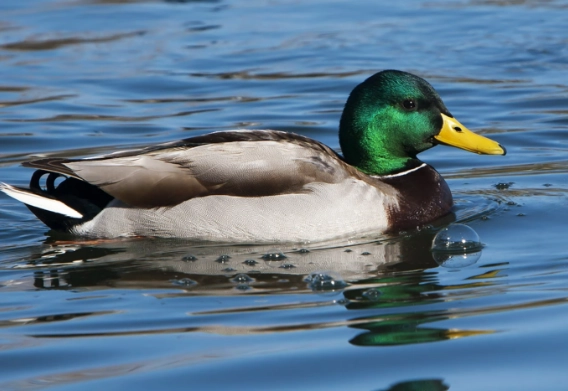
The Tricky Eclipse and Juvenile Plumage
Here's the curveball. In late summer, drakes molt into "eclipse" plumage. They lose their flashy colors and look remarkably like hens. The giveaway? Look at the bill. The eclipse drake usually retains a duller, but still mostly yellow, bill, while the hen's bill stays orange and blotchy. Also, his body feathers in eclipse are often a grayer brown than the hen's warmer tones. Juveniles look like duller versions of the hen until they mature.
| Feature | Male (Drake) - Breeding | Female (Hen) | Common Confusion Species |
|---|---|---|---|
| Head | Iridescent green, white collar | Mottled brown, dark eye-line | Black Duck (darker, no clear head pattern) |
| Bill | Bright, solid yellow | Orange-brown with dark spots | Mottled Duck (bill varies, similar to hen Mallard) |
| Breast | Chestnut brown | Pale, streaked brown & buff | Gadwall (male has gray, not chestnut) |
| Speculum (wing patch) | Blue-purple with white borders | Blue-purple with white borders | Northern Shoveler (larger, green speculum) |
| Best ID Clue | White neck ring & chestnut chest | Orange, blotchy bill & strong face pattern | Look at bill color and overall contrast |
One specific mistake I see constantly: people calling every plain brown duck a "female mallard." Take a closer look at that bill. Is it slightly upturned? Might be a Northern Shoveler hen. Is it huge and spoon-shaped? Definitely a shoveler. Is the bird smaller with a rounder head and a blue wing patch without bold white borders? That's a Blue-winged Teal. The mallard hen is your baseline—compare others to her.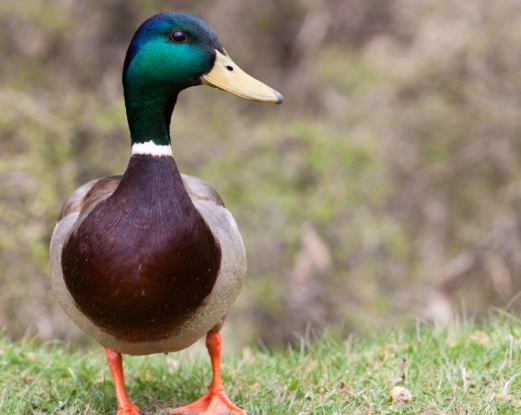
Understanding Mallard Duck Behavior and Ecology
Identification is just the cover of the book. Their behavior is the story.
Feeding (Dabbling): Mallards are classic "dabbling ducks" or "puddle ducks." They don't dive deep. They tip up, tails in the air, to reach aquatic plants, insects, and snails just below the surface. In city parks, this natural behavior is often replaced by begging, which is a shame. Watching a group dabble in unison is mesmerizing—a rhythmic dipping and rising.
Breeding and Nesting: This is where things get dramatic. Pair bonds form in fall and winter. Come spring, the hen picks a nest site, often far from water. She lays about 8-10 eggs. Here's a subtle point rarely mentioned: mallards are notorious for nest parasitism. A hen will lay eggs in another mallard's nest (or even in the nest of a different species). It's a survival strategy. Once the ducklings hatch, the hen leads them to water immediately. That trek can be perilous. I once watched a hen guide ten fluffy ducklings across a busy bike path—she waited, assessed, and hurried them across during a brief gap. It was nerve-wracking.
Molting and Migration: After breeding, adults become flightless for a few weeks during the molt. They seek dense, safe wetlands. By fall, they're airborne again. Not all mallards migrate. Many in temperate parks are year-round residents. But northern populations undertake significant journeys. Their flight is not the graceful V of geese, but a faster, more direct effort with steady wingbeats.
Their adaptability is their genius. They eat everything from aquatic bugs to acorns to agricultural waste. They nest in city planters, under bushes, and on islands. This is why they're everywhere.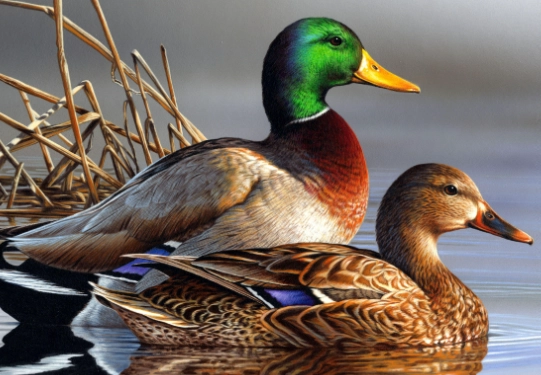
Ethical Mallard Watching and Common Questions Answered
Enjoying mallards comes with responsibility. Keep a respectful distance, especially from hens with broods. Your presence can stress them and separate ducklings. Use binoculars or a zoom lens. And please, reconsider feeding. If you must, offer something healthier than bread: cracked corn, oats, or duck-specific feed. Better yet, plant native water plants or create a habitat with clean water and cover. That's the real gift.
Can you really see mallard ducks in a city park?
Without a doubt. Mallards are the ultimate urban adapters. Any park with a pond, lake, or even a slow-moving stream is likely to have a resident population. Their success in cities is a testament to their flexible diet and tolerance for human activity. They've become part of the urban ecosystem.
What's the easiest way to tell a male and female mallard apart?
During most of the year, it's all about color. The male has the bright green head, white neck ring, and chestnut chest. The female is mottled brown. When in doubt, look at the bill. The male's is solid yellow; the female's is orange with black spots. In late summer when the male is in eclipse plumage and looks brown, the bill color is your best clue.
Is feeding bread to mallards actually harmful?
Yes, it is. Bread is like junk food for ducks. It fills them up but lacks the nutrients they need, which can lead to malnutrition and a condition called "angel wing" that prevents them from flying. Uneaten bread also pollutes the water, causing algae blooms. If you enjoy interacting with them, try offering defrosted frozen peas, chopped lettuce, or duck pellets instead. Or simply enjoy watching them forage naturally.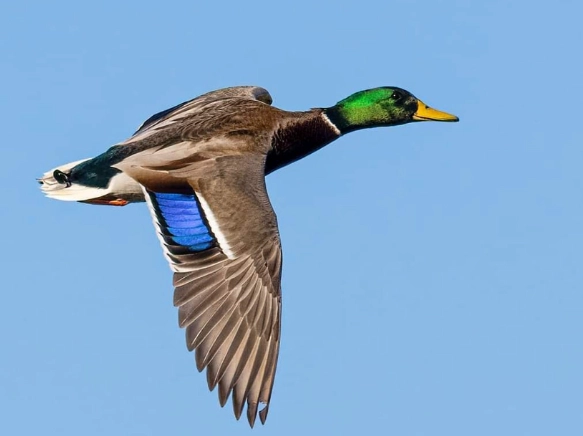
Are the mallards in my park the same as wild ones?
Genetically, yes, they are the same species (Anas platyrhynchos). However, their behavior is often different. Park mallards may be less migratory, more accustomed to people, and may have hybridized with escaped domestic ducks (which are often descended from mallards). So you might see unusual color patterns—all white ducks, or ones with odd patches. These are still essentially mallards, just with a complicated family tree.
So next time you pass a pond, take a moment. Look past the generic "duck." See if it's a drake or a hen. Watch how it feeds. Notice if it's alone or in a pair. That familiar bird becomes a window into the complex world of waterfowl ecology, happening right in our own neighborhoods. The mallard duck isn't just common; it's a perfect and accessible starting point for a deeper connection with the natural world.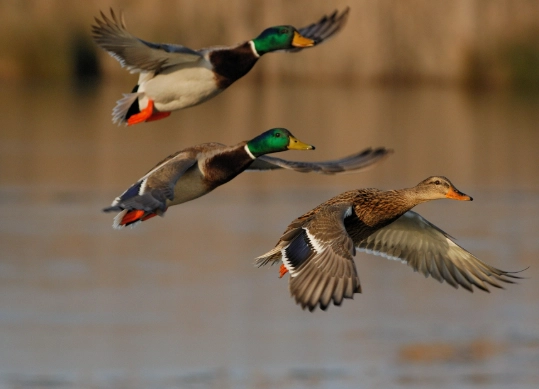
Reader Comments