Let's be honest. When you think "sparrow," you probably picture a little brown bird hopping on the sidewalk, maybe at a crowded feeder. It's background noise. The default bird. I used to think that too, until a freezing morning a few years ago changed my mind. I was shivering in a blind, hoping for a glimpse of something rare, when a small flock of American Tree Sparrows descended into the weeds. They weren't just brown. They had rusty caps, delicate two-toned beaks, and a soft, musical call that cut through the silence. I realized I'd been ignoring a whole world of subtle beauty and drama right under my nose.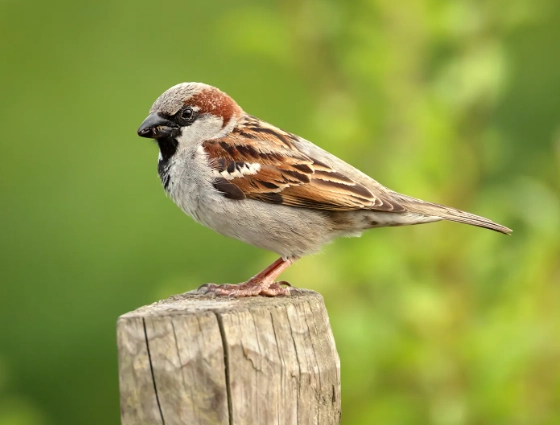
Sparrows are the gateway drug to serious birding. Mastering them teaches you everything: patience, observation, habitat, and behavior. This isn't just about telling one brown bird from another. It's about unlocking a hidden layer of your local ecosystem.
In This Article: Your Sparrow Field Guide
- The "Just a Sparrow" Misconception (And Why It's Wrong)
- Sparrow Identification Demystified: A Practical Framework
- The Big Three: Sparrows You Can Actually Tell Apart
- How to Attract Sparrows to Your Yard: The 4-Pillar System
- Observing Sparrow Behavior: From Feeding Frenzies to Family Drama
- Your 7-Day Sparrow Starter Observation Plan
The "Just a Sparrow" Misconception (And Why It's Wrong)
Calling all sparrows "just sparrows" is like calling all dogs "just dogs." In North America alone, there are over 30 species in the New World sparrow family (Passerellidae). Worldwide, the term encompasses hundreds. The common House Sparrow you see in cities? It's not even a native New World sparrow—it's an Old World sparrow (Passeridae) introduced from Europe.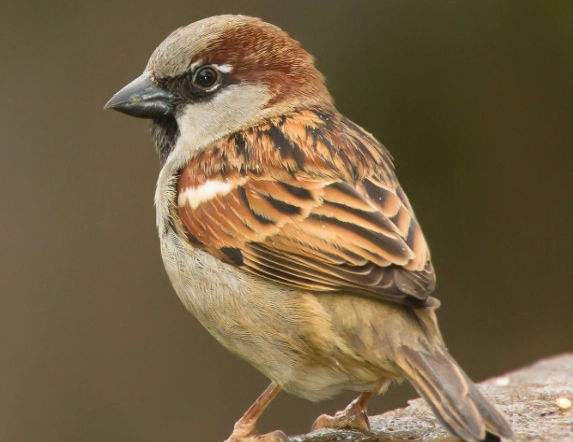
The biggest mistake beginners make is giving up too quickly. They see a streaky brown bird and move on. But the differences are there, etched in fine lines of color, song, and habit. Learning them trains your eye like nothing else. Once you can confidently name the sparrow scratching in your leaves, you'll find identifying warblers or flycatchers feels far less daunting.
Sparrow Identification Demystified: A Practical Framework
Don't try to memorize every sparrow at once. It's overwhelming. Instead, run through this mental checklist every time you see a candidate. Ask yourself these questions in order:
1. The Face Map: This is your most important tool. Look for stripes or patches. Is there a stripe through the eye? Above the eye (a supercilium)? Is the crown striped or solid? Is there a malar stripe (a mustache line from the base of the beak down)? Jot down the pattern—it often gives you the genus.
2. The Chest and Flanks: Is it clean? Heavily streaked? Is there a single dark spot in the center (a "stickpin")? Are the streaks sharp or blurry? Do the flanks (sides) have a warm, buffy color or are they gray?
3. The Tail and Back: A quick flash of the tail can be key. Does it have white outer tail feathers that flash in flight (like a Junco or Vesper Sparrow)? Is the back streaky or plain?
4. Location and Habitat: This is the clincher. A Seaside Sparrow won't be in your suburban yard. A Fox Sparrow is likely scratching in deep forest undergrowth, not on a city lawn. Are you in a marsh? A grassy field? A forest edge? The habitat often narrows it down to 2-3 possibilities.
Carry a small notebook. A crude sketch of the face pattern is worth a hundred blurry photos.
The Big Three: Sparrows You Can Actually Tell Apart
Let's apply the framework to three sparrows you're very likely to encounter, even in semi-urban areas. Master these, and you've built a solid foundation.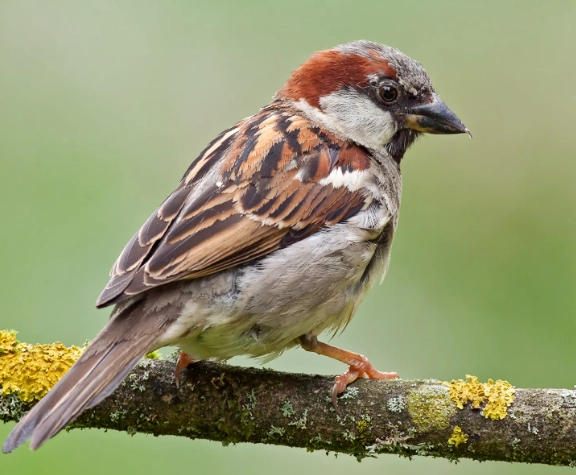
| Species | Face & Head Pattern | Chest & Body | Key Habitat & Behavior | One Surefire Tip |
|---|---|---|---|---|
| Song Sparrow | Brown crown with a gray central stripe. Gray eyebrow. Thick brown "mustache" stripe. | Heavily streaked with a distinct, messy central dark spot or "blotch." Streaks often look like they ran together. | Almost anywhere with thickets, brush, gardens. Loves to sing from a low perch. Constant tail-pumping when perched. | That central breast spot is the giveaway. If it's heavily streaked with a blob in the middle, think Song Sparrow first. |
| White-throated Sparrow | Striking black-and-white or tan-and-white stripes on the crown. Bright yellow spot between eye and bill (lores). | Gray breast, clean or faintly streaked. White throat patch is obvious. Flanks are often tan/buffy. | Forest edges, woodland understory, brushy areas. A winter visitor to many yards. Classic scratch-foraging style. | The candy-striped head is unmistakable. Listen for its iconic, whistled song: "Oh-sweet-Canada-Canada-Canada." |
| House Sparrow (Male) | Gray crown, chestnut nape. Black bib extending onto chest. Plain gray cheeks. | Gray, unstreaked chest and belly. Back is streaky brown. | Strongly associated with human development—cities, farms, suburbs. Loud, quarrelsome, and social. | The solid gray chest and black bib separate it from native sparrows. Females are plainer, buffy with a pale eyebrow. |
See? They're not just "little brown jobs." Each has a signature. Once you start seeing these patterns, the world gets more interesting.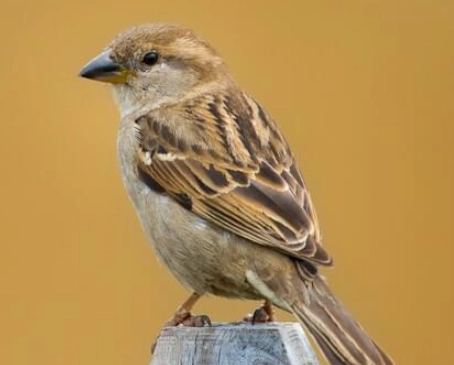
How to Attract Sparrows to Your Yard: The 4-Pillar System
Want a front-row seat to the sparrow show? It's not just about throwing seed. You need to think like a sparrow: a small, vulnerable bird that needs to eat, drink, hide, and nest. Ignore one pillar, and your results will be mediocre.
Pillar 1: The Right Food, Presented Right. This is where most people fail. Sparrows are ground feeders. They tolerate low platforms but are suspicious of hanging tubes. Ditch the generic mix. Get a platform feeder or a hopper with a large tray. Stock it with two things: white proso millet (the small, round, pale seed—it's like sparrow candy) and black oil sunflower seeds, especially the chips or hearts (no shell to deal with). Scatter some directly on a patch of bare ground under a bush for the shy ones. I've watched Chipping Sparrows ignore a full tube feeder to meticulously clean up the millet dust under my platform.
Pillar 2: Water, Not Just for Drinking. A birdbath is more critical than a second feeder. Place it on the ground or on a low pedestal, near cover. Keep it clean and topped up. Sparrows will drink and bathe daily, creating hilarious, splashy spectacles. In winter, a heated birdbath is an absolute magnet.
Pillar 3: Shelter and Escape Cover. This is non-negotiable. Your feeder must be within 10 feet of dense cover—a brush pile, a native shrub thicket (like dogwood or elderberry), or evergreen branches. Sparrows feed in bursts, then dart back to safety. No cover means nervous, fleeting visits.
Pillar 4: Nesting Sites (The Long Game). Encourage native grasses and let a corner of your yard go a bit wild. Plant dense shrubs. Some sparrows, like Song Sparrows, will nest in thicket-like vegetation. Putting up a nest box? Most native sparrows won't use it, but House Sparrows will—aggressively. Be mindful of that.
Observing Sparrow Behavior: From Feeding Frenzies to Family Drama
Once they're visiting, the real fun begins. Pull up a chair with your morning coffee and just watch. You'll see complex social hierarchies.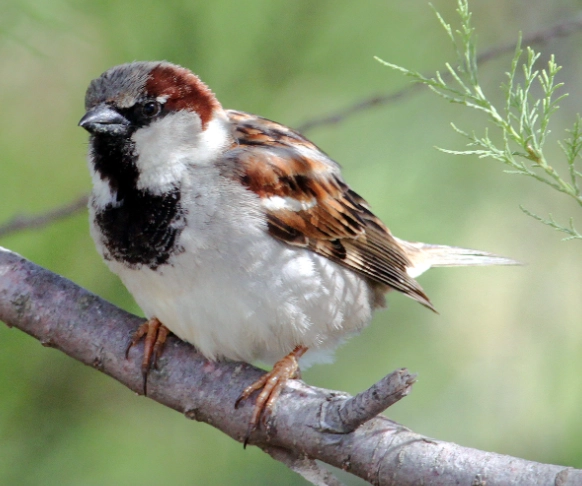
Notice how the larger White-throated Sparrows often dominate the millet patch with a gentle authority, while the smaller Chipping Sparrows zip in and out. House Sparrows operate like a street gang, arriving noisily and pushing everyone else aside.
Watch their foraging technique. Most scratch backwards with both feet in a rapid, energetic hop (the "double-scratch"), like they're digging for treasure. It's a charming, distinctive behavior.
Listen. Beyond songs, they have a repertoire of call notes. The Song Sparrow's sharp "chimp" call for alarm. The White-throated's soft, melancholy "seet." Learning these calls lets you know who's around before you even see them.
In spring, watch for courtship. Males sing from exposed perches. You might see a female being followed by a hopeful male, both with beaks full of nesting material.
Your 7-Day Sparrow Starter Observation Plan
Feeling inspired? Don't just read—do. Try this simple, one-week plan to jumpstart your sparrow education.
Day 1-2: The Setup. Get a small bag of white millet and black oil sunflower hearts. Use a plate or shallow tray as a temporary feeder. Place it near a window, within 10 feet of a bush or shrub. Add a shallow dish of water.
Day 3-4: The Census. Spend 15 minutes in the morning watching. Don't try to ID everything. Just count: how many birds? Are they all the same? Note one obvious difference (e.g., "one has a striped head, the others don't").
Day 5: Pattern Focus. Pick one frequent visitor. Describe its face out loud as if to a friend. "It has a gray eyebrow, a brown mustache..." Check against the table for Song or White-throated.
Day 6: Behavior Log. Time their visits. How long do they feed before looking up? Do they eat in the open or carry seed to cover? Do they bathe?
Day 7: Sound Check. Sit outside with your eyes closed for 5 minutes. Listen to the calls. Can you match a call to the bird you now recognize visually? Use a free app like Merlin Bird ID to record and confirm.
By the end of the week, that anonymous brown blob will have transformed into a recognizable individual with habits and a story. That's the magic.
Your Sparrow Questions, Answered
How can I tell if the sparrow in my yard is a House Sparrow or a native species like a Song Sparrow?
Look at the chest. Male House Sparrows have a solid gray chest and a black bib. Song Sparrows have a heavily streaked chest with a central dark spot or 'stickpin'. Also, check the head: House Sparrows have a plain gray crown, while Song Sparrows have a brown crown with a central gray stripe. Behaviorally, House Sparrows are much louder and more aggressive at feeders.
I put out birdseed but only get pigeons. What's the best food to specifically attract sparrows?
Sparrows are ground-feeding granivores. Skip the cheap mixed seed with lots of filler (milo, wheat) that pigeons love. Instead, use a platform feeder or scatter directly on clean ground. Your best bets are white proso millet (the small, round, pale seeds) and black oil sunflower seeds, especially the chips or hearts. They go nuts for it. A dedicated tray with just these two seeds, placed near a brush pile, is a sparrow magnet.
What type of bird feeder is worst for attracting shy sparrows?
Tube feeders with small perches. Most sparrows, except maybe House Sparrows, find them awkward and exposed. They prefer to feed on flat, stable surfaces where they can hop around and keep an eye out for danger. A platform feeder, a tray on a post, or even a section of cleared ground under a shrub works infinitely better. If you must use a tube feeder, get one with a large tray attachment at the bottom.
Are sparrows actually beneficial for my garden, or are they just eating my seeds?
They're fantastic pest controllers during breeding season. While adults eat mostly seeds, they feed their nestlings almost exclusively on insects, including beetles, caterpillars, and aphids. A family of sparrows can remove thousands of pests from your garden in a few weeks. So, by attracting them, you're hiring a highly motivated, round-the-clock insect removal squad for free.
Reader Comments