Quick Navigation
- Forget Color, Start With Shape: The Silhouette is Your Best Friend
- It's All in the Motion: Flight Patterns and Wingbeats
- Context is King: Where and When You See Them
- The Flock Dynamic: Identifying Groups in Flight
- Putting It All Together: Your Identification Checklist in Action
- Tools and Resources to Sharpen Your Skills
- Answers to the Questions You're Probably Asking
- Final Thoughts: Embrace the Chase
You're out for a walk, and a dark shape zips across the sky. A few seconds later, it's gone. Was it a hawk? A crow? Maybe a swift? If you've ever felt that flicker of frustration, you're not alone. Figuring out how to identify birds while flying is one of the trickiest, yet most rewarding, skills in birdwatching. It feels like solving a puzzle with half the pieces missing, moving at high speed, and backlit by the sun. I've spent countless hours squinting at the sky, getting it wrong more times than I'd care to admit, before some things finally clicked.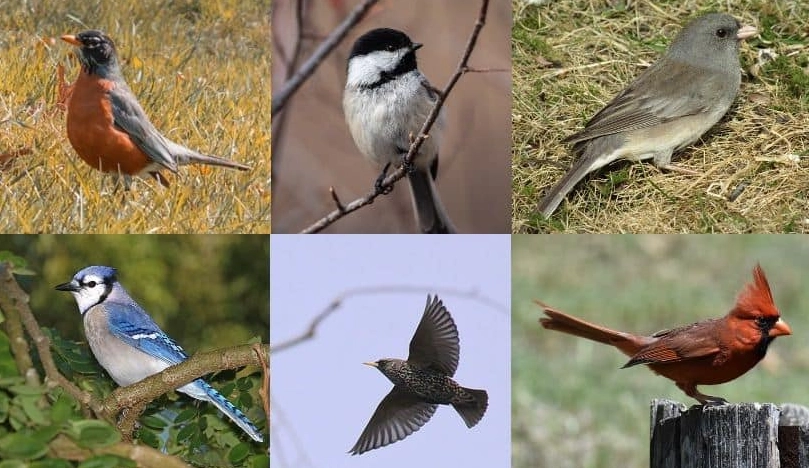
The ground rules are different up there. You can't see fine details like beak shape or leg color clearly. The bird is often just a silhouette. And it might only be in view for a handful of heartbeats. So, you have to learn a whole new language—the language of shape, motion, and behavior. This isn't about memorizing every feather; it's about recognizing the essence of a bird's flight. It turns a blur into a name, and that moment of recognition is pure magic.
Forget Color, Start With Shape: The Silhouette is Your Best Friend
When a bird is flying high, especially against a bright sky, color is the first thing to become useless. What you're left with is a black cut-out. This silhouette, or jizz (a birder's term for the overall impression of shape and movement), is your foundational clue. Learning to see wings and tails as distinct categories is step one.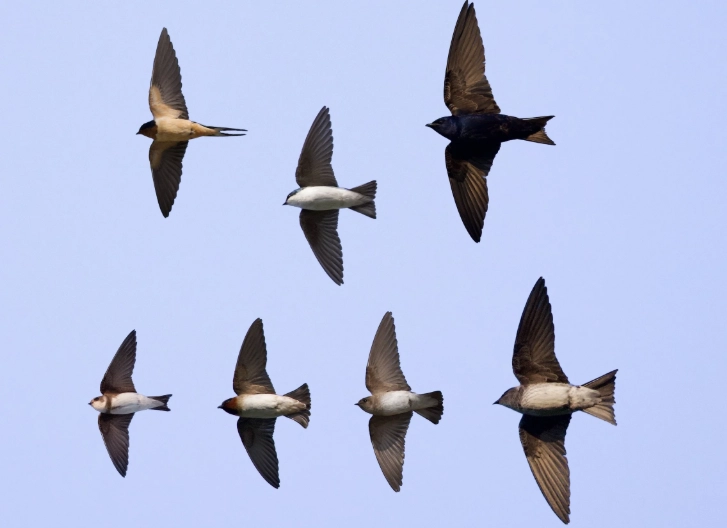
Think of wings in terms of their width, length, and shape at the tip. Are they long and slender, built for soaring like an albatross or a frigatebird? Are they broad and rounded, perfect for quick maneuvering in woods like an accipiter hawk? Or are they pointed like daggers, engineered for speed like a falcon or a swift?
The tail is just as telling. Is it forked, like a swallow's? Long and pointed, like a cuckoo's? Short and square, like a dove's? Or fanned out and rounded, like a Red-tailed Hawk's? The combination of wing and tail shape narrows the field dramatically. A buteo hawk (like the Red-tailed) has broad, rounded wings and a fanned tail, giving it a sturdy, powerful look. A falcon has those sleek, pointed wings and a relatively long, narrow tail, looking like a feathered bullet.
Wing Shapes Decoded: A Quick Reference
Let's break down the most common wing silhouettes you'll encounter. This table isn't exhaustive, but it covers the big players you're likely to see. Keep in mind, birds can change their wing profile slightly while flying, so look for the dominant shape.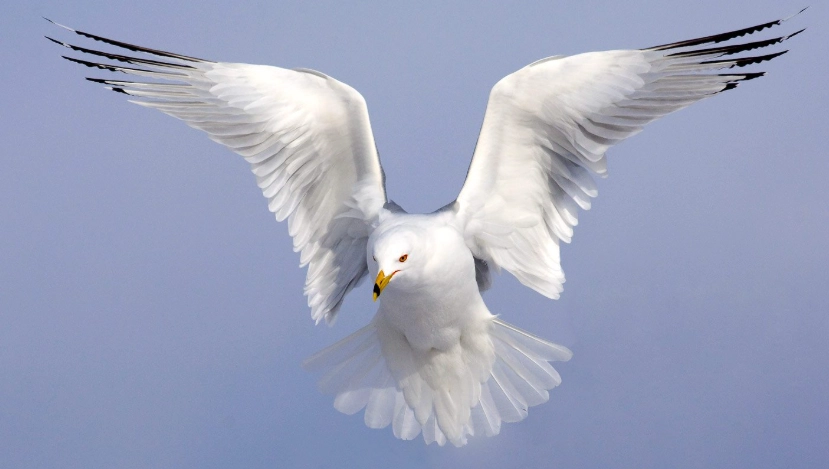
| Wing Shape Type | What It Looks Like | Typical Birds | What It's For |
|---|---|---|---|
| Broad & Rounded | Wings look wide, especially at the base, with blunt, rounded tips. Think of a rectangle with softened corners. | Red-tailed Hawk, Osprey, most owls, crows, ravens. | Powerful, controlled flight. Good for soaring on thermals and maneuvering in wooded areas. |
| Long & Slender (Soaring) | Exceptionally long, narrow wings with a high aspect ratio. They look almost stick-like. | Albatross, Frigatebird, many gulls and terns when gliding. | Energy-efficient, dynamic soaring over oceans or long-distance travel. Masters of wind currents. |
| Pointed (Falconiform) | Wings come to a sharp, distinct point at the tip. The leading edge may look slightly curved back. | Peregrine Falcon, Merlin, Kestrel, Swifts. | High-speed pursuit and agile, rapid flight. Built for the stoop (dive) and the chase. |
| Elliptical (Songbird) | Shorter, rounded wings that are broad but not overly long. The classic "songbird" wing. | Robins, Sparrows, Jays, Woodpeckers. | Quick bursts of speed and high maneuverability for taking off from perches and navigating dense cover. Not for long-distance soaring. |
| High-Lift (Bounding) | Wings are noticeably swept back, forming a distinct crescent or boomerang shape. | Nighthawks, Nightjars, some swallows. | Acrobatic, erratic flight for catching insects on the wing. Allows for sudden twists and turns. |
See? Already, you're not just seeing "a bird." You're seeing a wing type, which points you toward a family. A broad, rounded shape over a field screams "raptor or corvid." A pointed shape zipping past is almost certainly a falcon or a swift. This is the core of learning how to identify birds while flying.
It's All in the Motion: Flight Patterns and Wingbeats
If shape is the noun, motion is the verb. The rhythm and style of a bird's movement through the air is a dead giveaway. Some birds flap almost constantly. Others soar for minutes without a single wingbeat. Paying attention to this can separate look-alikes instantly.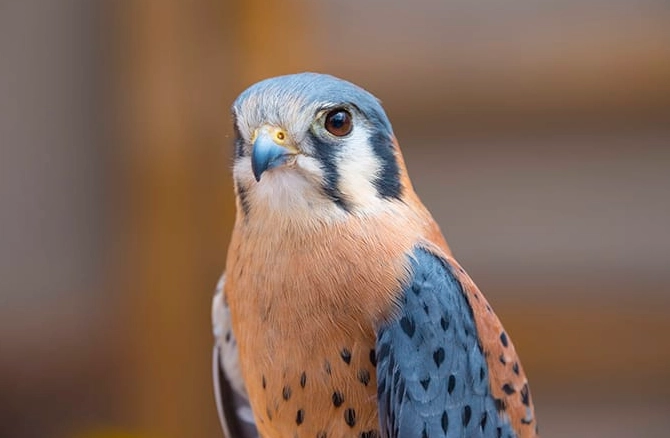
Take the classic confusion between a crow and a raven. From below, their silhouettes can be similar (both broad-winged). But watch them fly. A crow's wingbeats are quicker, stiffer, and more mechanical. A raven's are slower, deeper, and more deliberate, often interspersed with glides. Ravens also love to play in the wind, soaring and even doing barrel rolls, while crows are usually more business-like in their travel.
Here are some classic flight patterns to sear into your brain:
- Flap-Flap-Glide: The signature of many woodpeckers, finches, and some smaller hawks like the Sharp-shinned. It's an energy-saving technique for birds that aren't built for continuous soaring.
- Continuous, Shallow Flapping: Think of ducks and geese in migration. A steady, powerful rhythm that eats up miles.
- Erratic, Bouncy, Darting: The world of insect-eaters. Swallows, swifts, and flycatchers change direction on a dime, performing aerial acrobatics that would make a fighter pilot dizzy.
- Stiff, Rapid Wingbeats: Common in smaller birds with pointed wings, like starlings or blackbirds in a flock. It can look frantic.
- Deep, Slow Wingbeats: Herons and egrets. They retract their neck into an "S" and fly with a slow, almost ponderous grace. You can practically hear the effort in each downstroke.
- Soaring on Flat Wings: Vultures and eagles. They hold their wings perfectly straight out to the sides, rarely flapping, riding thermal updrafts in lazy circles.
- Soaring in a Dihedral (V-shape): The Turkey Vulture is the master of this. It holds its wings in a pronounced V, and its body seems to teeter-totter unsteadily in the wind. Red-tailed Hawks do this too, but usually with a more stable body.
Context is King: Where and When You See Them
A silhouette of a broad-winged bird soaring in circles over an interstate highway is almost certainly a Turkey Vulture or Black Vulture. That same shape over a remote mountain ridge could be a Golden Eagle. Habitat and behavior provide the final, crucial clues in the how to identify birds while flying puzzle.
You wouldn't expect to see an Osprey flying over a dense forest, right? It's a bird of lakes, rivers, and coastlines. You'll see it hovering over water before its dramatic feet-first dive. A Northern Harrier will almost always be cruising low over marshes or open fields, its wings held in that distinctive dihedral, listening for rodents.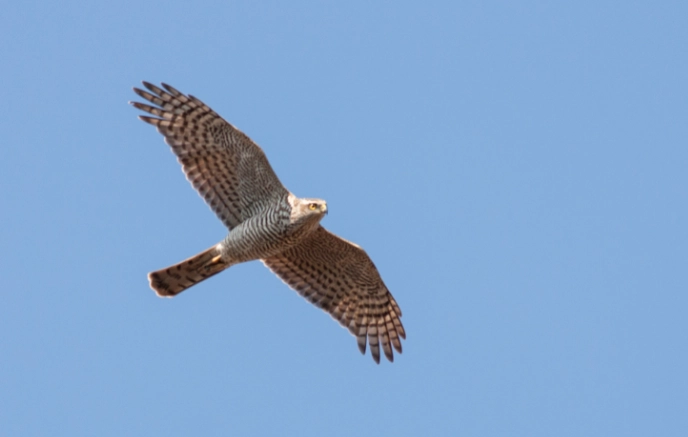
Time of day and year matter, too. A flock of long-necked, large birds flying in a V-formation at dawn in autumn is almost definitely migrating geese or cranes. A small, darting shape catching insects at dusk with a tiny beak and wide mouth? That's a nighthawk or common poorwill, members of the nocturnal nightjar family.
Ask yourself these questions when you see a flying bird:
- Habitat: Am I near water, forest, open field, urban area, or mountains?
- Altitude: Is it skimming the treetops, circling at medium height, or soaring so high it's a speck?
- Behavior: Is it soaring, actively hunting, migrating in a straight line, or just moving from one tree to another?
- Company: Is it alone, in a pair, or in a flock? What is the flock's shape? A tight, swirling ball is often starlings. A loose, fluid line might be cormorants or pelicans.
The Flock Dynamic: Identifying Groups in Flight
Birds often fly together, and the flock itself has an identity. The shape and movement of the group can tell you what it is before you can see a single individual clearly.
- Murmuration: The mesmerizing, fluid, shape-shifting cloud of birds. In North America and Europe, this is almost exclusively the domain of the European Starling (in North America, it's an introduced species). There's nothing else quite like it.
- V-Formation or Diagonal Line: The classic sign of migrating waterfowl (geese, ducks) or large birds like cranes and pelicans. It's an energy-saving formation for long journeys.
- Loose, Straggling Flock: Common with blackbirds (Red-winged, grackles, cowbirds) or robins. The group has a general direction but no tight formation, with individuals constantly changing position.
- Swirling, Towering Flock: Often seen with swallows or swifts over a field or lake at dusk as they feed on insects. It looks chaotic but is highly coordinated.
- Line Astern (Single File): Cormorants, Double-crested Cormorants in particular, often fly in a straight, single-file line just above the water's surface.
Putting It All Together: Your Identification Checklist in Action
Okay, let's run through a real-world scenario. You're by a large lake. You see a large bird circling high up. How do you work through it?
Step 1: Shape. Broad, long wings. Fingered primary feathers at the tips are visible (that means the feathers at the end of the wing are splayed, like fingers). Tail is relatively short. Likely: Raptor, large gull, or pelican.
Step 2: Motion. It's soaring in wide, lazy circles. Wingbeats are occasional and powerful. Raptor or vulture style.
Step 3: Wing Position. It holds its wings flat, not in a V. Body is stable. Rules out Turkey Vulture.
Step 4: Details. You get a glimpse of the underside as it turns. You see a dark band along the trailing edge of the wing, and a lighter area near the wingtip. Maybe a dark belly band? Classic Red-tailed Hawk markings.
Step 5: Context. It's over a lake edge, where there are fields and rodents. Red-tailed Hawks are common and widespread in such habitats.
Conclusion: It's almost certainly a Red-tailed Hawk.
That's the process. It gets faster with practice until it becomes subconscious. You'll start to just know.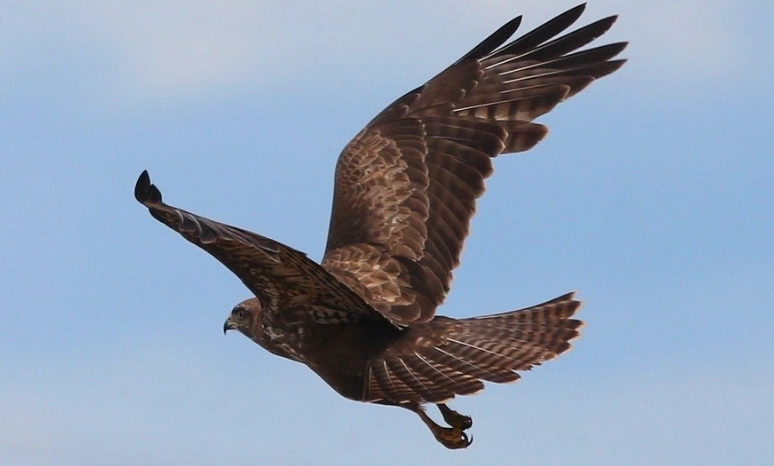
Tools and Resources to Sharpen Your Skills
You don't have to learn this in a vacuum. Some fantastic (and free) resources can train your eye faster than years of trial and error.
First, get the Merlin Bird ID app from the Cornell Lab of Ornithology. It's a game-changer. While its Sound ID feature is famous, the Photo ID tool is brilliant for flight shots. Take a blurry picture of a silhouette, and it will give you surprisingly accurate suggestions based on shape, location, and date. It's like having an expert in your pocket.
For in-depth learning, nothing beats the All About Birds website, also from Cornell. Their species guides often include sections on flight identification and even comparison pages between similar species. It's an authoritative, trusted source for North American birds.
For a more global or taxonomic perspective, resources like the IUCN Red List might not help with field ID directly, but understanding a bird's conservation status can sometimes explain its behavior or rarity in an area.
My personal favorite practice tool? Plane-spotting. No, really. Sitting near an airport (safely) and training yourself to identify different aircraft by their silhouette, wing shape, and engine placement uses the same mental muscles. A Boeing 777 has a very different "jizz" from an Airbus A380. It's a fun, low-pressure way to hone your shape-recognition skills.
Answers to the Questions You're Probably Asking
The goal isn't perfection on the first try. It's building a mental library of impressions. Every misidentification is a lesson that makes the next one easier.
Final Thoughts: Embrace the Chase
Learning how to identify birds while flying is a journey that never really ends. There will always be a distant speck that stumps you. And that's okay. The frustration is part of the fun. The key is to start simple. Pick one common bird in your area—say, the Turkey Vulture—and learn its flight profile so well you can ID it from a mile away. Then add the Red-tailed Hawk. Then the crow. Build your library one bird at a time.
Spend time just watching the sky, even without binoculars. Notice the different "ways of moving" up there. You'll start to see the sky not as an empty space, but as a layered highway filled with travelers, each with its own destination and style. That moment when you confidently name a passing bird based on a two-second glance at its wingbeat? That's the reward. It transforms your world. Get out there and look up.
Reader Comments