In This Guide
- Why Should You Care About the Female Mallard?
- Spotting Her: A Masterclass in Camouflage
- Female Mallard vs. Male Mallard: A Side-by-Side Breakdown
- The Secret Life: Behavior, Nesting, and Raising a Brood
- Her Crucial Role in the Ecosystem
- Challenges She Faces (It's Not Easy Being Brown)
- FAQs: Your Female Mallard Questions, Answered
- Final Thoughts: Appreciating the Unsung Hero
Let's be honest, when most people think of a mallard, they picture the guy. The one with the glossy green head, the white collar, the show-off. He's the poster child for "duck." But waddle over to almost any pond, lake, or slow-moving river, and you'll see far more of the subtly dressed females. The female mallard is the workhorse, the strategist, the hidden architect of the mallard dynasty. She's the one doing the heavy lifting, and frankly, she's a lot more interesting once you know what to look for.
I remember spending what felt like hours as a kid trying to spot the colorful ducks, ignoring the brown ones as boring. What a mistake that was. Understanding the female mallard opens up a whole new layer to watching wildlife. It's like finally noticing the lead cellist in an orchestra instead of just the flashy soloist.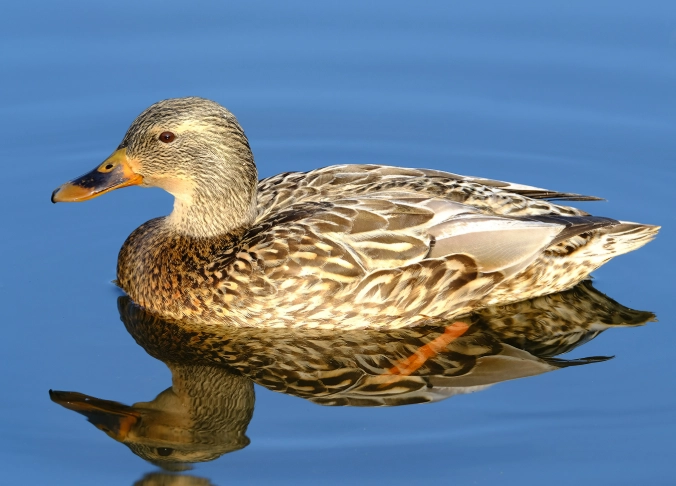
Why Should You Care About the Female Mallard?
If you're into birdwatching, photography, or just enjoy nature, knowing your female mallards is a fundamental skill. It's the difference between seeing a "bunch of ducks" and understanding a complex social and ecological story. She's the key to population survival, a master of camouflage, and her behaviors dictate the rhythm of life around the water. Misidentifying her means you're missing half the story—arguably, the more important half.
Spotting Her: A Masterclass in Camouflage
Forget the emerald greens and chestnut chests. The plumage of a female mallard is a masterpiece of practical design. It's not just "brown." It's a complex mosaic of buff, tan, creamy white, and dark brown streaks and mottling. Each feather seems deliberately scribbled with a dark pencil, creating a pattern that melts into reed beds, dried grasses, and muddy banks.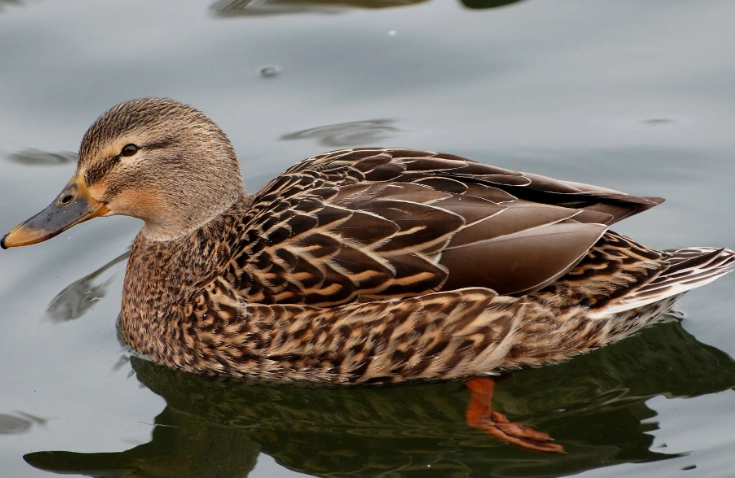
Think of it as her survival suit. While the male (the drake) can afford to be loud and conspicuous during much of the year, the female mallard's life depends on being unseen. During the nearly month-long incubation period, this camouflage is her primary defense against foxes, raccoons, and other predators.
The Key Identification Features (Beyond Color)
Color alone can be tricky, especially in poor light or at a distance. Here’s what to lock your eyes onto:
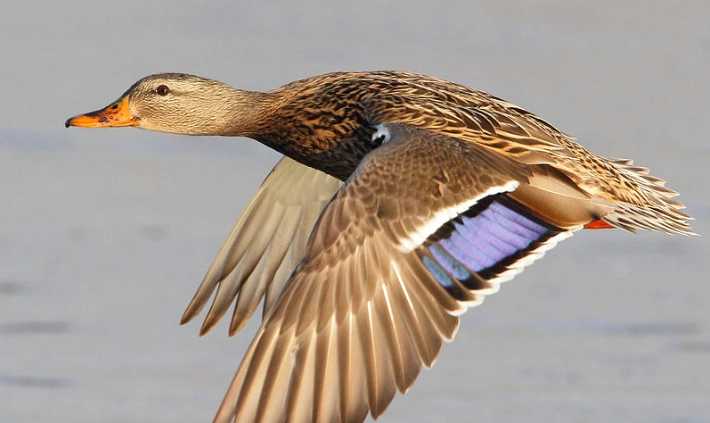
- The Orange-and-Black Bill: This is arguably her most reliable trademark. It's a smudgy orange color, often with a variable black saddle or blotch in the center. No other common North American duck has quite this bill pattern. The male's bill, in contrast, is a uniform yellow-green.
- The Dark Eye Line: Look for a distinct, dark brown or black streak running from the base of the bill, right through her eye. It gives her a slightly stern, focused look compared to the male's more blank expression.
- The Speculum: Even she has a flash of color, but you only see it in flight. It's the patch on the secondary wing feathers. On a female mallard, it's a vibrant, iridescent blue-purple, bordered in front and back by narrow bands of black and white. It's identical to the male's and is a dead giveaway for the mallard species.
- Overall Shape: She's stockier and often looks more "plain" in silhouette than the sleek-headed male. Her posture can be a clue too—often a bit more hunched and businesslike.
Sometimes you'll see a duck that's sort of in-between. That's often a young male starting to get his first green feathers, or sometimes a hybrid. Nature loves to throw curveballs.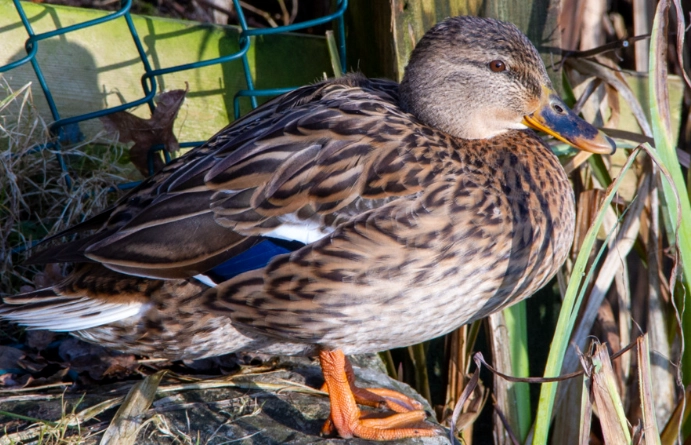
Female Mallard vs. Male Mallard: A Side-by-Side Breakdown
It's the most common question, so let's lay it out clearly. Here’s a quick-reference table that goes beyond just color.
| Feature | Female Mallard | Male Mallard (Drake) |
|---|---|---|
| Primary Plumage | Mottled brown, buff, and tan overall. Master camouflage. | Iridescent green head, white neck ring, chestnut chest, grey body. |
| Bill Color | Orange with a central black blotch or saddle. | Uniform yellow-green or olive. |
| Eye Stripe | Prominent dark brown/black streak through the eye. | No distinct eye stripe; green head color surrounds the eye. |
| Tail Feathers | Plain, mottled feathers. | Has 2-4 distinctive, upward-curling black tail feathers (rarely visible in females). |
| Summer Plumage (Eclipse) | Looks largely the same year-round. | In late summer, molts into a female-like plumage for a few months, but usually retains the male bill color and chest speckling. |
| Primary Role in Breeding | Selects nest site, builds nest, incubates eggs (27-28 days), leads ducklings. | Attracts female, defends territory early on. Often leaves once incubation begins. |
| Vocalization | The classic loud, descending "QUACK-quack-quack-quack." | Softer, raspy grunt or whistle. Doesn't truly quack. |
See? It's not just about color. It's about design for a specific job.
The Secret Life: Behavior, Nesting, and Raising a Brood
This is where the female mallard truly shines. Her year is a cycle of intense, calculated effort.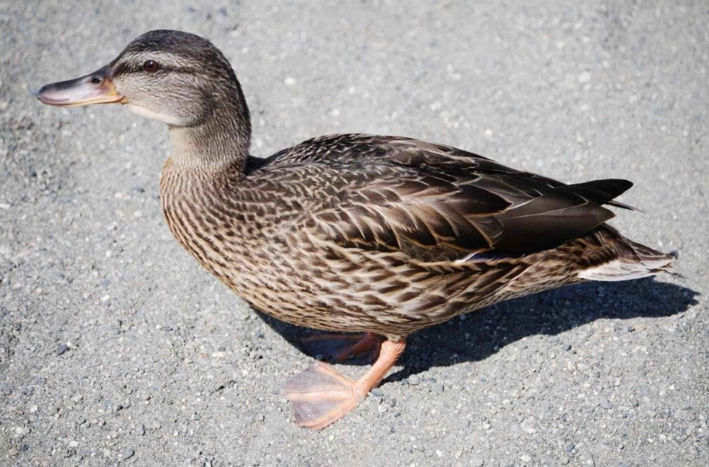
Pairing Up and Nest Site Selection
Pairs often form in the fall or winter. She's the one who ultimately chooses the mate, often from a group of displaying males. Come spring, the real work begins. She alone picks the nest site. And her choices can seem... questionable to us. I've found mallard nests in ridiculous places: in a raised flower pot on a busy porch, in the middle of a hospital rooftop garden, tucked under a bush in a city park mere feet from a walking path.
The logic is usually cover and proximity to water (within a mile, but the closer the better). She scrapes a shallow depression, lining it with down feathers she plucks from her own breast. This down is incredible insulation. I've touched a nest after the duck left—the inside was still warm to the touch on a cool day.
The Marathon of Incubation
She lays one egg per day, usually ending up with 8-13 eggs. Only once the last egg is laid does serious incubation begin, so all ducklings hatch within a day of each other. For about 28 days, she is glued to that nest. She leaves only briefly, once or twice a day, to feed, drink, and bathe—always covering the eggs with down when she goes.
Her metabolism changes. She becomes almost invisible, relying entirely on her camouflage. This is a period of immense vulnerability. If she's spooked off the nest too often, she may abandon it. It's a tough reality.
What to Do If You Find a Mallard Nest?
Do not disturb. Give her a very wide berth. Enjoy it from a distance with binoculars. Do not offer food or water at the nest—it attracts predators. The best thing you can do is nothing at all. She's an expert at this. If the nest is in a seemingly dangerous location (like a courtyard), trust that she knew the risks. Ducklings are mobile within hours of hatching and can walk long distances and jump from surprising heights to follow their mom to water.
The Great Exodus and Duckling Care
Hatching day is chaos in a shell. You can hear the ducklings peeping inside the eggs before they zip their way out. Within 12-24 hours, once they're dry and fluffy, she gives a soft call. It's time to go.
Watching a mother female mallard lead her line of ducklings to water is one of nature's great dramas. She has one goal: get them to a safe aquatic habitat where they can find food and have an escape route. She'll walk them across roads, through parking lots, down storm drains. The mortality rate here is high, which is why she started with so many eggs.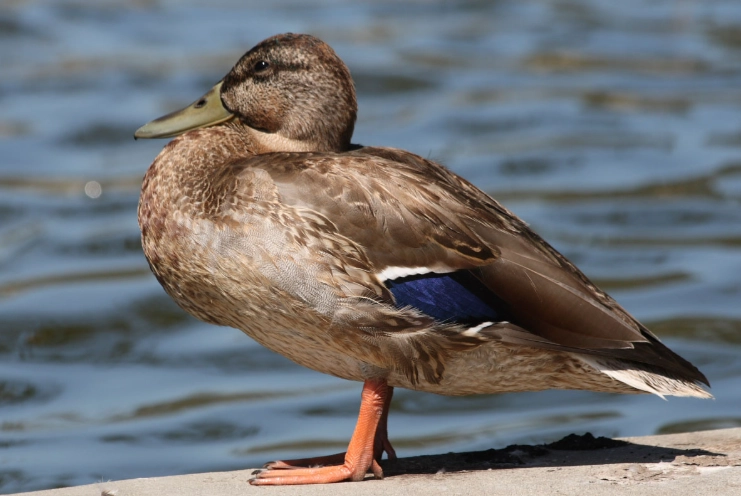
Once on the water, her teaching begins. She shows them how to dabble for food, what to eat, how to avoid danger. She broods them under her wings at night. They are precocial—fairly independent—but they need her warmth and protection for 50-60 days until they can fly.
She's a single mom, through and through.
Her Crucial Role in the Ecosystem
You can't overstate the importance of the female mallard in the food web. She's a linchpin.
- Seed Dispersal: Mallards are prolific dabblers, eating vast quantities of aquatic plant seeds, grains, and grasses. Those seeds pass through their digestive systems and are deposited far and wide, helping to colonize new wetlands.
- Prey Base: Eggs, ducklings, and even adult females are a vital food source for a huge range of predators: foxes, raccoons, mink, hawks, snapping turtles, large fish. Their population health is a key indicator of broader ecosystem balance.
- Nutrient Cycling: Their foraging and waste products help cycle nutrients within wetland systems, benefiting everything from insects to plants.
Without healthy, successful female mallards, the entire productivity of a wetland can be diminished. Organizations like Ducks Unlimited focus on habitat conservation precisely because they understand this foundational role. The work they do to protect and restore wetlands directly benefits the nesting and brood-rearing success of the female mallard and countless other species.
Challenges She Faces (It's Not Easy Being Brown)
Life for a wild female mallard is a constant risk assessment. Beyond natural predators, modern life adds layers of threat.
Habitat Loss: This is the big one. Draining wetlands for development or agriculture destroys nesting and feeding grounds. A female might choose a poor, risky nest site simply because the good ones are gone.
Predation by Domestic Animals: Loose cats and off-leash dogs are a massive problem, especially for flightless ducklings and incubating hens. It's a preventable tragedy.
Human "Help": Well-meaning people often do more harm than good. Feeding ducks bread is a classic issue—it causes malnutrition and pollutes water. "Rescuing" ducklings that are perfectly fine waiting for their mom causes more stress and separation.
Lead Poisoning: Though banned for waterfowl hunting, lead sinkers and old shot in sediment are still ingested by feeding ducks, causing slow, painful death. It's a silent killer.
FAQs: Your Female Mallard Questions, Answered
Final Thoughts: Appreciating the Unsung Hero
Next time you're by the water and see a cluster of mallards, take a moment to pick out the females. Look for that orange-and-black bill, that sharp eye line, that beautifully practical mottled coat. See the one trailing a line of fuzzy ducklings? That's a female mallard at the peak of her demanding, vital role.
She's not a side character or a dull version of the male. She is the engine of the species. Her choices, her resilience, and her success determine whether there will be mallards on that pond next year. Understanding her is the first step toward truly appreciating these common yet extraordinary birds and, hopefully, wanting to protect the wetlands they call home. The flashy male might catch your eye, but the female mallard will earn your respect.
Go on, take another look. The pond will never seem the same.
Reader Comments