In This Guide
- The Great Finch Debate: Purple Finch vs. House Finch
- Where in the World Do Purple Finches Live?
- Not Just a Pretty Face: Behavior and Diet
- The Sound of a Purple Finch
- How to Actually Attract Purple Finches to Your Yard
- Nesting and Family Life
- Common Questions About Purple Finches (Stuff You Actually Want to Know)
- Final Thoughts: The Joy of the Unpredictable Guest
Let's be honest. For a bird named "Purple," the Purple Finch (Haemorhous purpureus) can be downright confusing. It's not really purple, for starters. More of a raspberry or wine-stained color on the males. And to make things trickier, it has a near-identical twin that shows up at feeders way more often. I can't tell you how many times I've had friends send me a blurry photo, absolutely convinced they've got this special visitor, only for it to be the much more common lookalike.
That initial mix-up is what got me really interested in them years ago. I wanted to know, for myself, how to tell them apart without a shadow of a doubt. And then, once you know who you're looking at, the next questions pour in: Where do they go? What do they sound like? Can I get them to visit my yard?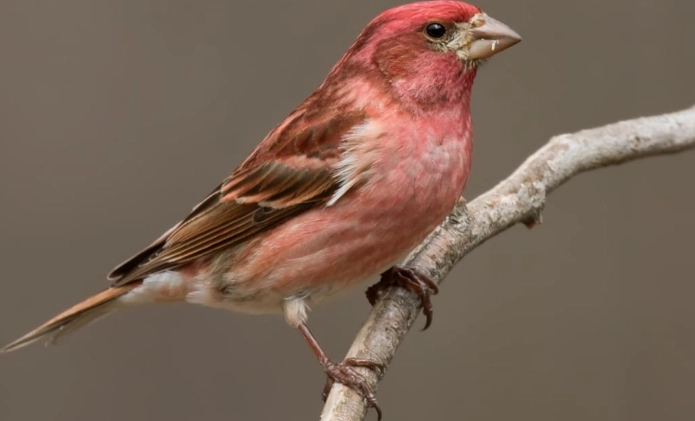
This guide is the deep dive I wish I'd had back then. We'll cut through the confusion, listen to their song, and talk about what makes these finches truly unique. Forget the dry, textbook descriptions. Let's talk about what you actually see and hear in the field (or at your kitchen window).
Quick Reality Check: If you live in the eastern U.S. and see a "purple" finch, it's probably a House Finch. I know, it's annoying. But getting this ID right is the first, most crucial step. The true Purple Finch is a bit more of a special event.
The Great Finch Debate: Purple Finch vs. House Finch
This is the big one. Mess this up, and everything else is moot. Both are streaky brown birds (females) or red/pinkish birds (males). So, where do you look? Forget the overall color for a second. Look at the head and face. It's all in the facial expressions.
A male Purple Finch looks like he dipped his whole head and chest in raspberry juice. The color washes over his head, back, and down his flanks in a soft, blurry way. There are no sharp lines. His face is mostly that uniform rosy color.
Now, a male House Finch? He looks like he got splashed with red paint, mostly on his forehead, throat, and upper chest. The color is more concentrated and doesn't spread as evenly. He has very distinct brown streaking on his flanks and a plain, brownish head behind the red forehead. His face looks more patterned.
Here's my personal tip: The Purple Finch has a much stronger, chunkier beak—perfect for cracking seeds—and its tail looks like it has a clear notch in it. The House Finch's tail has a more gentle curve. It's subtle, but after a while, you'll see it.
The females are tougher, I won't lie. Both are brown and streaky. But a female Purple Finch has a bold, white eyebrow stripe (a supercilium) and a dark cheek patch behind the eye, giving her a very "clean-faced," strongly patterned look. A female House Finch is a mess of blurry streaks everywhere, including all over her face and underside. She lacks that crisp eyebrow and cheek contrast.
Side-by-Side Comparison
This table might help cement the differences. Stare at this, then go look at your photos.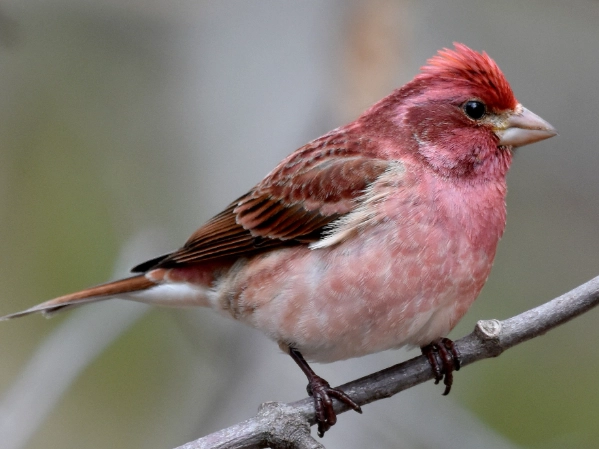
| Feature | Male Purple Finch | Male House Finch |
|---|---|---|
| Head Color | Entire head is rosy-red, like a deep wash of color. | Red is concentrated on forehead, eyebrow, and throat. Crown and nape are brown. |
| Flanks & Sides | Heavily washed with rosy red, with blurry streaks. | Clear, distinct brown streaking on white or tan background. |
| Facial Pattern | Relatively plain, uniform red face. | Strongly patterned with red patches and brown areas. |
| Beak Shape | Short, very thick, and conical. Looks powerful. | Longer and more slender in comparison. |
| Overall Impression | A soft, plump, rosy bird. | A sleek, sharply patterned bird. |
Where in the World Do Purple Finches Live?
Their range is a story of two seasons. In the summer, they claim the vast boreal forests of Canada and the northeastern U.S., nesting in coniferous and mixed woods. They love those spruce and fir trees. Come fall, many of them (but not all) head south in what birders call an "irruption."
An irruption isn't a regular migration. It's an irregular, mass movement southward, usually triggered by a poor cone crop in their northern homes. When the spruce and pine cones are scarce, Purple Finches flood into the northern and mid-tier U.S. in much larger numbers. Some years, you might get dozens at your feeder. Other years, you might see none. It's unpredictable and part of what makes seeing one feel like a little prize.
So, if you're in, say, Pennsylvania or Ohio and you see a Purple Finch in January, that bird likely spent its summer way up in Ontario or Quebec. They're true nomads of the seed-eating world. For the most accurate and current range maps, which show these seasonal shifts beautifully, I always cross-reference with the Cornell Lab of Ornithology's All About Birds page. It's an authoritative resource that uses real citizen science data from eBird.
Not Just a Pretty Face: Behavior and Diet
Okay, so you've identified one. What's it doing? Purple Finches are social, especially in winter. You'll often see them in small, chattering flocks, sometimes mixing with other finches like Pine Siskins or goldfinches.
Their diet is what I'd call "seasonally flexible." In their breeding territories, they eat a ton of insects, buds, and berries, which is great protein for raising chicks. But for most of us who encounter them, they're seed specialists. They have that massive beak for a reason. They can crack open seeds that smaller birds can't touch.
At feeders, they show clear preferences. They'll often muscle out smaller birds, not aggressively, but just by their presence. Watch how they eat—they're methodical, not frantic.
What's on the Menu? A Purple Finch Food Ranking
From my own backyard observations and talking to other birders, here’s what gets them most excited, from "can't resist" to "meh."
- Black Oil Sunflower Seeds: The undisputed champion. They love these. They'll crack them open right at the feeder or take them to a nearby branch.
- Nyjer (Thistle) Seed: A very close second. If you have a nyjer feeder, you're in business. They cling to the tiny ports and nibble away for minutes.
- Shelled Sunflower Hearts/Chips: The lazy bird's buffet. No shell to crack, just pure energy. They'll go for these, especially if competition is high.
- White Proso Millet: Often found in mixed seed. They'll eat it from a platform or the ground, but it's not their first choice.
- Safflower Seeds: They'll eat them, but often reluctantly. It's a filler food for them. If sunflower is available, they'll ignore the safflower.
I made the mistake once of buying a cheap mix full of millet and wheat. The Purple Finches that were visiting just sort of rummaged through it, scattering most of it on the ground, and then left. It was a clear message: quality over quantity.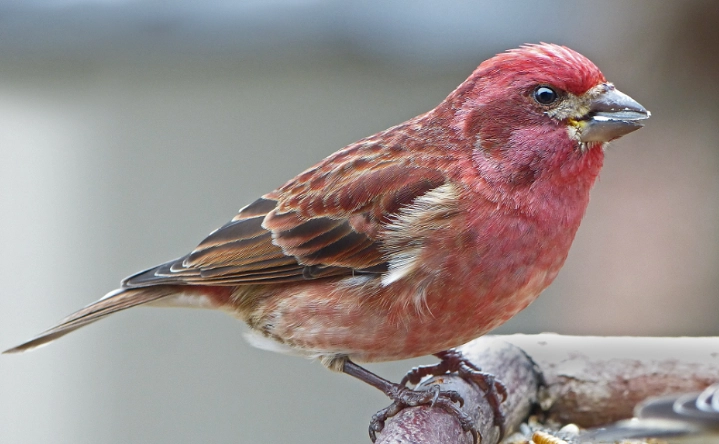
The Sound of a Purple Finch
This is a huge clue, often overlooked. Their song is nothing like the long, jumbled, cheerful warble of a House Finch. To me, the Purple Finch song is beautiful but almost... rushed? It's a rich, musical warble that rises and falls, but it's delivered in a fast, burry stream. It lacks the clear, individual phrases you hear in, say, a robin's song. It's more of a liquid pour of notes.
The call note is even more useful for ID. While a House Finch gives a sharp, rising "weet!" or a chattering series, the Purple Finch call is a distinctive, soft, metallic "pik" or "tek." It's a single, dry note. When you hear that in a flock of birds, it's worth lifting your binoculars. The best way to learn it is to listen. The Xeno-canto database is a fantastic, free repository of bird sounds where you can hear multiple recordings submitted by recordists worldwide. Compare the songs and calls there, and it'll click.
"The song is a rapid, musical warble, often ending with a distinctive downslurred note. It always strikes me as more fluid and less choppy than its relatives." – That's how an expert might describe it. To me, it sounds like someone trying to whistle a complicated tune very, very quickly.
How to Actually Attract Purple Finches to Your Yard
You can't force an irruptive species to show up. If it's a poor cone year up north and you're in their path, you have a chance. If not, you might wait a while. But you can massively increase your odds by being ready. Think of it as setting a trap with kindness.
First, the feeder. Tube feeders with large perches work well. They're not as acrobatic as goldfinches, so they like a solid place to stand. Platform feeders or hoppers are also great, especially if you have a squirrel baffle (which you absolutely need).
Food, as we ranked, is key. Offer fresh black oil sunflower seeds in one feeder and nyjer in another. Keep them stocked. Nothing turns a wandering flock away faster than empty or moldy seed.
Now, what most people forget: water and shelter. A birdbath, especially one with a gentle dripper or heater for winter, is a mega-draw. These birds need to drink and bathe year-round. And they need to feel safe. Planting native conifers like junipers, spruces, or pines gives them immediate cover to dart into if a hawk shows up. Dense shrubbery is their security blanket.
Finally, go easy on the pesticides. Remember, they eat insects during breeding season. A yard full of bugs in the summer is a grocery store for them and their young.
Nesting and Family Life
This is a part of their life most of us never see, unless we're in the northern woods. The female does all the nest building, usually on a horizontal branch of a conifer, far out from the trunk. It's a tidy cup of twigs, grasses, and rootlets, lined with softer hair and moss.
She'll lay 3-5 pale blue eggs with dark speckles. While she incubates for about two weeks, the male brings her food. Once the chicks hatch, it's a non-stop feeding frenzy for both parents. The nestlings are fed a diet rich in insects and caterpillars—vital protein for growth. They leave the nest after another two weeks but will stick close to the parents, begging noisily, for a while longer.
It's a tough life. According to data from long-term monitoring programs like the Cornell Lab's BirdCast and the American Bird Conservancy, nest success rates can be low due to predators and weather. Every fledgling that makes it is a small victory.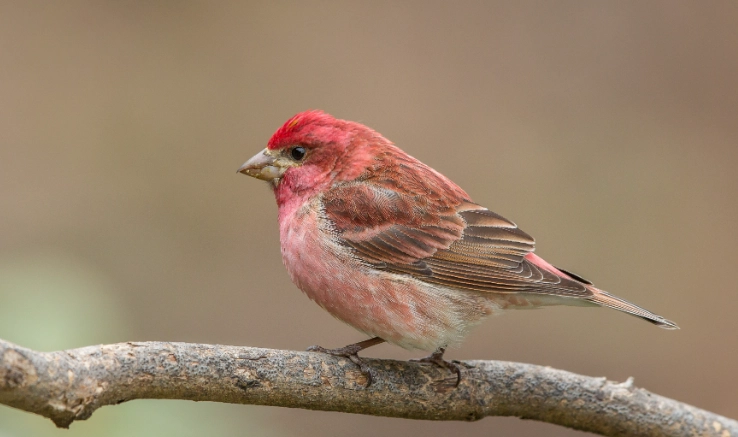
Common Questions About Purple Finches (Stuff You Actually Want to Know)
Are Purple Finches rare?
Not globally rare, but locally uncommon and irregular. They have a huge breeding range in Canada. But in the lower 48 states, especially outside the Northeast, a sighting is often noteworthy and tied to irruption years. Don't expect them daily like a Cardinal or Chickadee.
How long do they live?
The oldest known Purple Finch, based on bird banding records, was over 10 years old. That's impressive. But the average lifespan is probably much shorter, maybe 2-3 years, facing challenges from predators, disease, and windows. Which is why creating safe backyard habitat matters.
Why are they called "Purple" if they're pink?
Ah, the eternal question. Bird naming is an old and imperfect art. Many historical bird names were given based on dead specimens in hand, where colors can look different. "Purple" in older contexts sometimes referred to a crimson or deep red hue. It's a misnomer that stuck. We're stuck with it now.
Do they migrate at night?
Yes, like most songbirds, they migrate primarily at night. They use the stars for navigation and avoid many daytime predators. This is why you might suddenly have a flock appear one morning after a clear night with favorable winds.
What's their conservation status?
Globally, they're considered a species of "Least Concern" by the IUCN. However, data from long-term surveys like the Breeding Bird Survey suggest their populations have experienced significant declines in parts of their range, particularly in the East. Habitat loss on both breeding and wintering grounds is a concern. Supporting organizations that protect large tracts of boreal forest is one of the best things we can do for them.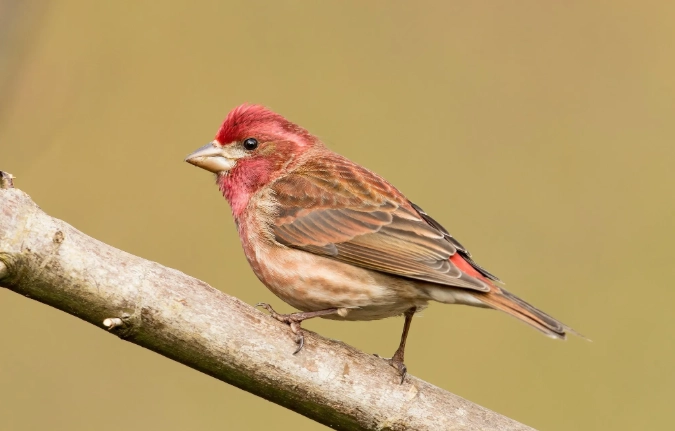
Final Thoughts: The Joy of the Unpredictable Guest
Chasing a Purple Finch listing is frustrating. You can't really chase them. You have to prepare, be patient, and get a little lucky. But that's what makes it so rewarding. When that soft "pik" call comes from your maple tree, and you lift your binoculars to see that rosy-washed, chunky-billed bird methodically cracking a sunflower seed, it feels earned.
It's a connection to those vast northern forests, a reminder of the complex, nomadic lives happening right outside our doors. So, get your feeders ready with the good stuff, keep the water fresh, and listen for that dry call note. You might just be rewarded with one of birding's most delightful cases of mistaken identity, finally clarified.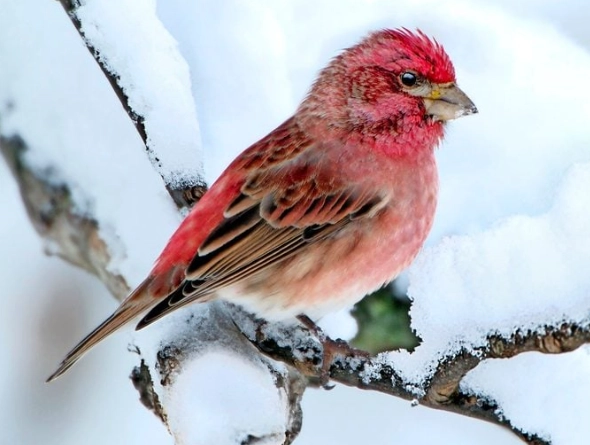
Just don't call it purple in front of me. We both know better now.
Reader Comments