I remember the first time I confidently misidentified a Sharp-shinned Hawk as a Coopers Hawk. It was perched, the light was tricky, and I latched onto the "medium-sized" idea. A more experienced birder gently pointed out the head—it was all wrong. That moment stuck with me. Getting a Coopers Hawk right is a badge of honor for many birders, not because it's impossibly rare, but because it demands you look past the obvious. This isn't just about a gray back and a banded tail. It's about understanding a forest predator's shape, its rhythm, and the subtle cues that separate it from its doppelgängers. Let's cut through the noise and get you spotting Cooper's Hawks with real confidence.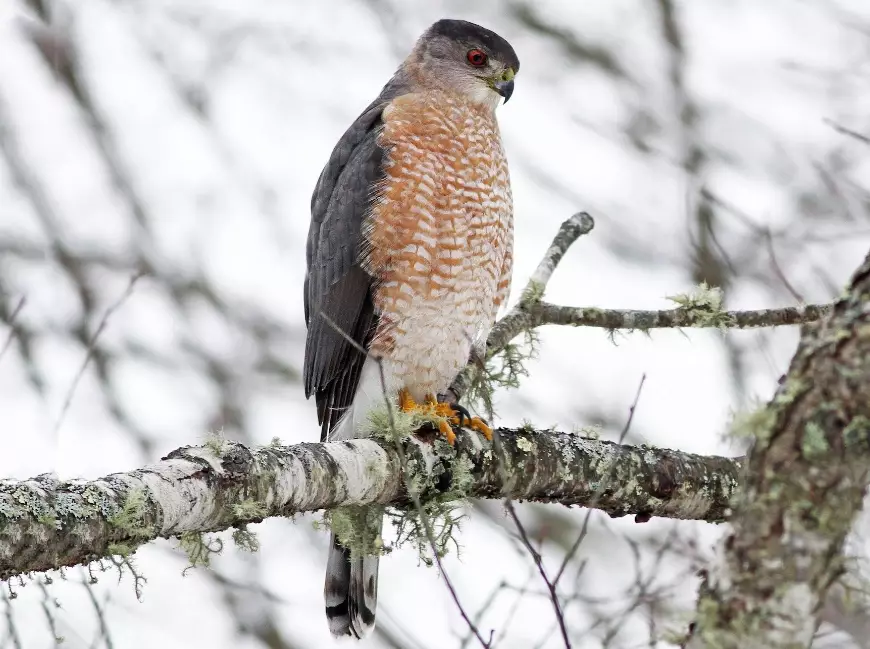
Your Quick Navigation
- The Coopers Hawk: More Than Just a 'Chicken Hawk'
- How to Identify a Coopers Hawk with Confidence
- Where and When to Look for Coopers Hawks
- Understanding Coopers Hawk Behavior: From Hunting to Nesting
- Advanced Tips for Observing and Photographing Coopers Hawks
- FAQs: Your Coopers Hawk Questions Answered
The Coopers Hawk: More Than Just a 'Chicken Hawk'
Let's clear something up first. The old name "chicken hawk" is a misnomer that did this bird no favors. While historical accounts might tell tales of farmyard raids, studies like those from the Cornell Lab of Ornithology show their diet is overwhelmingly wild birds (up to 90% or more), with small mammals like squirrels and chipmunks making up the rest. They're specialized bird hunters, not poultry pirates.
Named after the naturalist William Cooper, the Coopers Hawk (*Accipiter cooperii*) is a mid-sized raptor built for agility. Think of it as the pursuit predator of the woodlands. Unlike the soaring Red-tailed Hawk, Cooper's are built for explosive acceleration and tight turns through dense branches. They have a distinctive profile: long tails for steering, relatively short, rounded wings for quick bursts, and that characteristic Accipiter look—like a flying cross.
One non-consensus point I'll make early: most guides overemphasize tail shape (rounded vs. squared) for separating them from Sharp-shinned Hawks. In the field, on a moving bird, that's often the last detail you can reliably see. We'll focus on what you actually notice first.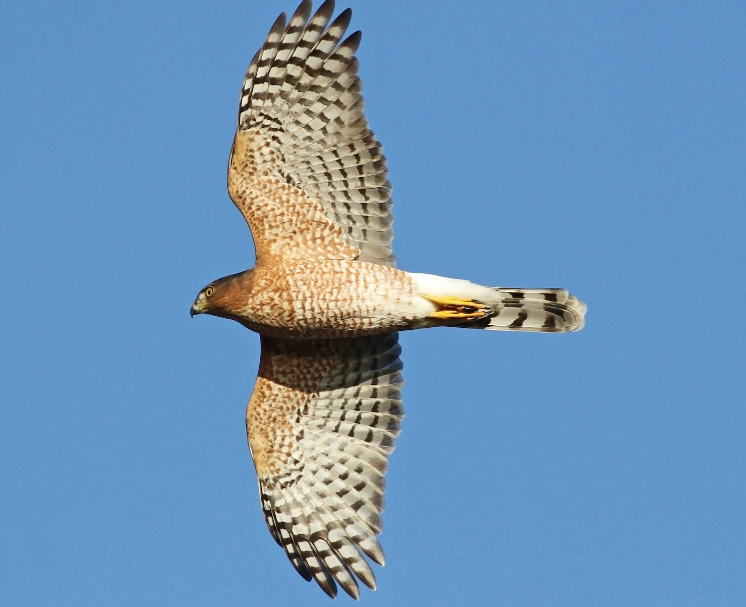
How to Identify a Coopers Hawk with Confidence
Identification is a puzzle. You need to fit several pieces together, not just one. Here’s the breakdown, from the easiest signs to the expert nuances.
Size and Shape: The Foundation
Forget exact measurements. Think in comparisons. A Coopers Hawk is crow-sized. A Sharp-shinned Hawk is jay-sized. This is helpful... until you see a single bird with nothing to compare it to. That's where shape becomes critical.
- Head Projection: This is my top tip. In flight, look at how much the head sticks out in front of the wings. A Coopers Hawk has a noticeable, blocky head that projects well forward. A Sharp-shinned Hawk's head looks tiny, barely peeking out, making its neck seem non-existent.
- Overall Balance: A Coopers looks front-heavy. The chest is broad, the head is substantial. A Sharpie looks rear-heavy, with a long tail dominating its silhouette.
- Flight Style: Several rapid, stiff wingbeats followed by a short glide. It's purposeful, powerful, and direct. They don't typically soar for long periods in open sky like a Red-tailed.
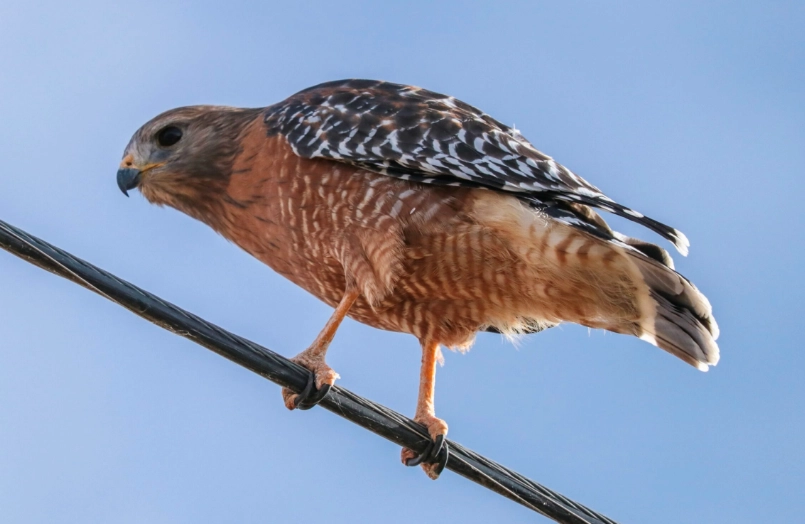
Plumage and Color: Adults vs. Juveniles
They wear two very different outfits.
The Classic Conundrum: Coopers Hawk vs. Sharp-shinned Hawk
This is the identification hurdle. Let's put it in a table to make the distinctions stark.
| Feature | Coopers Hawk | Sharp-shinned Hawk |
|---|---|---|
| Head Size & Shape | Large, blocky, squared-off. Projects clearly beyond wings in flight. | Small, round, like a "knob" on the neck. Minimal projection. |
| Neck | Appears longer, giving a more "necky" look. | Very short, often invisible, making head appear sunken into shoulders. |
| Body Proportions | Front-heavy. Chest is broad and powerful. | Rear-heavy. The long tail dominates the body line. |
| Tail Tip | Tail feathers are uneven in length, often giving a rounded appearance when folded. White terminal band is prominent. | Tail feathers are more even, usually giving a squared-off look. White tip is narrower. |
| Leg Thickness | Legs are noticeably thick, like pencils. | Legs are extremely thin, like toothpicks. |
| Typical Prey Size | Larger: jays, robins, pigeons, squirrels. | Smaller: sparrows, warblers, finches. |
If you only remember one thing from that table, make it the head projection. It's the most field-practical clue.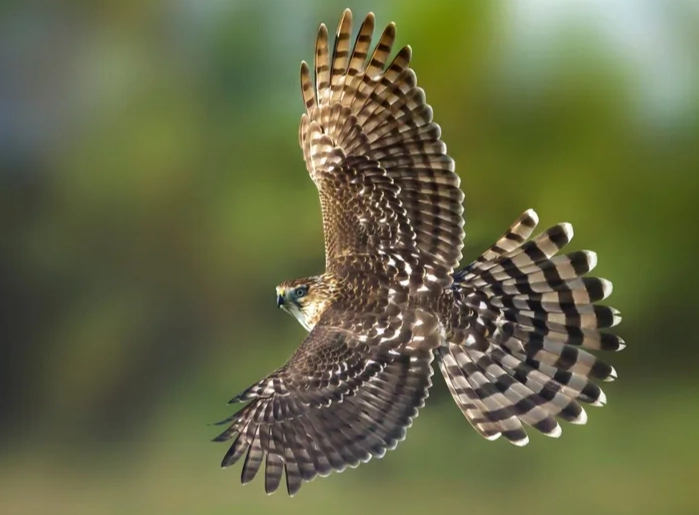
Where and When to Look for Coopers Hawks
You won't find them over open fields or deserts. Their world is the edge.
Prime Habitat: Look for mixed woodlands, forest edges, riparian corridors (streams and rivers lined with trees), and increasingly, suburban areas with mature trees. They need trees for cover to ambush prey and to nest. A park with a good population of birds like pigeons or doves can be a fantastic spot. My most reliable Coopers Hawk sighting last year was in a suburban backyard bordering a small woodlot—it was perched silently, watching a bird feeder from about 50 yards away.
Geographic Range: According to data from the U.S. Geological Survey Bird Banding Lab, Coopers Hawks breed across most of the contiguous United States and southern Canada. They winter throughout the U.S. and into Mexico. Some northern birds migrate south, while many in the central and southern U.S. are year-round residents.
Seasonal Activity: They're present year-round in much of their range. Spring (March-May) is great for observing courtship flights and early nesting behavior. Fall migration (Sept-Nov) can see an influx of birds moving through. Winter is excellent because the lack of leaves makes them easier to spot perched in trees.
Understanding Coopers Hawk Behavior: From Hunting to Nesting
Watching what they do tells you as much as what they look like.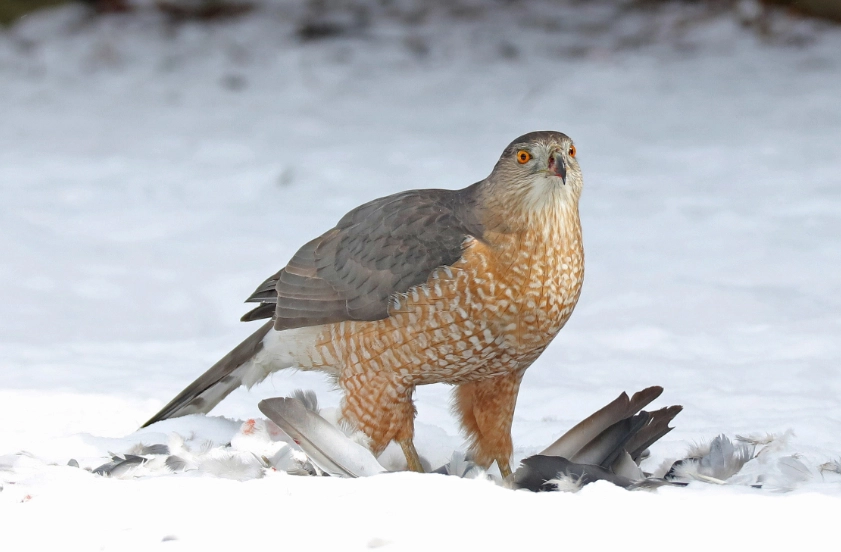
The Ambush Hunter: They don't chase prey for miles. A Coopers Hawk will find a concealed perch—a thick branch inside a tree, a fence post near a brush pile—and wait. It's a patient, still wait. Then, an explosive launch. They use terrain and surprise, flying fast and low, often twisting through obstacles to snatch a bird in mid-air or off a branch. After a successful hunt, they often take their prey to a "plucking perch," a favorite branch or stump where you might find a pile of feathers.
Nesting: They build bulky stick nests high in deciduous or coniferous trees, often near the trunk. The female does most of the incubation. A common mistake is to assume any large stick nest belongs to a Red-tailed Hawk; Coopers Hawk nests are generally smaller and placed deeper in the forest canopy, not on open platforms.
Territoriality: They can be fiercely territorial, especially during nesting season. You might see dramatic aerial displays or hear their loud, rapid *kak-kak-kak* alarm call if you get too close to a nest.
Advanced Tips for Observing and Photographing Coopers Hawks
Ready to move beyond casual spotting? Here's how the pros do it.
- Listen for Commotion: The best way to find a hunting Coopers Hawk is to listen. A sudden, frantic chorus of alarm calls from robins, jays, or chickadees often means a hawk is nearby. Jays are particularly good sentinels.
- Scan the Perches: Train your eyes to scan the interior branches of trees, not just the tops. Look for that upright, stocky silhouette against the trunk.
- Timing is Everything: Early morning and late afternoon are peak hunting times. The low light also makes for beautiful photography.
- Photography Gear: A lens in the 300-400mm range is a good start. Because they're often in shaded woods, a lens with a wide aperture (like f/4 or f/2.8) helps keep your shutter speed high. Patience is your primary tool. Don't approach a nest. Use your car as a blind in open areas—they often ignore stationary vehicles.
- Ethical Note: Always keep a respectful distance, especially during nesting season. Stress can cause adults to abandon eggs or chicks. Use binoculars and long lenses to observe without disturbance.
I learned the hard way that rushing for a closer photo only results in a blurry shot of a departing hawk. Now, I settle in, let the bird get used to my presence, and often get better behavioral shots as it goes about its business.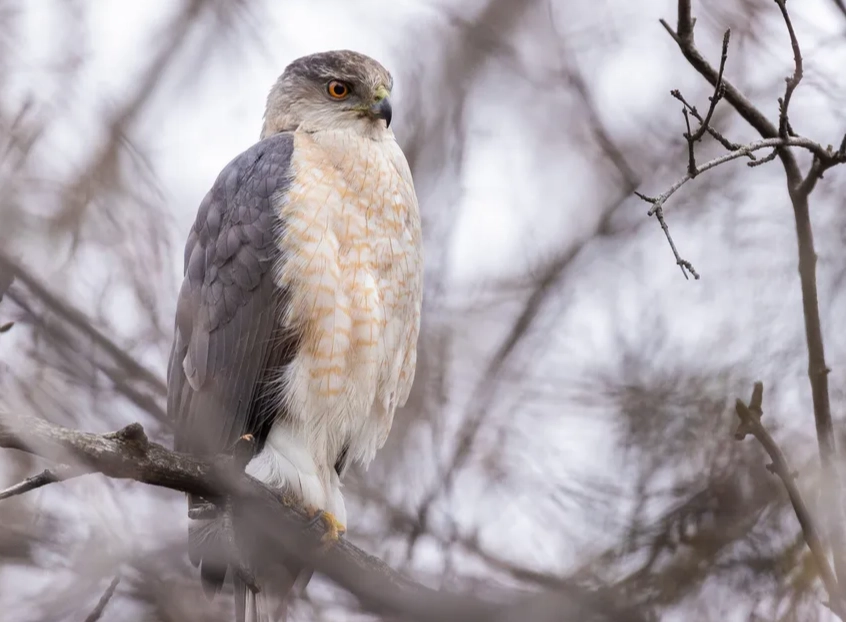
Reader Comments