Let's cut to the chase. You're not here for a dry encyclopedia entry. You want to understand the creature that turns birdwatching into an adrenaline sport. The peregrine falcon isn't just another bird on a list. It's a biological marvel, a conservation legend, and for many of us, the holy grail of a day in the field. I remember the first time I saw one—not in some remote wilderness, but stooping past the 30th floor of a city office building, a blur of grey against glass and steel. That moment changed how I saw the natural world. This guide is about giving you the tools and insights to find your own moment, whether you're holding binoculars for the first time or your life list runs into the hundreds.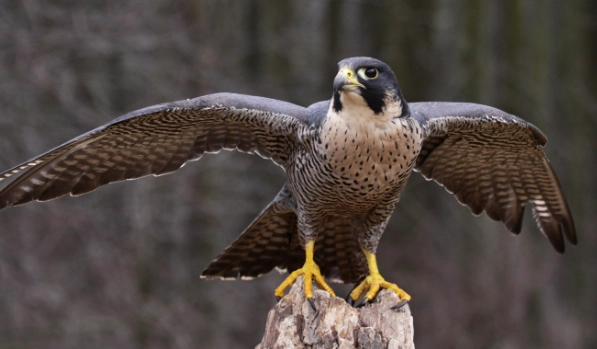
What You’ll Find in This Guide
Why the Peregrine Falcon Captivates Birders
It's the speed, of course. A peregrine in a hunting dive, or "stoop," can exceed 240 mph (386 km/h). That makes it not just the fastest bird, but the fastest animal on the planet. But speed alone is a shallow fascination. What hooks people is the context of that speed. This isn't a cheetah sprinting on a plain. This is an animal that uses the third dimension like no other, climbing to heights where it becomes a speck, then folding its wings and becoming a living missile. The precision is terrifying. It doesn't just hit its prey; it strikes with a closed foot, often killing with the impact alone. Watching it is like watching a masterclass in evolutionary physics.
Then there's the contrast. This is a bird that evolved on remote sea cliffs and towering mountain crags. Yet, its most famous modern habitats are skyscrapers, bridges, and cathedrals. The peregrine didn't just adapt to human landscapes; it conquered them, using our tallest structures as perfect artificial cliffs. Seeing a pair nesting on a city hall, raising chicks amid the traffic noise, feels like a paradox. It's wildness insisting on a place in our world.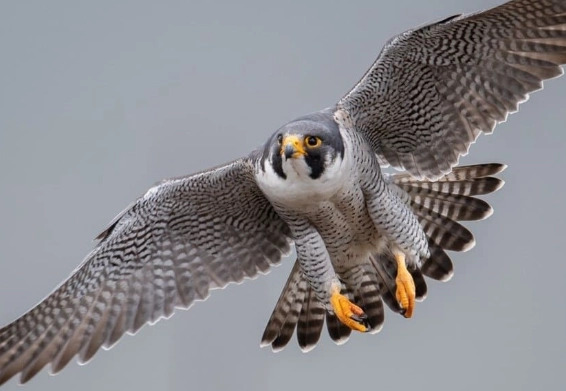
How to Identify a Peregrine Falcon: Beyond Just Speed
You won't often see it at top speed. Most of the time, you need to ID a bird sitting on a ledge or cruising the sky. Relying solely on the "black helmet" or "mustache" mark leads to confusion with other raptors, especially the smaller Merlin. Here’s a more nuanced approach.
- Powerful Build: Think football player, not marathon runner. Broad chest, muscular shoulders, and relatively short tail compared to hawks.
- Helmet & Mustache: The dark crown and thick, contrasting "mustache" (malar stripe) are definitive, but look closely. The helmet is solid, and the mustache is wide and dark, creating a stark, helmeted look.
- Wing Shape in Flight: Long, pointed wings that taper sharply. When gliding, the wrist (the forward bend of the wing) is prominent, and the wing shape resembles a stretched-out "M" or a sickle.
- Underwing Pattern: Crucial for flying birds. Adults have clean, finely barred underparts and underwings. Juveniles are streaked below, not spotted or checkered like some hawks.
A Common Mistake: Peregrine vs. Cooper's Hawk
New birders in urban areas often mix these up. Both can take pigeons. But a Cooper's hawk is a forest accipiter—long tail, rounded wings, a stealthy ambush hunter that dashes through trees. A peregrine is built for open sky and high-speed pursuit. If you see a raptor weaving through an alley after a pigeon, it's likely a Cooper's. If you see one perched high on an exposed ledge overlooking a wide river or square, ready to launch into open air, think peregrine.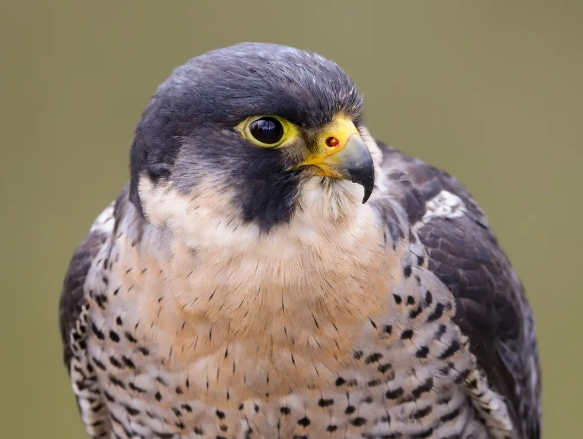
The Sound Test
Listen. Around the nest (or "eyrie"), peregrines are notoriously loud and defensive. Their call is a rapid, harsh, repetitive "kak-kak-kak-kak." It's not the high-pitched whistle of a red-tailed hawk. It's an angry, scolding chatter that once heard, is hard to forget. If you're near a potential nest site in spring and hear relentless scolding, look up. You're likely being told off.
Where and When to Watch Peregrine Falcons
Forget the idea that you need to trek to the Arctic. Your best bet might be downtown.
Urban Strongholds (The Guaranteed Sights): Major cities worldwide host breeding pairs. They favor tall buildings with good ledges, cathedral spires, and especially large bridges. The water below bridges provides a steady food source (ducks, pigeons). Locations like the Tyne Bridge in Newcastle (UK), the Peace Bridge in Calgary (Canada), and countless skyscrapers in New York City, Chicago, and Baltimore have famous, easily observed nests. Many have live nest cams run by local Audubon chapters or universities.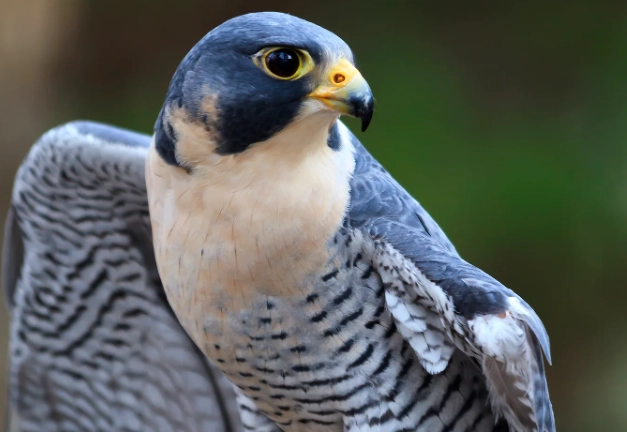
Natural Habitats (For the Purist): Here, timing is everything.
- Coastal Cliffs: Spring and summer for breeding. Think cliffs along the Pacific Coast, the Gulf of St. Lawrence, or the UK coast.
- River Canyons: The western US and Canada. Places like the Snake River Birds of Prey Area in Idaho are legendary.
- Migration Hotspots: Fall is prime time. Head to a known "hawk watch" site. These are ridges where raptors funnel during migration. Hawk Mountain Sanctuary in Pennsylvania counts hundreds of peregrines each autumn. You'll see them passing through, not breeding, but the volume of birds increases your odds dramatically.
My personal favorite spot? It's a quiet stretch of the Mississippi River bluffs. Not famous, no crowds. But I know a particular pothole in a limestone cliff face that's been used for over a decade. I go in early April with a spotting scope, set up 300 yards away on the opposite bluff, and just wait. The key is learning one location intimately.
The Hunting Secrets of the World's Fastest Animal
The stoop is the headline act, but it's only part of the story. A peregrine won't waste energy on a 200 mph dive unless the success rate is high. Their hunting is a patient, tactical operation.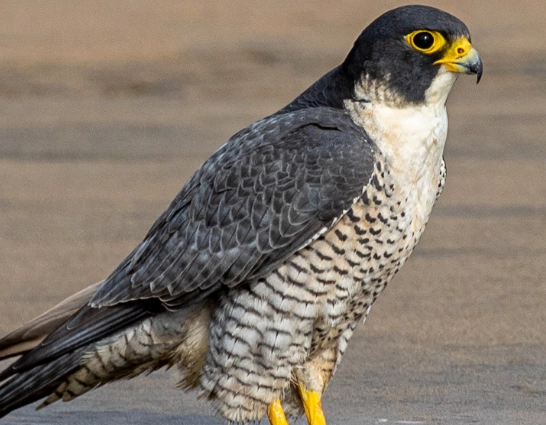
Step 1: The High Perch or High Cruise. They find a commanding vantage point or circle high on thermal updrafts, scanning. Their eyesight is legendary—they can spot a pigeon over a mile away.
Step 2: The Position. This is the subtle part most miss. They don't just dive on the first bird they see. They maneuver to get up-sun, putting their prey in silhouette and hiding their own approach. They also gain position directly above or slightly ahead of the flight path.
Step 3: The Stoop. They tuck their wings tight, becoming a feathered bullet. Special bony tubercles in their nostrils regulate airflow, preventing lung damage at insane speeds. They don't usually hit the prey directly at full speed; often, they'll level out slightly and strike with the rear talons, a controlled swipe. The force is still devastating.
Step 4: The Retrieve. If the prey is knocked dead from the sky, the peregrine will circle down to collect it on the ground or water. This is a vulnerable moment. They'll often eat on a nearby perch, a "plucking post" littered with feathers.
I once watched a peregrine fail. It stooped on a flock of teal, missed, and instead of giving frantic chase, it simply circled back up, regained its height, and went back to scanning. No wasted effort. Pure, cold efficiency. That lesson in energy management stuck with me more than any successful kill.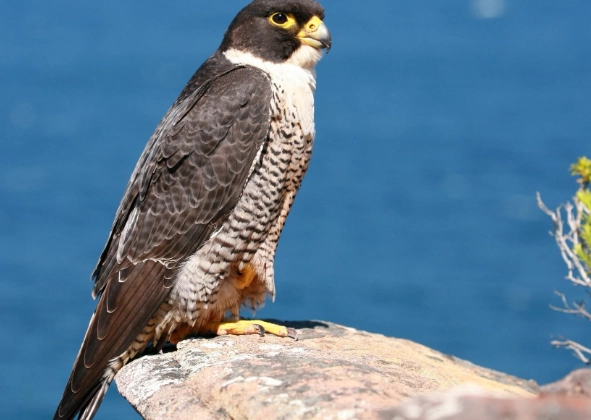
The Unlikely Conservation Comeback Story
In the mid-20th century, peregrines were nearly wiped out in much of North America and Europe. The culprit was DDT, a pesticide that caused eggshell thinning. Eggs crushed under incubating parents. It was a silent, global collapse.
The comeback is one of conservation's greatest successes, spearheaded by a coalition of scientists, falconers, and volunteers. It involved captive breeding and a technique called "hacking"—releasing young birds from artificial cliff boxes. The story is well-known. The part that fascinates me is the unintended consequence.
Those released birds didn't all go to remote cliffs. They discovered cities. The pioneers that nested on skyscrapers found an ideal habitat: no pesticides, abundant prey (pigeons and starlings), and few natural predators. The urban peregrine population exploded. Today, in many regions, cities hold a higher density of breeding peregrines than the wilderness. They've become a symbol of hope, not just for species recovery, but for the possibility of wildness in our midst. Organizations like The Peregrine Fund were instrumental in this work, and their research continues to guide raptor conservation globally.
Your Peregrine Falcon Questions Answered
How can I tell a peregrine falcon from a hawk at a distance?
Look at the flight silhouette. Hawks often soar with their wings in a slight V-shape (dihedral). Peregrines hold their powerful wings straight out or slightly swept back, like a fighter jet. Their wingbeats are stiffer and faster. Also, watch the hunting style: a peregrine will often gain great height before a stoop, while hawks like the Cooper's hawk rely more on surprise attacks through cover.
What's the single biggest mistake people make when trying to photograph peregrine falcons?
They try to get too close, too fast. Peregrines are incredibly alert. If you approach a nest site or perch directly, you'll spook them every time. The key is to set up at a respectful distance with a long lens (at least 400mm is recommended) and let the bird get used to your presence. Use your car as a blind whenever possible. Sudden movements are your enemy; patience is your best tool.
Are peregrine falcons dangerous to small pets?
The risk is extremely low but not zero. A peregrine's natural prey are birds in flight, like pigeons, ducks, and shorebirds. They are not adapted to hunt on the ground. However, there are very rare, documented cases of peregrines taking very small pets (like a teacup Chihuahua) from backyards, usually in areas where their natural cliff habitats border suburbs. For typical cats and dogs, the danger from cars or other predators is astronomically higher.
Where is the most reliable place to see a peregrine falcon in the United States?
For a guaranteed sighting with interpretive context, head to a major city with a known nest site on a skyscraper or bridge. The peregrine falcon nest cams and viewing programs managed by organizations like the Cornell Lab of Ornithology or state wildlife agencies are excellent. For a more natural setting, coastal cliffs during migration (like Hawk Mountain, PA in fall) or western river canyons in spring offer high probabilities.
So there you have it. The peregrine falcon isn't just a checkmark. It's a gateway to understanding predation, adaptation, and resilience. Grab your binoculars, look up at the tallest structure in your town, and give it a scan. You might just lock eyes with the fastest thing alive.
Reader Comments