What’s Inside
- Spotting the Difference: How to Identify a Barn Swallow
- A Year in the Life: From Mud Nest to African Skies
- Why Barn Swallows Matter and Why They're in Trouble
- How to Live With (and Even Attract) Barn Swallows
- Digging Deeper: Answering Your Barn Swallow Questions
- Wrapping It Up: Our Role in Their Story
You've probably seen them a hundred times. Slicing through the air above a field, perched on a power line like little feathered notes on a staff, or maybe even darting in and out of your barn or garage. The barn swallow is one of those birds that feels deeply familiar, a signpost of warm weather. But how much do you really know about them? I used to just think of them as "those speedy blue birds," until a pair decided to build a nest on my porch light a few years ago. That summer of watching them up close—the frantic feeding, the messy nest, the first wobbly flights—completely changed my perspective.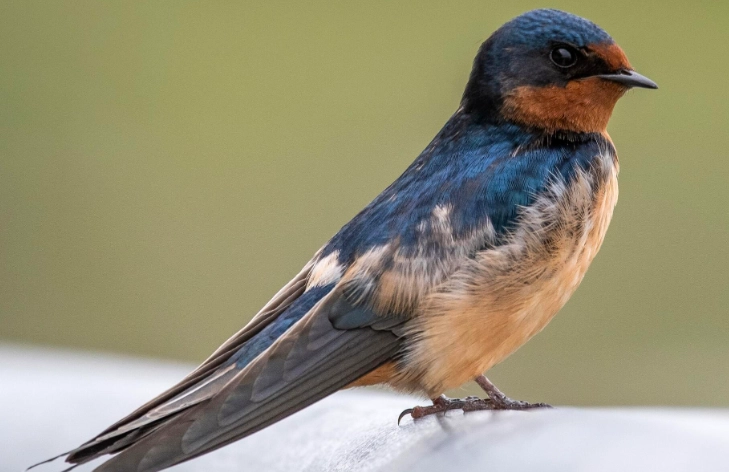
It turns out, there's a whole world of drama, endurance, and ecological importance behind that streamlined silhouette. And these birds, despite being so widespread, are facing some real challenges. If you've ever wondered what kind of swallow that is, why they build those mud nests in such inconvenient places, or if you can actually encourage them to visit your property, you're in the right spot. This guide is my attempt to pull together everything I've learned from watching my porch tenants and digging into the research, so you can go from casual observer to someone who truly gets what makes a barn swallow tick.
Spotting the Difference: How to Identify a Barn Swallow
Okay, so you see a small, agile bird zipping around. Is it a barn swallow? Here’s how to be sure. Forget just color—it’s all about the shape and specific markings.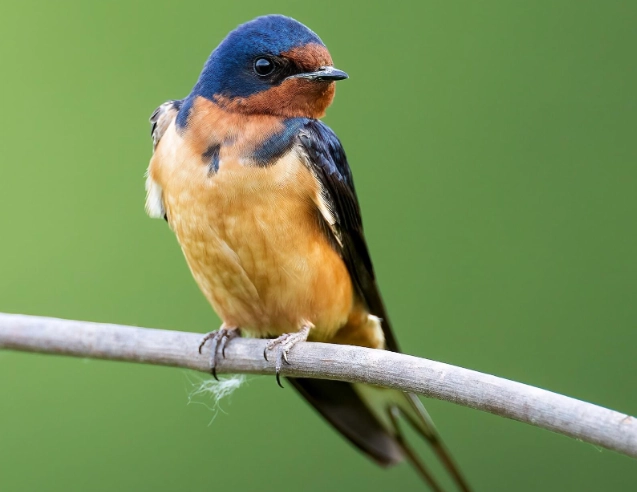
The single best giveaway is the tail. Look for a deeply forked tail, with long, thin outer feathers called streamers. When they glide, that tail looks like two sharp prongs. No other common North American swallow has a fork that pronounced. It’s like their signature accessory.
Now for the color scheme. From above, they are a stunning steely blue, almost iridescent. But the belly is where it gets interesting. They have a rich, creamy buff or cinnamon-colored belly and throat. And here’s a neat trick: look for a dark blue "breast band" that separates that creamy throat from the belly. It’s like they’re wearing a little neckerchief.
Their face is chestnut-colored, right up to the forehead. I always think it looks like they’re wearing a rust-colored mask.
Quick ID Checklist: Deeply forked tail? Check. Steel-blue back? Check. Cinnamon belly and throat with a dark breast band? Check. You've got yourself a barn swallow.
Males and females are similar, but males tend to have longer tail streamers and more vibrant colors. Juveniles are duller and don’t have the long tail feathers yet—they can look a bit scruffy and are sometimes mistaken for a different bird.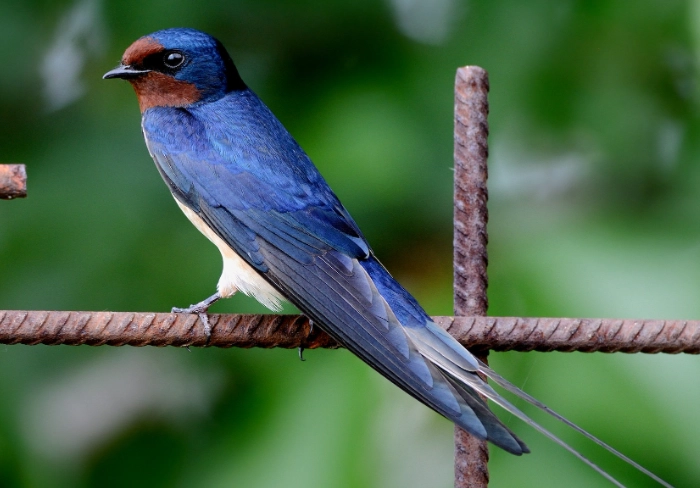
Barn Swallow vs. The Look-Alikes
It’s easy to mix them up with other members of the swallow family. Let’s clear up the confusion.
| Bird | Key Differences from Barn Swallow | Where You'll See Them |
|---|---|---|
| Tree Swallow | White belly and throat, no forked tail (just slightly notched), iridescent blue-green back. | Open fields near water, often using nest boxes. |
| Cliff Swallow | Squared-off tail, pale forehead, buffy rump, and they build gourd-shaped mud nests in big colonies. | Under bridges, cliffs, and eaves in large groups. |
| Purple Martin | Much larger, dark purple-black all over (males), slightly forked tail but chunkier body. | Specially designed apartment-style birdhouses. |
The cliff swallow is the one that most often causes a mix-up. I made that mistake myself until I noticed the pale forehead and the totally different nest shape. Barn swallows are more solitary nesters, while cliff swallows love a busy neighborhood.
A Year in the Life: From Mud Nest to African Skies
This is where things get truly fascinating. The life cycle of a barn swallow is an epic journey, literally.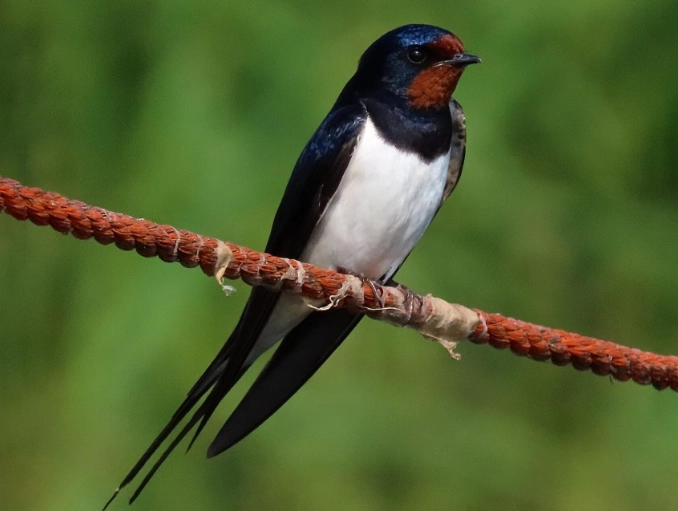
Architects of Mud: Nesting Habits Up Close
This is usually the first point of contact (or conflict) between people and barn swallows. They don't just pick any spot. They need a vertical surface with a little ledge or protrusion overhead to anchor the nest. That’s why barn beams, garage door openers, porch lights, and even the top of an exterior door frame are prime real estate.
The nest itself is a masterpiece of avian engineering. Both parents work for over a week, making hundreds of trips to collect little pellets of mud. They mix it with their saliva and grass to form a sturdy, cup-shaped structure. It’s not the tidiest construction site—expect some mud splatter on the wall below. I learned that the hard way.
Inside, they line the cup with soft feathers, which they often pluck from their own breasts or find on the ground. A single nest can contain over a thousand feathers. They’ll lay 4-5 pure white eggs with reddish-brown speckles. The female does most of the incubating for about two weeks, while the male stands guard and brings her food.
And here’s a cool fact: they often reuse and repair the same nest year after year. That nest on your property might be a multi-generational family home.
The Feeding Frenzy and Fledging
Once the eggs hatch, the real work begins. Both parents are in constant motion, catching insects on the wing to feed their constantly hungry chicks. A single barn swallow chick can be fed hundreds of times a day. Their diet is almost exclusively flying insects: flies, mosquitoes, moths, beetles, you name it. They are nature’s most efficient pest control service.
I spent hours watching my porch pair. The precision was incredible. They’d zip in, the chicks would pop up with gaping yellow mouths, get stuffed with insects, and the parents were gone again in a flash. After about three weeks, the chicks are ready to fledge. The first flights are wobbly and nerve-wracking to watch (for the human, at least). The parents continue to feed and care for them for another week or so as they learn to hunt. A successful pair can raise 2-3 broods in a single summer.
The Great Migration: An Unbelievable Journey
This is the part that blows my mind. As summer ends, our North American barn swallows gather in huge flocks. Then, they leave. They fly all the way to Central and South America for the winter. We’re talking a journey of thousands of miles.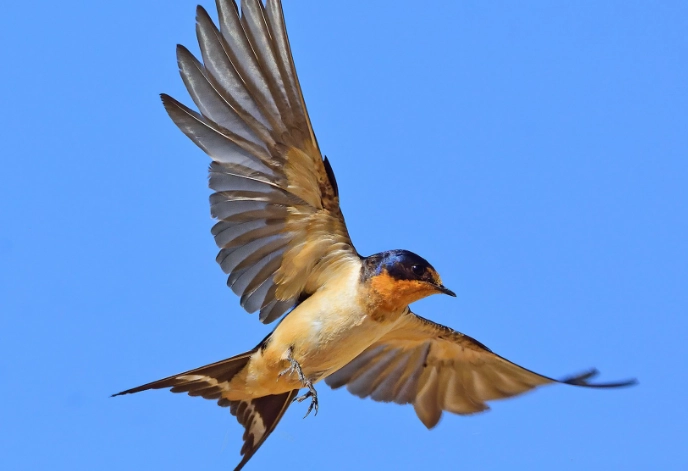
They navigate using the sun, stars, and the Earth’s magnetic field. They face storms, predators, and a lack of food along the way. Some even cross the Gulf of Mexico in a single, non-stop flight. The barn swallows you see one summer are likely the same ones, or their offspring, that return to your exact same barn the next spring. That homing instinct is incredibly strong. Organizations like the Cornell Lab of Ornithology have done extensive research on this migration, and the data shows just how precise these routes are.
Why Barn Swallows Matter and Why They're in Trouble
Beyond being beautiful to watch, barn swallows play a crucial ecological role. They are voracious consumers of insects. A single barn swallow can eat hundreds of insects per day. Imagine the impact of a whole colony over a summer. For farmers and gardeners, they provide free, organic pest control. Reducing mosquito and fly populations is a direct benefit to us.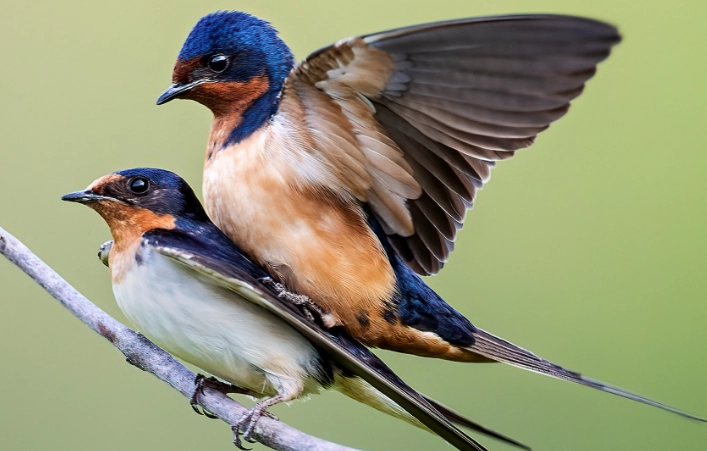
But here’s the hard truth: their numbers are declining. According to long-term surveys like the North American Breeding Bird Survey, we’ve lost a significant portion of the barn swallow population over the past few decades. It’s a trend that worries ornithologists.
The Top Threats to Barn Swallows
- Habitat Loss: Modern farming practices, the decline of family farms with open barns, and "tidier" agricultural landscapes mean fewer nesting sites and less insect prey.
- Insect Decline: The widespread use of pesticides doesn’t just kill pests; it wipes out the flying insects that swallows depend on for food. No food, no birds.
- Climate Change: This messes with migration timing. If insects hatch earlier due to warm springs, but the swallows arrive on their traditional schedule, they can miss the peak food supply for their chicks.
- Direct Persecution: Some people still destroy nests because of the mess (the droppings) or simply because they don’t want birds in their structures.
It’s that last point that really gets me. The mess is undeniable. But seeing it as a nuisance without understanding the cost feels short-sighted. These birds are struggling, and the places they’ve adapted to use—our buildings—are becoming less welcoming.
How to Live With (and Even Attract) Barn Swallows
So, what can you do? Whether you want to peacefully coexist with an existing nest or actively try to attract these aerial acrobats, here are some practical, actionable steps.
If They’ve Already Moved In: Coexistence 101
First, a critical legal note: In the United States, barn swallows are protected under the Migratory Bird Treaty Act. It is illegal to harm, harass, or destroy an active nest with eggs or chicks. You must wait until after the nesting season is completely over and they have left.
Now, for the mess. The solution is simple: place a shallow tray or a piece of plywood (I used a cookie sheet) about 18-24 inches below the nest. This will catch about 90% of the droppings. Clean it regularly. It’s a small effort that prevents a big cleanup later and lets the birds raise their young in peace.
Enjoy the show! You have front-row seats to one of nature’s most impressive feeding displays. The benefit of having thousands of mosquitoes and flies eaten daily is a pretty good trade-off for a little preventative maintenance.
How to Attract Barn Swallows to Your Property
Want to roll out the welcome mat? Here’s what barn swallows are looking for:
Do's:
- Provide Nesting Sites: Leave barns, sheds, or garage doors open (if safe) during the spring. They need access to protected, high ledges.
- Offer Mud: In early spring, create a small muddy patch in your garden. A depression in the soil that you keep wet will give them the prime building material they need.
- Grow Native Plants: A healthy, pesticide-free garden or field attracts the insects they eat. It’s about creating a food-rich environment.
- Provide a Water Source: A birdbath, pond, or even a large, shallow dish of water gives them a place to drink and bathe, and helps with that mud supply.
Don'ts:
- Don't Use Pesticides: This is the biggest one. Killing insects kills their food supply.
- Don't Be Too Tidy: A perfectly manicured lawn is a desert for insect-eating birds. Let some areas grow a bit wild.
- Don't Disturb Active Nests: Give them space. Constant human activity right at the nest site might cause them to abandon it.
You can even buy or build artificial nesting cups or shelves designed to mimic their preferred ledge. Mount them high up (at least 8 feet) under an eave or in a corner. It might take a season or two for them to discover it, but it can work.
Digging Deeper: Answering Your Barn Swallow Questions
Let’s tackle some of the specific things people search for online. These are the questions I had, and the ones I see popping up in birding forums all the time.
How long do barn swallows live? Surprisingly long for a small bird! While many die in their first year, if they survive migration and their first winter, they can live 4-8 years on average. The oldest known wild barn swallow was over 11 years old.
How can you tell a male from a female barn swallow? It’s subtle. Males generally have longer, more slender tail streamers and more vibrant, deeply colored plumage on their underparts. The female’s colors are often a bit paler and washed out, and her tail fork is shorter. During courtship, the male will sing a complex, warbling song and show off his tail.
Do barn swallows eat bees? This is a big concern for beekeepers. The short answer is: rarely, and usually only by accident. Their primary targets are softer-bodied flying insects like flies, mosquitoes, and winged ants. A hard, stinging bee is not a preferred meal. They might snap at one occasionally in a mixed insect swarm, but bees do not make up a meaningful part of their diet. They’re after the easier, more abundant stuff.
Where do they go at night? During nesting season, they sleep in their nest. Outside of breeding season, they gather in enormous communal roosts, often in marshes or reedbeds, where thousands of birds will spend the night together on tall vegetation. Finding one of these roosts is an incredible sight (and sound!).
What’s the best time of day to see them? Dawn and dusk are usually the most active feeding times. On warm, sunny afternoons with high insect activity, you’ll also see them hunting constantly. On cool, rainy days, they tend to sit still to conserve energy, often lined up on wires.
Wrapping It Up: Our Role in Their Story
Look, I get it. They can be messy. They can be loud. They might even startle you with a swoop. But after learning about the barn swallow’s incredible migration, its role in our ecosystem, and the pressures it faces, I’ve come to see that messy nest as a badge of honor. It means my little piece of land is providing something they need.
These birds are a direct link to a more wild, interconnected world, and they’ve chosen to live alongside us. Their decline is a warning about the health of our insect populations and our shared environment. The choice we have is pretty simple: we can see them as a temporary inconvenience, or we can choose to be a small part of the solution—by providing space, by tolerating a little mess, and by ditching the chemicals that harm their food source.
Next time you see that forked tail slicing across the sky, I hope you see more than just a bird. You’re looking at a master aviator, a devoted parent, and a globe-trotting migrant that has shared our farms and skies for centuries. Let’s make sure that partnership continues for centuries more.
Reader Comments