Quick Guide
- Why Bother? The Joy of Knowing Your Ducks (and Geese)
- The First Step: Don't Look at the Colors (Yet!)
- The Dabbler Lineup: Common Pond Ducks
- The Diver Crew: Masters of the Deep
- Geese and Swans: The Big Birds
- The Tools You Actually Need
- Answering Your Real-World Questions
- Putting It All Together: A Practice Scenario
- Embrace the Journey
Let's be honest for a second. You're out by the pond, binoculars in hand, and you see a bunch of ducks. Some are brown, some have green heads, some are diving, some are dabbling. They all kind of look similar if you squint, right? For years, that was me. I'd call everything with a vaguely duck-like shape a "mallard" and hope nobody asked for specifics. It was frustrating. I loved watching them, but I felt like I was missing the whole story.
Then I learned it doesn't have to be that hard. Identifying waterfowl is a skill, not a mystery. It's about knowing what to look for, and more importantly, in what order to look. This isn't about memorizing a thousand textbook pictures. It's about building a simple, repeatable system you can use in the field, even when the light is bad or the bird is far away.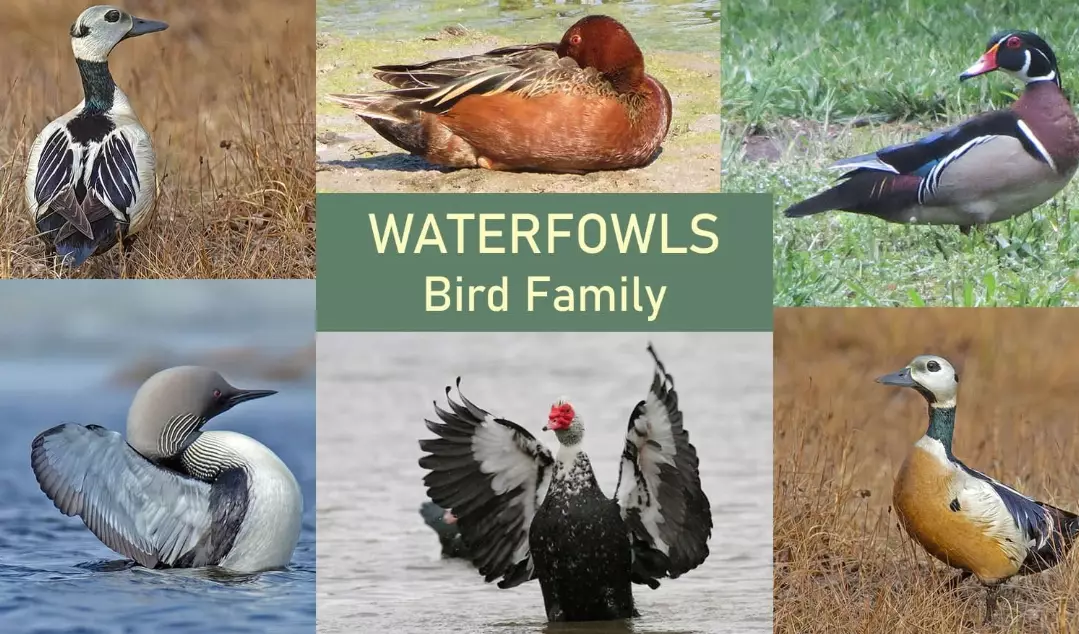
Why Bother? The Joy of Knowing Your Ducks (and Geese)
You might wonder why it's worth the effort. After all, they're just birds. But trust me, once you start identifying waterfowl correctly, the whole experience changes. That anonymous brown blob becomes a fascinating Northern Shoveler, a specialist with a beak like a kitchen spatula designed to filter tiny food from the water. The loud honking flock overhead transforms from "some geese" to a precise V-formation of Snow Geese, migrating thousands of miles. You're not just looking anymore; you're reading a living, flying story.
It connects you to the seasons, too. You'll notice when the first Wood Ducks return in spring, their colors so absurdly beautiful they look painted. You'll learn which ducks are year-round locals and which are just passing through on an epic journey. It adds layers to a simple walk by the lake.
It turns observation into understanding.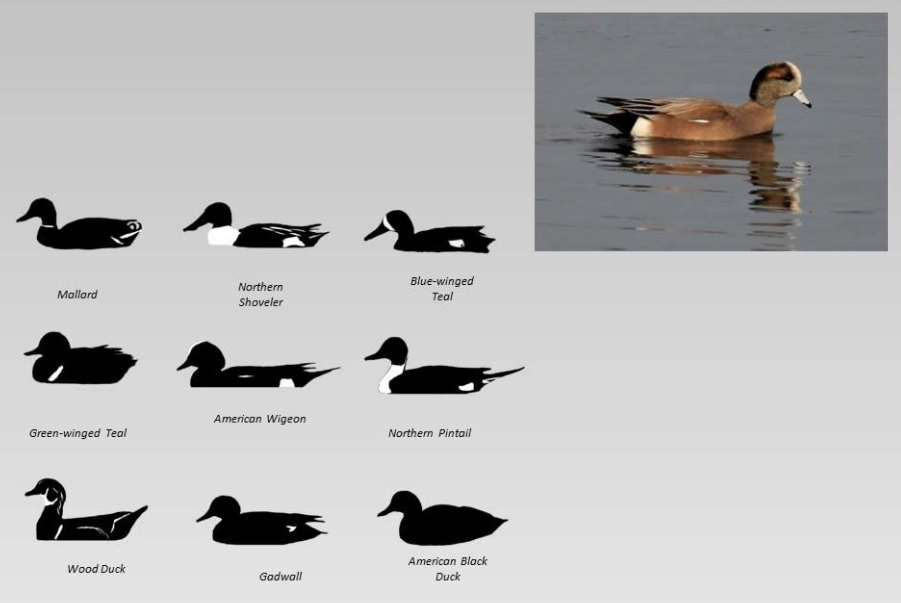
The First Step: Don't Look at the Colors (Yet!)
This is the biggest mistake beginners make. We're drawn to bright colors. That green head on the Mallard is a beacon. But what if it's a cloudy day, or the bird is in shadow, or it's a female (which is often brown and streaky)? Color fails you. Instead, start with these three much more reliable factors.
Size and Shape: The Bird's Silhouette
Is it the size of a crow or a turkey? This instantly splits the group. A Canada Goose is massive compared to a teal. Then, look at the profile.
- Long neck and legs? Think herons or cranes—technically not waterfowl, but a common mix-up.
- Compact, rounded body with a short neck? Classic duck shape.
- Slender, elongated body that sits low in the water? Likely a diver like a grebe or a loon (again, not true waterfowl, but worth noting).
The bill shape is a dead giveaway, even from a distance. Is it tall and stubby? Long and slender? Spoon-shaped? Hooked at the tip? We'll get into specifics later, but just noticing this feature narrows things down dramatically.
Behavior: What's It Doing?
How a bird acts is a huge clue. This is where identifying waterfowl gets interactive.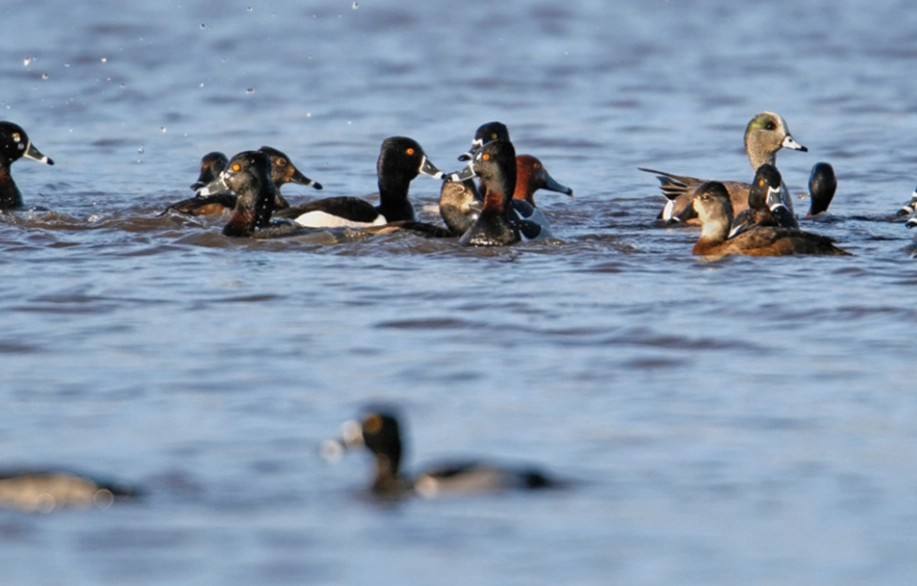
Watch how they take off. Dabblers spring almost straight up from the water. Divers need a running start, pattering across the surface to build speed. How are they sitting on the water? Some ride high, others sit low like a submarine. Flock behavior matters too—some species are almost never alone.
Habitat and Location: Context is Key
You won't find an ocean-loving sea duck on a tiny freshwater farm pond. Your location sets the stage. Are you at a:
- Shallow marsh or pond? Expect dabblers like Gadwall, American Wigeon, and Blue-winged Teal.
- Large, deep lake or reservoir? This is diver territory: Redheads, Canvasbacks, Common Goldeneyes.
- Coastline or bay? Think scoters, Long-tailed Ducks, and Buffleheads.
Check a trusted resource like the Cornell Lab of Ornithology's All About Birds guide for range maps. It's a fantastic, free tool to see what species are even possible in your area during a specific month. No use trying to identify a bird that's 2000 miles away from its usual range!
Start with shape, watch what it does, and consider where you are. Got it? Now we can add some color.
The Dabbler Lineup: Common Pond Ducks
These are the birds you'll most likely encounter on typical inland waters. They're the gateway to waterfowl identification. Let's break down a few of the most common, focusing on the one or two features that really set them apart.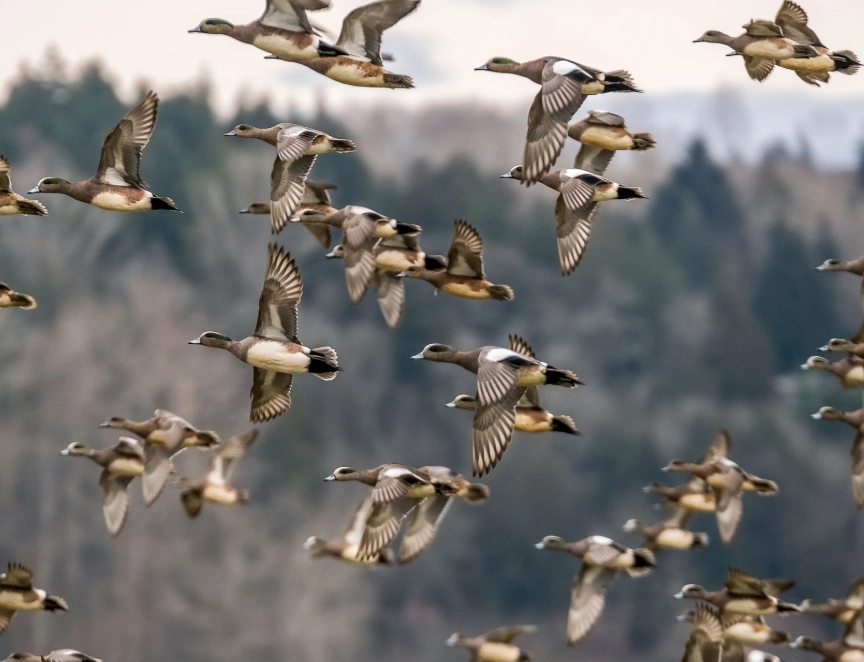
Mallard: The Standard
The classic duck. Male has the iridescent green head, white neck ring, chestnut chest, and curly black tail feathers. Female is mottled brown with an orange-and-black bill. The key here is the speculum (the colorful patch on the wing). In both males and females, it's bright, iridescent blue with white borders. If you see a brown duck flying away and see that blue flash, it's very likely a female Mallard.
Northern Shoveler: The Spoonbill
You cannot miss this bill. It's comically large and spoon-shaped. The male has a dark green head, white chest, and rusty sides. They often feed in groups, swinging those bills side-to-side in the water like little vacuum cleaners. Once you see the bill, you'll never mistake it for anything else.
American Wigeon: The Balding One
The male has a striking white crown on a green head patch, making it look bald. Its body is gray with a pinkish hue on the breast. Listen for them too—the males make a delightful, whistling "whee-whew" sound. Females are brownish but often show a gray head and a shorter, blue-gray bill.
Gadwall: The Understated Elegant One
Many people overlook the Gadwall because it's not flashy. The male is finely patterned in gray, brown, and black—a study in subtlety. Look for a black rear end. In flight, a white speculum (wing patch) is very obvious. The female resembles a female Mallard but has a thinner, orange-sided bill and a sharper tail. I think they're some of the most handsome ducks precisely because they're not screaming for attention.
The Diver Crew: Masters of the Deep
These ducks are built for submarine work. They sit lower in the water, their legs are set farther back for powerful swimming, and they're often found on larger, open water. When identifying waterfowl in this group, head shape and bill profile are everything.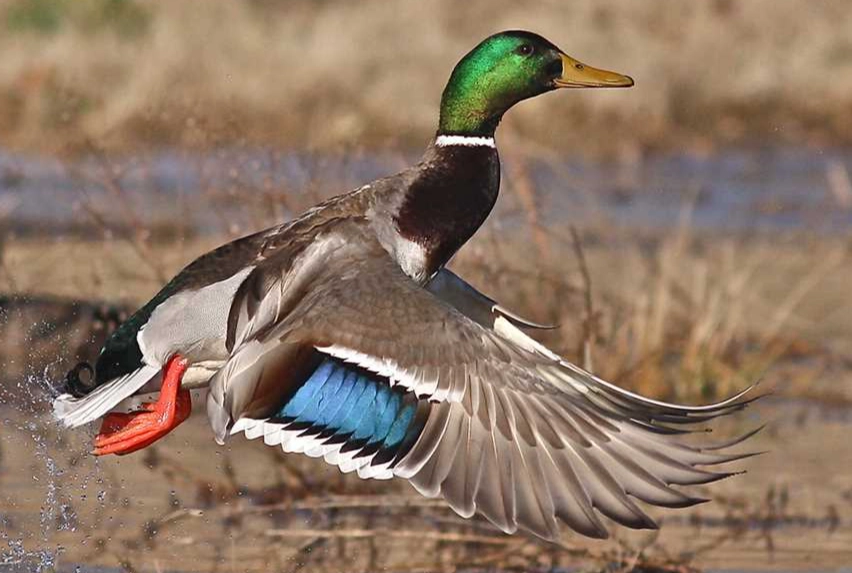
| Species (Male) | Key Identifying Feature | Head/Bill Shape | Common Confusion |
|---|---|---|---|
| Canvasback | Long, sloping profile from forehead to bill tip; red head, black chest. | Long, straight, wedge-shaped. | Often confused with Redhead, but Canvasback has a much longer, sloping bill and darker back. |
| Redhead | Rounded, globular red head; gray back. | Short, steep forehead, blue bill with black tip. | The round head vs. the Canvasback's slope is the key difference. |
| Ring-necked Duck | Purple sheen on head, peaked crown, white ring on bill (not the neck!). | Peaked at the back, white vertical bar on bill. | Can look similar to scaup; look for the peaked head and white bill ring. |
| Lesser Scaup | Purple-iridescent head, peaked crown but with a little tuft. | Peaked with a slight bump or tuft at the back. | Very hard to separate from Greater Scaup; head shape is the best clue (Lesser has a peak). |
| Bufflehead | Tiny! Large white patch on back of head. | Puffy, with a huge white wedge. | Unmistakable due to size and dramatic head pattern. |
See how the table focuses on shape? A Canvasback looks like it's wearing a ski slope on its face. A Redhead looks like it has a perfect, round pumpkin for a head. That's what you look for first.
Geese and Swans: The Big Birds
These are generally easier, but there are still pitfalls. Canada Geese are everywhere, but did you know there are several subspecies of varying sizes? The basic black head and neck with white "chinstrap" is unmistakable.
Snow Geese come in two color morphs: white and "blue" (which is actually gray). Both have pink bills with a black "grinning patch." They travel in enormous, noisy flocks. The smaller Ross's Goose looks almost identical but has a shorter, stubbier bill without the black patch—a tough ID challenge.
Swans are the giants. Mute Swans (non-native in North America) have an orange bill with a black knob. Native Trumpeter and Tundra Swans are all white with black bills. Telling those two apart is for advanced students—it involves subtle bill shape and a tiny yellow spot in front of the eye on some Tundras. For most of us, seeing a majestic, all-white bird with a black bill is enough to call it a native swan and feel pretty good about it. The U.S. Fish & Wildlife Service's Feather Atlas can be a fascinating deeper dive for confirming species based on found feathers, which is a whole other level of detective work.
The Tools You Actually Need
You don't need fancy gear to start. A decent pair of binoculars is the number one tool. 8x42 is a great all-purpose configuration for birding. A field guide is next. I prefer physical books like Sibley or National Geographic because you can flip pages quickly, but apps are incredible now.
The Merlin Bird ID app from Cornell is a game-changer. You can answer three simple questions (size, colors, location) and get a list of likely birds, or even use its sound ID feature to record calls and get suggestions. It's like having an expert in your pocket. Use it to learn, not just as a crutch.
A notebook. Seriously. Jot down what you see: "big duck, low in water, dark head, light back, long bill." The act of writing it down forces you to observe more carefully than just glancing and moving on. Later, you can match your notes to a guide. This is how the skill sticks.
Answering Your Real-World Questions
Here are the things I wondered about when I started, the questions that forums and basic guides often gloss over.
The questions never really end, and that's the fun part.
Putting It All Together: A Practice Scenario
You're at a medium-sized reservoir in November. You see a flock of ducks riding the waves in the middle. Let's walk through it.
- Size/Shape: Medium-sized ducks, bodies sitting fairly low in the water. Not the high-riding profile of a Mallard.
- Behavior: One disappears completely, then pops up 20 feet away. They're divers.
- Habitat: Open, deep water. Diver habitat confirmed.
- Closer Look (through binos): You see two main types. One has a bright white back, black chest, and a long, sloping red head. The other has a rounded gray body, a gray back, and a perfectly round, bright red head.
- Identification: The first is a Canvasback (sloping profile, white back). The second is a Redhead (round head, gray back). Bingo. You've just identified a mixed raft of Canvasbacks and Redheads.
That systematic approach works every time. Shape, behavior, location, then details.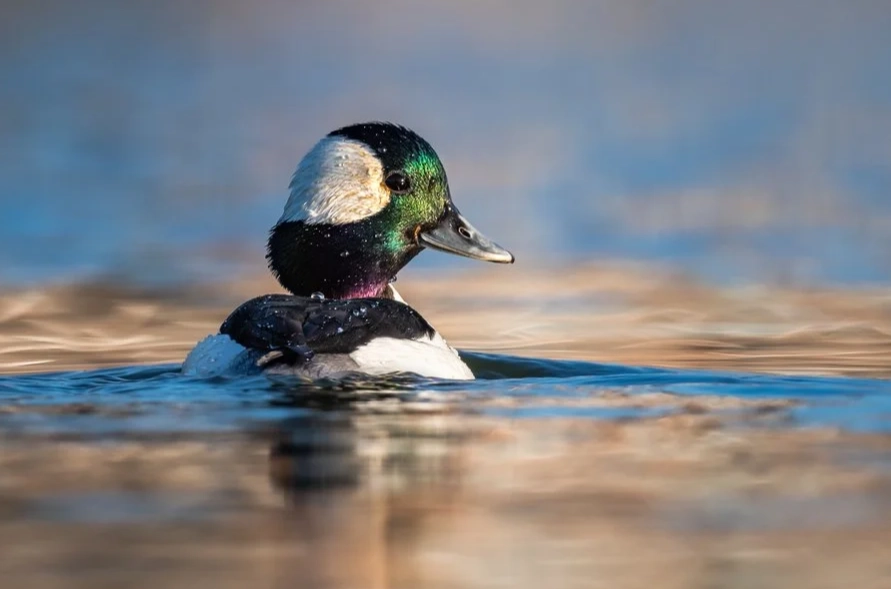
Embrace the Journey
You won't get every ID right. I still don't. The differences between Lesser and Greater Scaup can be maddening. Some hybrids show up and break all the rules. That's okay. The goal isn't perfection; it's participation. It's about seeing more of the world's details.
Start with the common birds in your local park. Master the Mallard, the Gadwall, the Shoveler. Get so familiar with them that you recognize them from a moving car (passenger seat, please!). Then, when a stranger shows up, you'll notice immediately because it breaks the pattern.
The skill of identifying waterfowl is a gift that keeps giving. It turns every patch of water into a potential discovery. It connects you to ancient migration routes and intricate ecological roles. Grab your binoculars, head to the nearest water, and start looking—really looking. You'll be surprised how quickly those anonymous brown blobs turn into old friends with names and stories.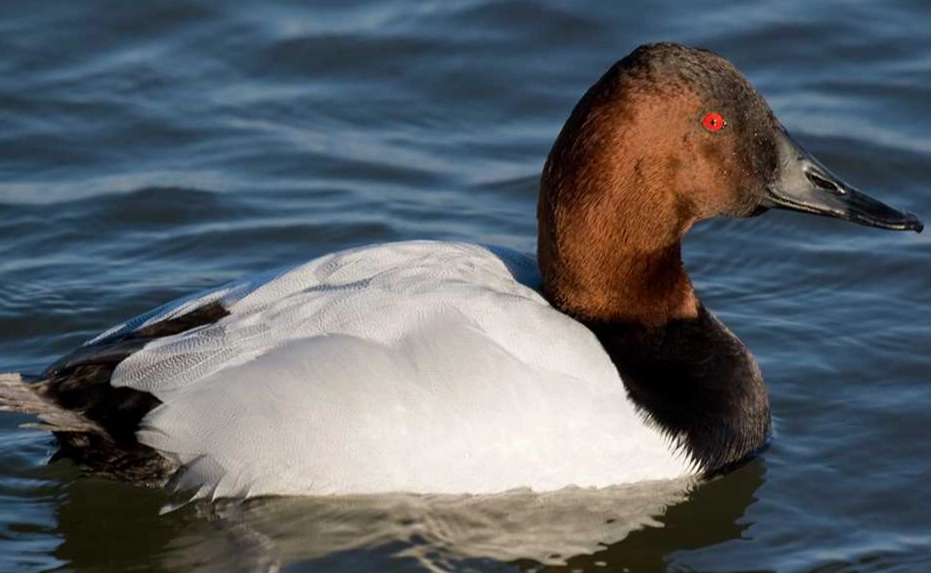
And if you see a duck with a spoon for a face, you'll know exactly what to call it.
Reader Comments