Quick Navigation
- Why Your Location is Your Best Clue
- The Core Tools for Range-Based Bird ID
- A Step-by-Step System for Using Range in the Field
- Common Pitfalls & How to Avoid Them
- Advanced Tactics: Elevation, Pelagic Zones, and More
- Answering Your Top Questions on Range-Based ID
- Putting It All Together: A Real-World Example
Let's be honest. You're out with your binoculars, you spot a bird, and your mind starts racing through the field guide. Is it a Hermit Thrush or a Swainson's Thrush? A Downy Woodpecker or a Hairy? The differences can feel maddeningly subtle sometimes. I've been there, flipping pages back and forth until I just give up and write "small brown bird" in my notebook. Not very satisfying, is it?
But what if I told you there's a secret weapon most beginners overlook? It's not a better camera or more expensive binoculars. It's something much simpler, and it's already in your pocket or on your computer. It's the concept of geographic range. Seriously, learning the art of identifying birds by geographic range was the single biggest leap forward in my own birding skills. It cuts the possibilities down by half, sometimes more, before you even consider a single feather.
Think of it like this: you wouldn't expect to see a penguin in the Sahara, right? That's an extreme example, but the same logic applies everywhere. Every bird species has a map of where it lives, breeds, winters, and migrates through. That map is your first and most powerful filter.
This guide isn't about complex ornithology theory. It's a practical, step-by-step walkthrough of how to use location to your advantage. We'll talk about the tools (most are free), the common pitfalls, and how to think like a birder who knows their geography. By the end, you'll see that identifying birds by their geographic range isn't just a tip—it's a fundamental skill.
Why Your Location is Your Best Clue
Before we dive into the how-to, let's get clear on the why. Why is focusing on geographic range so effective for bird identification?
Birds are creatures of habit, bound by ecology. A bird needs specific food, nesting sites, and climate conditions. A Pinyon Jay is tied to, you guessed it, pinyon-juniper woodlands. A Red-cockaded Woodpecker needs mature pine forests with a specific fungus. Their ranges are drawn by these needs, not by random chance. So, when you're in a specific place—say, a coastal marsh in New Jersey in October—the list of probable birds is actually quite narrow. You're looking for salt-tolerant species that are either migrating south or overwintering. That immediately rules out hundreds of other species from your mental checklist.
I remember a trip to southern California. I saw a medium-sized, all-dark bird with a long tail swooping over a canyon. My first, excited thought was "Common Raven!" But I paused. I checked the range map on my app. Turns out, Common Ravens are pretty rare in that exact urban-coastal zone. The far more likely candidate, given the precise location, was a Great-tailed Grackle. A quick check of the tail shape and eye color confirmed it. Without that geographic reality check, I'd have logged the wrong bird. It happens to everyone, but it doesn't have to.
Location first. Details second. It saves so much time.
The Core Tools for Range-Based Bird ID
You don't need to memorize every range map (thank goodness). Today's birders have incredible digital tools that do the heavy lifting. Here are the non-negotiables.
1. eBird & The Merlin Bird ID App (Your Dynamic Duo)
If you only use one tool, make it this combo from the Cornell Lab of Ornithology. They are game-changers for bird identification by range.
eBird is a global database of bird sightings. Its magic lies in the "Explore" tools. You can pull up a "Hotspot" (a specific birding location) and see a bar chart showing which birds are seen there in every single week of the year. Going to Central Park in New York on May 10th? The bar chart will show you that's peak time for warblers like the Black-throated Blue, but you're very unlikely to see a Dark-eyed Junco (they've mostly moved north by then). This temporal layer on top of the spatial map is incredibly powerful.
Merlin Bird ID is the identification wizard. When you use its "Photo ID" or "Sound ID" features, it doesn't just compare your observation to all birds. It first filters to the birds expected in your location and on that specific date, using eBird's massive dataset. This context is what makes its suggestions scarily accurate. It's literally built on the principle of identifying birds by geographic and temporal range.
Pro Tip: Always allow Merlin/ eBird to use your precise location. The more accurate your pin on the map, the better the filtered list of birds will be. "Near San Francisco" is okay, but "Point Reyes National Seashore, Clem Miller Trailhead" is perfect.
2. Understanding Range Maps: More Than Just a Blob of Color
Range maps in field guides or on sites like the Audubon Field Guide can look simple, but they tell a detailed story. You need to know how to read them.
Look for these key details on a good range map:
- Breeding Range (often solid color): Where the bird nests and raises young in summer.
- Non-breeding/Wintering Range (often a different pattern): Where the bird spends the winter.
- Year-Round Range (often a combination): Where the bird lives permanently.
- Migration Routes/Passage (often indicated with arrows or shading): The paths they take between breeding and wintering grounds. This is crucial—a bird may only be in your area for a few weeks!
Let's take the Swainson's Thrush. Its map shows breeding in the boreal forests of Canada and the northern US. Its wintering range is in Central and South America. The entire central US is just a migration corridor in spring and fall. So if you see one in Kansas, it's almost certainly May or September, not July. That context changes everything.
Here’s a quick comparison of how range clarifies confusion between two commonly mixed-up species:
Tends to be more tied to larger, mature forests. Less common in suburban backyards than the Downy in many eastern areas. Its range is slightly more restricted, especially in the arid southwest.
The dividing line is arguably the best example of range-based ID. They hybridize only in a very narrow zone. If you're north of a line (roughly through Kansas, Missouri, Illinois, New Jersey), think Black-capped. South of it, think Carolina. Your location gives you a 95% confident answer before you hear its song.
See above. Range is the primary field mark.
| Bird Species | Key Visual Similarity | How Geographic Range Solves It |
|---|---|---|
| Downy Woodpecker | Small, black-and-white, similar pattern to Hairy Woodpecker. | Widespread across most of the US and Canada in a variety of woodlands, even suburbs. |
| Hairy Woodpecker | Looks like a larger Downy, bill is much longer. | Tends to be more tied to larger, mature forests. Less common in suburban backyards than the Downy in many eastern areas. Its range is slightly more restricted, especially in the arid southwest. |
| Black-capped Chickadee | Nearly identical to Carolina Chickadee in the field. | The dividing line is arguably the best example of range-based ID. They hybridize only in a very narrow zone. If you're north of a line (roughly through Kansas, Missouri, Illinois, New Jersey), think Black-capped. South of it, think Carolina. Your location gives you a 95% confident answer before you hear its song. |
| Carolina Chickadee | Nearly identical to Black-capped Chickadee. | See above. Range is the primary field mark. |
A Step-by-Step System for Using Range in the Field
Okay, you have the tools. How do you actually use them in a systematic way? Here’s my personal workflow.
Step 1: Pre-Trip Homework. Never go in blind. The night before, I open eBird on my computer. I find the hotspot or region I'm visiting. I look at the "Recent Checklists" to see what's being seen right now. Then I study the "Bar Chart" for that location. This gives me a target list of 20-50 likely species instead of the 700 in my whole field guide. I mentally note a few "possibles" that would be rare but exciting.
Step 2: The On-Site Filter. When I see an unfamiliar bird, I don't grab the book first. I ask: "What habitat am I in?" (deep forest, marsh edge, suburban garden). Then I pull out Merlin and open the "Bird ID" wizard. I answer its questions: size, colors, behavior, location (auto-filled). The list it generates is my geographic and habitat-filtered shortlist. This process of identifying birds by geographic range happens in seconds.
Step 3: The Visual Confirmation. Now, with my shortlist of 5-10 likely candidates, I look at the pictures and details. The differences become much easier to spot because I'm not comparing it to a lookalike from another continent. I'm comparing it to the few species it could realistically be. Is the eye-ring complete or broken? Does it have wing bars? This focused comparison is where the real identification happens.
Watch Out! Don't become a slave to the range map. Birds can and do show up outside their documented ranges. These are called "vagrants" or "accidentals." They're the exceptions that prove the rule. If you see something truly bizarre, document it thoroughly (photos, notes) and consider submitting it to your local bird records committee. But your first assumption should always be the likely, in-range species.
Common Pitfalls & How to Avoid Them
Even with this approach, mistakes happen. Here are the big ones I've made or seen others make.
Pitfall 1: Ignoring Season. This is the #1 error in identifying birds by geographic range. A range map shows where a bird can be, but not *when*. The Scarlet Tanager is a classic. Its breeding range covers the eastern US. In July in Ohio, a bright red bird with black wings is a Scarlet Tanager. In December in Ohio, a bright red bird with black wings is almost certainly a male Northern Cardinal—the Tanager is long gone in South America. Always layer season on top of location.
Pitfall 2: Overlooking Habitat. Range maps are broad. Within that range, a bird needs its specific home. You won't find a Marsh Wren in a dry upland forest, even if the map shows it in your state. The habitat is a sub-filter within the geographic range. eBird's hotspot data is great for this because it shows what's in that exact patch of habitat.
Habitat is range on a micro-scale.
Pitfall 3: Assuming Pets/Escapes. In urban areas, always consider the possibility of a cage bird that got out. A bright green parakeet in Chicago is more likely to be someone's lost Budgerigar than a truly wild, range-defying species. Check local regulations and escapee lists. The American Birding Association has guidelines on counting introduced species.
Advanced Tactics: Elevation, Pelagic Zones, and More
Once you've got the basics down, you can get even more precise. Geography isn't just horizontal; it's vertical.
Elevation: In mountainous areas, a drive up a mountain can change the birdlife as dramatically as driving 500 miles north. This is called "life zones." A species like the Clark's Nutcracker is tightly linked to high-elevation conifer forests. Seeing one at sea level would be bizarre. Apps like Merlin often account for elevation if your location data is good.
Pelagic (Ocean) Zones: Identifying seabirds is all about knowing how far from shore you are. Some species, like the Northern Gannet, may come close to land in winter. Others, like albatrosses, are found only far out over deep, cold water. Your "range" here is distance from the coastline and water temperature.
"The map is not the territory, but for a birder, the map is the first and most important guide to the territory." This old saying among birders captures it perfectly. You use the map to understand what's probable, then your eyes and ears to confirm it on the actual territory.
Answering Your Top Questions on Range-Based ID
Let's tackle some specific questions I get all the time. These are the real head-scratchers.
What if two lookalike birds' ranges overlap completely?
This is where your other skills come in. Range got you to the shortlist of two. Now you need the finer details: song (often the best differentiator), subtle plumage, behavior, or even habitat preference within that overlap zone. For example, Willow and Alder Flycatchers are virtually identical in looks and have overlapping ranges. You *need* to hear their song to tell them apart for sure. Range did its job by narrowing it down to the *Empidonax* flycatchers of your area.
How accurate are the digital range maps?
Incredibly accurate for most common species, and they're getting better every day because they're powered by real citizen science data from eBird. They dynamically show changes too, like northward shifts due to climate change or the spread of invasive species. They are far more current than the static maps in a printed field guide from 10 years ago. For the latest on species distributions, you can also consult resources like the Birds of the World online database, which provides detailed, scholarly range descriptions.
Can I still use my old printed field guide?
Absolutely! But use it smarter. Don't start on page one. Use the index to look up the birds on your Merlin-generated shortlist. The printed guide often has more nuanced illustrations and text about behavior. The combo of digital for filtering and printed for deep study is a powerful one. I still love my Sibley guides for this.
I think some apps make it too easy, you know? You just point and click and get an answer. You don't always learn *why*. The old guide forces you to engage with the details, and when you've pre-filtered by range, that engagement is focused and productive, not overwhelming.
Putting It All Together: A Real-World Example
Let's walk through a scenario. It's early September, and you're in a small woodland patch in central Texas. You see a warbler. It's yellow below, olive above, with faint streaking on the sides. You feel the panic—there are so many warblers!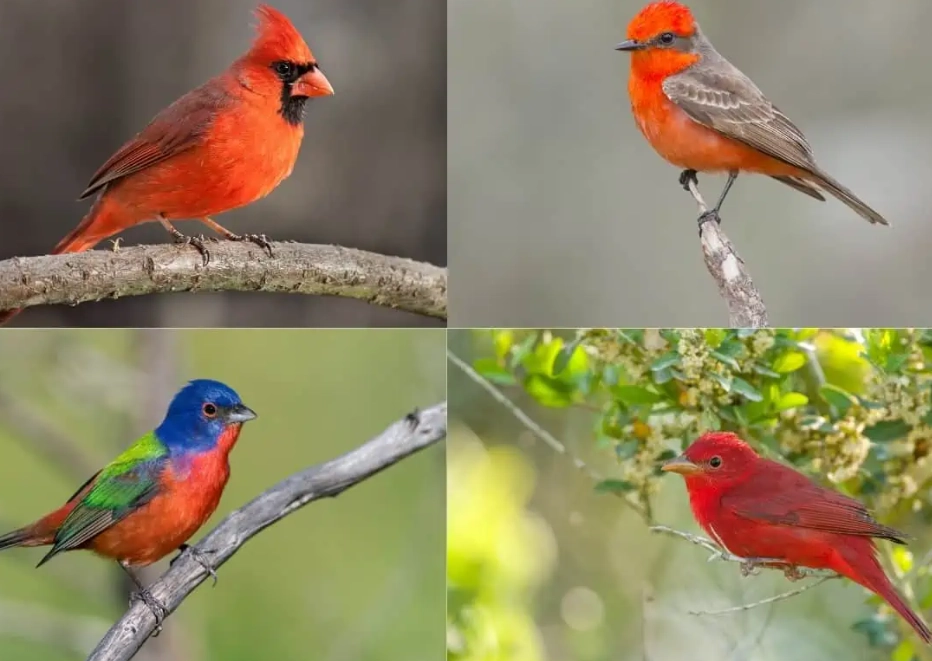
Stop. Use the system.
- Location & Date: Central Texas, September. This is major fall migration territory for warblers heading south.
- Habitat: Woodland edge.
- Open Merlin Bird ID: Enter size (sparrow), main colors (yellow, olive), behavior (hopping in foliage). Location is auto-set. It generates a shortlist. Prominent candidates: Orange-crowned Warbler, Pine Warbler, Tennessee Warbler, maybe a young Magnolia Warbler.
- Apply Range/Season Knowledge:
- Pine Warbler? Mostly a permanent resident in East Texas pine woods. Less likely here in central deciduous woods in fall.
- Tennessee Warbler? A common migrant through Texas in fall. Very likely.
- Orange-crowned Warbler? Winters commonly in Texas, but early September might be a bit early for large numbers. Possible.
- Magnolia Warbler? A migrant, but its peak through Texas is a bit later (October). Less likely, but not impossible.
- Visual Confirmation: Look at the shortlist pictures. The bird has a sharp, pointed bill and a faint eye-line. The Tennessee Warbler has a very sharp bill and a strong eye-line. The Orange-crowned is drabber with a more broken eye-ring. The evidence points strongly to a Tennessee Warbler, which aligns perfectly with the most likely candidate based on location and timing.
See how that worked? You went from "a warbler" to a confident ID by systematically applying geographic and temporal filters. That's the power of this method. It turns confusion into a logical process.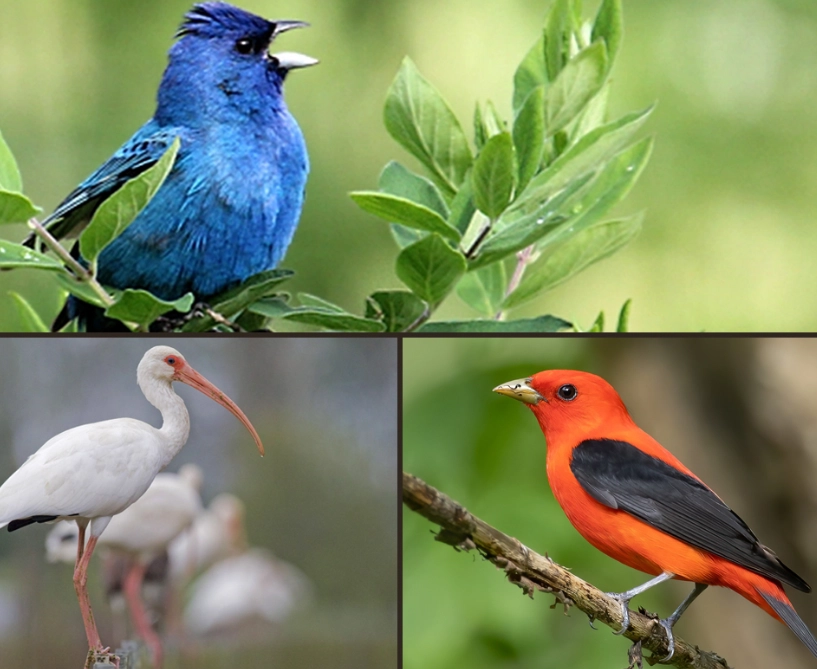
The goal of identifying birds by geographic range isn't to make birding robotic. It's to remove the noise so you can truly see and appreciate the bird in front of you. It builds your knowledge from the ground up, based on the real-world patterns of nature. It makes you a more connected, observant, and ultimately, more successful birder. Now get out there, look at a map, and then look through your binoculars. You'll be amazed at the difference it makes.
Reader Comments