Quick Guide
It happens more often than you think. You're out in the garden, walking the dog, or just getting the mail, and there it is—a tiny, fluffy (or maybe bald and awkward) baby bird on the ground. Your first instinct is probably a mix of "Aww!" and sheer panic. Your brain immediately fires the question: How do I know what baby bird I found? Is it a robin? A sparrow? Something rare? And more importantly, does it even need my help?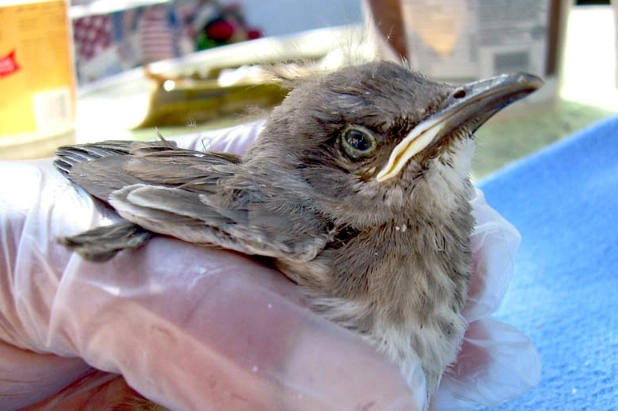
I've been there. I've crouched on the sidewalk, trying to coax a screeching fledgling away from a busy path, and I've also made the mistake of "rescuing" a bird that was perfectly fine being watched by its parents from a nearby bush. It's a confusing situation, and the internet is full of conflicting, sometimes downright bad advice.
This guide is different. We're going to cut through the noise. Forget complex scientific jargon for a minute. We're going to walk through this step-by-step, like you're texting a friend who knows a bit about birds. We'll focus on practical observation, safety (for you and the bird), and finally, answering that core question: how do I know what baby bird I found? Let's start with the single most important step, one that most people skip.
The First Critical Step: Is It a Nestling or a Fledgling?
Before you even think about species, you need to answer this question. It changes everything. This is the fundamental fork in the road that tells you whether the bird is in trouble or just going through a normal, clumsy life stage.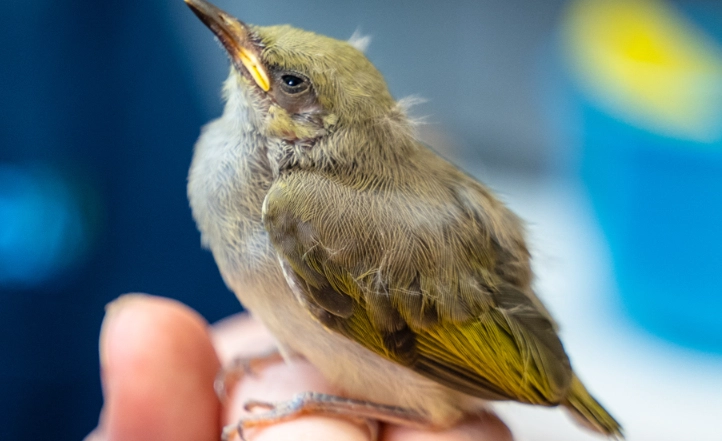
Here’s a quick breakdown. I wish someone had given me this clear comparison when I found my first bird.
| Feature | Nestling | Fledgling |
|---|---|---|
| Stage | Too young to be out of the nest. | Teenager bird. Left the nest to learn to fly. |
| Feathers | Patchy, fluffy down. May look bald or have sheathed feathers (like little pins). | Mostly feathered like an adult, but tail/wings might be short. |
| Mobility | Can't walk, hop, or perch well. May shuffle weakly. | Can hop, walk, and perch on branches. Flutters but can't fly strongly. |
| Location | ON THE GROUND, away from any nest. This is a problem. | On the ground, in bushes, on low branches. This is NORMAL. |
| Parental Care | Cannot survive without parents feeding it in the nest. | Parents are almost certainly nearby, watching and feeding it. |
| Your Action | Likely needs help. Try to renest if safe. | Leave it alone. Monitor from afar. |
See the difference? It's huge. A fledgling on the lawn, looking lost, is almost always fine. Its parents are probably off getting food and will return. If you stand there for 45 minutes, you'll likely see a frantic adult bird swoop in with a bug.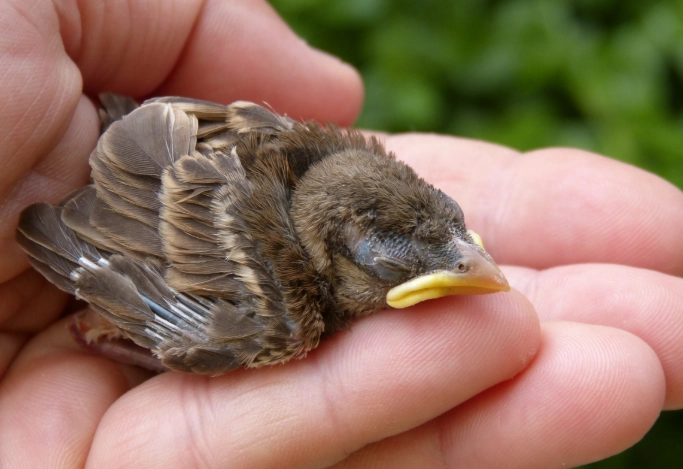
So, you've observed from a distance. You now know if you're dealing with a true emergency (a nestling) or a bird in training (a fledgling). This is the foundation. Now, let's say you've determined the bird genuinely needs intervention, or your curiosity is just killing you. How do I know what baby bird I found for real? Time for some detective work.
The Bird Detective Kit: Safe Observation for Identification
You're not going to need a magnifying glass, but you do need your eyes and a bit of patience. The goal is to gather clues without stressing the animal. Remember, if it's a healthy fledgling, you're just a curious observer. If it's an injured or orphaned nestling, you're gathering info to give to a wildlife rehabilitator.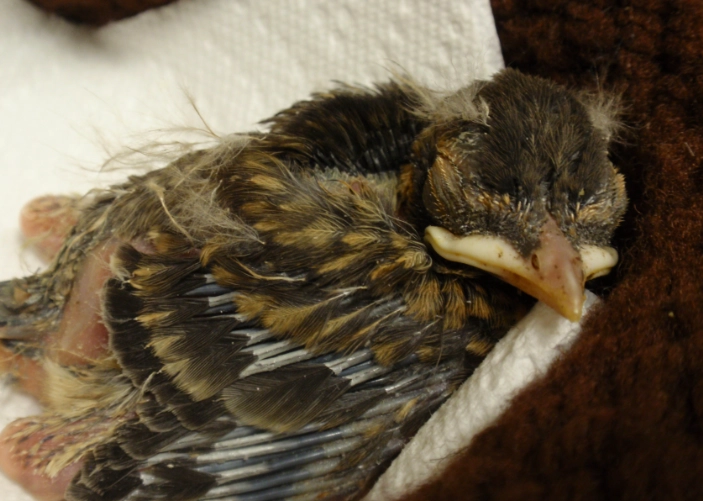
Clue #1: Location, Location, Location
Where did you find it? This isn't a perfect science, but it hints at habitat.
- Suburban lawn or garden: Think common yard birds. Robins, sparrows, starlings, blue jays, cardinals, mourning doves.
- Under trees in a wooded area: Could be woodpeckers, thrushes, chickadees, wrens.
- Near water (pond, creek): Ducks, geese, swallows, red-winged blackbirds.
- In a field or open area: Meadowlarks, killdeer (these often nest on the ground!), sparrows.
Clue #2: Size and Shape (The Silhouette)
Compare it to everyday objects. Don't guess "small." Be specific.
- Is it hummingbird-sized (tiny, could fit in a teaspoon)?
- Sparrow-sized (fits in your palm)?
- Robin-sized (fills your hand)?
- Crow-sized (large)?
- What's the beak like? Is it short and stubby (sparrow, finch), long and pointy (robin, starling), or really long and dagger-like (heron, kingfisher—if you find one of these babies, call a pro immediately)?
- Are the legs long (like a shorebird) or short?
Clue #3: Colors and Markings (But Be Careful!)
Baby birds are masters of disguise and often look nothing like their parents. Don't expect a bright red cardinal baby—it will be a dull, grayish-brown with a dark beak. Focus on patterns.
- Speckles or spots? Many thrushes (like robins) have spotted breasts as youngsters.
- Streaks? Lots of sparrows have streaked chests.
- Uniformly gray or brown? Could be a dove, a starling (before it gets speckled), or many other species.
- Bright colors anywhere? Even a hint of yellow at the beak base (gape) is a big clue. Some babies have brightly colored mouth linings to guide parents.
Look, I'll be honest. Some baby birds are just... generic little brown blobs. Especially at the nestling stage. That's okay. The combination of clues is what matters.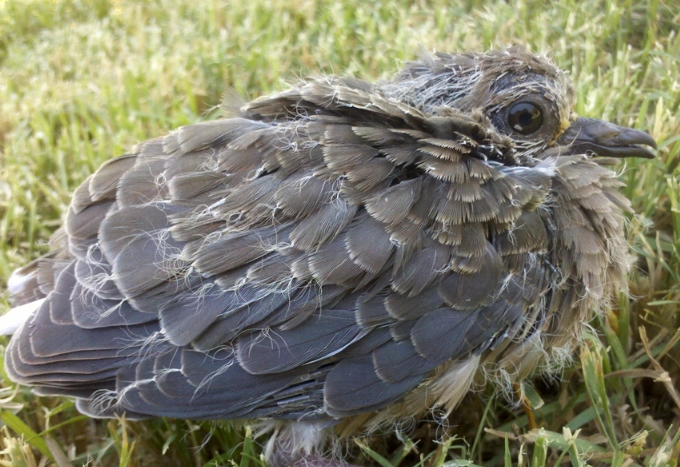
Putting the Clues Together: Common Baby Birds You Might Find
Let's apply the detective work. Here are some of the most frequent "found baby bird" suspects in North America. This isn't an exhaustive list, but it covers a big chunk of the cases.
American Robin Nestling/Fledgling
You'll find these everywhere in spring. Nestlings: Pinkish skin, sparse gray down, and a prominent yellow "gape" (the inside of their mouth). They have a big, rounded belly. Fledglings: They look like spotty, awkward versions of their parents. Brown body with a reddish-orange wash on the belly, and dark spots all over the chest. They're often seen hopping on lawns, and their parents are usually very loud and defensive nearby.
House Sparrow or Similar Small Brown Bird
Very common. Nestlings are often pinkish-gray with some down. The tricky part is that many small songbird babies look similar. Fledglings will be a dull, streaky brown. Their beak is usually a conical seed-eater shape (short and thick). They often end up in gutters, on patios, or near buildings.
Mourning Dove
These babies look almost comically different from their sleek parents. They are covered in a scaly-looking, tan-colored down and have a bluish beak with a black tip. They grow incredibly fast and can look almost full-sized but still fluffy and incapable of good flight. People often mistake them for sick adults.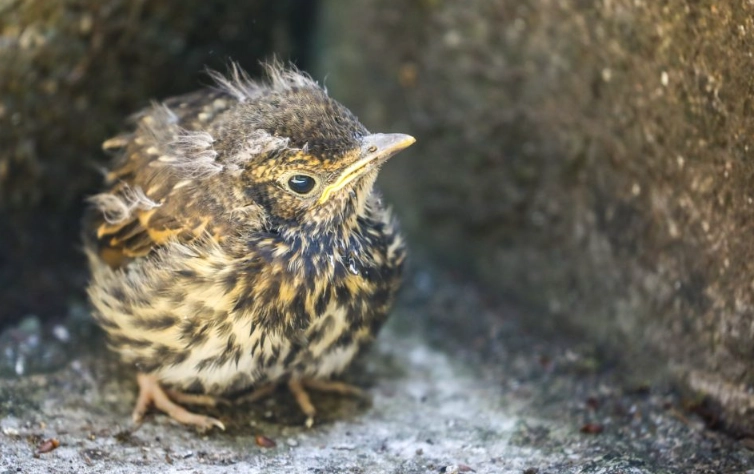
European Starling
Nestlings are a dull gray-brown with a yellow gape. Fledglings are a uniform, soft gray-brown all over, with a dark bill. They lose the baby gray and develop the glossy, speckled feathers later. They are often found in cavities or on the ground near buildings.
Northern Cardinal
Baby cardinals are a lesson in "don't judge by color." They are a pale, grayish-brown all over with a dark, almost black beak. You might see the faintest hint of red feathers starting to come in on a fledgling's wings or tail. The signature crest is short and fuzzy.
Okay, you've done your detective work. You have a photo, you've noted the size, the location, the markings. You have a rough idea. But what if you're still stumped? Or what if you need a definitive answer because the bird needs professional care?
Your Best Tools for Final Identification
This is where we bridge your observations with expert resources. Don't just Google "baby bird pic"—you'll get a million unrelated results.
Use a Specialized Database: Merlin Bird ID
I can't recommend the Merlin Bird ID app from the Cornell Lab of Ornithology enough. It's free and a game-changer. You can use their "Photo ID" tool. Upload the picture you took (even a bad one), and it will use AI to suggest species. Even better, answer their simple questions (size, colors, location) in the "Step-by-Step ID" mode. It's built by one of the world's top bird science institutions, so the info is reliable.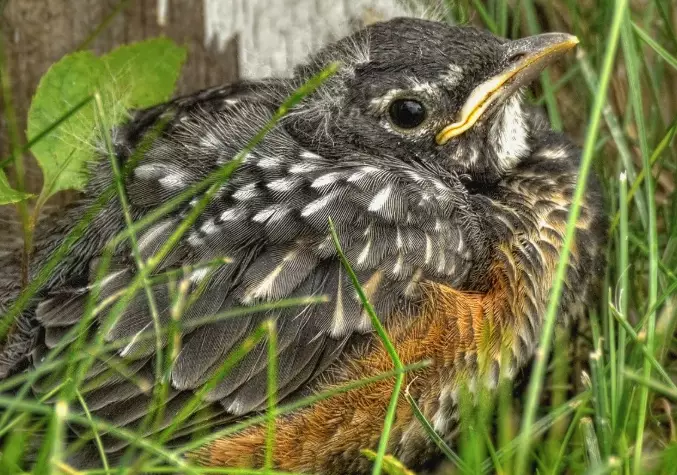
Consult Regional Resources
A baby bird in Florida is different from one in Oregon. Search for "[Your State] wildlife rehabilitation association" or "[Your Region] common nestling birds." These local groups often have guides tailored to your area. For example, the California Department of Fish and Wildlife has general advice, while a local group like a county wildlife center will have specific info.
The Nuclear Option: Contact a Wildlife Rehabilitator
If the bird is injured, cold, or clearly orphaned (you've watched for hours and no parent comes), your job shifts from identifier to rescuer. The best thing you can do is get it to a professional. Use the Humane Society's wildlife rehabilitator directory or Animal Help Now's site/app (ahnow.org). When you call, they will ask you all the questions we've covered. Your detective work will pay off. You can say, "I found a sparrow-sized fledgling with a streaky chest and a short beak on my lawn. It hasn't moved much in two hours, and I haven't seen parents." That's gold to them.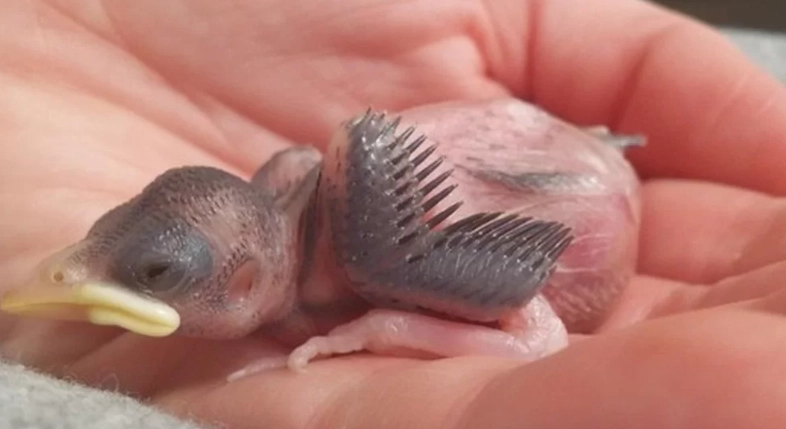
Answering the Real Questions: Your Baby Bird FAQ
Look, the process of figuring out how do I know what baby bird I found is really a process of learning to see the world from the bird's perspective. It's about asking, "Is this normal for you, or is this a crisis?" More often than not, it's normal, and our human impulse to help is the very thing that can cause harm.
Wrapping It Up: Your Action Plan
Let's make this simple. Here’s your mental checklist the next time you see a baby bird on the ground:
- Pause & Observe. From a distance. Is it fluffy and feathered (fledgling) or naked/patchy (nestling)? Can it hop?
- Scan for Parents. Watch for 45-60 minutes. Do you see adult birds in the area, chirping anxiously or delivering food?
- Assess for Danger. Is it in immediate risk from cars, cats, or pedestrians? If it's a fledgling, you can gently move it to the nearest shrub or safer spot. If it's a nestling, see if you can locate and renest it.
- Gather Intel. If intervention is needed, note the size, colors, beak shape, and location. Take a photo.
- Identify & Act. Use Merlin Bird ID for curiosity. If the bird is injured, cold, or orphaned, contain it safely (ventilated box, no food/water, warmth), and use AHNow.org to find a local wildlife rehabilitator.
The journey from "What is this?" to "I know what to do" is empowering. You're not just figuring out how do I know what baby bird I found; you're learning to be a better neighbor to the wildlife that shares your space. You're moving from panic to informed, compassionate action. And that's the best outcome for everyone—especially the little, fluffy (or awkwardly bald) bird on the ground.
Good luck out there.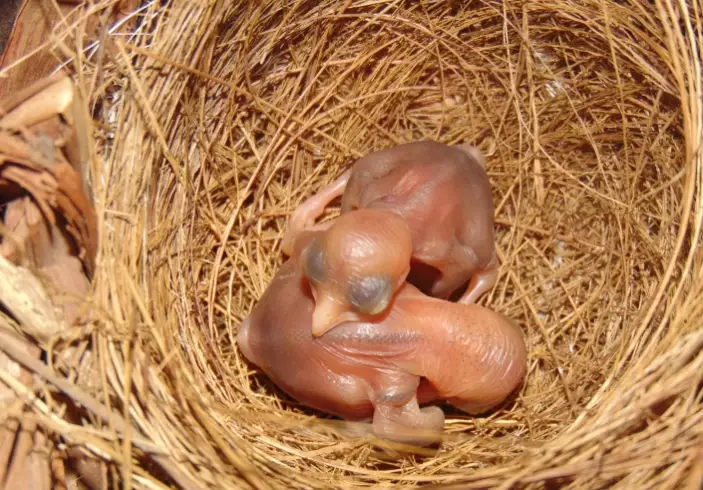
Reader Comments