That electric blue flash. It’s over in a second, a streak of color low over the water that leaves you doubting your own eyes. Was it really a kingfisher? For years, they were just a myth to me, a bird other people saw. I’d stand by rivers feeling a bit foolish. Then I figured out the rules—not just where to look, but how to look. It wasn’t about luck. It was a system.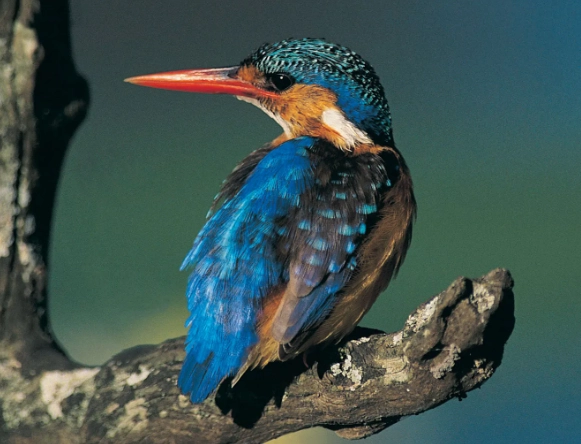
This guide is that system. We’re going past the basic facts. I’ll show you the specific perches they love, the binoculars that actually work, the camera setting most people get wrong, and the one mindset shift that made all the difference for me.
Your Quick Path to Kingfisher Success
Essential Gear for Kingfisher Watching
You don’t need a fortune, but you need the right tools. A common mistake is using binoculars meant for wide landscapes. Kingfishers are small (sparrow-sized) and often distant. You need clarity and close focus.
| Gear | Why It Matters | My Recommendations & Notes |
|---|---|---|
| Binoculars | Critical for spotting and identifying distant, stationary birds on perches. | **8x42 is the sweet spot.** 8x magnification is steady enough, 42mm objective lenses gather light. Brands like Vortex Diamondback HD or Nikon Monarch 5 offer great value. Avoid compacts for this job—their light gathering is poor at dawn/dusk. |
| Clothing | Camouflage isn't the goal; not scaring the bird is. Movement and silhouette are what they notice. | Muted colors (greens, browns, grey). Avoid bright whites or blues. The most important factor? Staying still. A person in a bright shirt who doesn't move is less threatening than someone in camo shifting their weight. |
| Notebook & App | Logging sightings reveals patterns—times, perches, weather—turning chance into predictability. | I use the Merlin Bird ID app by the Cornell Lab of Ornithology for sound ID and logging. A small paper notebook is also perfect for sketching perch locations on a crude map of your spot. |
| Patience | Your most important piece of equipment. It’s not optional. | Plan to stay in one good spot for at least 45 minutes. The first 20 are for the environment to settle down after your arrival. Kingfishers operate on their own schedule. |
I learned the hard way that cheap binoculars with fuzzy edges made me miss birds. Upgrading to a mid-range pair with a sharp image and a close focus of around 2 meters (for observing nearby insects or details) changed the game.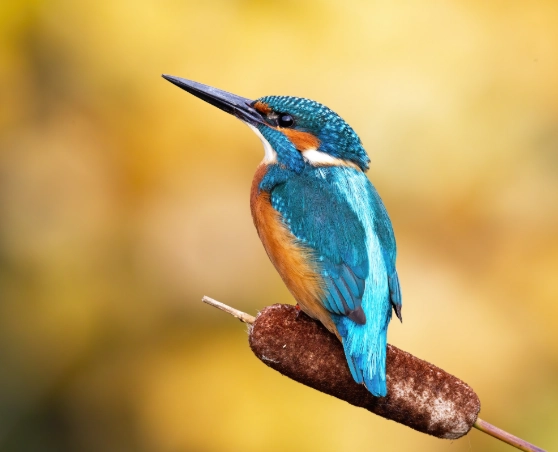
How to Find Kingfishers: Habitat and Behavior
Forget randomly checking any body of water. Kingfishers are specialists. They need two things: food and a home.
Food means fish. Small ones, 3-5cm long. Look for clear, slow-moving or still water where fish are visible near the surface. Canals, slow rivers, mill ponds, lakes, and gravel pits are prime. Fast, murky rivers are less ideal.
A home means a vertical earth bank. They tunnel into these to nest. No bank, no breeding kingfishers. This is the golden clue. Scan the water's edge for raw, unvegetated sandy or earthy banks, about 1-3 meters high. Even a short stretch can host a nest.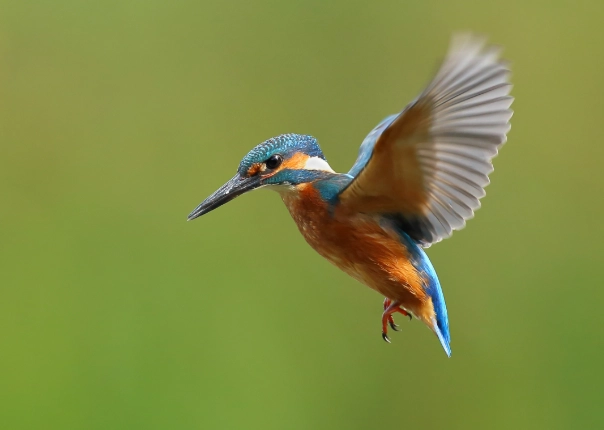
Pro Tip: The Perch Circuit
Kingfishers are creatures of habit. They have a circuit of favorite hunting perches—usually 5-10 spots along a 200-500 meter stretch of water. They’ll hit one, fish, move to the next. Find one perch, wait quietly, and you might see them return or move to the next one in line. Common perches are dead branches overhanging the water, reed stems, or posts.
Timing is everything. They’re most active at dawn and dusk. But on overcast days, they might fish all day. Winter can be better for spotting because there’s less foliage to hide them.
I had my first real, prolonged view on the Norfolk Broads in England, at a place called Cley Marshes. I wasn’t on the main path. I’d found a muddy cut-through to a ditch, flanked by banks. I stood still for twenty minutes. Then, a flash, and it landed on a reed not fifteen feet away. It was the bank that gave it away. I’ve since used that rule to find them in unlikely urban canals.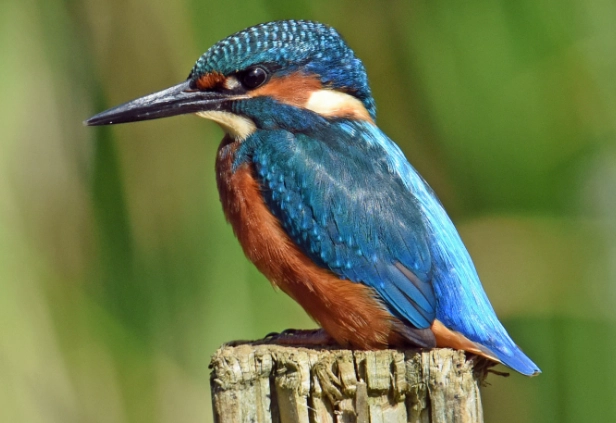
The Biggest Beginner Mistake: Scanning the Water
You look at the water, waiting for that blue bolt. It’s intuitive. It’s also wrong. Kingfishers spend more time perched than flying. Your eyes should be glued to the potential perches 1-3 meters above the waterline. Scan each one methodically. Is that a bump on the branch? A strange color in the reeds? That’s your kingfisher.
How to Identify Different Kingfisher Species
Most people think of the Common Kingfisher (Alcedo atthis), the bright blue and orange European and Asian species. But others exist. Here’s a quick breakdown beyond the common guidebook points.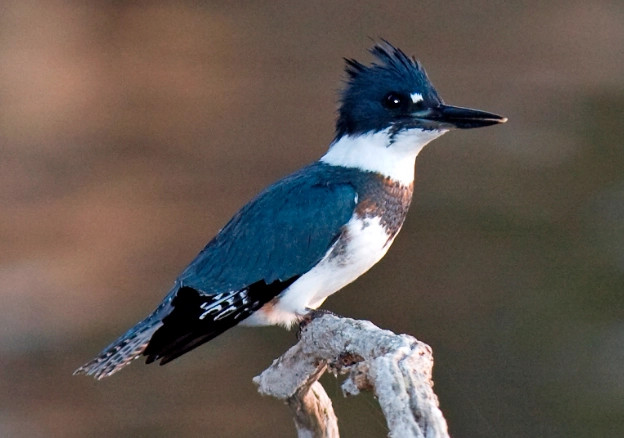
Common Kingfisher: The classic. Sapphire blue upperparts, orange underparts. In flight, it looks like a bright blue streak. The key ID point everyone misses? Check the beak. Males have a completely black lower mandible. Females have an orange-red base to the lower mandible. It’s the most reliable sexing feature.
Belted Kingfisher (North America): Larger, louder, and with a shaggy crest. Blue-grey above, white below with a blue-grey “belt” across the chest (females have an additional rusty belly band). They’re raucous, often giving a loud, rattling call before you see them. They favor similar habitats but are more tolerant of wider, faster rivers.
Giant Kingfisher (Africa): Massive—the size of a crow. Black and white spotted plumage, with a huge dagger of a beak. It’s unmistakable. It hunts bigger fish and crabs. You won’t confuse this with anything else.
The sound is a huge clue. The Common Kingfisher’s call is a short, sharp, high-pitched “chee” or a brief trill. The Belted Kingfisher’s rattle is unmistakable. Use the Merlin app to familiarize yourself with these calls—you’ll often hear them before you see them.
How to Photograph Kingfishers: Techniques and Settings
This is where gear and patience collide. You can get shots with a superzoom bridge camera or a DSLR/mirrorless. The principles are the same.
1. Shutter Speed is King. Forget “auto” mode. Their flight is a blur. To freeze one, you need a minimum of 1/2000th of a second. I aim for 1/3200th. This means shooting in Shutter Priority (S or Tv) or Manual mode. Your camera will compensate by widening the aperture and raising ISO. Let it. A noisy, sharp shot is better than a clean, blurry one.
2. Pre-focus on the Perch. This is the pro move. Find an active perch. Set up your tripod (yes, use one), and manually focus on that spot. Use back-button focus to lock it. When the kingfisher lands, it’s already in focus. Half the battle is won.
3. The Setup:
- Mode: Shutter Priority (S/Tv).
- Shutter Speed: 1/2000s to 1/4000s.
- Aperture: As wide as your lens allows (e.g., f/5.6) to let in light.
- ISO: Auto-ISO, with a maximum limit of maybe 3200 or 6400 depending on your camera’s noise performance.
- Drive Mode: High-speed continuous (burst mode).
- Focus: Single-point AF, or manual if you’re pre-focused on a perch.
I spent a whole winter weekend at a hide where a kingfisher was known to visit. I got hundreds of shots of an empty perch. On the second afternoon, it came. Because I was pre-focused and my shutter was set to 1/3200th, I got a burst of sharp shots as it landed. The one where it’s just touching down, with a tiny splash from its feet, is still my favorite. It wasn’t luck. It was the system working.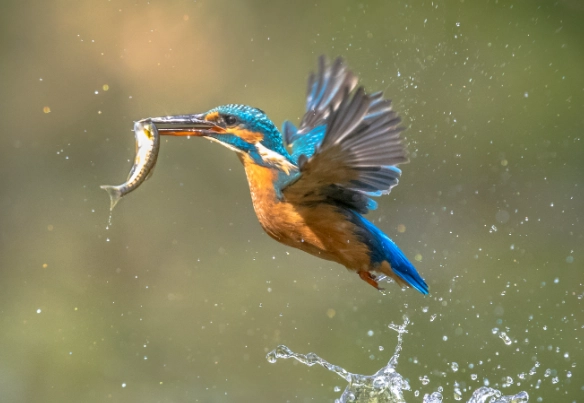
Your Kingfisher Questions Answered
Can I find kingfishers in a city park?
It's possible but unlikely in a busy, manicured urban park. Kingfishers need clean, slow-moving or still water with fish, and vertical earth banks for nesting. Look for them along quieter urban river stretches, large canals, or reservoirs with natural banks, especially in suburban fringe areas. A park with a large, fish-stocked pond and an undisturbed bank might host one, but they're sensitive to disturbance.
What's the main difference between male and female common kingfishers?
The key difference is on the lower mandible (beak). In males, the entire lower mandible is black. In females, the base of the lower mandible is orange-red, creating a two-toned look. This is much more reliable than subtle color differences in the plumage, which can vary with light. Under the beak is the first place I check.
What shutter speed do I need to freeze a kingfisher in flight?
Aim for a minimum of 1/2000th of a second. Their flight is a rapid, low blur over water. 1/2000th will freeze the wings and body sharply. If light allows, push to 1/3200th or even 1/4000th for absolute crispness. This often means raising your ISO. A blurry, fast-moving kingfisher shot is almost always due to shutter speed being too slow, not poor focus.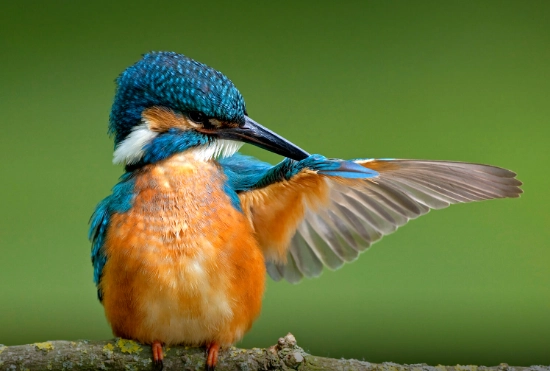
Why do I never see a kingfisher even when I know they're there?
You're probably moving too much and looking in the wrong place. Kingfishers are small and perch motionless for long periods. Instead of scanning the water, train your binoculars on potential perches 1-3 meters above the waterline: overhanging branches, reeds, or posts. Stay still for 15-20 minutes. Your eyes need time to adjust and your brain needs time to parse the scene. Movement spooks them long before they're in your field of view.
Seeing a kingfisher isn’t a lottery ticket. It’s a skill built on understanding a few non-negotiable rules about where they live and how they behave. Get the right gear for the job, learn to read the habitat for banks and perches, and train yourself to wait and watch with purpose. That flash of blue will stop being a myth and start being a regular, breathtaking reward.
Now, go find some water with a bank. And remember, look at the perches.
Reader Comments