Let's cut to the chase. You're here because you want to see a falcon. Not just a blur in the sky, but to really know what you're looking at. Maybe you saw a sleek, fast bird and wondered, or you're planning a trip hoping to catch a glimpse of the legendary Peregrine. I've spent over a decade with my eyes glued to binoculars, from city skylines to remote cliffs, and I can tell you this: falcon spotting is less about luck and more about a specific set of skills. This guide is that skill set.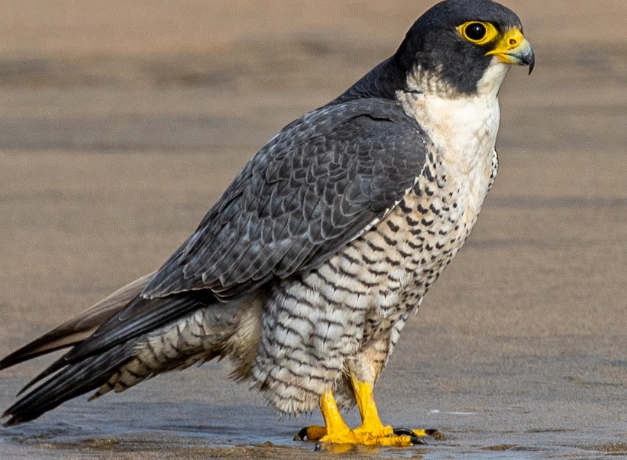
Forget the poetic fluff. We're talking about predators. They're fast, they're efficient, and they don't care if you see them or not. Your job is to learn their rules.
What's Inside This Falcon Guide
How to Identify a Falcon: Key Markers Beyond Size
Everyone starts by asking "how big is it?" It's the wrong question. A Merlin is smaller than a crow, a Peregrine is about crow-sized, and a Gyrfalcon can be bigger. Size varies, and at a distance, it's useless. You need better markers.
The Silhouette is Everything
Look at the wings. Falcon wings are long, slender, and come to a sharp point. Think of a fighter jet. When they flap, it's with rapid, powerful strokes, not the slow, deliberate beats of a heron or the lazy circles of a vulture. In a glide, the wings are often swept back.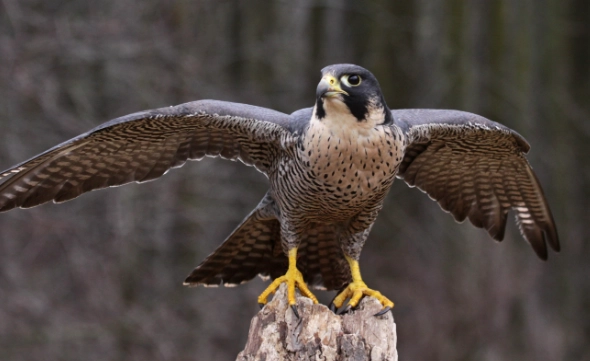
Now the head. Falcons have a rounded, almost helmet-like head. It's blocky. This is different from the more elongated head of an accipiter hawk like a Cooper's Hawk. The beak is short and has a specific, deadly feature: the tomial tooth. It's a notch you can sometimes see in good photos, used to snap the neck of their prey. You won't see it in the field, but knowing it's there changes how you think about them.
The Falcons You're Most Likely to See
North America and Europe are home to a handful of common falcons. Knowing these three will cover 95% of your sightings.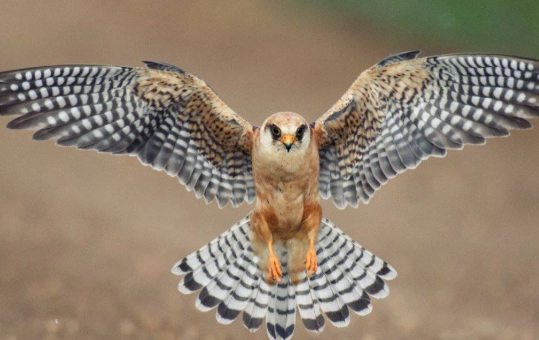
| Species | Key Identification Features | Prime Habitat | Behavior Quirk |
|---|---|---|---|
| Peregrine Falcon | Blue-gray back, barred white underside, distinctive black "helmet" or mustache marking. Powerful, barrel-chested build. | Coastal cliffs, urban skyscrapers, major river valleys. Truly global. | The high-speed stoop (dive). Can exceed 200 mph. Often nests on man-made structures. |
| American Kestrel (or Eurasian Kestrel) | Small, colorful. Rusty back and tail (male), two vertical black facial stripes. Often seen hovering. | Open fields, farmland, roadsides with wires or posts for perching. | Famous for hovering in place while hunting insects and rodents. Our smallest falcon. |
| Merlin | Small, compact, and fierce. Dark streaking below, faint mustache. Wings beat rapidly, flies low and fast. | Open forests, coastal areas, increasingly in towns during migration/winter. | An aggressive, feisty hunter. Often takes birds in flight in acrobatic chases, not high dives. |
I remember my first clear Peregrine sighting. It wasn't in a wilderness. It was on the ledge of a bank tower in downtown Cleveland. I almost dismissed it as a pigeon until it turned its head and that iconic black helmet was unmistakable against the gray stone. The lesson? They're where the food is.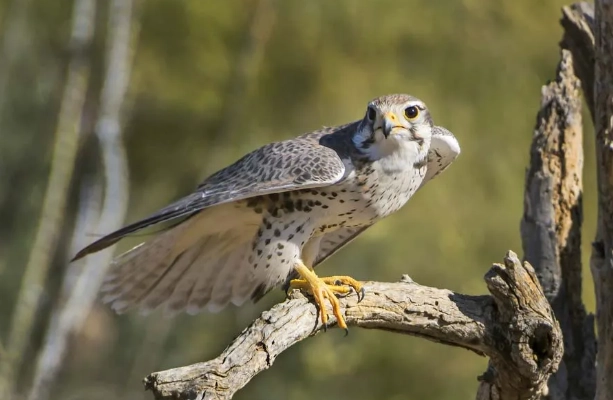
Where and When to Look: Habitats and Seasons
You won't find a forest falcon (well, the Merlin skirts edges). Think open spaces and vertical features.
Coastal Cliffs: The classic Peregrine territory. Check areas like the Channel Islands (UK), the cliffs of Donegal (Ireland), or Lake Superior's north shore. Scan the cliff faces for ledges and dark spots that might be a bird or a nest (eyrie).
Urban Canyons: Cities are modern cliff ranges. Peregrines love them. Look for nest cams on city websites—many major cities like New York, Chicago, and London have them. The Cornell Lab of Ornithology often streams urban nests. Great places to look are cathedral spires, university clock towers, and any tall building near a river or park.
Open Country: This is Kestrel and Merlin domain. Drive any rural road with telephone wires. Kestrels will be perched, scanning the grass. Merlins might zip past, chasing a flock of sparrows.
Timing: Early morning. Always early morning. That's when they're most active hunting. Migration seasons (spring and fall) are fantastic, as birds like Merlins move through areas they don't breed in. Winter can be good for seeing resident birds more clearly against bare trees.
Advanced Watching: Tactics Beyond the Basics
Okay, you know what to look for and where. Now, how do you actually find one?
First, look for the food. See a flock of pigeons or starlings suddenly erupt from a city park? Look up. A Peregrine might be making a pass. Shorebirds scattering on a beach? Same thing.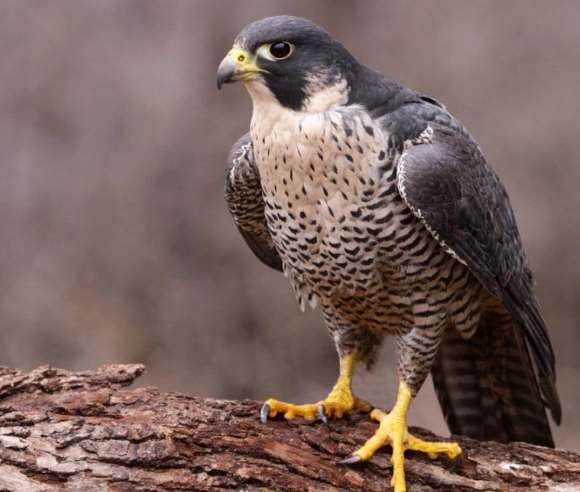
Second, listen. Falcons aren't songbirds, but they have calls. The Peregrine's alarm call is a rapid, harsh "kak-kak-kak." The Kestrel has a shrill "klee-klee-klee." Learning these sounds lets you find birds you can't see yet.
Third, think like a perch. Falcons want a vantage point with a clear view of hunting grounds. Is there a single dead tree in a field? A lone pylon? The highest fence post? Scan those first. I've wasted hours scanning empty sky when the bird was sitting still on an obvious perch I ignored.
Gear & The Most Common Beginner Mistake
You don't need a $3000 spotting scope. Really. A solid pair of 8x42 binoculars is perfect. The 8x means magnification, 42 is the lens diameter (bigger lets in more light). Brands like Vortex, Nikon, and Celestron offer great mid-range options.
The biggest mistake I see? People trying to follow a bird in flight by keeping it in the binoculars. It's nearly impossible. Here's the trick: spot the bird with your naked eyes. Note its location against a stationary background—that cloud, that tree, that building corner. Then, without looking away, bring your binoculars up to your eyes. You'll be looking right at the spot. Now you can fine-tune.
Another mistake: only looking for the whole bird. Look for parts. A dark head on a light ledge. A sharp wingtip against the sky. A silhouette on a wire. Break the scene into pieces.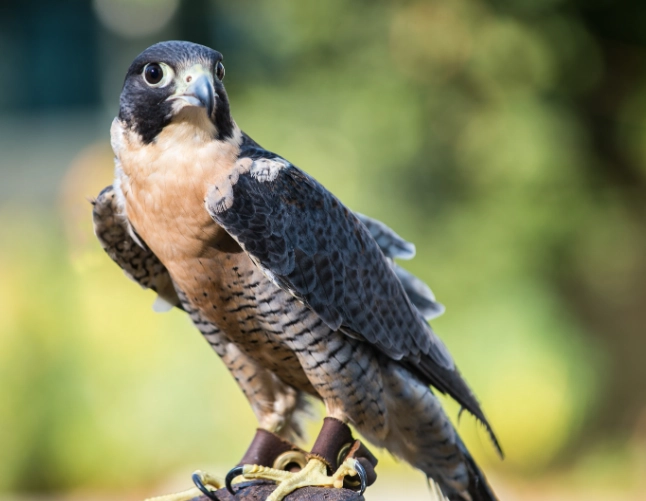
Falcon Watching Questions Answered
It's one of the best places. I've had more reliable sightings in downtown Minneapolis than on remote cliffs in Scotland. They use skyscrapers as artificial cliffs. The prey base (pigeons, starlings) is enormous and year-round. Check local birding forums or Audubon chapters—they often know exact nest sites or favorite perching buildings. Look for whitewash (bird droppings) on ledges.
This trips up everyone. Forget size. Look at the wings and the head. In flight, a falcon's wings are long and pointed like a sickle. A hawk's (like a Red-tailed or Red-shouldered) are broader and rounded. The falcon's head is more rounded; many hawks have a more "peaked" look. Behaviorally, falcons often take prey in mid-air with speed or a dive. Hawks are more likely to snatch from the ground or from a perch. It's a different hunting toolkit.
The first two to three hours after sunrise are golden. The light is low and soft, making details easier to see, and the birds are hungry after the night. They're actively hunting. Late afternoon can be good for a final hunt. Midday, especially in summer, is when they often loaf—rest and digest. You might still see them, but they'll be less active.
No. A huge no. I started with a $150 pair of binoculars. The gear doesn't find the bird; you do. Spending more gets you better light gathering (for dawn/dusk) and sharper optics, but a keen eye is free. Put the money towards gas to get to a good location, or a field guide app. The best investment is your own patience.
Seeing your first falcon clearly, knowing what it is, and understanding a fraction of what it's doing—that's the reward. It turns a random bird into a character in the landscape. It's not about ticking a box on a list. It's about seeing the world with a slightly sharper, wilder edge. Now get out there and look up.
Reader Comments