Quick Navigation
- Anatomy of an Aerial Missile: Built for the Dive
- Deconstructing the Stoop: The World's Fastest Maneuver
- Not Just a Dive Bomber: Other Modes of Peregrine Falcon Flight
- Where and How to Witness This Phenomenon
- Peregrine Falcon Flight in Context: A Comparative Look
- Digging Deeper: Your Questions Answered (FAQ)
- Final Thoughts: More Than Just Speed
Let's cut to the chase. You're not here for a dry, textbook description. You want to feel what it's like. You want to understand the sheer, unadulterated force of nature that is a Peregrine Falcon in full flight. I get it. The first time I saw one—really saw one, not just a blur in a documentary—it wasn't on some remote cliff. It was over a city river, of all places. A slate-gray bullet tearing through the sky, then vanishing. It left me with more questions than answers. How does something that looks so streamlined in a picture become pure velocity in the air? What's actually happening during that legendary dive? This article is my attempt to piece together that wonder, to go beyond the basic "fastest bird" factoid and into the gritty, beautiful mechanics of Peregrine Falcon flying.
The Core Truth: The Peregrine Falcon (Falco peregrinus) isn't just fast. It's the fastest animal on the planet when in a hunting dive, or stoop. We're talking speeds clocked by researchers at over 240 miles per hour (386 km/h). To put that in perspective, it's falling from the sky faster than a Formula 1 car accelerates on a straight. But raw speed is only part of the story.
Anatomy of an Aerial Missile: Built for the Dive
You can't talk about Peregrine Falcon flying without geeking out over the body that makes it possible. This isn't a bird built for graceful, hours-long soaring like an albatross. This is a predator engineered for explosive acceleration and pinpoint strikes. Every part serves the stoop.
The Body Shape: Nature's Perfect Aerofoil
Look at a Peregrine. Notice how compact it is? Long, pointed wings tucked tight against a muscular, barrel-chested body. This isn't an accident. That sleek, tapered shape minimizes drag—the air resistance that tries to slow everything down. It's the same principle behind a fighter jet or a high-speed train. The goal is to slice through the air with as little fuss as possible. When a Peregrine Falcon is flying at high speed, its silhouette is almost like a feathered arrow.
Their wings are stiff and sickle-shaped, perfect for powerful, rapid thrusts. They're not meant for lazy flapping. The aspect ratio (the wings' length relative to width) is high, giving them great lift and agility for their size. But honestly, sometimes I think people over-emphasize the wings alone. The real magic happens when you combine them with everything else.
The Respiratory & Circulatory Super-System
This is where it gets wild. Flying at 200+ mph isn't just a physical strain; it's a physiological marathon. The force of the air at those speeds could literally prevent a human from breathing. So, what does the Peregrine have? Baffles.
Small, bony tubercles inside its nostrils. These act like tiny air dams, disrupting and slowing the incoming air just enough so it can reach the lungs without causing damage. Think of them as built-in, non-mechanical air brakes for its respiratory system. Simultaneously, its heart is pounding, pushing oxygen-rich blood at an incredible rate to muscles working overtime. The cardiovascular system of this bird is, frankly, humbling. Studies referenced by institutions like the Cornell Lab of Ornithology detail how their metabolism and oxygen efficiency are off the charts compared to most other birds.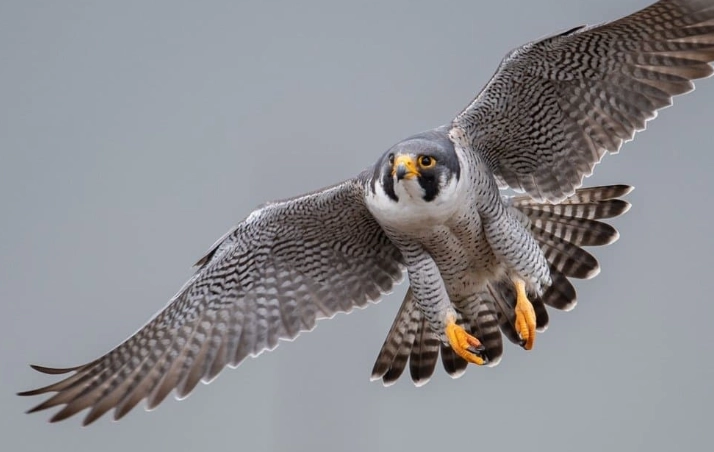
I remember reading about these nasal baffles for the first time and just sitting back in my chair. It's one of those details that makes you realize evolution isn't just about big, obvious changes. It's about perfecting the tiny, critical details that allow the big spectacle—like a 240 mph dive—to even be possible.
The Ultimate Weapon: The Tomial Tooth
Speed is useless if you can't finish the job. Peregrines primarily hunt other birds, striking them mid-air. At the point of impact, the force alone is often enough to kill or stun the prey. But to make sure, the Peregrine has a notched, razor-sharp edge on its upper beak called the tomial tooth. It's not a real tooth, but a specialized adaptation. They use it to swiftly sever the spinal cord of their prey. It's a clean, efficient killing tool that matches the brutal efficiency of their flight. The spectacle of a Peregrine Falcon flying culminates in this moment of precise, lethal contact.
Deconstructing the Stoop: The World's Fastest Maneuver
Alright, let's break down the main event. The stoop. The dive. This is what everyone wants to understand. It's not just "flying down fast." It's a complex, multi-stage aerial maneuver.
- The Scan & Ascent: It often starts high, sometimes thousands of feet up. The Peregrine rides thermals or simply climbs with powerful wingbeats, scanning the ground and air below with vision that's arguably the best in the animal kingdom. They can spot a pigeon from over a mile away.
- The Tuck & Drop: Once a target is locked, the falcon stops flapping. It pulls its wings in tight, close to its body, forming that iconic bullet shape. It might make minor adjustments with its tail feathers. Then, it simply lets gravity take over, pointing its head straight down.
- The Acceleration & Control: This is the freefall. Gravity accelerates the bird rapidly. It's not passive, though. The falcon is constantly making micro-adjustments with its wings and tail to stay on target, steering itself like a guided missile. The air rushing past starts to scream.
- The Strike: Just before impact, it might slightly open its wings to adjust the angle or slow a fraction. It then strikes the prey with its talons clenched into fists, delivering a knockout blow. Sometimes it follows with the tomial tooth. The whole thing is over in seconds.
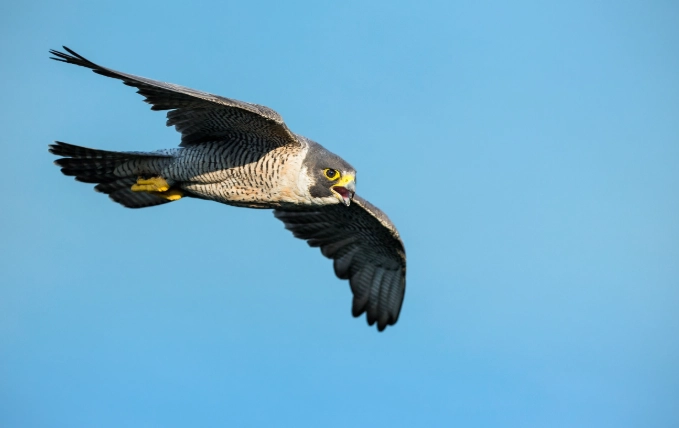
How do they not black out or damage themselves? This was my biggest question. The G-forces involved must be insane. While research is ongoing, it's believed their small, compact size, robust musculature, and that incredible circulatory system help distribute the force. They're also masters of their own trajectory, likely avoiding the most extreme pressure angles. Still, it's a testament to their ruggedness. A failed stoop must be a brutal experience, even for them.
There's a lot of debate about the top speed. The often-cited 242 mph (389 km/h) comes from a 1999 National Geographic account. More recent attempts at measurement are tricky—you try clocking a wild bird in a dive with perfect accuracy. The U.S. Fish & Wildlife Service and other authorities generally state "over 200 mph" as a conservative, documented fact. Whatever the absolute number, it's in a realm we can barely comprehend for a biological creature.
Not Just a Dive Bomber: Other Modes of Peregrine Falcon Flight
It's easy to get obsessed with the stoop, but Peregrine Falcon flying encompasses a whole range of behaviors. They're not one-trick ponies.
- Flapping Flight: When moving between perches or during migration, their flight is direct and powerful with rapid, shallow wingbeats. It's purposeful, not leisurely.
- Soaring & Gliding: They will soar on thermals to gain height without expending energy, especially when scanning for prey or during long-distance travel. Their glides are fast and controlled.
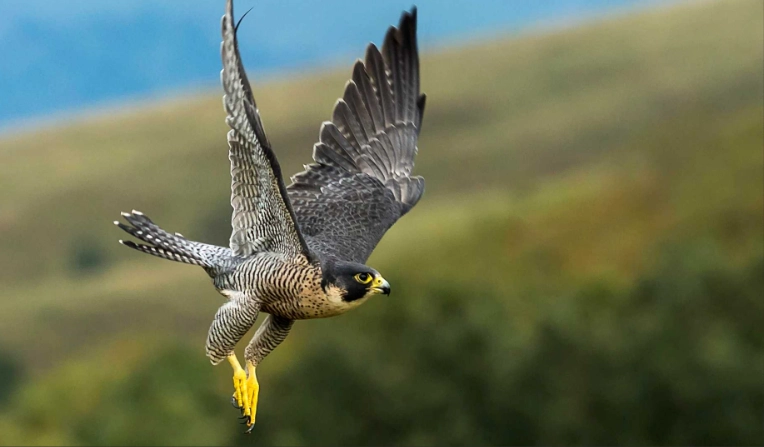
- Aerial Play & Courtship: This is where you see a different side. Mated pairs engage in spectacular aerial displays, with synchronized dives, rolls, and talon-touching passes. It's a breathtaking mix of agility and coordination that shows flying isn't just about hunting for them.
Where and How to Witness This Phenomenon
You don't need to go to the remotest wilderness. One of the most incredible conservation success stories is the Peregrine's adaptation to urban environments. Skyscrapers mimic their natural cliff ledges, and cities are full of pigeons (rock doves), a primary prey item.
Prime Urban Viewing Spots: Look for them near large bridges, tall cathedral spires, and downtown skyscrapers. Many cities now have nest cams on office buildings. Coastal cliffs and mountain ranges remain their classic natural habitats. The key is to look high. Scan the sky above the skyline, not just the trees.
I've had the best luck in the early morning or late afternoon, when thermals are strong and bird activity is high. Bring binoculars—seriously, don't try without them. A spotting scope if you're serious. Patience is the real tool. You might spend an hour seeing nothing, then ten seconds of absolute heart-stopping action that makes it all worth it. Watching a Peregrine Falcon flying, even in simple transit, has a distinct quality—it looks *busy*, intent, unlike the drifting of a hawk or vulture.
Peregrine Falcon Flight in Context: A Comparative Look
How does the Peregrine's flight stack up against other avian speedsters? Let's be clear: in a straight, level flight race, it might not win. Birds like the Common Swift or certain ducks are faster in horizontal flight. But the stoop is a different category altogether. The table below clarifies this niche.
| Bird Species | Flight Type for Speed | Estimated Max Speed | Key Note |
|---|---|---|---|
| Peregrine Falcon | Diving Stoop (Vertical) | 200-240+ mph (322-386+ km/h) | Fastest recorded animal movement on earth. |
| White-throated Needletail Swift | Level Flight | ~105 mph (169 km/h) | Possibly the fastest in sustained level flight. |
| Golden Eagle | Diving Stoop | ~150-200 mph (240-322 km/h) | Larger, powerful diver, but generally slower than Peregrine. |
| Gyrfalcon | Level & Pursuit Flight | ~90 mph (145 km/h) in pursuit | Larger falcon, relies more on powerful pursuit than vertical dive. |
| Frigatebird | Dynamic Soaring | High efficiency over long distances | Master of using wind currents, not raw speed. |
The table shows the Peregrine's specialization. It owns the vertical dive niche completely. No other animal comes close. This specialization is why the phrase "Peregrine Falcon flying" is synonymous with ultimate speed.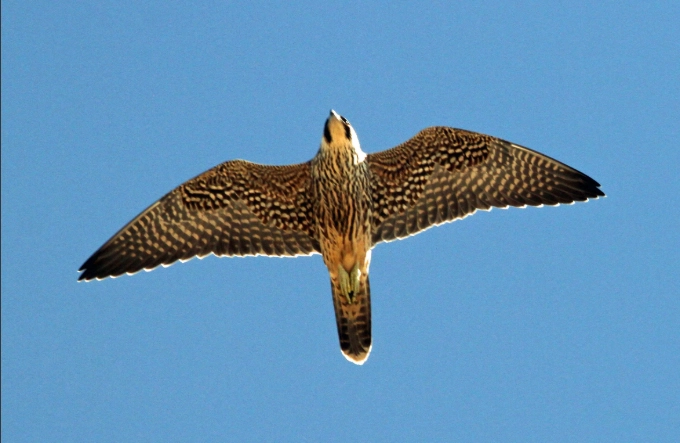
Digging Deeper: Your Questions Answered (FAQ)
Based on what I've searched, read, and wondered myself, here are the practical questions people really ask.

Final Thoughts: More Than Just Speed
After diving down this rabbit hole, I realize focusing solely on the speed of Peregrine Falcon flying misses the point. The speed is the headline, the show-stopper. But the real story is in the integration. It's the seamless fusion of form, function, physiology, and instinct. The baffled nostrils, the tomial tooth, the heart that can handle the G's, the eyes that can spot a speck from a mile up, and the brain that can compute an intercept course in a split second—all of it converges into that one, breathtaking stoop.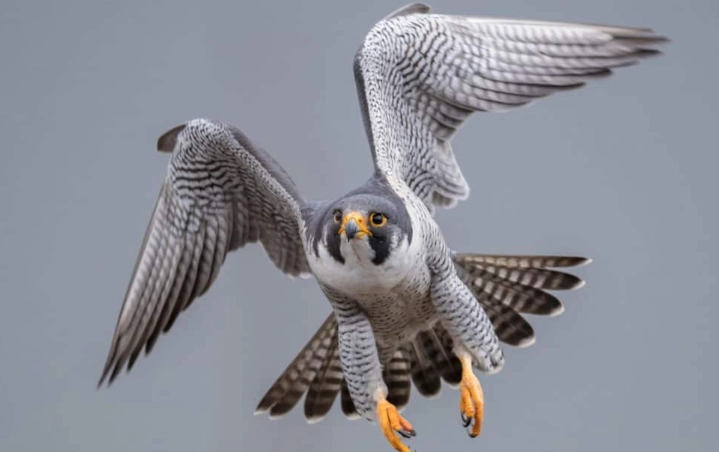
It's a reminder that nature's engineering often surpasses our own in elegance and efficiency. We can build jets that go faster, but we can't yet build something that can grow, heal, reproduce, and perform such a maneuver on a handful of mice a day. The next time you're in a city, look up. You might just see a living piece of aerospace history, a master of physics wrapped in feathers, going about its daily business of being the fastest thing alive. And that, to me, is infinitely more interesting than any number on a speedometer.
Reader Comments