Your Quick Navigation
- Getting Your Bearings: What Even Is a Spring Migrant?
- Your Toolkit for Identifying Spring Migrants
- The Spring Migrant Lineup: Who to Expect and How to Tell Them Apart
- Strategy Session: Where and When to Look
- Putting It All Together: A Step-by-Step Field Approach
- Common Hurdles & How to Jump Them
- The Bigger Picture: Why This All Matters
You know the feeling. One day, the backyard is quiet, just the usual chickadees and cardinals. Then, almost overnight, there's a new chatter in the trees, flashes of unfamiliar color, songs you haven't heard since last year. That's the magic of spring migration, and if you've ever squinted at a small, fast-moving bird and thought, "What on earth are you?" then you're in the right place.
Let's be honest, identifying spring migrants can feel overwhelming at first. They're often tired, they move quickly, they don't always sing, and the leaves are just starting to come in, offering both cover and visual clutter. I remember spending a whole morning convinced I'd found a rare warbler, only to realize it was a female American Redstart in a tricky light—a common bird, but my excitement (and subsequent mild embarrassment) was real. That's part of the fun, though.
This isn't about memorizing every single feather. It's about building a practical, usable system for figuring out what's passing through your patch of the world. Whether you're on a coastal flyway or in a suburban park, the principles are the same. We'll ditch the jargon and focus on what actually works in the field.
Getting Your Bearings: What Even Is a Spring Migrant?
Before we dive into the how-to, let's clear the air. A "spring migrant" is simply a bird that is traveling from its wintering grounds to its breeding grounds during the spring months. They're not here to stay (in your specific location, anyway). They're refueling. Think of your local green space as a busy airport food court for birds.
This is different from your year-round residents (like Northern Cardinals or Blue Jays) and your summer residents that arrive and stick around to nest (like Barn Swallows or Chipping Sparrows). Spring migrants are the transients. They might stick around for a day, a week, or just a few hours to catch insects and rebuild fat reserves for the next leg of their journey.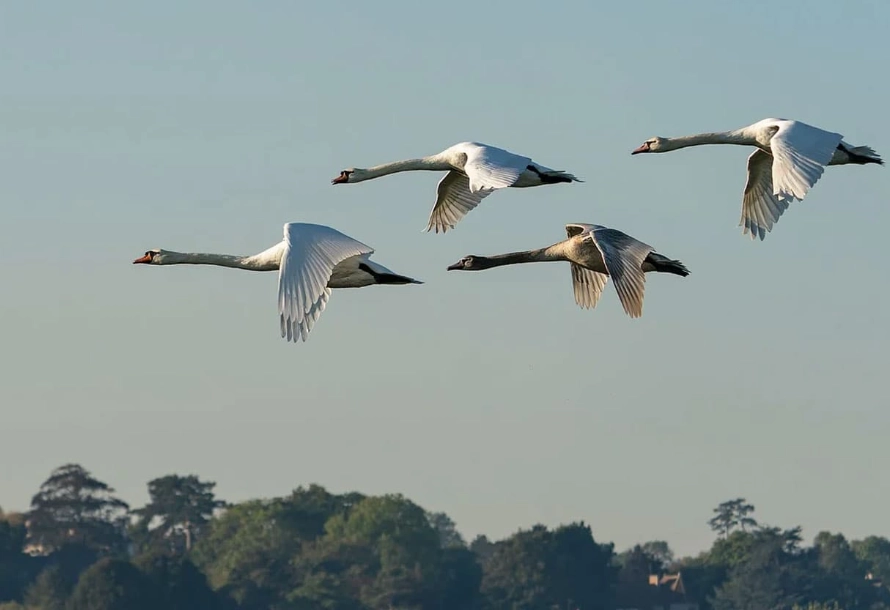
And that behavior is your first big clue.
The Why Behind the Flight
They're not just out for a scenic tour. This journey is driven by ancient rhythms—following the explosion of insect life (a vital food source) and heading to territories with ample space and resources for raising young. The Cornell Lab of Ornithology's guide to migration basics breaks down the incredible physiological demands of this trip. It makes you appreciate that tired warbler even more.
Your Toolkit for Identifying Spring Migrants
You don't need fancy gear to start, but a few things shift this from frustrating to fascinating.
Eyes and Ears: Your Primary Sensors
Forget trying to see every detail immediately. Start with the overall impression. Size and shape are king. Is it sparrow-sized but thinner? Does it have a noticeably long tail? Is it creeping up a tree trunk like a nuthatch? This "GISS" (General Impression of Size and Shape) is what experts use in poor light or at a distance.
Then, listen. Seriously, this is the cheat code. Many migrants are far more easily identified by ear than by sight, especially in dense foliage. A singing bird is also often a more stationary bird, giving you a better look. The song of the Black-throated Green Warbler (a common spring migrant in the East), with its buzzy "zoo-zee zoo-zoo-zee," is unmistakable once you learn it.
Pro Tip I Wish I'd Known Sooner: Don't just look for color. Look for contrast. A black mask, white wing bars, an orange throat. These bold patterns are often more visible in dappled light than specific hues.
The Essential Gear (Beyond Binoculars)
Okay, yes, binoculars are key. But your next most important tool is a good field guide specific to your region. I'm partial to the Sibley guides for their illustrations showing variations, but apps have revolutionized the game.
The Merlin Bird ID app from Cornell is a game-changer. Its sound ID feature can listen to the chorus of dawn and tell you what's singing. It's not perfect, but it's an incredible learning tool. Use it to confirm what you're hearing, not as a crutch to avoid learning.
A notebook. Scribble down quick notes: "small, yellow below, gray head, foraging low in willows." The act of writing cements the observation.
The Spring Migrant Lineup: Who to Expect and How to Tell Them Apart
This is where it gets fun. Let's break down some of the most widespread groups you'll encounter. Remember, timing is everything. A Yellow-rumped Warbler in early April is expected; one in late May might be a laggard.
The Warblers (The Colorful Confusion)
The stars of the show. Tiny, active, and often breathtakingly colorful in spring. The key is not to panic. Focus on a few common ones first.
| Common Spring Warbler | Key Field Marks | Favorite Hangout | Signature Sound |
|---|---|---|---|
| Yellow Warbler | All-over lemon yellow. Males have rusty streaks on breast. Looks like a "canary." | Willows, wet thickets, shrubby areas. | A sweet, rapid "sweet-sweet-sweet, I'm so sweet." |
| Yellow-rumped Warbler | Gray with yellow rump (obviously), yellow side patches. The "butter-butt." | Coniferous and mixed woods, often lower in trees. | A loose, weak trill; also a loud, sharp "check." |
| Common Yellowthroat | Male has a bold black mask with white border. Olive above, yellow below. | Dense marshes, wet fields, tangles. | A loud, rhythmic "wichity-wichity-wichity." |
| Black-throated Green Warbler | Yellow face, olive back, black throat (males). White undertail coverts. | Mature coniferous and mixed forests. | The buzzy "zoo-zee zoo-zoo-zee." |
See? You don't need to memorize 40 species. Nail these four, and you've got a solid foundation. Identifying spring migrants in the warbler clan becomes less about a flash of color and more about recognizing patterns and habits.
The Flycatchers (The Subtle Sitters)
These guys are tougher. Often various shades of gray, olive, and white. Their trick? Many return to the same perch after sallying out to catch a fly. Look for an upright posture, a tendency to sit still, and often a slight crest. The Eastern Phoebe is a great early migrant—drab gray-brown, constantly wagging its tail. Its raspy "fee-bee" name-say is a classic early spring sound.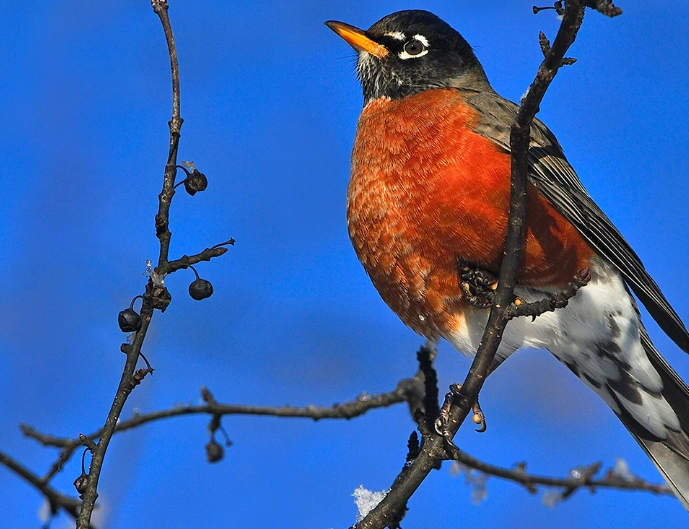
The Thrushes (The Melancholy Singers)
If you hear a flute-like, ethereal song in the deep woods at dusk or dawn, it's likely a thrush. The Swainson's Thrush has a beautiful upward-spiraling song. The Hermit Thrush starts with a single clear note. They're brown, spotted below, and often forage on the ground in leaf litter. Their songs are often easier to identify than their looks.
The Frustration Factor: Let's talk about "LBJs"—Little Brown Jobs. Sparrows, some female birds, and young birds can be brutally difficult. Don't get discouraged. Sometimes, noting the habitat (a sparrow in a marshy reedbed is likely a Swamp Sparrow) and the general shape is all you can do. It's okay to leave some as "sparrow sp."
Strategy Session: Where and When to Look
You can't identify what you don't see. Being in the right place at the right time is 80% of the battle.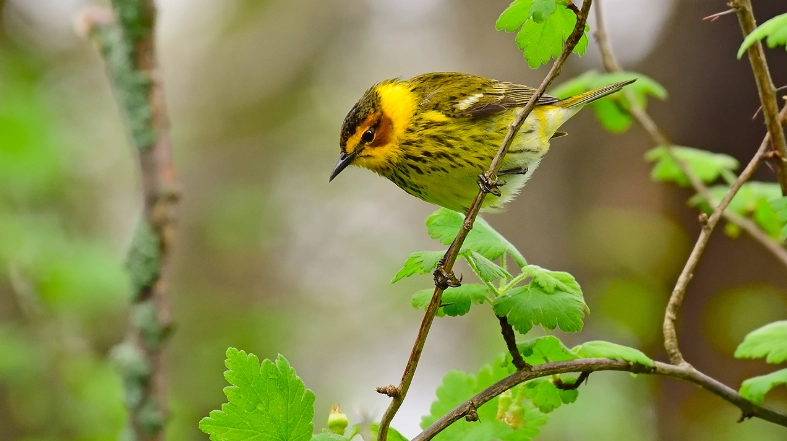
Timing is Everything: The Waves of Migration
Migration isn't a single event; it's a cascade. In North America, a rough sequence often goes:
- Early March-April: Waterfowl, blackbirds, early shorebirds, Eastern Phoebes.
- Late April-Mid May: The peak! Warblers, vireos, thrushes, flycatchers, orioles, tanagers. This is the main event for identifying spring migrants.
- Late May-June: Stragglers, some shorebirds still moving north.
A cold front with north winds can cause a "fallout," where migrants drop out of the sky in huge numbers to wait for better conditions. These are legendary birding days.
Location, Location, Location: Habitat Hotspots
Migrants follow resources. The best places are "stopover habitats" that provide food and cover.
Coastal Green spaces and Promontories: Places like Point Pelee in Canada or Cape May in New Jersey are famous because birds funnel along coastlines and gather before or after crossing large bodies of water.
Urban Parks and Botanical Gardens: Seriously! An oasis of trees and water in a city can be a magnet for tired migrants. I've seen more warblers in Central Park than in some remote forests.
Lakeshores and River Corridors: These act as natural flyways. Any patch of woods near water is worth checking.
Your Own Backyard: If you have native trees, shrubs, and a water source, you'd be surprised. Planting native oaks, for example, supports hundreds of caterpillar species—the premium fuel for migrating warblers.
The best time of day? Early morning. The birds are hungry and vocal after a night of flying.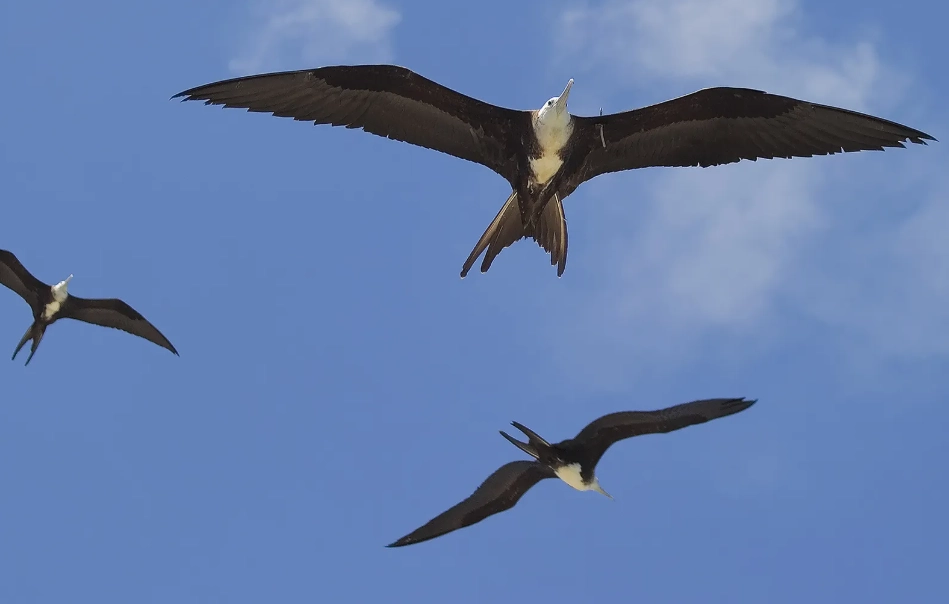
Putting It All Together: A Step-by-Step Field Approach
Let's walk through a real scenario. You're in a park in early May. You hear a chorus of songs and see movement.
- Stop and Listen. Don't just charge in. Close your eyes for 30 seconds. How many different songs do you hear? Use Merlin's Sound ID if you need a hint.
- Locate a Singer. Find one bird that's singing consistently. Get your binoculars on it. Don't worry if it moves; follow it patiently.
- Run the Checklist (Silently):
- Size & Shape: Warbler-sized? Sparrow-sized?
- Color Pattern: Look for blocks of color: yellow breast? gray head? wing bars?
- Behavior: Is it flitting high in the oak leaves? Creeping on a tree trunk? Hawking insects from a perch?
- Habitat: Is it in the tall canopy? In the shrubby understory?
- Consult Your Guide or App. Now that you have notes, flip or scroll. Does it match a species known to be here at this time? The BirdCast migration forecast maps are fantastic for seeing what's on the move in real-time.
- Take a Mental Picture. Even if you get the ID, just watch it for a minute. How it moves, how it feeds. This builds your mental library faster than any book.
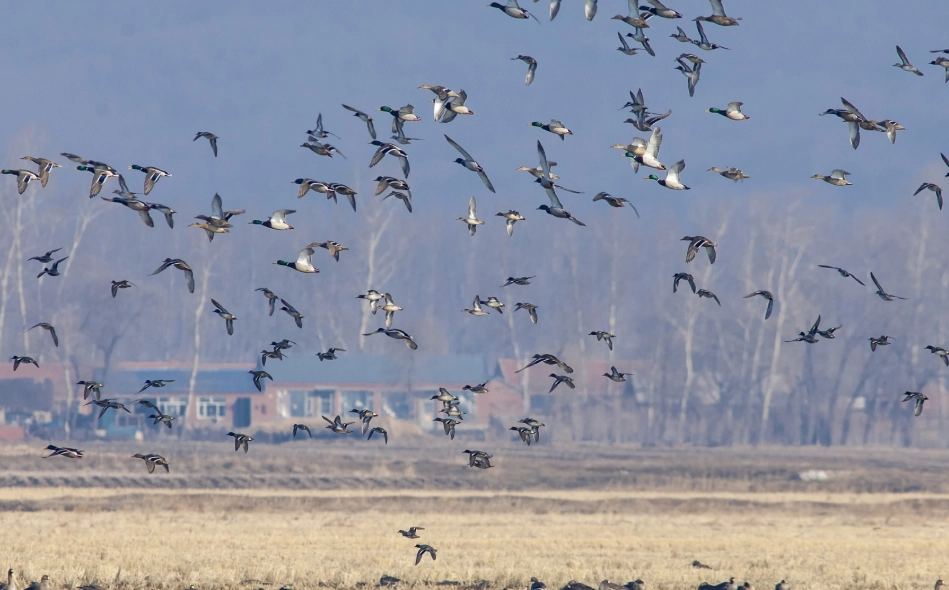
Common Hurdles & How to Jump Them
You will get frustrated. The bird will fly away just as you focus. You'll misidentify things. Welcome to the club.
The "I Only Saw It For a Second" Problem: That's often enough. One good field mark is a clue. A bright yellow underside? You've narrowed it to a dozen possibilities instead of a hundred. Write it down.
The Silent Bird Problem: Not all migrants sing, especially later in the day or in poor weather. This is when GISS and behavior are your lifelines. Focus on how it moves.
The Female/Juvenile Problem: They're often duller and more confusing. Again, shape and behavior are your guides. A female American Redstart still flicks its wings and tail like the flashy male.
My personal nemesis for years was the Tennessee Warbler vs. the Orange-crowned Warbler. Both are dull greenish-yellow. The Tennessee has a sharper bill, a thinner eye-line, and loves the canopy. The Orange-crowned has a blurry eye-line and forages lower. I still double-check sometimes.
Your Questions on Identifying Spring Migrants, Answered
What's the single best thing I can do to get better at this?
Go birding with someone who knows more than you. Local birding groups or Audubon chapter walks are invaluable. Hearing how an experienced birder pieces together an ID in real time is the fastest education possible.
How can I attract spring migrants to my yard?
Think food and water, not just seed. A birdbath is a huge draw. Plant native trees and shrubs that host insects (like oaks, willows, cherries). A few mealworms in a tray can attract insect-loving warblers and thrushes. Avoid pesticides—you're killing their food.
Is it okay to use playback of bird songs to attract them?
This is a hot topic. Most ethical birders and organizations like the American Birding Association advise extreme caution. Playback can stress birds, disrupt their feeding, and waste their precious energy during migration. It's best to learn their natural songs and let them come to you.
What's the difference between a spring migrant and a summer resident?
Timing and intent. A spring migrant is just passing through your area on its way farther north. A summer resident arrives and stays in your general area to nest. A Baltimore Oriole in Illinois in early May might be a migrant heading to Canada; one that builds a nest in your elm tree is a summer resident.
I saw a weird bird at my feeder in April. Could it be a migrant?
Absolutely! While many migrants are insectivores, some, like Rose-breasted Grosbeaks or Indigo Buntings, will happily visit seed feeders for an easy meal during their journey. A sudden, brief appearance of a colorful unfamiliar bird at your feeder is a classic sign of a migrant stopping by.
The Bigger Picture: Why This All Matters
Getting good at identifying spring migrants does more than fill a checklist. It plugs you into a global phenomenon. That Blackpoll Warbler in your local park? It might have wintered in the Amazon and is heading to the boreal forests of Canada. You're witnessing one leg of a staggering, intercontinental journey.
It also makes you a better citizen scientist. Submitting your sightings to platforms like eBird contributes to real scientific understanding of migration timing, population trends, and the effects of climate change. Your observations have value.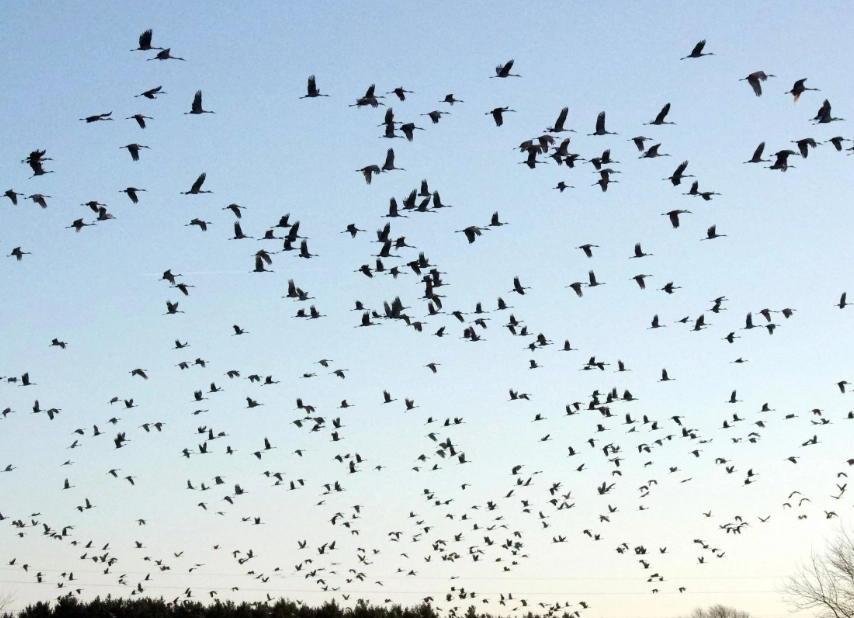
So grab your bins, head outside, and embrace the confusion. Start with the common ones. Celebrate the easy IDs and laugh off the misses. That flutter in the bushes has a name, and with a little patience, you can learn it. The season of identifying spring migrants is short, but the wonder it brings lasts all year.
Now, if you'll excuse me, I think I just heard the first Wood Thrush of the year. I need to go check.
Reader Comments