Inside This Guide
- What Exactly Is a Common Grackle? Let's Clear Up the Confusion
- Life of a Grackle: Diet, Behavior, and Some Seriously Smart Moves
- The Love Life and Home of Quiscalus quiscula
- The Great Backyard Debate: Friend, Foe, or Just a Neighbor?
- So, How Do You Manage Common Grackles Humanely?
- Final Thoughts: Coexisting with the Iridescent Crow
You've probably seen them. A flock of large, dark birds strutting across your lawn, their feathers showing a surprising sheen of purple and blue in the right light, letting out a sound that's somewhere between a rusty gate hinge and a laser beam. That's your common grackle, Quiscalus quiscula. Most people either barely notice them or actively dislike them for hogging the bird feeder and making a racket. I was in the latter camp for years, honestly. I used to see them as bullies, nothing more.
But then I started paying closer attention. I watched one solve the problem of a squirrel-proof feeder by hanging upside down and pecking just the right spot. I noticed the incredible complexity of their social interactions. It turns out, there's a whole world of intelligence and adaptation behind those bright yellow eyes. This isn't just a "blackbird." It's one of North America's most successful and misunderstood avian residents.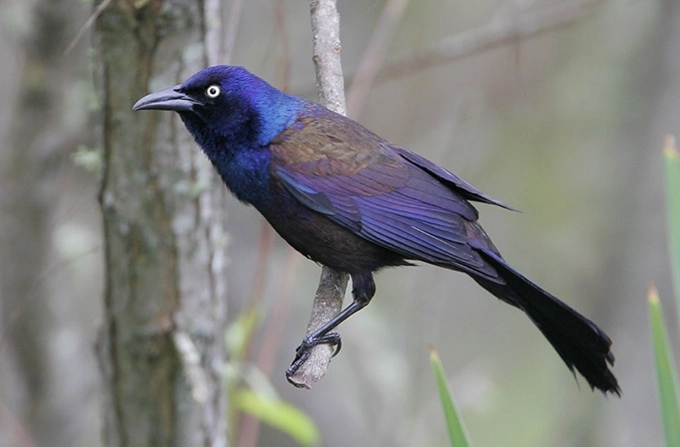
What Exactly Is a Common Grackle? Let's Clear Up the Confusion
First things first, a lot of people call them crows or blackbirds. They're not wrong, but they're not entirely right either. The common grackle is part of the blackbird family (Icteridae), which includes orioles, meadowlarks, and your regular red-winged blackbirds. But they're their own distinct thing. Think of it like this: all poodles are dogs, but not all dogs are poodles. All grackles are blackbirds, but not all blackbirds are grackles.
So how do you know you're looking at a common grackle and not, say, a crow or a brewer's blackbird?
The Tell-Tale Signs: Your Identification Checklist
Forget the vague descriptions. Here’s what you actually need to look for:
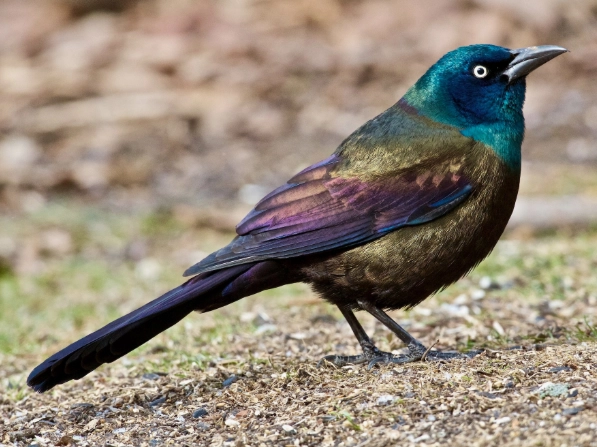
- The Iridescence: This is the big one. In bright sunlight, a male common grackle isn't just black. Its head can glow with a vibrant purple or blue sheen, while the body often shines bronze or greenish. Females are less flashy but still show some iridescence. It's like oil on water – the color shifts as they move. No other common backyard bird in eastern North America has this combination.
- The Tail Shape: They have a long, keel-shaped tail. Imagine a V-shape, like the hull of a boat. When they fly, this tail is very noticeable. Crows have fan-shaped tails.
- The Eyes: Piercing, pale yellow eyes. It gives them a fierce, almost predatory look. Starlings have dark eyes.
- The Bill and Size: A long, dark, sharp bill perfect for poking and probing. They're smaller than crows but larger than most other songbirds at your feeder, about the size of a mourning dove but slimmer.
- The Voice: Oh, the voice. It's a harsh, rising "readle-eek" or a guttural "chuk." It's not melodic. It's functional. You can hear a recording of the classic common grackle call on the Cornell Lab of Ornithology's All About Birds guide, which is an amazing resource for any bird sound.
Life of a Grackle: Diet, Behavior, and Some Seriously Smart Moves
This is where the common grackle gets interesting. They are opportunistic omnivores, which is a fancy way of saying they'll eat almost anything. And I mean anything.
What's on the Menu? (You Might Be Surprised)
Their diet changes with the season and opportunity. In my own backyard observations, I've seen them:
- Plunder the bird feeder: This is their most famous (or infamous) habit. They prefer sunflower seeds, cracked corn, and millet. They don't just eat; they often sweep their beaks through the seed, flinging stuff everywhere to find the choicest bits. Messy eaters.
- Hunt for protein: They eat a staggering number of insects, especially in spring and summer. This includes grubs, caterpillars (even hairy ones others avoid), grasshoppers, and beetles. They'll follow lawnmowers to catch disturbed insects. This is actually a huge benefit to gardeners.
- Forage on the ground: Earthworms are a favorite after a rain. They'll also eat small frogs, salamanders, mice, and even the eggs or nestlings of other birds. This predatory side is often overlooked but is a big reason some smaller birds fear them.
- Scavenge human food: French fries, bread crumbs, garbage scraps – nothing is off-limits in a parking lot or park.
So, are they pests or helpful pest control? They're both. It totally depends on your perspective and what they're eating in your yard at that moment.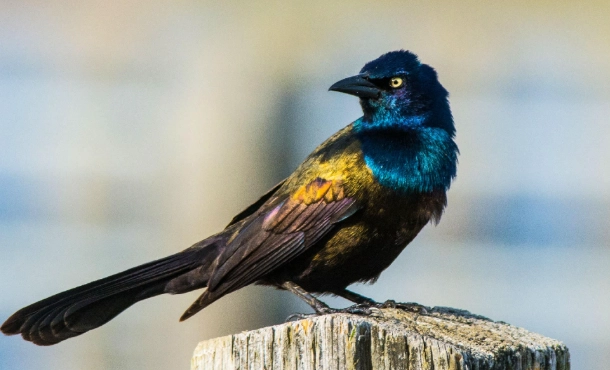
Social Butterflies (The Noisy Kind)
Common grackles are highly social outside of the breeding season. You'll rarely see just one. They form huge flocks, sometimes numbering in the thousands, especially in winter. These massive, swirling flocks are called "plagues" or "annoyances," depending on who you ask. They roost together in dense trees, often in urban areas, which leads to... complaints. The noise and the droppings can be significant.
But within these flocks, there's structure. They communicate constantly with those varied calls and body postures. Watching them interact is like watching a busy, argumentative community.
Are Common Grackles Actually Intelligent?
This was the game-changer for me. The short answer is yes, they exhibit remarkable problem-solving skills. Research and countless backyard observations show they can:
- Use tools in a basic way, like using a stick to probe for food.
- Recognize individual humans, especially those who pose a threat or provide food.
- Learn complex sequences to get food, like opening simple latches or understanding feeder mechanisms. I've personally watched one figure out the weight-activated closure on my "squirrel-proof" feeder by perching on the edge just right so it didn't close.
- Employ cooperative strategies when foraging.
The American Bird Conservancy notes their adaptability as a key to their success. Their intelligence is a direct part of that adaptability. They're not just instinct-driven; they learn and remember.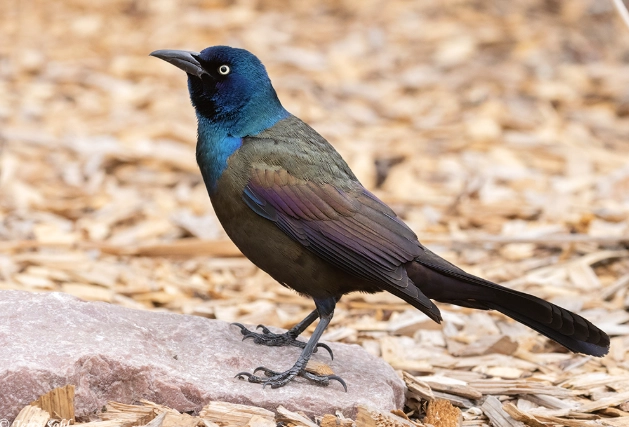
The Love Life and Home of Quiscalus quiscula
In spring, the huge winter flocks break up as pairs form. The males put on quite a show. They puff up their feathers to maximize that iridescent glow, spread their tails, and let out a creaky song. It's not pretty to our ears, but it does the job.
Nesting is a team effort, but the female does the heavy lifting. They often nest in small colonies for protection. The nest is a bulky cup of grass, mud, and twigs, usually placed high in a coniferous tree (like a pine or spruce) or sometimes in a dense shrub. They're not too picky about location, and will even use old nests from other species.
The female lays 4-5 eggs, which are a stunning pale blue with dark scrawls. She incubates them for about two weeks. Once the chicks hatch, both parents work tirelessly to feed them a high-protein diet of insects. The young leave the nest in another two weeks or so, but stay close to their parents, begging noisily. This is when you might see clumsy juvenile common grackles on your lawn, looking a bit scruffy and less iridescent.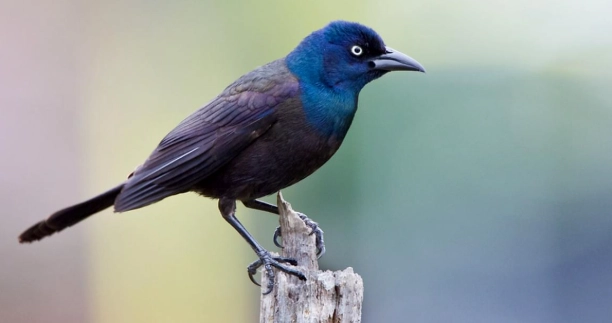
The Great Backyard Debate: Friend, Foe, or Just a Neighbor?
This is the core of most people's questions about the common grackle. Are they good or bad for my yard? Let's break down the pros and cons honestly.
| Aspect | The Good (The "Friend" Argument) | The Bad (The "Foe" Argument) |
|---|---|---|
| Insect Control | Excellent. They consume vast quantities of lawn grubs, beetles, caterpillars, and other insects, acting as natural pest control. | Their foraging can tear up small areas of lawn as they hunt for grubs. |
| Bird Feeders | They are entertaining to watch with their social dynamics and problem-solving. | They dominate feeders, scare away smaller birds (like finches and chickadees), and waste large amounts of seed. A flock can empty a feeder in minutes. |
| Gardens | They eat harmful insects that damage plants. | They will sometimes eat seedlings, ripening corn, or small fruits. They are known to pull up sprouting plants. |
| Nesting | They help control insect populations near their nests. | They may prey on the eggs and nestlings of other songbirds you might be trying to attract, like robins or bluebirds. |
| Noise & Mess | Their sounds are part of the natural soundscape. | Large roosting flocks can be incredibly loud and create significant droppings that can kill grass, damage paint, and pose a slight health risk. |
See? It's not black and white. For me, the insect control in my vegetable patch is a major plus. The feeder domination is the main minus. Your tolerance will depend on what you value more in your outdoor space.
So, How Do You Manage Common Grackles Humanely?
If the cons are outweighing the pros for you, you don't have to just suffer. The goal isn't eradication—that's impossible and illegal—but gentle persuasion to encourage them to spend more time elsewhere.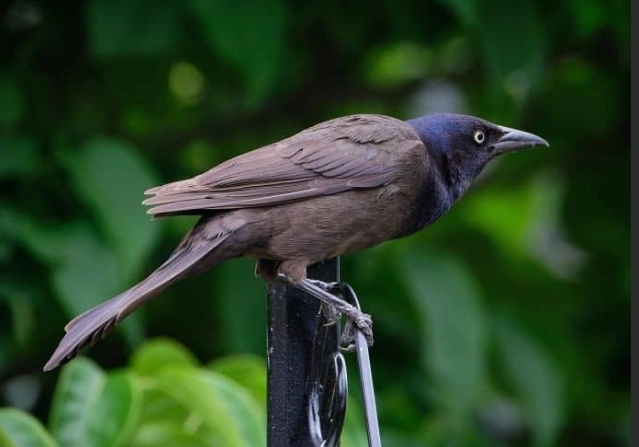
Top Strategies for a Grackle-Friendly (But Not Exclusive) Yard
- Change Your Bird Feeder Strategy:
- Use Feeders They Hate: Tube feeders with very short perches (less than 5/8 of an inch) and no tray. Their larger size makes it hard for them to perch and balance. Weight-activated feeders that close the ports under a grackle's weight are very effective (though the smart ones might eventually figure it out).
- Change the Seed: Stop offering their favorites: cracked corn, millet, and sunflower seeds. Switch to safflower seed or nyjer (thistle) seed. Most common grackles strongly dislike safflower, while cardinals, chickadees, and house finches love it. It's my number one recommendation.
- Take a Break: If a flock is overwhelming you, take all your feeders down for 5-7 days. The grackles will move on to more reliable food sources. Then, put up only the grackle-proof feeders with safflower seed.
- Make Your Yard Less Inviting:
- Keep your grass longer. Grackles prefer short grass for easy foraging.
- Use bird netting over fruit bushes or vegetable seedlings you want to protect.
- Remove easy water sources or use a shallow, moving water feature in a bird bath (they prefer still water).
- Use Visual Deterrents (Temporarily):
- Reflective tape, old CDs, or predator decoys (like owl statues) can work for a few days. But grackles are smart—they quickly learn these are not real threats if nothing ever happens. Move them daily for best effect.
The key is consistency. You're not building a fortress; you're making your yard a slightly less convenient diner compared to the one down the street.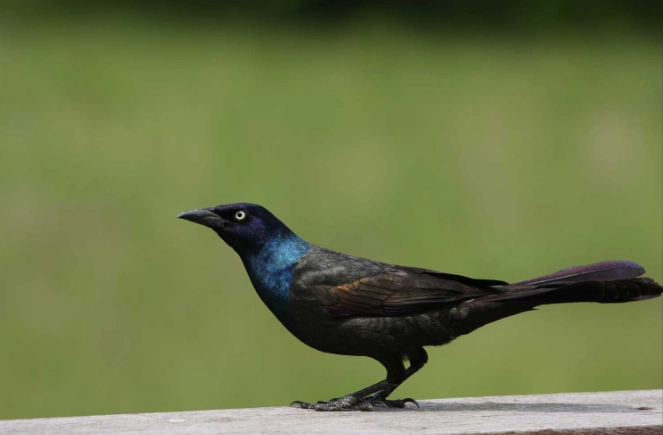
Your Common Grackle Questions, Answered
Final Thoughts: Coexisting with the Iridescent Crow
Look, the common grackle isn't going anywhere. They've thrived alongside human development, turning our suburbs, parks, and agricultural fields into a new kind of habitat. You can fight them, or you can try to understand them.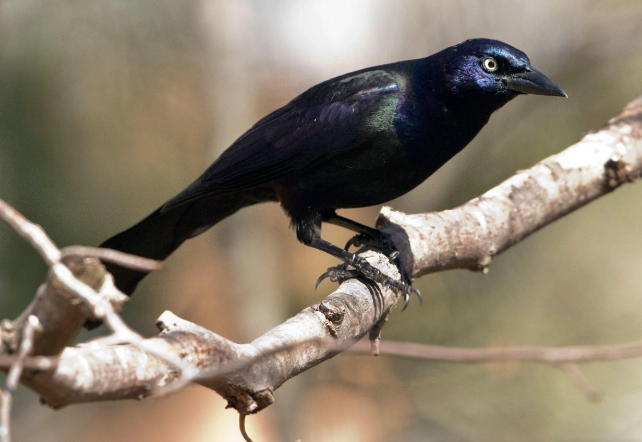
My own journey went from wanting them gone to appreciating their role. I still use a safflower-seed-only policy in my main feeders to give the smaller birds a chance. But I also leave a small, open area of my lawn unmowed and enjoy watching the grackles patrol it for grubs. They've become part of the messy, complicated, and fascinating ecosystem of my backyard.
They're loud, they're clever, they're sometimes destructive, and they're beautiful in their own way. That's the common grackle. Not just a black bird, but a truly successful and adaptable native species that's simply trying to make a living, just like the rest of us.
Reader Comments