I almost gave up on woodcocks. My first five trips to supposedly prime habitat yielded nothing but mud on my boots and mosquito bites. Then, on a damp March evening in a forgotten corner of a New England field, I heard it—the faint, nasal "peent" call. Ten minutes of patient waiting later, I witnessed the spiraling, twittering courtship flight against the twilight sky. It was magic. That moment taught me that finding an American Woodcock isn't about luck; it's a puzzle with a very specific set of pieces. If you're tired of missing out, this guide is for you.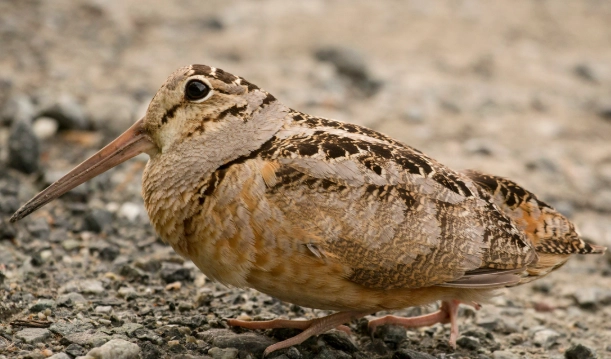
In this article
- Where to Actually Find Woodcocks (Forget the Obvious Spots)
- The Best Time to See Woodcocks: It's Not Just Dusk
- Essential Gear You Need (And What You Can Skip)
- Spotting and Identification Tips That Work
- Understanding the Famous "Sky Dance"
- Why Woodcocks Matter Beyond the Sighting
- Your Woodcock Questions, Answered
Where to Actually Find Woodcocks (Forget the Obvious Spots)
Everyone says "young, damp forests." That's too vague. You'll waste hours. Think like the bird: it needs soft soil for probing worms, thick cover for hiding by day, and open space for displaying at dawn and dusk.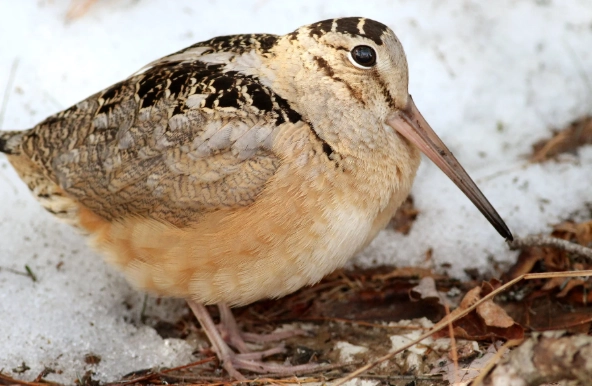
The gold standard is an alder or willow thicket adjacent to a fallow field or pasture. The transition zone is key. I've had consistent success in places like the margins of old farmlands reverting to forest in the Midwest, or along powerline cuts in the Northeast that create the perfect shrubby habitat.
Here’s a breakdown of specific habitats, ranked by my personal success rate:
- Abandoned Farmland / Early Succession: Overgrown fields with patches of shrubs, saplings, and wet spots. This is often the most reliable public land habitat.
- Utility Rights-of-Way: Managed corridors under powerlines are often kept in a perpetual shrubby state, creating perfect woodcock real estate.
- Forest Openings & Edges: Look for places where a wet woods meets a logging road or a small clearing. Avoid the deep, dark interior.
- Shrubby Wetlands: Bottomlands with speckled alder or dogwood. Can be productive but often harder to access and view.
Check with your state's wildlife agency or a local Audubon chapter. Many have specific woodcock management areas or can point you to known display grounds. The Ruffed Grouse Society also works on habitat that benefits woodcock.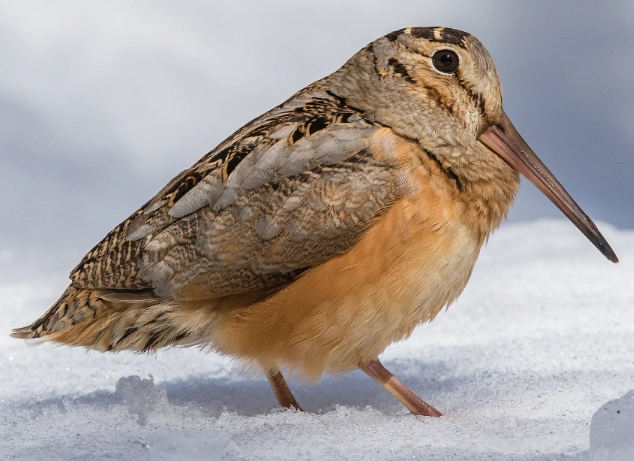
The Best Time to See Woodcocks: It's Not Just Dusk
Timing is everything, and it's more nuanced than "go at sunset."
The Season: Focus on early spring. In most of the U.S., peak courtship display activity runs from mid-March through mid-April. This is when males are most vocal and perform their sky dance reliably. Fall migration (October-November) can offer sightings, but birds are quieter and less predictable.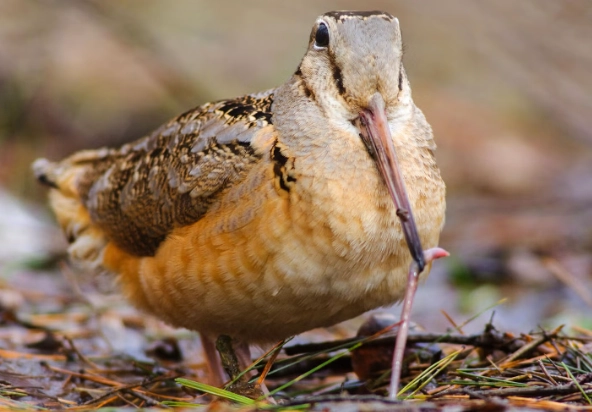
The Time of Day: You have two primary windows:
- The Evening Display: Start listening 15-20 minutes after sunset. The sequence usually begins with the ground call ("peent"), followed by the flight. This window lasts about 30-45 minutes.
- The Morning Display: Often overlooked! Activity can occur 30-45 minutes before sunrise until just after sunrise. It's typically shorter and less frequent than the evening show, but you'll have fewer competitors for the view.
Weather & Conditions: Forget clear, cold, windy nights. Woodcocks prefer calm, relatively warm (above 40°F / 4°C), and overcast evenings. Drizzle or light fog can actually be excellent, as sound carries better and the birds may be more active. A bright full moon can sometimes delay or shorten displays.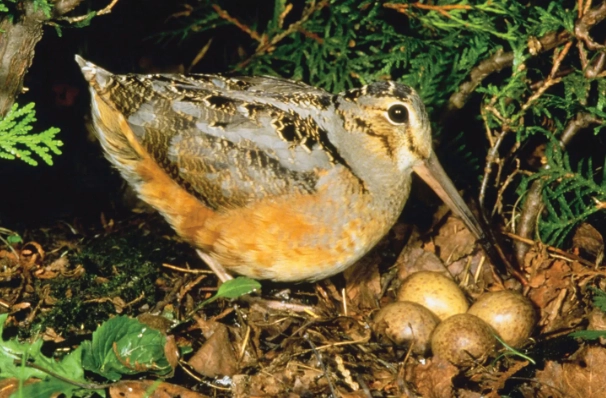
Essential Gear You Need (And What You Can Skip)
You don't need a fortune in equipment, but the right tools make a huge difference. Here’s a practical breakdown.
| Gear Item | Why It's Important | My Personal Recommendation / Note |
|---|---|---|
| Binoculars | Critical for spotting a motionless, camouflaged bird on the ground. | Go for an 8x42 model. The 8x magnification is steady, and the 42mm objective lens gathers enough light for dusk. I use a Nikon Monarch M7 8x42. Avoid compact models for this task—they're too dim. |
| Headlamp (with red light) | For safe walking in the dark without ruining your night vision or spooking birds. | Non-negotiable. The red light setting is crucial. A basic Petzl Tikkina with a red mode is perfect. Don't use white light after sunset. |
| Footwear | You will be in wet, uneven terrain. | Knee-high rubber boots or waterproof hiking boots. I lean toward rubber boots—you can stand in that soggy spot without worry. |
| Quiet Clothing | Minimize noise as you move through thick brush. | Soft, synthetic fabrics or wool. Avoid loud, swishy rain gear if possible. |
| Notebook & Pen | Log location, time, weather, and behavior. | This turns a sighting into data. It helps you learn patterns and can be contributed to citizen science projects like eBird. |
| Smartphone App | For sound ID, logging, and navigation. | The Merlin Bird ID app by Cornell Lab is fantastic for confirming the "peent" call. eBird is great for finding hotspots and logging sightings. |
What can you skip? A giant spotting scope is overkill. A heavy camera with a huge lens will just be a burden on your first few trips. Focus on observation first, photography later.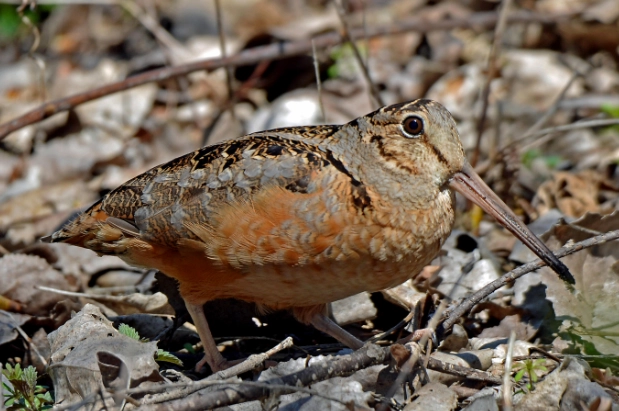
Spotting and Identification Tips That Work
Seeing a woodcock on the ground before it flushes is the ultimate challenge. Their camouflage is phenomenal.
Look for the Shape, Not the Details
Don't scan for eyes or feathers. Look for a plump, football-shaped blob with a straight, vertical line sticking out of one end—that's its bill, often pointed into the ground. The mottled brown, black, and gray plumage melts into leaf litter. Move slowly and pause often. Let your eyes relax and look for outlines.
Listen First, Look Later
Your ears are your best tool. In spring, find a spot at the edge of a field at dusk and just listen. That nasal, insect-like "peent" call is your homing beacon. Once you hear it, note the direction, use your binoculars, and wait. The bird is likely within 50 yards.
Key Identification Markers
- Bill: Extremely long, straight, and fleshy at the tip. It's a probe, not a pecker.
- Eyes: Large, dark, and set high and far back on the head. This gives it 360-degree vision while its bill is buried.
- Posture: Horizontal when feeding, upright and alert when alarmed.
- Flight: When flushed, it takes off with a rapid, twisting flight and a distinctive sharp, twittering call. The wings are broad and rounded.
Understanding the Famous "Sky Dance"
This is why we brave the bugs and the mud. The male's courtship display is one of nature's great performances.
It starts on the ground with the repetitive "peent." After several calls, he takes off in a slow, spiraling flight upward, his wings making a melodic twittering sound (created by air passing through three specialized outer wing feathers). At 200-300 feet, he switches to a zigzagging, chirping descent, landing often within feet of where he started. The whole aerial sequence lasts less than a minute.
The common mistake? Getting too close to the display ground. If you approach the calling spot directly, you'll flush him and end the show. Instead, pinpoint the sound, then circle to set up a viewing spot 30-40 yards away with a clear view of the sky above the calling post. Use binoculars to watch him on the ground, but the flight is best enjoyed with the naked eye.
Why Woodcocks Matter Beyond the Sighting
Woodcocks are more than a cool bird to check off a list. They are an indicator species for young forest and shrubland health. These habitats are declining across North America, and so are woodcock populations. According to the American Woodcock Conservation Plan, populations have been declining by about 1% per year since the 1960s.
By seeking out woodcocks, you're learning to value a habitat type often overlooked. Reporting your sightings to eBird provides valuable data for researchers tracking these trends. Supporting organizations that create and manage early successional habitat, like the Ruffed Grouse Society or your state's wildlife agency, helps ensure future generations get to hear that springtime "peent."
Your Woodcock Questions, Answered
I hear the "peent" call in my damp woods but never see the bird take off. What am I doing wrong?
You're probably too close or in his direct line of sight. Woodcocks freeze when they sense danger. That incredible camouflage means he's likely right there, motionless. Try backing up 50 yards and using your binoculars to scan the exact spot the sound came from. Look for the horizontal bill shape against the leaves. Also, he may be calling from a slightly different spot each night.
What's the biggest mistake beginners make when trying to find woodcocks?
Going to the wrong habitat and at the wrong time. Searching a mature, dry oak forest at 2 PM on a sunny day is a guaranteed zero. The habitat and timing specifics outlined above aren't just suggestions—they're the rules of the game. Ignore them, and you won't find the bird. Also, impatience. You need to arrive before sunset, get settled, and wait quietly. If you're rustling around as the light fades, you'll miss the start of the display.
Are woodcocks active during the day at all?
They are almost exclusively nocturnal and crepuscular (active at dawn/dusk). During the day, they roost on the ground in dense cover and are incredibly difficult to find. The only reliable daytime encounters are accidental flushes when you walk right up to one. Don't plan a midday woodcock hunt—focus your effort on the twilight windows.
How can I tell an American Woodcock from a related species like a Common Snipe?
Habitat and behavior are quick giveaways. Snipes prefer more open, marshy areas, while woodcocks stick to shrubby woods and fields. On the ground, the woodcock's stockier, more horizontal posture and incredibly long bill are distinctive. In flight, snipes have a faster, more direct flight with a sharper zigzag and a harsh "scaape" call, unlike the woodcock's twittering ascent.
Is it ethical to use a call playback to attract a woodcock?
Most experienced birders and guides advise against it, especially during the breeding season. Playback can stress the bird, interrupt its natural courtship behavior, and draw it away from its display ground, potentially making it more vulnerable. The best practice is to let the bird perform its natural routine. The reward of finding one without artificial means is far greater.
Reader Comments