I still remember the first time I heard a Swainson's Thrush. It was in a damp Oregon forest, early June, and that rising spiral of notes cut through the morning fog like nothing else. I spent twenty minutes craning my neck, binoculars glued to my face, before I caught a glimpse of that olive-brown bird tucked in the understory. If you're here, you probably know the feeling—the mix of frustration and thrill when chasing this elusive migrant. Let's cut to the chase: this guide is for anyone who wants to move from guessing to knowing when it comes to Swainson's Thrush. We'll cover the nitty-gritty of ID, where to find them, and mistakes even seasoned birders make.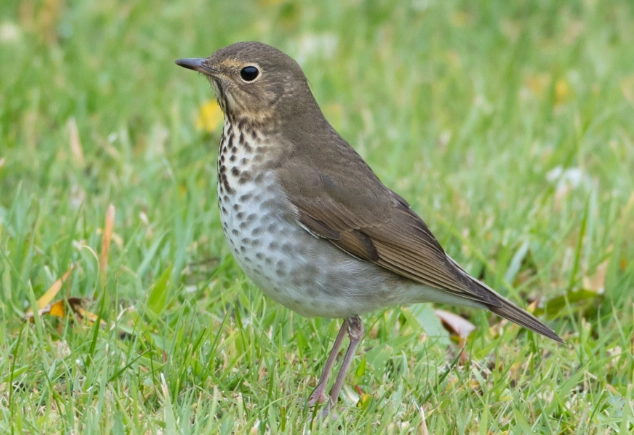
What You'll Learn in This Guide
Getting to Know the Swainson's Thrush
Swainson's Thrush (Catharus ustulatus) isn't just another brown bird. It's a neotropical migrant that breeds across North America's boreal forests and winters in Central and South America. Think of it as the forest's secretive songster—often heard, rarely seen. What sets it apart? That buffy eye-ring and spotted breast are clues, but the real giveaway is its voice. Most birders I talk to fixate on visuals, but with this species, sound is half the battle. The Cornell Lab of Ornithology lists it as a common but cryptic species, which sums up the challenge perfectly.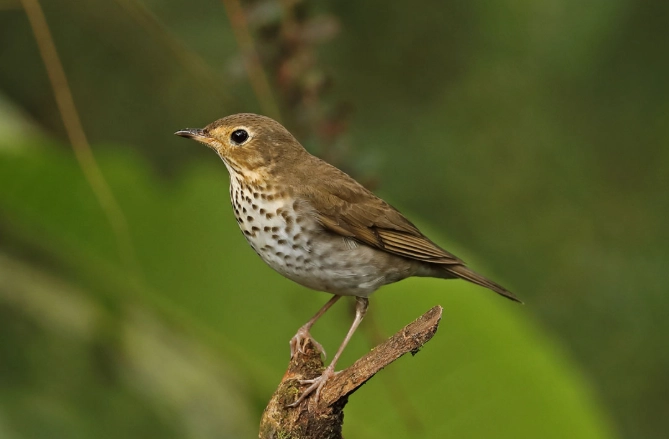
I've seen beginners mix it up with Hermit Thrushes or Veeries, especially in low light. One time in Maine, a friend swore he had a Swainson's until we played back the song—turned out to be a Hermit with an unusual pitch. That's why we need to dive deeper.
How to Identify Swainson's Thrush: Sight and Sound
Let's break this down. Identification isn't about memorizing a checklist; it's about noticing subtle patterns.
Visual Clues: More Than Just Brown
At first glance, Swainson's Thrush looks like a typical thrush: brownish back, white belly with dark spots. But stare longer. The upperparts are olive-brown, not grayish like a Hermit Thrush. The breast spots are blurry and smudged, not crisp. And that eye-ring—it's buffy or whitish, forming a distinct spectacled look. Juveniles can be trickier, with less defined spotting.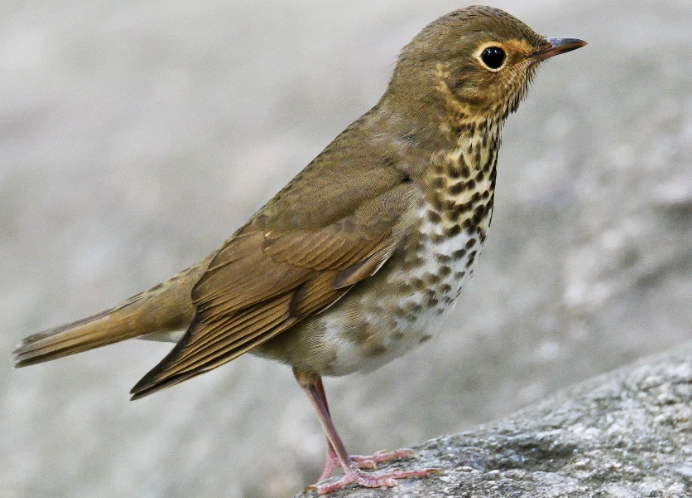
Here's a table comparing key features with similar thrushes. I put this together after years of leading bird walks, because side-by-side comparisons save time in the field.
| Feature | Swainson's Thrush | Hermit Thrush | Veery |
|---|---|---|---|
| Back Color | Olive-brown | Reddish-brown tail contrast | Uniform reddish-brown |
| Breast Spots | Blurry, smudged | Distinct, dark spots | Faint or absent |
| Eye-ring | Prominent buffy ring | Faint or lacking | Faint |
| Tail Movement | Rarely flicks | Often flicks tail up | Subtle movements |
Notice the tail thing? Hermit Thrushes love to flick their tails, a habit Swainson's rarely shows. It's a small detail, but in dense foliage, it can be the deciding factor.
The Signature Song: A Whistled Ascension
If visuals fail, listen. The song is a series of upward-spiraling notes, often described as "whistling upward." It starts low and rises, like a musical staircase. The call note is a sharp "whit" or "queep." I've found that recordings from the Macaulay Library at Cornell Lab help, but nothing beats hearing it live. In spring, males sing persistently at dawn and dusk—prime time for birding.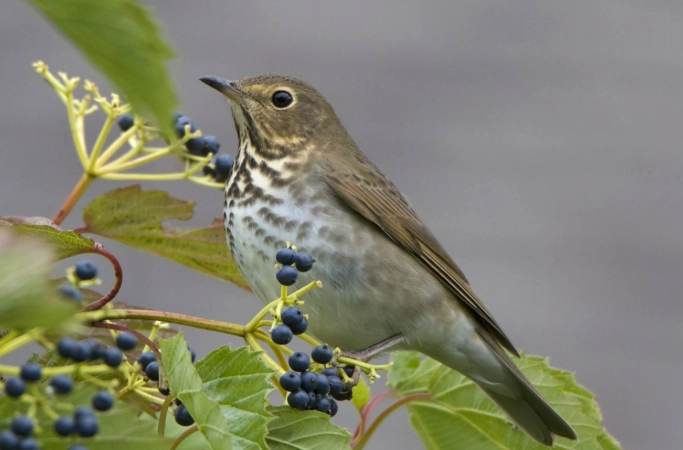
A common mistake? Confusing it with the Veery's descending spiral. Swainson's goes up; Veery goes down. Simple, but under pressure, people flip them. I did once in a rainy Washington forest, and it cost me a good sighting.
Habitat Hotspots: Where to Look for Them
Swainson's Thrush isn't everywhere. It prefers moist, dense forests with thick understory. During breeding season, think boreal and montane forests across Canada and the northern U.S. I've had best luck in places like the Pacific Northwest's rainforests or the Adirondacks in New York.
Migration is where things get interesting. They move through wooded areas, often stopping in parks or riparian zones. In the Midwest, spots along the Mississippi River flyway can be goldmines. For wintering, they head to Central America—think Costa Rican cloud forests. But let's be practical: most readers want North American locations.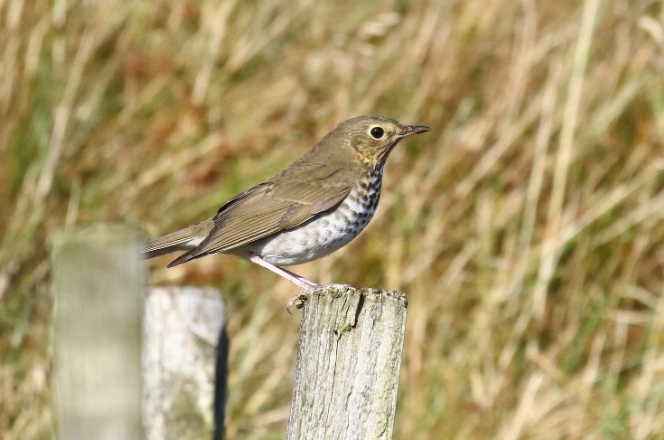
Top Spots for Swainson's Thrush in North America:
- Pacific Northwest: Olympic National Park, Washington—dense understory, especially near streams. Best in May-June.
- Northeast: White Mountains, New Hampshire—high-elevation spruce forests. Try the Kancamagus Highway area.
- Canada: Algonquin Provincial Park, Ontario—mixed forests, reliable in summer.
- Migration Corridors: Point Pelee, Ontario in May; Cape May, New Jersey in September.
Timing matters. They arrive in breeding grounds by late May, peak migration is May and September, and they're gone south by October. I missed them one year by going too early in April—learned that lesson the hard way.
Pro Birding Strategies: Gear, Timing, and Techniques
Birding for Swainson's Thrush isn't just about showing up. You need a plan. Let's talk gear first. Binoculars with good low-light performance are key, like 8x42 models—I use Nikon Monarchs, but anything with a wide field of view works. A field guide or app like Merlin Bird ID helps, but don't rely solely on apps; they can misID songs in noisy environments.
Clothing? Wear muted colors and quiet fabrics. These birds spook easily. I once wore a bright jacket and scared off a thrush before I could even raise my binoculars.
Time of day: Dawn and dusk are prime, but overcast days can be productive too. They're more active then. In breeding season, focus on early morning when males sing territorially.
Techniques:
- Listen first: Park yourself in a likely habitat, stay still for 10 minutes, and just listen. The song carries far.
- Slow scanning: Use binoculars to scan the understory methodically. Look for movement low to the ground.
- Playback sparingly: Some birders use playback to lure them, but it's controversial. I avoid it during breeding season—it can stress birds. If you must, keep it short and low-volume.
I remember a trip to Montana where I spent hours searching. Finally, I sat by a creek at dusk, didn't move, and a Swainson's hopped into view—patience pays.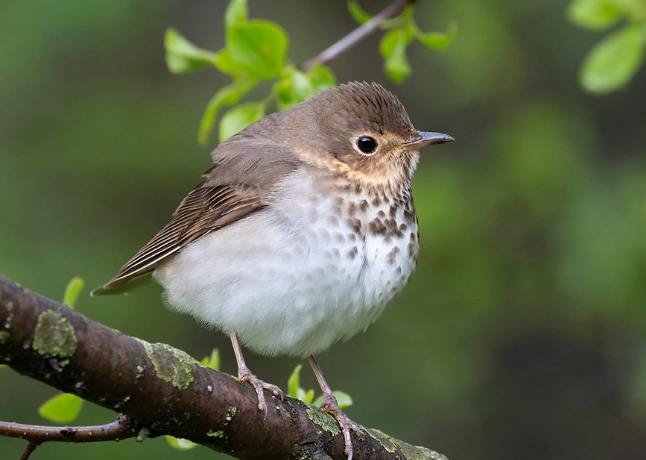
Pitfalls and Pearls: Wisdom from the Field
Here's where experience talks. New birders often over-rely on visuals and ignore behavior. Swainson's Thrush tends to forage on the ground or in low shrubs, not high in trees. If you're looking up, you might miss it.
Another pitfall: assuming all thrush songs are the same. I've seen people confuse Swainson's with the Gray-cheeked Thrush, which has a flatter song. Gray-cheeked is rarer, but in migration, it happens. The buffy eye-ring is a safer bet.
Weather impacts sightings. After a rain, they're more active foraging for insects. Windy days? Forget it—they hunker down.
My non-consensus tip: don't chase rarity reports blindly. Swainson's is common in its range, so focus on habitat rather than chasing specific eBird hotspots. I wasted a weekend once driving to a reported hotspot, only to find it was a one-off sighting. Instead, learn to read habitat—dense, wet woods are your friend.
Your Swainson's Thrush Questions Answered
That wraps it up. Swainson's Thrush might seem daunting, but with these tips, you'll start spotting them more reliably. Get out there, listen for that rising whistle, and enjoy the chase. Happy birding!
Reader Comments