Your Winter Birding Compass
- Why Birds Change Their Feathers: More Than Just Fashion
- The Core Skills for Winter Bird ID
- Common Winter Visitors and Residents: A Closer Look
- Regional Hotspots and What to Expect
- Tackling Common Winter ID Challenges
- Gear and Resources That Actually Help
- Your Winter Bird ID Questions, Answered
- Wrapping It Up: Embrace the Challenge
Let's be honest, winter birding can throw even seasoned watchers for a loop. You step outside, binoculars in hand, and the familiar summer visitor is gone, replaced by a drabber, confusingly similar-looking bird. That brilliant yellow warbler? Now a dull olive-green. That distinctively marked sparrow? It's lost its contrasting face pattern. This is the central challenge of bird identification in winter plumage in the USA. The rules change when the temperature drops.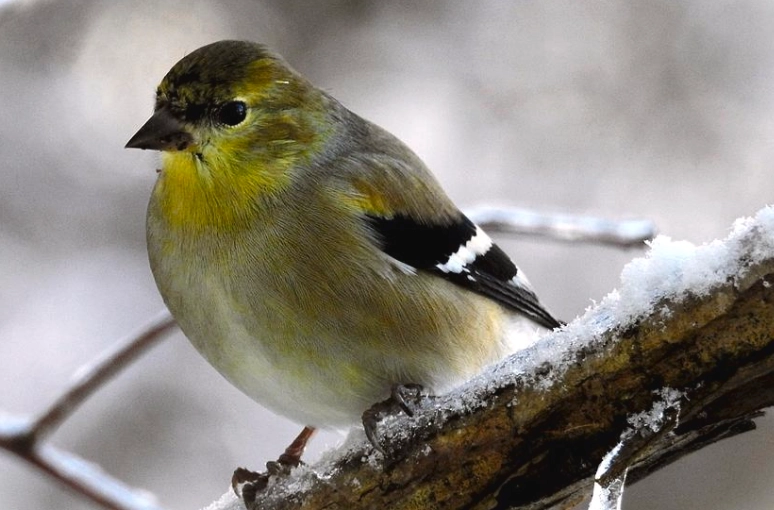
I remember one bitterly cold morning in Central Park, staring at a flock of small brown birds foraging in the leaf litter. My brain immediately defaulted to "sparrows." But after ten minutes of patient observation—noting the faint streaking, the shape of the tail, the way they flicked their wings—I realized I was looking at a mixed flock of White-throated Sparrows and Dark-eyed Juncos. The juncos, in their crisp gray and white winter suits, were easy. The sparrows, washed-out and streaky, were the real puzzle. It was a lightbulb moment. Winter birding isn't about flashy colors; it's a subtler game, a masterclass in observing shape, behavior, and subtle clues.
Why is winter plumage so tricky? For many species, the bright breeding plumage (used to attract mates and defend territories) is a seasonal wardrobe. Come fall, they molt into a more conservative, often insulating, set of feathers. This "basic plumage" is frequently less colorful, with muted patterns that provide better camouflage against bare branches and snowy landscapes. For birders, this means our primary visual cues are often hidden.
Why Birds Change Their Feathers: More Than Just Fashion
It's not about making our lives difficult, that's for sure. The shift to winter plumage serves critical survival functions. The most obvious is insulation. Winter feathers are often denser, with more downy bases to trap warm air. Camouflage is another huge factor. A bright red Northern Cardinal male is stunning against green leaves, but a slightly browner, less vivid version is less of a target against brown and gray winter scenery. Some birds, like the American Goldfinch, undergo such a drastic change that they're nicknamed "wild canaries" in summer and are almost unrecognizable in winter.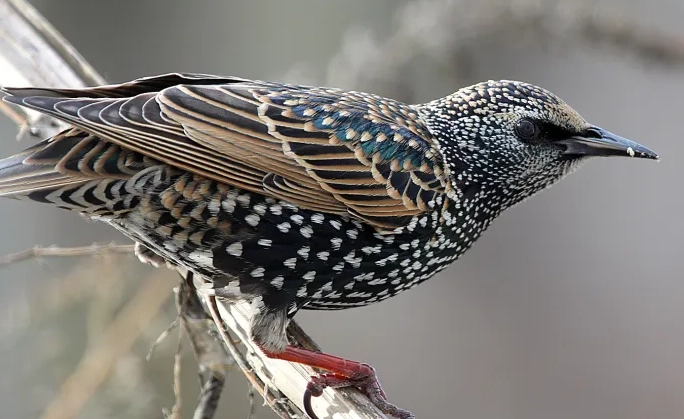
This molt usually happens in late summer or early fall, giving birds time to settle into their new look before migration or the onset of harsh weather. Understanding this why helps you appreciate the what you're seeing. You're not looking at a different bird; you're looking at the same bird in its practical winter coat.
The Core Skills for Winter Bird ID
When color fails you, you need to rely on a broader toolkit. This is where birding moves from simple pattern matching to true detective work.
Shape and Silhouette: The Bird's Blueprint
Forget color for a minute. What is the overall shape? This is the most reliable feature, as it doesn't change with the seasons. Is the body plump or slender? Does it have a long tail or a short, stubby one? What about the bill? A finch's conical seed-cracker is vastly different from an insectivore's thin, pointed bill. A perched bird's profile—the way it stands—can also be a giveaway. Flycatchers tend to sit upright, while many warblers have a more horizontal posture.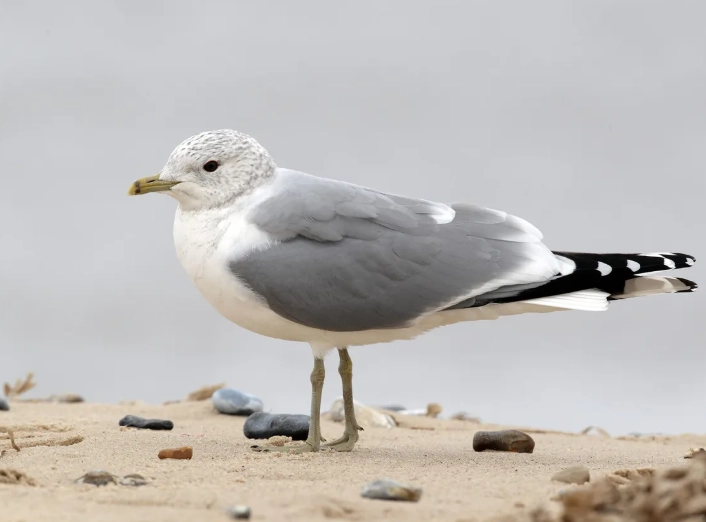
Pro Tip: Before you even lift your binoculars, try to identify the bird by its silhouette alone. Practice this with common backyard birds first. The classic example is distinguishing a crow from a raven in flight by tail shape (fan vs. wedge), a skill that works year-round.
Key Field Marks Beyond Color
Color might fade, but structural patterns often remain. Look for:
- Wing Bars: Those pale lines across the wings are often still visible in winter. Are they one bold bar or two faint ones? This is crucial for separating similar flycatchers or sparrows.
- Eye Rings: A pale circle around the eye can be a fantastic clue. Is it complete, broken, or bold?
- Tail Patterns: Look at the outer tail feathers. Are they white? Does the tail have a notched tip or is it square? The flash of white on a junco's tail is a dead giveaway.
- Streaking and Spotting: Even if muted, the pattern of streaks on the breast or spots on the back can point you in the right direction. Are the streaks fine and dense, or coarse and blurry?
Behavior and Habitat: Context is King
A bird's actions and where you find it are huge pieces of the puzzle. This is especially true for bird identification in winter plumage in the USA, where visual clues are reduced.
Is the bird clinging to the trunk of a tree like a nuthatch (head-first, no less!) or methodically probing bark crevices like a Brown Creeper? Is it in a dense thicket (a sparrow's favorite) or high in a conifer (crossbills, siskins)? Does it flick its tail constantly (like a Palm Warbler or an Eastern Phoebe) or pump it slowly (like a Hermit Thrush)?
I once spent ages trying to ID a plain, grayish bird in a riverside tree. It wasn't until it dove straight into the icy water and emerged with a fish that I knew it was a juvenile Belted Kingfisher—lacking the adult's striking belt but sharing its unmistakable behavior.
The Sound of Winter
Winter woods are quieter, but not silent. Many birds still call. Learning the simple "chips," "seets," and contact calls of winter flocks is immensely valuable. That high, thin "tsee" note might lead you to a foraging flock of kinglets. The soft "chuck" could be a Hermit Thrush. The cheerful "chick-a-dee-dee-dee" is, of course, a classic. Apps like Merlin Bird ID from the Cornell Lab of Ornithology are fantastic for learning these sounds. Their sound ID feature can be a game-changer in the field, though I still believe in training your own ear.
Common Winter Visitors and Residents: A Closer Look
Let's get practical. Here are some groups and species you're likely to encounter, focusing on their winter appearance. This table breaks down some classic winter ID challenges.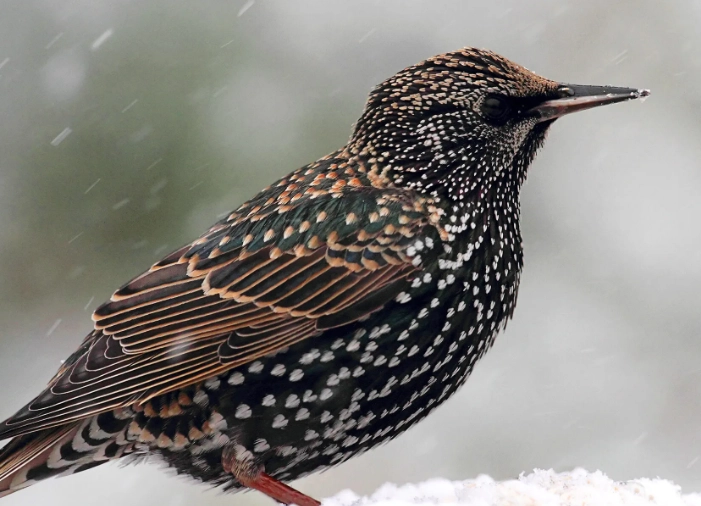
| Bird Group/Species | Key Winter Plumage Features | Primary Winter Habitat | Distribution in USA |
|---|---|---|---|
| Dark-eyed Junco | Slate-gray body ("Oregon" form has brown back, black hood), clean white belly, white outer tail feathers conspicuously flashed in flight. | Ground forager in woodlands, fields, and suburban yards. Often in flocks. | Widespread across the continent; specific subspecies vary by region. |
| American Goldfinch | Drab olive-brown overall, with faint wing bars. Loses almost all bright yellow. Bill remains conical and pale. Females and males look very similar. | Weedy fields, feeders (loves nyjer/thistle), and open areas with seed-bearing plants. | Widespread, though northern populations may move south. |
| White-throated Sparrow | Streaky brown back, gray breast, a clear (but sometimes less bright) white throat patch. Yellow lore (spot between eye and bill) can be dull. Look for the peaked head. | Dense undergrowth, forest edges, brush piles, and ground under feeders. | Eastern and central US; winters south to the Gulf Coast. |
| Yellow-rumped Warbler | The "butterbutt." Dull brown/gray with faint streaking. The yellow rump patch is always visible in flight. Some ("Myrtle" type) retain a yellow throat patch. | Very adaptable: woods, parks, shores, even catching insects in mid-air on warm days. | One of the most widespread wintering warblers; abundant across much of the US. |
| Hermit Thrush | Brown upperparts, spotted breast, and a distinctive habit of slowly raising and lowering its reddish tail. The eye ring is faint. | Forest understory, often near water. More solitary than other thrushes. | Winters across much of the southern and central US. |
| Northern Flicker | A large brown woodpecker with black spotting, a black "bib," and a white rump patch visible in flight. The bright yellow or red shaft color (under wings/tail) is still present. | Open woods, fields, and suburban areas; often forages on the ground for ants. | Widespread; "Yellow-shafted" in East, "Red-shafted" in West. |
I have a soft spot for the Yellow-rumped Warbler. They're tough. While other warblers flee to the tropics, "butterbutts" stick around, switching their diet to berries like wax myrtle and bayberry. Seeing them flit through a snowy pine forest always feels like a small victory against winter.
Regional Hotspots and What to Expect
Winter birding in the USA isn't a one-size-fits-all experience. Your location dramatically shapes your checklist.
The Northeast and Great Lakes
Brace for cold and look for hardy residents and visitors from the far north. This is prime territory for winter finches—like Pine Siskins, Common Redpolls, and Evening Grosbeaks—in what birders call "irruption years" when seed crops fail in the boreal forest. Check coniferous forests for crossbills. Coastal areas host vast flocks of sea ducks like scoters, eiders, and Long-tailed Ducks. Identifying these ducks, often at a distance in rough water, is a true test of your bird identification in winter plumage skills—focus on body shape, head profile, and wing patterns in flight.
The Midwest and Plains
Open country rules here. Look for massive flocks of Snow Geese and Canada Geese. Raptors become more visible against barren trees; Red-tailed Hawks are ubiquitous, but keep an eye out for Rough-legged Hawks (hovering over fields) and the regal Bald Eagle along rivers. Sparrow diversity can be high in weedy fields and shelterbelts—Lapland Longspurs and Snow Buntings are prized finds.
The West
From the Pacific Coast to the Rockies, variety is key. Coastal bays are filled with grebes, loons, and a bewildering array of gulls in various immature plumages (a real headache, I won't lie). Mountain forests hold Clark's Nutcrackers, Steller's Jays, and Mountain Chickadees. The deserts host unique species like the Verdin and Sage Thrasher year-round. The National Audubon Society's website has excellent regional guides and Christmas Bird Count data that can show you what's being seen near you right now.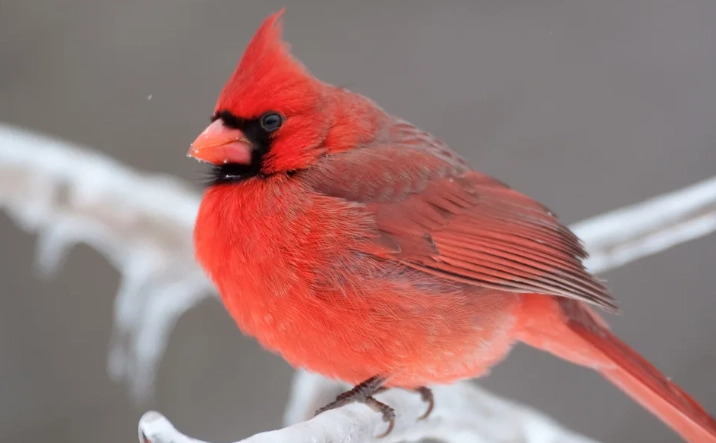
The South and Southeast
This is the winter haven for many species. Warblers that are rare elsewhere, like Orange-crowned and Palm Warblers, are common in thickets and gardens. You get the full suite of herons, egrets, and ibises. This is also the best place to practice distinguishing between the several species of confusing, look-alike *Empidonax* flycatchers in their winter garb—a task I find equal parts frustrating and rewarding.
The Big Frustration: Sparrows. Honestly, the *Spizella* sparrows (Chipping, Field, Clay-colored, Brewer's) in winter are a nightmare. They all become varying shades of streaky brown with pale jaw stripes. You need perfect looks at head pattern, bill color, and habitat to have a shot. Sometimes, you just have to note "*Spizella* sp." and move on. It's humbling.
Tackling Common Winter ID Challenges
Let's address some specific headaches head-on.
1. The "Little Brown Job" (LBJ) Syndrome
This is the core of winter birding. When faced with an LBJ, run through your checklist: Size and shape (compare to a known bird like a House Sparrow). Bill shape (conical = seed-eater, thin = insect-eater). Streaking/pattern (breast, back, head). Behavior (ground-scratching? tree-creeping?). Habitat. Call note. It's a process of elimination.
2>Gulls in Winter: A Beginner's Minefield
Gulls take years to reach adult plumage, and their immature plumages are mottled brown and gray. My advice? Start local. Learn the common gulls in your area (e.g., Ring-billed and Herring Gulls over much of the interior) in all their stages. Use resources like the All About Birds guide from Cornell. Focus on overall size, leg color, bill size/color, and wingtip pattern. And accept that some distant birds will remain "that immature gull."
3>Female Ducks
While male ducks (drakes) are often stunning, females (hens) of many species are mottled brown for camouflage. Look for bill color and shape (the bright blue bill of a female Northern Shoveler is a giveaway), facial patterns (a distinct eye stripe or patch), and speculum color (the colored patch on the secondary wing feathers, often visible when preening or in flight).
Gear and Resources That Actually Help
You don't need the most expensive gear, but the right tools make a difference.
- Binoculars: A decent pair (8x42 is a great all-around configuration) with good light-gathering ability is crucial for short winter days. Clear, bright optics help you see those subtle field marks.
- Field Guide/App: Have both. A physical guide (Sibley or National Geographic) lets you compare plates easily. An app like Merlin Bird ID is incredible for instant photo/sound ID and range maps. The American Birding Association's (ABA) website also offers great codes of ethics and community resources for serious birders.
- Notebook: Jot down what you see: shape, size, what it was doing, what it sounded like. This active process solidifies the memory and helps with later identification.
- Layers and Hand Warmers: Seriously. You can't focus on a bird if you're shivering. Comfort is key to patient observation.
Your Winter Bird ID Questions, Answered
Wrapping It Up: Embrace the Challenge
Mastering bird identification in winter plumage in the USA is one of the most satisfying skills a birder can develop. It forces you to look deeper, to see beyond the obvious, and to truly understand the birds you're watching. The winter landscape may seem barren, but it's teeming with life adapted in remarkable ways.
So, layer up, grab your binoculars, and head out. Start in your own backyard or a local park. That dull brown bird at your feeder isn't just a sparrow—it's a puzzle waiting to be solved. With practice, the subtle differences in shade, the flick of a tail, the shape of a bill will start to click. You'll begin to see the diversity hidden in plain sight. And when you finally nail the ID of that confusing little brown job, the satisfaction is worth every chilly moment.
Remember, every expert was once a beginner staring at a confusing bird. The journey is the fun part. Now go see what's out there.
Reader Comments