Key Points
You see them all the time, right? Soaring over highways, perched on telephone poles, that iconic rusty-red tail fanned out against the sky. The red-tailed hawk is the picture of power and control in the American landscape. It's the hawk everyone knows. It hunts rabbits, snakes, squirrels—you name it. It sits comfortably at the top of the food chain in its domain. So it's a weird question to ask, almost funny: what predator is the red-tailed hawk most afraid of?
I mean, what could possibly scare a bird with talons like steak knives and a gaze that misses nothing? We think of them as the bullies of the open country. But that's the thing about nature. There's always a bigger fish. Or, in this case, a more cunning owl.
It's a question that doesn't get asked enough because we're so used to seeing them as the ultimate hunters. But spend enough time watching them, reading the research, and talking to folks who track these birds, and a different story emerges. A story of a constant, silent threat that shapes where they live, how they nest, and when they dare to move. Let's dig into that.
Quick Reality Check: While adult red-tailed hawks are formidable and have few natural enemies, they are not invincible. Their greatest vulnerabilities are during their first year of life and, crucially, when they are sitting on eggs or guarding helpless chicks in the nest. That's when the balance of power shifts dramatically.
The Apex Predator Has an Achilles' Heel
To understand what a red-tail fears, you have to understand its life. It's a bird of open spaces—fields, deserts, woodland edges. It relies on sharp daytime vision to spot prey from a hundred feet up. It's built for power dives, not for acrobatic dogfights. And perhaps most importantly, it's mostly diurnal. It goes to bed when the sun goes down.
And that right there is the key to its greatest fear. Its world goes dark, but another predator's world is just waking up.
I remember talking to a wildlife rehabilitator once who had a red-tail with a healed, but nasty, scar on its back. "Great horned owl," she said without hesitation. "We see it more often than you'd think. The hawk got lucky; it survived the ambush." That stuck with me. It's one thing to read about it, another to see the evidence clawed into a living bird.
The Night Shift: Enter the Great Horned Owl
So, let's cut to the chase. If you ask any ornithologist, any seasoned birder, or even look at the data from nest monitoring studies, one name consistently comes up as public enemy number one for the red-tailed hawk.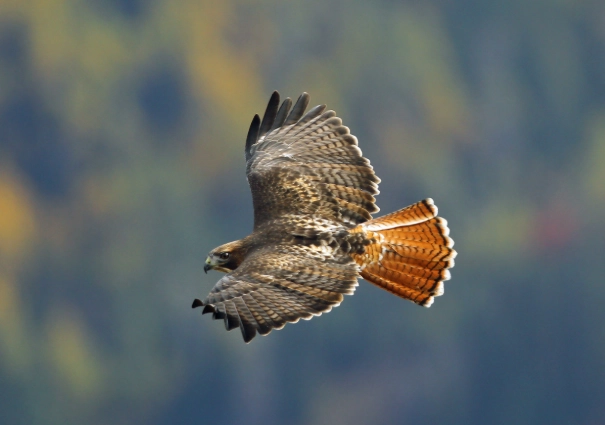
The great horned owl.
That's the one. What predator is the red-tailed hawk most afraid of? For adults, juveniles, and especially for eggs and nestlings, the great horned owl (often called the "tiger of the woods") is the undisputed top threat. It's not just a predator; it's the predator that causes them the most grief.
Why? The matchup is a nightmare for the hawk. Think of it like a heavyweight boxer (the hawk) being stalked by a special forces operative (the owl).
| Factor | Red-Tailed Hawk | Great Horned Owl | Advantage |
|---|---|---|---|
| Active Hours | Strictly diurnal (daytime) | Nocturnal/Crepuscular (night/dawn/dusk) | Owl. It attacks when the hawk is roosting and vulnerable. |
| Senses | Exceptional daytime vision. | Exceptional night vision and hearing. Flight is nearly silent. | Owl. The hawk can't see it coming in the dark. |
| Strength & Grip | Powerful grip (~200 psi). | Incredibly powerful grip (~500 psi). One of the strongest of any raptor. | Owl. Can crush spine with talons. |
| Diet & Prey Size | Rabbits, rodents, snakes. | Extremely varied. Regularly takes skunks, porcupines, other raptors. | Owl. A red-tail is just another item on the menu. |
| Nesting Timing | Starts nesting in late winter/early spring. | Nests very early, often in late winter. Chicks are already growing when hawks are just laying eggs. | Owl. Has hungry chicks to feed just as hawk eggs/nestlings become available. |
The table tells a clear story. The owl operates on a shift when the hawk is off-duty and defensively blind. Its silent flight is a huge deal—there's no warning rustle of feathers. By the time the hawk senses something, those talons might already be closing. The grip strength difference is staggering. An owl can exert enough pressure to sever a spine almost instantly.
But the real kicker is the nesting schedule. Great horned owls are among the first birds to nest each year. They're sitting on eggs in the dead of winter. By the time a red-tailed hawk couple is getting their nest ready and the female is laying her beautiful, blotchy eggs, the owl couple has loud, demanding chicks to feed. And what's a convenient, protein-rich food source for an owl chick? A hawk nest full of eggs or fluffy white nestlings. The timing is a cruel twist of ecological fate.
"The great horned owl is the only animal that regularly preys on the red-tailed hawk. This relationship is a classic example of intraguild predation, where one top predator hunts another." – This is a standard observation in raptor ecology, echoed in resources like the Cornell Lab of Ornithology's detailed species account.
So, when we ask what predator is the red-tailed hawk most afraid of, the great horned owl wins the title hands down. It's the bogeyman in the dark woods. It's the reason a sleeping hawk might startle awake at a strange sound.
Beyond the Owl: Other Threats on the Ground and in the Air
Okay, so the great horned owl is the top-tier threat. But it's not the only one. The world is a dangerous place, especially for a young hawk just figuring things out. The fear isn't monolithic; it's layered, depending on age, location, and circumstance.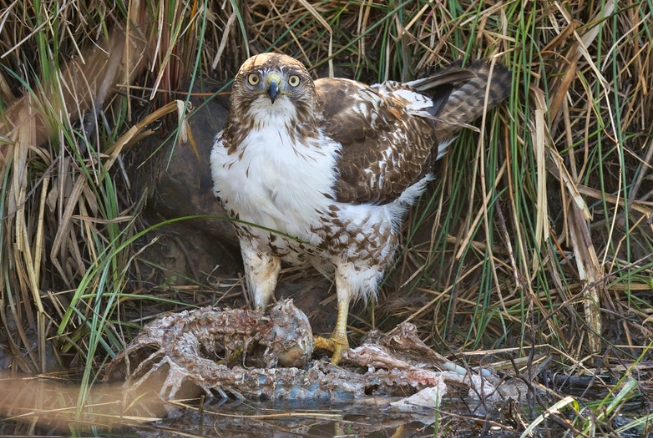
The Mob Mentality: Crows and Ravens
This one is more about harassment than direct predation, but don't underestimate it. Crows and ravens HATE hawks (and owls). They will mob them relentlessly—diving, cawing, pecking. For an adult hawk, it's an annoying day at the office. But for a fledgling still mastering flight? It can be terrifying and exhausting. A mob can drive a young hawk into exhaustion or into a dangerous situation (like traffic). While they rarely kill a healthy adult, they will absolutely raid unattended nests to eat eggs. So, for a parent hawk, the sound of an approaching crow mob triggers instant alert mode. It's a different kind of fear—the fear of losing your entire next generation to a gang of clever, opportunistic thieves.
Sky Rivals: Eagles and Other Hawks
In some areas, bald eagles and golden eagles will take a red-tail, especially a juvenile. It's not a primary food source, but it happens. An eagle has the size and power advantage. More commonly, there's competition and occasional conflict with other large hawks. A red-tailed hawk might fear a larger female northern goshawk invading its woodland territory—the goshawk is a fierce, agile forest hunter. But these are more about territorial disputes. The fear is of injury, which for a wild animal can be a death sentence, rather than direct predation.
Ground Assaults: Mammals that Raid Nests
This is where the fear shifts from the skies to the trees. A nest 60 feet up in a tree feels safe... until a determined climber shows up. Raccoons are public enemy number one on this front. They are ingenious, dexterous, and love eggs and chicks. A raccoon raid is often a complete nest failure. Other climbers like fisher cats (in the north) or even snakes (like rat snakes in the south) can also scale trees to reach nests. For the parent hawks, these threats are maddening. They can dive-bomb a raccoon all day, but if they can't drive it off, they're powerless. The fear is one of helplessness.
I once watched a pair of red-tails go absolutely berserk over a tall pine tree. They were screaming, diving, over and over. I couldn't see what was upsetting them until I got my binoculars on the tree trunk. A fat raccoon was about halfway up, taking its sweet time, completely ignoring the aerial drama. It was a slow-motion tragedy. The hawks knew what was coming and were utterly incapable of stopping it. It was a brutal lesson in the limits of their power.
Let's summarize these secondary threats. While the great horned owl is the answer to what predator is the red-tailed hawk most afraid of overall, this list shows the daily dangers they navigate.
| Predator | Primary Threat To | Method | Threat Level |
|---|---|---|---|
| Great Horned Owl | Adults, Juveniles, Eggs, Nestlings | Nocturnal ambush, direct killing, nest raiding | EXTREME |
| Raccoons | Eggs, Nestlings | Arboreal climbing, nest raiding | HIGH (for nests) |
| Crows & Ravens | Eggs, Fledglings, Adults (harassment) | Mobbing, nest raiding, causing stress/exhaustion | MODERATE-HIGH |
| Eagles (Bald/Golden) | Juveniles, occasionally adults | Aerial competition, occasional predation | MODERATE (location-dependent) |
| Other Large Hawks/Goshawks | Adults, Juveniles (territory) | Territorial fights, competition | LOW-MODERATE |
| Climbing Snakes & Fishers | Eggs, Nestlings | Arboreal climbing, nest raiding | LOW-MODERATE (region-specific) |
How Red-Tails Fight Back: Survival Strategies
They're not just sitting ducks (or, sitting hawks). Evolution has given them some smart, albeit imperfect, strategies to deal with the constant fear, especially the owl problem.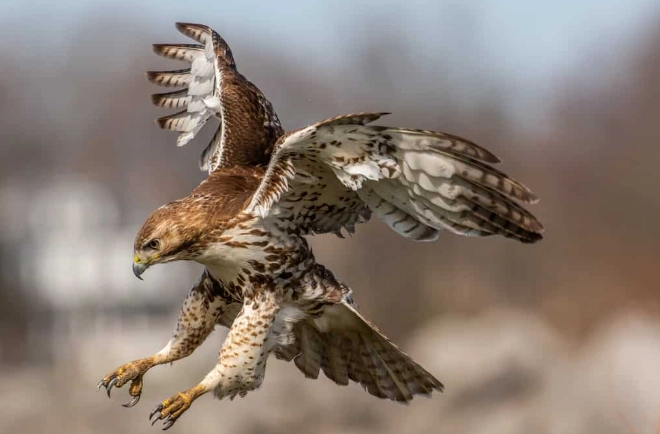
Choosing the Right Real Estate: Nest Site Selection
This is their first and best line of defense. Red-tailed hawks are incredibly strategic about where they build their massive stick nests (called eyries).
- Height and Openness: They often choose the tallest tree in an area, or one with a commanding view. This makes it harder for a ground climber to approach unseen and gives them early warning.
- Avoiding Owl Turf: There's evidence they try to nest away from dense, deep woods—the preferred core habitat of great horned owls. They'll pick a tree on the edge of a woodlot, near open fields.
- Reusing Old Nests... Carefully: They often reuse and add to old nests from previous years (theirs or even other large birds'). But if a nest was predated by an owl or raccoon once, it might be abandoned as a "compromised" location. They seem to have a memory for danger.
The Art of the Dive Bomb: Direct Defense
When a threat is spotted, they go on the offensive. Both parents will aggressively dive-bomb any intruder near the nest—humans, dogs, eagles, and yes, even great horned owls if they catch one in daylight. They'll hit with their talons, sometimes striking with incredible force. It's a risky strategy against an owl, but a cornered parent is a fearless one. This behavior is meant to startle, injure, or simply annoy the threat into leaving.
Strength in Numbers? Not Really.
Unlike crows, red-tailed hawks aren't social defenders. They don't form mobs. It's usually just the mated pair against the world. Their strategy is based on individual vigilance and ferocity, not cooperation with neighbors. Honestly, it feels like a lonely battle sometimes when you watch them.
A Human-Caused Fear: We can't talk about threats without mentioning humans. While not a "natural predator," human activity is arguably what a modern red-tailed hawk should fear most. Vehicle collisions, electrocution on power lines, secondary poisoning from rodents, and illegal shooting cause far more red-tailed hawk deaths annually than all natural predators combined. Resources from the U.S. Fish and Wildlife Service Feather Atlas and conservation groups highlight this as the leading cause of mortality.
Your Questions Answered: Red-Tailed Hawk Predator FAQs
Do red-tailed hawks ever attack great horned owls?
Yes, but almost exclusively in daylight and usually in a defensive context. If a hawk discovers an owl roosting near its nest during the day, it will mob and dive-bomb it relentlessly, trying to drive it away from the area. It's a pre-emptive strike born of fear. They are trying to evict the threat before night falls. A fair fight in open daylight might be a toss-up, but the hawk wants to avoid that fight at all costs.
Will a red-tailed hawk attack a human or a dog?
Almost never as prey. But during nesting season, if you get too close to their nest, they may dive-bomb you. They aim for the highest point—usually your head. They rarely make contact, and even more rarely cause injury (though a talon strike to the scalp is no joke). It's a bluff charge, a fear response for their young. Keep your distance from active nests, and they'll leave you alone.
What about cats and small dogs? Are they predators of hawks?
No, a domestic cat or small dog is not a predator of hawks. The opposite is true—a hawk might see a very small, unattended pet as potential prey. The fear here is misplaced on the human side. However, a large, aggressive dog could potentially threaten a grounded or injured hawk.
How successful are red-tailed hawks at raising young with all these threats?
The odds are tough. Studies suggest only about 30-40% of red-tailed hawk nests successfully fledge at least one young in a given year. Nest failure due to predation (mainly by great horned owls and raccoons) is a major reason. The first year of life is even harder, with mortality rates for juveniles estimated at 60-70%. It's a high-stakes world. This data is tracked by projects like the Audubon Christmas Bird Count and other citizen science initiatives, which help paint a long-term picture of raptor survival.
So, if they're so afraid of owls, why don't they just evolve to be nocturnal too?
That's a great question. Evolution doesn't work like a quick fix. They are supremely specialized for daytime hunting—their eyes are packed with cone cells for color and detail in bright light, not rod cells for low light. Retooling that entire sensory system is a monumental evolutionary shift. It's easier (in an evolutionary sense) to adapt behaviors—like better nest hiding, more aggression, different roosting spots—than to rewrite millions of years of sensory biology. They're stuck in the day shift, making the best of a dangerous situation.
The Bigger Picture: Why This Matters
This isn't just trivia about which bird beats which. This predator-prey relationship between the red-tail and the great horned owl is a fundamental force shaping ecosystems.
It's a classic check and balance. The red-tailed hawk controls rodent and rabbit populations. The great horned owl controls the red-tailed hawk (and other mid-sized predators). This prevents any one species from exploding in number. The fear the hawk feels directly influences where it can nest successfully, which in turn affects the prey populations in those areas.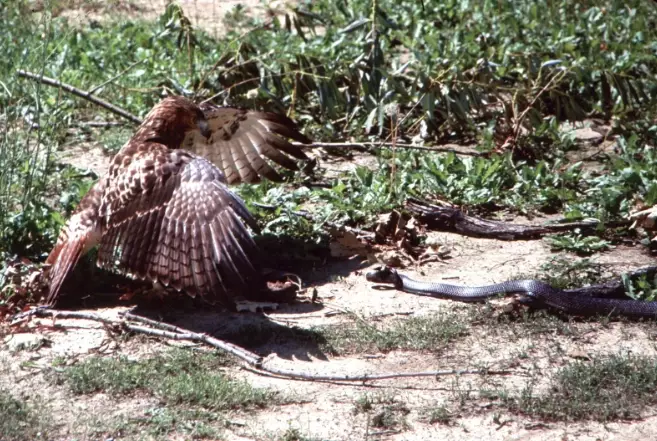
When you understand what predator is the red-tailed hawk most afraid of, you understand a key piece of the ecological puzzle. That fear creates a "landscape of fear" that structures the food web. It pushes hawks to nest in certain places, which gives prey species refuge in others. It's a dynamic, invisible force field created by the mere presence of the great horned owl.
So next time you see that majestic red-tail circling overhead, give it a little credit. It's not just the king of the hill. It's a survivor, constantly weighing risks, listening for crows, and checking the deepening shadows for the silent shape of the one creature it truly fears. Its life, and the success of its family, depends on managing that fear every single day and night.
And that's the surprising, complex truth behind a simple question.
Reader Comments