You're scanning a pond, and there it is—a slate-gray bird bobbing on the water like a duck. Black body, white bill. You note "duck" in your journal and move on. If that's you, you've just made the most common mistake in beginner birding. That bird is the American Coot (Fulica americana), and it's not a duck at all. It's a rail, a member of the Rallidae family, and understanding that distinction opens up a world of fascinating behavior, unique anatomy, and year-round birding opportunities. I've spent over a decade watching these birds from the marshes of Florida to the reservoirs of the Pacific Northwest, and I'm still surprised by their antics. This guide is here to move you from casually noting a "black duck" to confidently identifying and appreciating one of North America's most misunderstood waterbirds.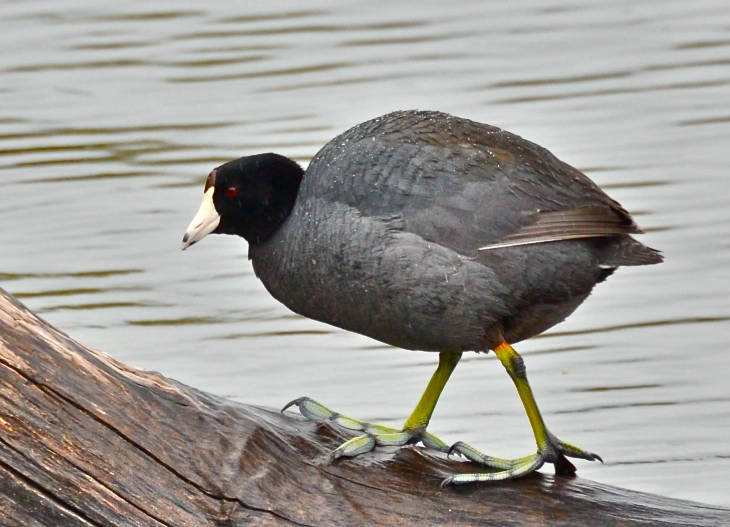
What's Inside This Coot Guide
How to Identify an American Coot with Confidence
Let's start with the basics. A coot's look is distinctive once you know what to ignore and what to focus on.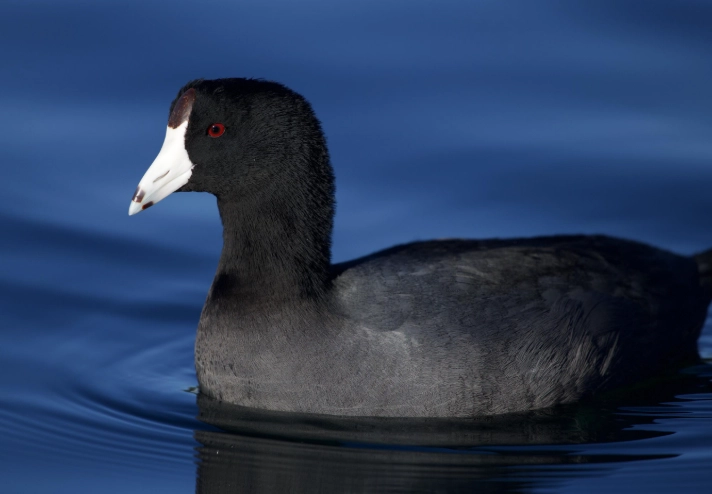
New birders obsess over the bill color, which is good, but they often miss the head shape and movement. A coot's head has a rounded, almost chicken-like profile, not the elongated, streamlined shape of a duck's head. Watch how it moves. A coot often pumps its head back and forth when swimming or walking, a jerky motion most ducks don't have.
The Coot vs. Moorhen Challenge
This is where even intermediate birders can stumble. The Common Gallinule (or Common Moorhen) is the coot's closest lookalike and shares the same marshy habitats. Mistaking them is easy, but the differences are clear side-by-side.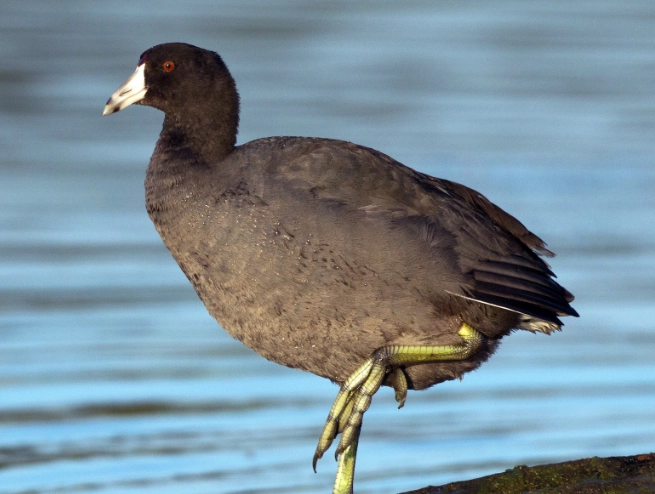
| Feature | American Coot | Common Gallinule/Moorhen |
|---|---|---|
| Bill | All white, thick and blunt, with a white frontal shield. | Red with a yellow tip, like it's been dipped in paint. Shield is red. |
| Body Color | Uniform slate-gray to black. | Dark gray-brown back, with slate-gray head and neck, and distinctive white flank stripes. |
| Undertail | Usually dark, but can show a narrow white border. | Has prominent white patches on the sides under the tail, very visible when flicking its tail. |
| Legs & Feet | Greenish legs with lobed toes. | Yellowish legs with very long toes, no lobes. |
| Swimming Style | Head pumps noticeably. Floats lower in the water. | Head is held still while swimming. Often appears more graceful. |
I once watched a birder confidently call out "moorhen!" at a distance. Through my scope, the all-white bill was glaringly obvious. It was a coot. The bill is your fastest, most reliable clue, even in poor light.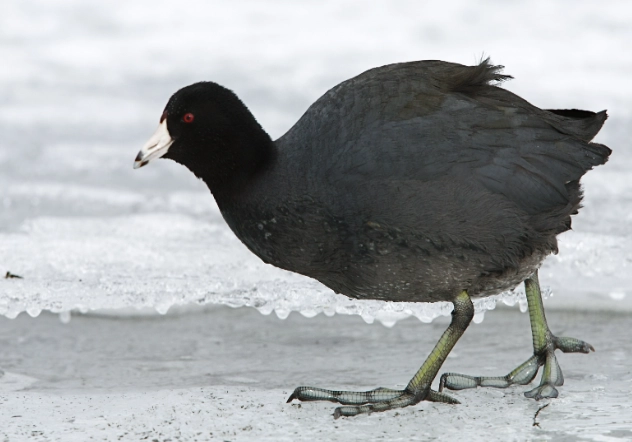
Coot Behavior Secrets: From Toes to Turf Wars
If identification gets you to notice them, their behavior will make you a fan. Their biology is a series of brilliant adaptations.
Those weird lobed toes aren't a design flaw. They're multi-tools. The lobes fold back when the foot is pulled forward, reducing drag, then spread wide on the power stroke to push against the water—efficient for swimming. On soft mud, they act like snowshoes, distributing the bird's weight so it doesn't sink. It's a masterclass in evolutionary engineering. They're not great for perching, but coots don't need to.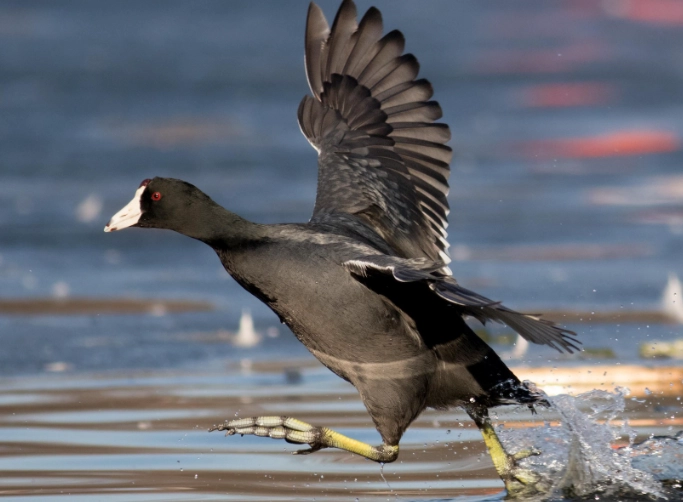
Now, onto their personality. "Coot" is slang for a cranky old man, and it fits. They are fiercely territorial and social in a chaotic, argumentative way. In winter, you'll see huge rafts of hundreds of birds. It looks peaceful from afar, but get your binoculars on them. There's constant low-grade squabbling—chasing, pecking, splashing. It's a soap opera.
During breeding season, it gets serious. Pairs defend small patches of reeds fiercely. I've seen a coot chase off a mallard three times its size without hesitation. Their displays involve bowing, presenting nesting material, and a lot of noisy calling—a sharp, repetitive kuk-kuk-kuk or a grating kraaaak.
Here's a subtlety most guides miss: watch how they feed. Yes, they dabble on the surface and dive for aquatic plants. But they also graze on lawns adjacent to ponds, walking with that comical head-pump. People don't expect a waterbird to be munching grass like a goose. Their chicks are another story—brightly colored with orange-red heads, spiky plumage, and incessantly begging from their parents. They look nothing like the adults.
Where to Find American Coots: Prime Birding Locations
Coots are widespread, but they're habitat specialists. You won't find them on fast-moving rivers or open ocean. Think slow, shallow, and vegetated.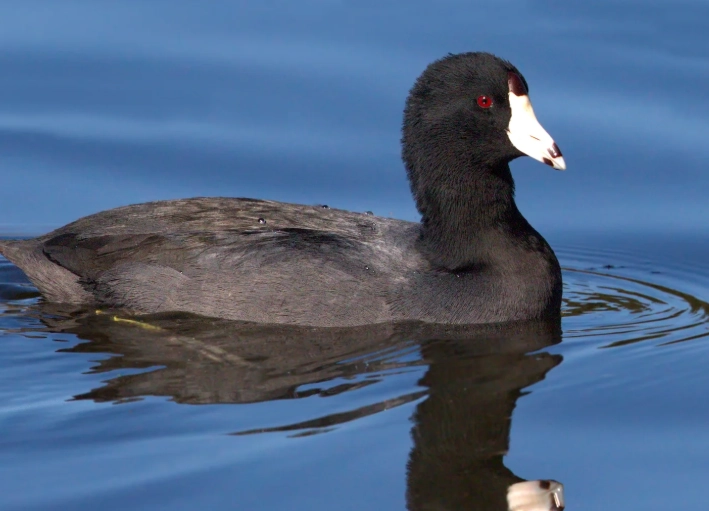
Their Year-Round Checklist:
Freshwater Marshes & Managed Wetlands: This is coot heaven. Places with a mix of open water and emergent vegetation like cattails and bulrushes. Think of national wildlife refuges with impoundments. The Everglades in Florida, Horicon Marsh in Wisconsin, or the Sacramento National Wildlife Refuge in California are classic examples. The water control structures in these areas create perfect coot conditions.
City Ponds & Reservoirs: Don't overlook your local park. Coots are highly adaptable to human landscapes. Any sizable pond with some weeds and a slow shoreline can host a few. They're less shy than many rails, making them great subjects for beginner photographers.
Seasonal Movements: In much of the U.S. and southern Canada, coots are summer residents, arriving in spring to breed. Across the southern U.S., they are present year-round. In winter, northern populations migrate south, and birds concentrate in massive numbers on ice-free lakes, reservoirs, and coastal estuaries. The Great Lakes region, the Central Valley of California, and the Gulf Coast become major wintering grounds. Checking eBird's abundance maps for your county is the best way to see local patterns.
Pro Birding Tips for Observing Coots
Gear up right. You don't need a massive telescope. A decent pair of 8x42 binoculars is perfect for following their antics at a pond. If you want to see the detail on those lobed toes or the red eye from across a lake, a spotting scope on a 20-40x zoom is a game-changer.
Timing is easy. Coots are active all day. Early morning and late afternoon are best for photography (softer light) and active behavior like feeding and squabbling.
Listen. Their calls are distinctive. Learn the sharp "kuk" notes and the grating kraak. Often, you'll hear them arguing in the reeds before you see them.
Look for the drama. Instead of just ticking off the species, watch one pair for 10 minutes. Follow a chase. Watch how they interact with other species. You'll see a personality emerge—bold, quarrelsome, and endlessly entertaining.
So next time you're by the water and see that black shape with the white bill, take a second look. Check for the head pump, look for the greenish legs, and listen for the squabble. You're not just looking at a duck impersonator. You're watching a rugged, adaptable, and endlessly fascinating rail that has mastered life in the marshes. Grab your binoculars, find a muddy shoreline, and enjoy the show.
Reader Comments