Quick Guide
- Flamingos 101: More Than Just a Pretty Color
- Home Sweet (Extreme) Home: Where Flamingos Live
- Built for the Job: Anatomy of a Filter-Feeder
- The Social Network: Life in a Flamingo Colony
- The Not-So-Pink Reality: Conservation Challenges
- Your Flamingo Questions, Answered
- Wrapping It Up: Why Flamingos Matter
Let's be honest, when you think of flamingos, you probably picture a lawn ornament first. That tacky plastic thing staked next to a garden gnome. It's a shame, really, because the real animal is so much more bizarre, fascinating, and frankly, hardcore than its kitsch counterpart. These aren't just pink birds; they're extreme survivalists, master filter-feeders, and social butterflies with a serious flair for the dramatic. I remember the first time I saw a flock in the wild, in a remote lagoon. It wasn't the color that struck me first—it was the sound. A low, goose-like honking murmur that filled the air, and the sheer, almost unnatural coordination of thousands of birds moving like a single, flowing entity. It felt ancient. So, let's ditch the plastic version and talk about what makes real flamingos some of the most incredible birds on the planet.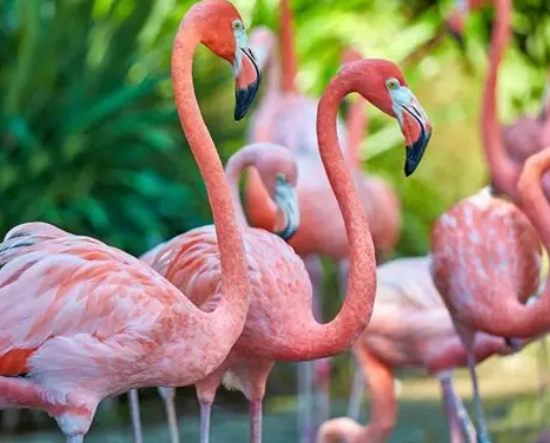
Bottom Line Up Front: Flamingos are a family (Phoenicopteridae) of wading birds found across the Americas, Africa, Europe, and Asia. Their iconic pink color comes from carotenoids in their diet of algae and crustaceans. They are highly social, live in massive colonies, and have uniquely specialized beaks for filter-feeding. Several species face threats from habitat loss and disturbance.
Flamingos 101: More Than Just a Pretty Color
Okay, basics first. What even is a flamingo? They're large wading birds, but they're oddly unique. Their closest relatives aren't herons or storks, as you might guess, but something called grebes. Weird, right? They stand on those ridiculously long, stilt-like legs, which are actually a brilliant adaptation for wading into deeper water than other birds to access their food. And that famous pink? It's not something they're born with. Baby flamingos are actually a fluffy white or grey. The pink, orange, or red hues are entirely diet-dependent.
They get their color from pigments called carotenoids, found in the blue-green algae and brine shrimp they eat. No shrimp, no pink. It's like a built-in health meter. A pale flamingo is often a poorly fed flamingo. This is why zoo flamingos have their diet supplemented with stuff like shrimp or pellets containing carotenoids—otherwise, they'd literally fade to white. Kind of blows the idea of a naturally pink bird out of the water, doesn't it?
The Flamingo Family Tree: Who's Who
There aren't just one or two types of flamingos. There are six living species, and they're spread out across the globe. They're generally split into two groups: the Greater Flamingo and its close relatives, which are larger and have paler beaks with more black, and the Lesser Flamingo and its crew, which are smaller and have darker, deep-keeled beaks. Here's a quick cheat sheet to tell them apart.
| Species | Where You'll Find Them | Key Identifying Feature | Conservation Status (IUCN) |
|---|---|---|---|
| Greater Flamingo | Widest range: Africa, S. Europe, S. Asia. | Largest species, very pale pink, beak tip is black. | Least Concern |
| Lesser Flamingo | Sub-Saharan Africa, W. India. | Smallest, darkest pink, deep dark red beak. | Near Threatened |
| Chilean Flamingo | South America (Peru to Argentina). | Pink with grey legs, joints, and beak base are pink. | Near Threatened |
| James's (Puna) Flamingo | High Andes of Peru, Chile, Bolivia. | Small, bright yellow beak with black tip. | Near Threatened |
| Andean Flamingo | High Andes of Peru, Chile, Bolivia. | Pale pink, yellow legs, yellow and black beak. | Vulnerable |
| American (Caribbean) Flamingo | Caribbean, Galápagos, N. South America. | The classic vibrant pink/red, beak is pink and black. | Least Concern |
See that "Near Threatened" and "Vulnerable" status? That's a big deal, and we'll get to why later. But just looking at this, you can see most flamingos aren't doing great. The American and Greater are the exceptions, not the rule.
Home Sweet (Extreme) Home: Where Flamingos Live
You won't find flamingos in your local pond. They're specialists of some of the harshest aquatic environments on Earth. We're talking about: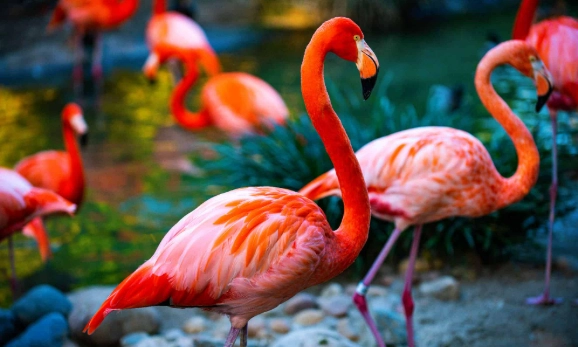
- Saline/Alkaline Lakes: Think places like Lake Nakuru in Kenya or the Etosha Pan in Namibia. These lakes are often caustic, with pH levels that would burn human skin. Why live there? Because hardly anything else can. Competition is low, and their main food—the algae—thrives in these conditions.
- Estuaries & Lagoons: Coastal spots like the Camargue in France or the Yucatán in Mexico. These are richer, less extreme, but still shallow, productive waters.
- High-Altitude Lakes: This is the hardcore stuff. James's and Andean flamingos live on lakes in the Andes, over 2,000 meters (6,500 feet) above sea level, where temperatures swing wildly and oxygen is thin.
The common thread is shallow, standing water. They need these vast, open, shallow basins to support their feeding style and their massive colonies. Which brings us to the first major threat: habitat loss. When we divert water for agriculture or industry, these shallow lakes are often the first to dry up. I've seen photos of former flamingo breeding sites that are now just cracked, white earth. It's bleak.
Built for the Job: Anatomy of a Filter-Feeder
That beak. It's the flamingo's Swiss Army knife, and it's completely upside down compared to most birds. Here's the genius of it:
- They wade in, head upside down in the water.
- They sweep their head side-to-side. The large, fleshy tongue acts like a piston, pumping water in and out.
- Inside the beak are hair-like structures called lamellae. These act like a sieve, trapping tiny organisms—algae, diatoms, brine shrimp, mollusks—as the water is expelled.
- The trapped food is then swallowed.
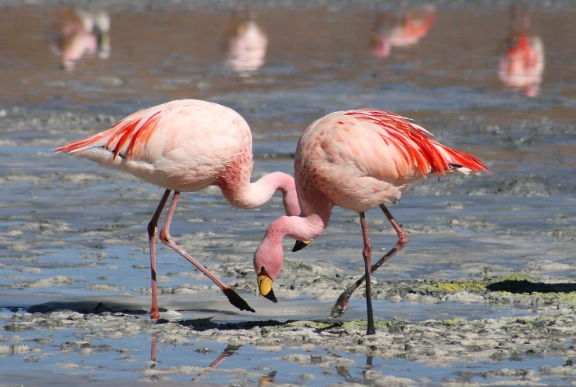
It's a ridiculously efficient system. Different species have different lamella density, which is why they can coexist without competing directly. Lesser Flamingos have super-fine filters for tiny algae, while Greater Flamingos have coarser filters for bigger shrimp and insects. Their tongue is so strong it can crush small mollusk shells. Not so delicate after all.
And those legs. Standing on one leg isn't just a party trick. Thermoregulation is the leading theory. By tucking one leg up into their warm feathers, they minimize heat loss in cold water or wind. It might also reduce muscle fatigue. Whatever the reason, they can stand like that for hours, even sleeping balanced on a single leg. Try that after your next workout.
The Social Network: Life in a Flamingo Colony
Flamingos are rarely alone. They live in colonies that can number in the hundreds of thousands. Imagine the noise, the smell. But this isn't chaos; it's a highly evolved social structure with clear benefits.
Safety in Numbers: A giant pink mass is hard to miss, which seems counterintuitive. But for predators like jackals or birds of prey, picking out a single individual from a seething, moving crowd of thousands, all with sharp beaks and a tendency to panic en masse, is incredibly difficult. The colony acts as a living early-warning system.
Synchronized Breeding: This is the coolest part. To have the best chance against predators, it's crucial that all the chicks hatch around the same time, overwhelming predators with sheer numbers (a strategy called predator satiation). How do you coordinate tens of thousands of birds? You dance.
The Mating Dance: A Pink Ballet
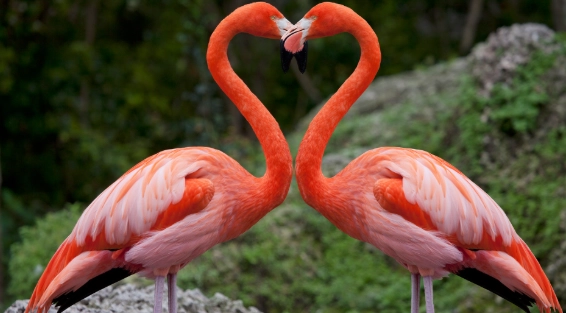
Flamingo courtship is one of the most elaborate bird displays. It starts with a few birds, then spreads like a wave through the colony.
- Head-Flagging: Stretching the neck up and turning the head side-to-side.
- Wing-Saluting: Spreading the wings to show off the vibrant black flight feathers against the pink.
- Marching: Large groups walking in unison, changing direction together.
It's loud, it's visual, and it's perfectly synchronized. This isn't just for fun; it hormonally synchronizes the females, leading them to lay eggs within a few days of each other. After the eggs are laid in muddy mound nests, both parents take turns incubating. Once the grey, downy chicks hatch, they form massive crèches—essentially chick daycare—supervised by a few adult birds while the others go off to feed. The parents can somehow find their own chick in the screaming, moving crowd of thousands by recognizing its unique call. How they do that is still a bit of a mystery to science, but it's essential.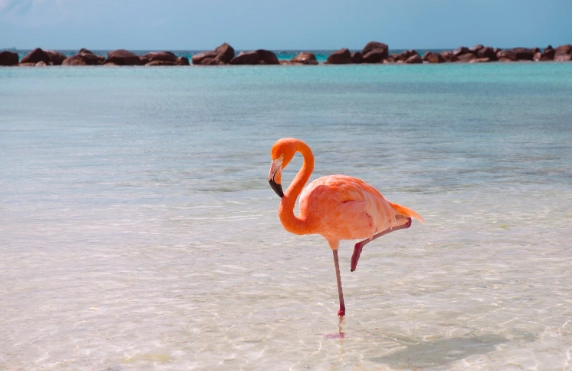
Fun (and Slightly Gross) Fact: Flamingo "milk" isn't milk like ours. It's a secretion produced in the upper digestive tract of both parents, rich in fat, protein, and, yes, carotenoids. They regurgitate this bright red liquid to feed their chicks for the first several months, which is what gives the chicks their initial pink tinge. Not exactly a gourmet meal, but it gets the job done.
The Not-So-Pink Reality: Conservation Challenges
This is where the story gets less pretty. While the American and Greater flamingos are currently stable, the other four species are on the IUCN Red List for a reason. Let's break down the threats.
Habitat Loss & Degradation: This is the big one. As mentioned, their specialized lakes are vulnerable. Mining (especially for lithium in South America's "lithium triangle" which overlaps with flamingo habitat), water diversion for cities and farms, and pollution are draining and poisoning these critical sites. The IUCN Red List is the go-to authority for tracking these status changes, and the trends for Andean, James's, and Chilean flamingos are worrying.
Human Disturbance: Flamingos are skittish. Tourism, if not managed responsibly, can cause colonies to abandon nests. Low-flying aircraft are a particular menace. A panicked colony stampeding off their nests can mean thousands of crushed eggs.
Climate Change: This is the wild card. It alters rainfall patterns, which can either flood nests or dry up lakes completely. Changing temperatures can also affect the delicate balance of algae and brine shrimp populations.
It's easy to feel helpless.
But there are people and organizations doing incredible work. The National Audubon Society's International Alliances Program, for instance, works with local partners in South America to protect key Andean flamingo sites through monitoring and community engagement. Supporting such groups is one of the most direct ways to help.
Your Flamingo Questions, Answered
I get a lot of the same questions about these birds. Here are the straight answers.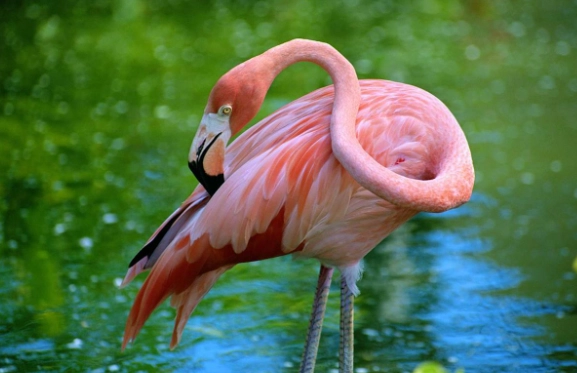
Wrapping It Up: Why Flamingos Matter
Flamingos are more than Instagram celebrities of the bird world. They are vital indicators of ecosystem health. Their presence tells us a saline or alkaline lake is functioning, its food web intact. Their decline is a flashing red light for the entire ecosystem. Protecting flamingos means protecting these unique, often overlooked wetlands that provide services like water filtration and support other wildlife.
They remind us of nature's brilliance—the upside-down beak, the one-legged stand, the pink-from-diet trick, the synchronized city of birds. They've evolved to conquer environments most life shuns. That deserves more respect than a plastic lawn decoration.
The next time you see a picture of a flamingo, I hope you see the survivor, not just the pink.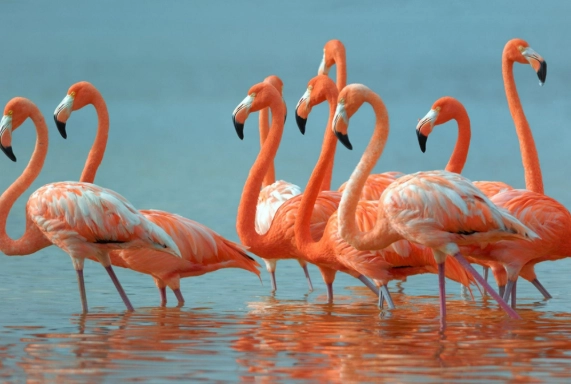
If you want to learn more or see how scientists are tracking these birds, check out the Flamingo Specialist Group, which is part of the IUCN's Species Survival Commission. It's a hub for the latest research and conservation action plans. Real, practical info from the folks on the ground.
Their future isn't guaranteed. But with awareness, responsible tourism, and support for habitat protection, we can make sure the pink parade keeps marching for generations to come.
Reader Comments