Quick Guide
I was filling up my bird feeder last weekend when I saw it – a quick, agile little bird scurrying headfirst down the trunk of my oak tree. It let out a sharp "yank-yank" call, nabbed a sunflower seed, and darted off. My neighbor, watching from his porch, called out, "Cute little woodpecker!" And that's the moment I realized just how widespread this mix-up is. So let's get the answer out of the way right at the start, because I know that's why you're here.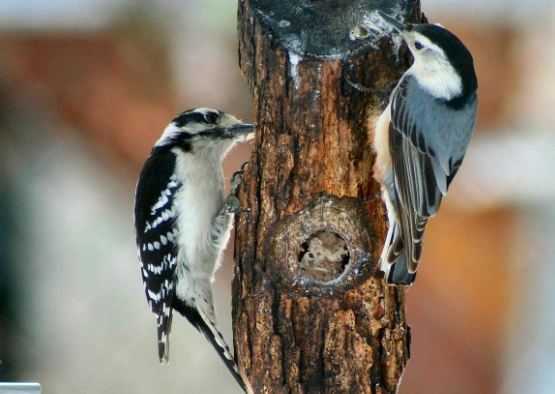
No. A White-breasted Nuthatch is not a woodpecker.
Not even a little bit. They belong to completely different families in the bird world. But honestly, I don't blame anyone for getting confused. From a distance, they share a similar job description: tree-climbing, bug-eating, cavity-nesting birds. They even sound like they're tapping on wood sometimes. The confusion between a White-breasted Nuthatch and a woodpecker is one of the most common identification puzzles for new birdwatchers, and even some seasoned ones glance too quickly.
The Core Mix-Up: People see a bird on a tree trunk and their brain jumps to "woodpecker." It's a logical first guess. But the animal kingdom is full of look-alikes that aren't related – think dolphins and fish, or butterflies and moths. The nuthatch and woodpecker situation is a classic case of convergent evolution, where unrelated species develop similar traits to solve similar problems (like living on tree trunks).
Why the Confusion? The Shared Stage
Before we dive into the differences, it's only fair to look at why the question "Are White-breasted Nuthatches woodpeckers?" pops up so often. They really do share the same backyard theater and play somewhat similar roles.
First, their habitat. You find both of them on trees. If you're looking at bark, you might see either. Second, their menu has significant overlap. Both love insects and larvae hiding in the crevices of bark. A Downy Woodpecker and a White-breasted Nuthatch might be foraging on the same tree just minutes apart, seeking the same hidden bugs.
Then there's the sound. Not their calls – those are very different – but the foraging sound. A nuthatch can make a subtle tapping or scraping noise as it pries under bark. It's not the loud, rhythmic drumming of a pileated woodpecker, but to the untrained ear, any tapping from a tree trunk can sound "woodpecker-ish."
Finally, the real clincher: the nest site. Both are cavity nesters. They raise their young in holes in trees. This is a huge point of similarity. If you see a bird zipping in and out of a hole in a tree, your first thought isn't "Is that a nuthatch?" – it's often "Oh, a woodpecker's nest!"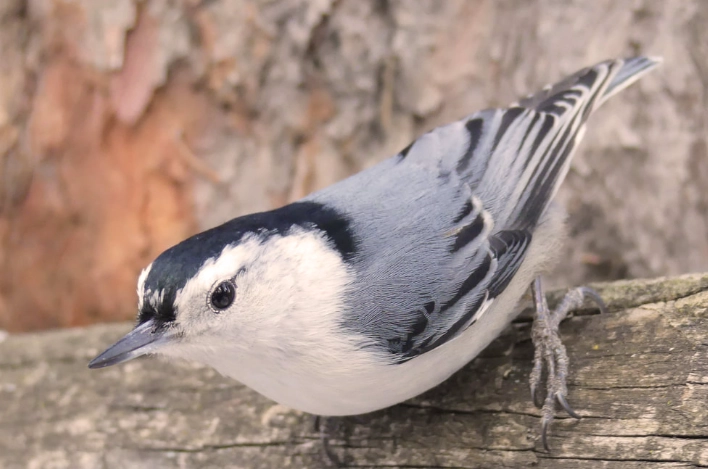
I remember spending nearly an hour once watching what I thought was a Downy Woodpecker excavating a nest hole. The bird was small, black and white, and chipping away. It wasn't until it turned and I saw its clean white face and lack of any red marking that I realized my mistake. It was a nuthatch, and it wasn't excavating a new hole – it was just modifying an old one. That was the day I really started paying attention to the details.
So, the confusion is understandable. But it's in the details where the fascinating truth lies. Let's break down exactly what sets them apart.
The Nitty-Gritty: How to Tell a Nuthatch from a Woodpecker
This is where we move from generalities to specifics. When you know what to look for, the differences become as clear as day. I find it helpful to think about it in layers: how they look, how they move, how they act, and how they sound.
Anatomy 101: Built for Different Jobs
This is the foundation. Woodpeckers are the construction crew and demolition experts of the tree world. Their bodies are tools for chiseling. A woodpecker's beak is like a sturdy, sharp chisel – straight, pointed, and incredibly strong. It's attached to a skull with amazing shock-absorbing adaptations (a topic you can delve into with resources from the Cornell Lab of Ornithology). Their neck muscles are powerful. Their feet are zygodactyl – two toes pointing forward, two pointing backward – perfect for gripping vertical surfaces like a climbing harness.
Now, look at a White-breasted Nuthatch. Its beak is more like a fine pick or a pair of forceps. It's longer, slenderer, and slightly upturned. It's not for hammering; it's for probing, prying, and picking. Their feet? Three toes forward, one back, like most perching birds (passerines). They're agile, but they're not built for the sustained, heavy hammering that defines a woodpecker's life. The nuthatch's tail feathers are also soft and not used for support, unlike the stiff, pointed tail feathers of a woodpecker that act as a prop.
Quick Fact: The name "nuthatch" comes from their habit of jamming nuts (or seeds) into tree bark and then "hatching" (an old word for hacking) them open with their beak. A woodpecker might try to pound a nut open.
The Movement Tells the Story
This is the single biggest giveaway, and my favorite way to distinguish them. Watch how the bird moves on the tree.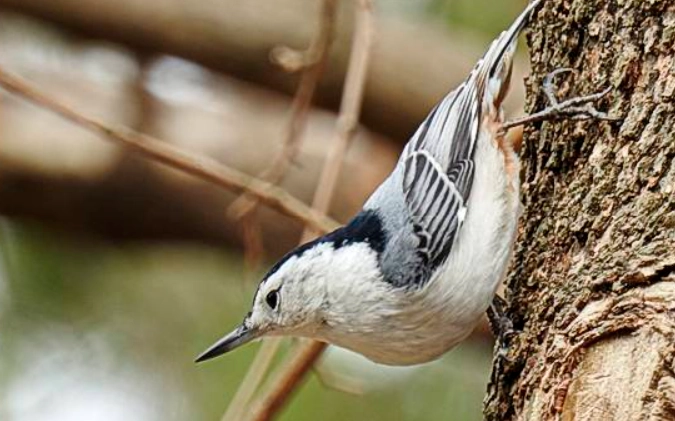
Woodpeckers are upwardly mobile. They hitch themselves up a tree trunk in jerky, upward movements. They almost always move upward or laterally. Seeing one go headfirst down a trunk is incredibly rare. Their body is usually angled slightly away from the tree.
White-breasted Nuthatches are the acrobats. They are the only common backyard bird in North America that regularly walks headfirst down a tree trunk. They spiral around branches. They hang upside-down from twigs. Their movement is fluid, inquisitive, and multidirectional. If you see a bird walking down a tree like it's no big deal, you are almost certainly looking at a nuthatch. This unique behavior is a dead giveaway that answers "Are White-breasted Nuthatches woodpeckers?" with a visual no.
A bird walking down a tree is a nuthatch. A bird hitching up a tree is probably a woodpecker.
Table: The Side-by-Side Breakdown
| Feature | White-breasted Nuthatch | Typical Woodpecker (e.g., Downy) |
|---|---|---|
| Taxonomic Family | Sittidae (Nuthatches) | Picidae (Woodpeckers) |
| Primary Movement on Tree | Up, down, sideways, upside-down. Famous for walking headfirst down trunks. | Primarily upward or lateral hitches. Almost never descends headfirst. |
| Beak Shape & Use | Long, slender, slightly upturned. For prying, probing, and picking. | Straight, stout, chisel-tipped. For hammering, drilling, and chiseling. |
| Tail | Short, soft feathers. Not used as a prop. | Stiff, pointed tail feathers. Used as a crucial third leg for support. |
| Foraging Sound | Subtle scraping, prying sounds. | Loud, rhythmic pecking or drumming. |
| Common Call | A rapid, nasal, laughing "yank-yank-yank" or "inh-inh-inh". | A sharp "pik" or descending rattle (species-dependent). |
| Nesting | Uses existing natural cavities or old woodpecker holes. May modify entrance with mud. | Excavates its own fresh cavity in dead wood. |
Beyond the Basics: Three Core Differences That Seal the Deal
Okay, so they look and move differently. But the separation goes deeper into their very lifestyles.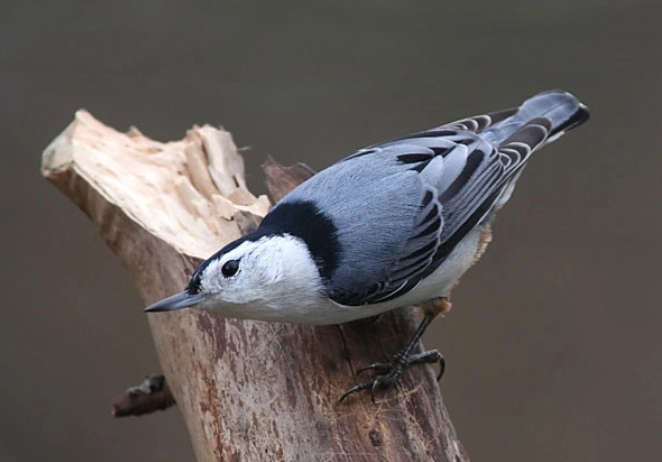
1. The Foraging Technique (The "How" of Eating)
A woodpecker is a percussionist. It uses powerful blows to break into wood, drill for sap, or uncover tunnels of boring insects. Its foraging is loud, deliberate, and leaves clear marks (rows of holes, stripped bark).
A nuthatch is a stealthy investigator. It uses its slender beak to carefully lift flakes of bark, probe into deep crevices, and extract insects and spiders that a woodpecker might miss. It's more of a precision tool user than a power tool. They're also famous for their caching behavior, hiding seeds in bark crevices to eat later – something you rarely see woodpeckers do systematically.
2. The Nesting Strategy (The "Home" Difference)
This is a huge one. Woodpeckers are primary cavity nesters. They are the architects. They create new nesting holes every year, which provides crucial homes for a whole host of other species (like, you guessed it, nuthatches).
White-breasted Nuthatches are secondary cavity nesters. They don't excavate their own holes from solid wood. They rely on finding existing holes – often those abandoned by woodpeckers. They are tenants, not builders. They might tidy up the hole or famously smear sticky resin or mud around the entrance (scientists think this might deter predators or competitors). You can learn more about cavity nesting dynamics from forestry resources like those from the USDA Forest Service.
Myth Buster: If you see a bird carrying mud or resin to a tree hole, it's almost certainly a nuthatch (or a bluebird, for mud). A woodpecker carries wood chips out, not mud in.
3. The Social and Vocal World
Listen. Just close your eyes and listen. The call of a White-breasted Nuthatch is unmistakable once you know it: a series of nasal, cheerful, slightly comical "yank" notes. It's one of the sounds of a deciduous forest.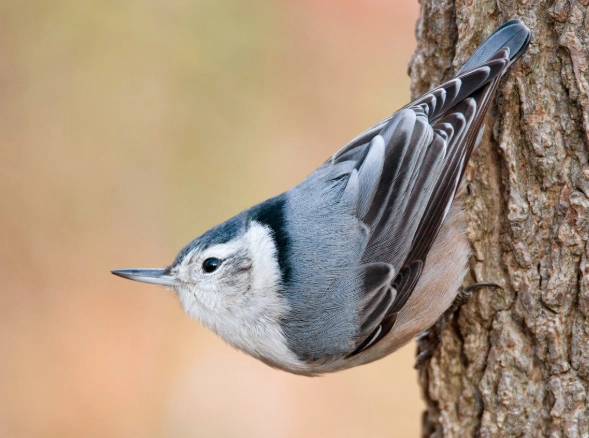
Woodpeckers have a variety of calls, but many are sharp "pik" or "peek" notes, or rolling drums. They also communicate through that iconic drumming on resonant surfaces – a rapid-fire tattoo that serves as a territory marker and mating call. Nuthatches don't drum like that. Their communication is all about those nasal vocalizations.
Socially, nuthatches often join mixed-species foraging flocks in winter with chickadees, titmice, and yes, sometimes Downy Woodpeckers. But even in the flock, their unique movement gives them away.
What About Their Ecological Niche?
This is where it gets really cool. They aren't direct competitors. Think of them as specialists in the same office building who work different shifts and use different tools, so they don't get in each other's way.
The woodpecker, with its hammering, opens up new feeding opportunities. It exposes insect galleries and creates splinters. The nuthatch, with its finer tools, comes in afterward and cleans up the insects in the smaller crevices and under the loosened bark that the woodpecker might have missed. One creates opportunities for the other. It's a neat little ecosystem partnership.
So, while you might ask, "Are White-breasted Nuthatches woodpeckers?" from an identification standpoint, ecologically, they're more like complementary neighbors. They reduce competition by having different, finely-tuned techniques.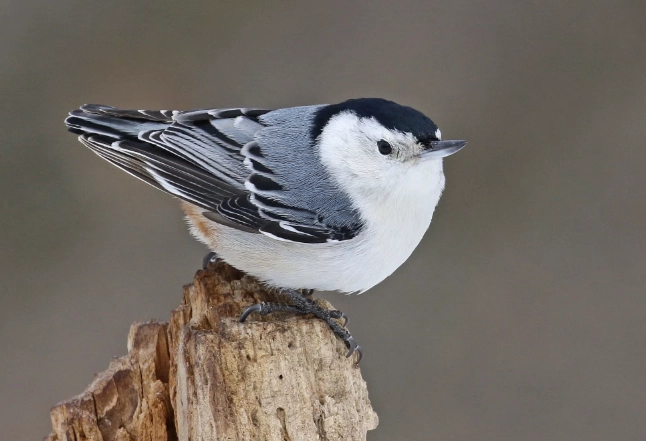
Frequently Asked Questions (The Stuff You're Really Wondering)
Quick-Fire Identification Guide: What to Look For in 10 Seconds
You're in your yard, you see a bird on a tree. Quick! Ask yourself these questions:
- Which way is it going? Headfirst down = Nuthatch. Hitching up = Woodpecker.
- What's the posture? Body angled away from tree, tail braced against trunk = Woodpecker. Body close to tree, tail not used for support = Nuthatch.
- Hear a call? Nasal "yank" = Nuthatch. Sharp "pik" or loud drumming = Woodpecker.
- At the feeder? Zips in and out quickly, may cache seeds = Nuthatch. Stays put on suet, feeds steadily = Woodpecker.
Master these, and you'll never have to wonder "Are White-breasted Nuthatches woodpeckers?" again. You'll just know.
The bottom line is this: White-breasted Nuthatches and woodpeckers are a beautiful example of nature finding different solutions to the same challenge of living on a vertical, bug-filled landscape. One is a powerhouse driller, the other an agile acrobat. Both are fascinating, beneficial, and a joy to watch. So next time you see that little gray-blue bird hustling headfirst down your maple tree, you can smile and know you're watching a nuthatch – a unique and wonderful bird that stands proudly in its own family, no woodpecker label needed.
Reader Comments