Quick Navigation
- Spotting the Wilson's Warbler: Beyond the Basic Yellow
- Where to Find Them: Wilson's Warbler Habitat Decoded
- Learning the Wilson's Warbler's Song and Calls
- A Year in the Life: Breeding, Migration, and Wintering
- Can You Attract Wilson's Warblers to Your Yard?
- Conservation Status and How to Help
- Wilson's Warbler FAQs: Your Questions, Answered
- Final Thoughts: Why This Little Bird Matters
Let's talk about one of the cheeriest little packages of energy that flits through the underbrush every spring and fall: the Wilson's Warbler. If you've ever been out in a damp thicket and seen a flash of brilliant yellow, like a sunbeam with wings, chances are you've met one. They're not the rarest bird, but they have this way of making a birding trip feel successful. That bright color is just an instant mood lifter.
But here's the thing. For a bird that seems so boldly colored, they can be surprisingly tricky. They don't always sit still for a portrait, and if you're just learning bird songs, their chatter can blend into the background noise. I remember the first time I confidently identified one... only to have a more experienced birder gently point out it was a female Common Yellowthroat. A bit embarrassing, but hey, we all start somewhere.
That's why I wanted to put this guide together. It's the resource I wish I'd had. We're going to move beyond just "yellow bird with a black cap" and get into the nitty-gritty of what makes a Wilson's Warbler tick. Where do they hide? What do they really sound like? And can you ever get them to visit you? Let's dig in.
Spotting the Wilson's Warbler: Beyond the Basic Yellow
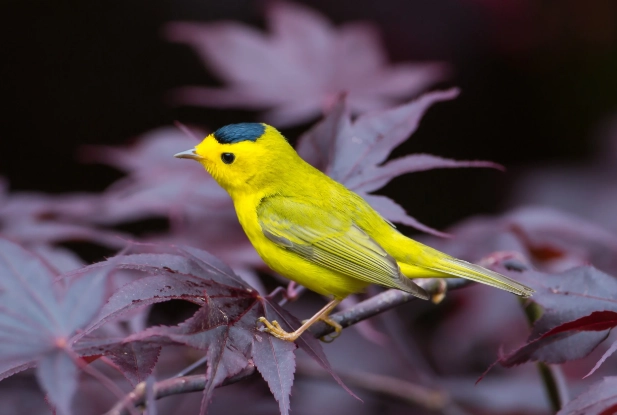
Everyone starts with the classic description: a small, round yellow warbler with a black cap. And for adult males, that's pretty much it. It's a dead giveaway. But birding isn't always that straightforward. You'll see females, young birds, and birds that are molting. Relying solely on that black cap will lead to missed IDs.
The yellow isn't just any yellow. It's a clean, lemon-yellow on the underparts, fading to a more yellowish-olive on the back. Unlike some warblers, there are no streaks on the breast or flanks. It's a pure, smooth yellow belly. The face is also yellow, which is a key point. Compare that to a similar-looking Common Yellowthroat, where the female has a grayish or brownish face. The Wilson's always looks like it's wearing a yellow mask.
Let's break down the specifics, because the devil is in the details.
Male vs. Female vs. Juvenile: A Quick Visual Guide
Not all Wilson's Warblers look identical. Here’s how to tell them apart at a glance.
| Feature | Adult Male | Adult Female | Juvenile/Fall Bird |
|---|---|---|---|
| Cap | Solid, well-defined black cap. The star of the show. | Duller, often a grayish-black or dark olive cap. Sometimes just a faint shadow of a cap. | No distinct black cap. The head is olive-green like the back. |
| Face & Underparts | Bright, clear lemon-yellow. | Yellow, but often slightly duller than the male's. | Pale yellow, sometimes with a faint grayish wash on the chest. |
| Back & Wings | Olive-green. | Olive-green. | Olive-green, possibly a bit browner. |
| Key ID Tip | Unmistakable black beret on a yellow body. | Look for the hint of a dark cap and the pure yellow face/chest. | Eliminate other warblers first. Look for unstreaked yellow underparts and active, tail-pumping behavior. |
See? The female and young birds are where people get tripped up. Without the bold cap, you have to focus on the overall package: a small, unstreaked, yellow warbler that loves dense, low cover. That tail-pumping habit is a huge clue. They flick their tails downward frequently, almost like a nervous tick. I don't know any other common yellow warbler that does it quite as persistently.
Where to Find Them: Wilson's Warbler Habitat Decoded
You won't find a Wilson's Warbler just anywhere. They're habitat specialists, and knowing their preferred real estate is half the battle. Think damp, messy, and dense.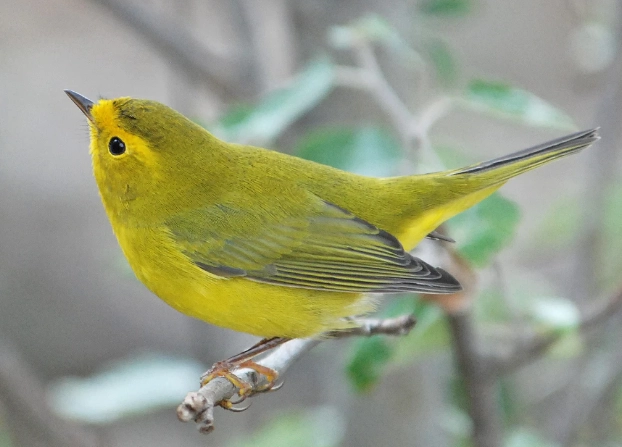
During the breeding season, they head north and up. We're talking Canada, Alaska, and the mountainous western U.S. Here, they seek out:
- Willow and Alder Thickets: Especially along streams, rivers, and bog edges. This is prime territory.
- Damp Forest Edges: The transition zone between open areas and coniferous forests, particularly where there's a dense understory.
- Regenerating Burn Areas: A few years after a fire, when the shrubs and young trees come back thick, warblers move in.
But here's the good news for most of us: you don't have to trek to the remote boreal forest to see one. Wilson's Warblers are migration superstars. They travel huge distances, wintering from Mexico down through Central America. This means twice a year, they flood through nearly all of the United States.
During migration (primarily April-May and August-September), their habitat requirements relax a bit. They'll use:
- City parks with dense shrubs (I've seen them in New York's Central Park).
- Botanical gardens.
- Riparian corridors (any green space along a waterway).
- Even overgrown backyards with a good water source.
The key is thick, low cover near water. They're not usually up in the high canopy like some warblers. Look down. Scan those shadowy patches near the ground.
Learning the Wilson's Warbler's Song and Calls
This is where you go from seeing a few birds to truly finding them. Their song isn't the most musical, but it's distinctive once you know it.
The song is a rapid, chattering series of notes that descends in pitch and often trails off at the end. The best description I've heard is that it sounds like a handful of marbles being poured onto a table: chi-chi-chi-chi-chi-chi-chit. It's not sweet, it's busy and mechanical.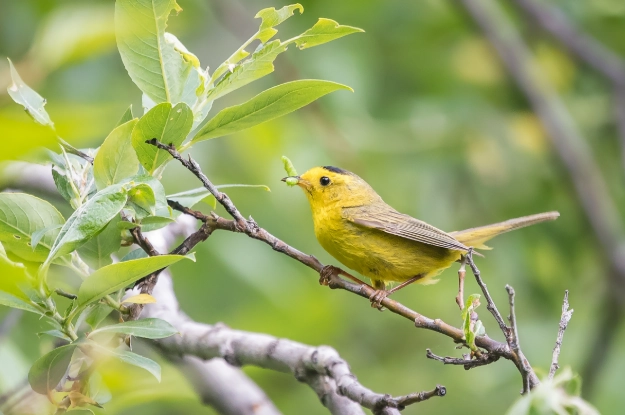
Their calls are even more useful during migration. The most common is a sharp, loud "CHIP!" or "JIP!" It's a hard, metallic sound. When you're in a migration hotspot and hear that sharp note from the bushes, it's always worth stopping and looking for a flicker of yellow.
Seriously, the best thing you can do is listen. The Cornell Lab of Ornithology's Macaulay Library has fantastic, clear recordings. Play them a few times before your next walk. It makes all the difference.
A Year in the Life: Breeding, Migration, and Wintering
To really understand any bird, you need to know its annual cycle. The Wilson's Warbler lives a life of extreme long-distance travel.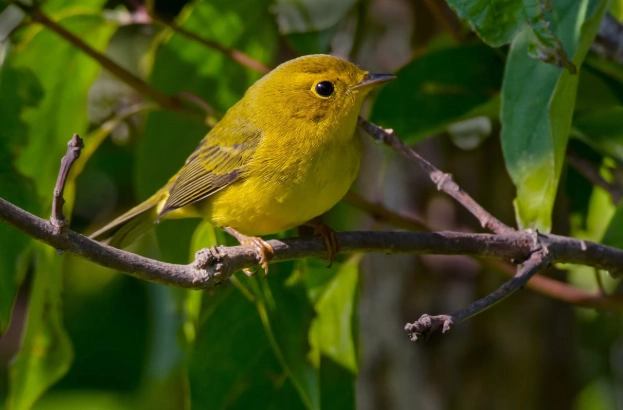
Nesting and Breeding (May - July)
They build a neat, cup-shaped nest right on the ground or in a low shrub, rarely more than a few feet up. It's made of leaves, grass, and moss, and lined with fine hair or plant down. This ground-nesting habit makes them vulnerable to predators and disturbance. The female lays 4-6 white eggs with brown speckles.
It's a brief, intense period in the far north before the urge to head south kicks in again.
The Great Migration (Spring & Fall)
This is when most birders encounter them. They move at night, using the stars to navigate, and refuel during the day. Spring migration (northbound) is usually more concentrated and frantic, as birds race to claim the best breeding territories. Fall migration (southbound) is more leisurely, with juveniles and adults wandering through over a longer period.
Wintering in the Tropics (October - March)
While we're shivering, Wilson's Warblers are in the warm, humid forests and shade-coffee plantations of Central America. They switch from eating insects to including more berries and nectar. It's a tough life, competing with resident tropical birds, but it's a necessary escape from the northern winter.
Can You Attract Wilson's Warblers to Your Yard?
This is a common question. The honest answer? It's challenging, but not impossible, especially if you live along a migration corridor.
Wilson's Warblers are insectivores. They don't eat seed from traditional bird feeders. So, you have to think like a bug.
Here’s what might convince one to stop by during migration:
- Water, Water, Water: A birdbath, especially a ground-level one or one with a gentle drip/mister, is a magnet. They need to drink and bathe.
- Dense Native Shrubs: Plant native bushes and thickets that provide cover and attract insects. Willows, dogwoods, and serviceberries are great choices.
- Leave the Leaves: Don't be too tidy! A layer of leaf litter under your shrubs is a bug buffet.
- No Pesticides: This is non-negotiable. If you kill the insects, you kill the bird's food source.
I've had them visit my Pacific Northwest yard exactly twice, both times in late April. They were in a tangled salmonberry thicket near my pond, presumably grabbing spiders. It was a thrilling, fleeting visit. Don't expect them to stay, but creating a welcoming pit-stop is a huge win.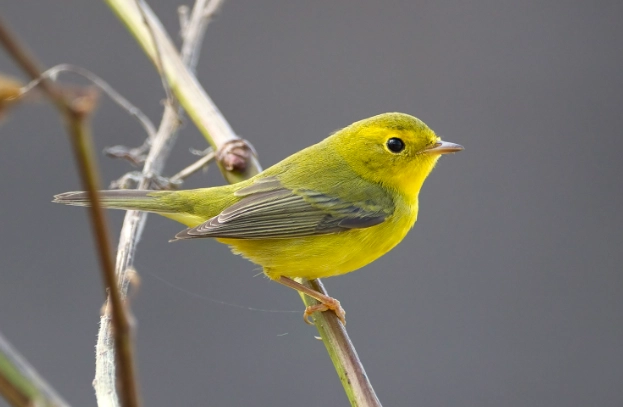
Conservation Status and How to Help
Currently, the Wilson's Warbler is listed as a species of Least Concern by the IUCN. Their population is still relatively large. But that doesn't mean everything is fine.
Like all long-distance migrants, they face mounting threats:
- Habitat Loss: On both breeding and wintering grounds. Development, agriculture, and deforestation chip away at the places they need to survive.
- Climate Change: This is a big one. Shifting temperatures can affect insect emergence (their food) and alter the timing of migration, creating a mismatch.
- Collisions: With windows, towers, and wind turbines.
So what can you do? It feels big, but small actions matter.
- Make Your Windows Safe: Use decals, screens, or special tape to prevent collisions. It saves countless birds, not just warblers.
- Keep Cats Indoors: Outdoor cats are a leading human-caused source of bird mortality.
- Support Habitat Conservation: Donate to or volunteer with groups that protect land along migration routes, like the Nature Conservancy or local land trusts.
- Be a Citizen Scientist: Report your sightings to eBird. This free data helps scientists track population trends and identify critical stopover sites for birds like the Wilson's Warbler.

Wilson's Warbler FAQs: Your Questions, Answered
Final Thoughts: Why This Little Bird Matters
Look, the Wilson's Warbler isn't the biggest, flashiest, or rarest bird out there. But to me, it's a perfect little indicator of healthy ecosystems. Its need for dense, damp thickets tells us something about the land. Its incredible migratory journey links the boreal forests of Canada to the coffee farms of Costa Rica. When you see one, you're seeing a thread in a vast, continental tapestry.
It’s also a bird of pure, simple joy. That bright yellow, that cheerful (if unmusical) chatter, that energetic tail-flick—it’s hard not to smile. They represent the accessible wonder of migration. You don't need to go to some exotic locale. Just find a wet patch of willows in April or September, be patient, and look.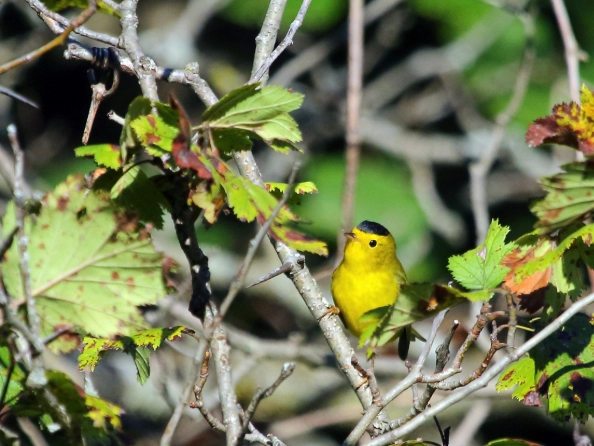
I hope this guide helps you have your own moments like that. Grab your binoculars, listen for that chattering song, and keep an eye out for a flash of yellow in the bushes. The Wilson's Warbler is out there waiting.
Reader Comments