In This Article
Let's talk about a bird that sounds more like a character from a mystery novel than a forest resident. If you've ever been camping in the eastern woods or even just have a decent-sized patch of trees behind your house, there's a good chance you've heard it. Not a simple tweet or chirp, but a full-blown, eight-note conversation that seems to ask a question and then answer it. "Who cooks for you? Who cooks for you-all?" That's the barred owl. It's not shy about making itself known.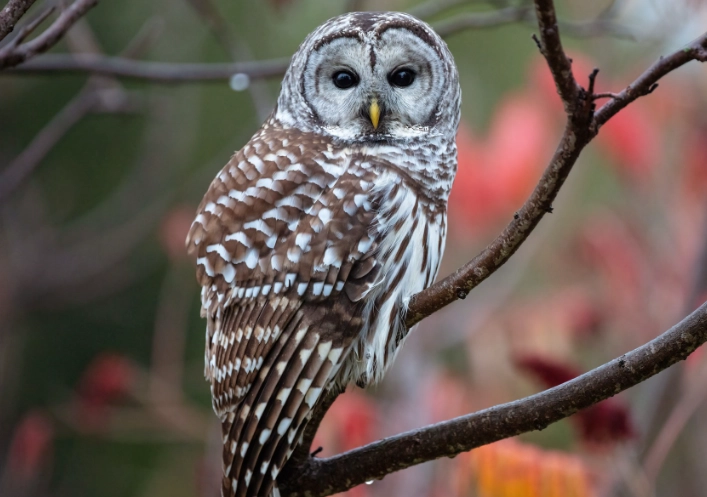
I remember the first time I heard one clearly. It was late, dead quiet, and then this series of hoots and cackles erupted from the pines. I'll be honest, it was a bit spooky before I knew what it was. Now, I listen for it. That call is the sound of a healthy, wet forest. This owl is more than just a cool noise in the night, though. It's a fascinating predator with a complicated life story, and it's right in the middle of some big conservation debates out west. Sticking to just the basics feels like a disservice. So, let's dig into everything that makes the barred owl such a compelling bird—from how to tell it apart from its look-alikes to why its expansion is causing headaches for biologists.
Quick Take: The barred owl (Strix varia) is a large, stocky owl native to eastern North America. It's famous for its distinctive vocalizations, dark eyes, and vertical belly barring. It's a generalist predator that thrives in mature forests near water.
What Does a Barred Owl Look Like? Spotting the Key Features
You can't mistake its voice, but what if you see one sitting still during the day? Barred owls have a very specific look. First off, they're big. I'm talking dinner-plate-sized face big. They lack the ear tufts that great horned owls sport, so their head looks perfectly round, which gives them a kind of stern, professorial look.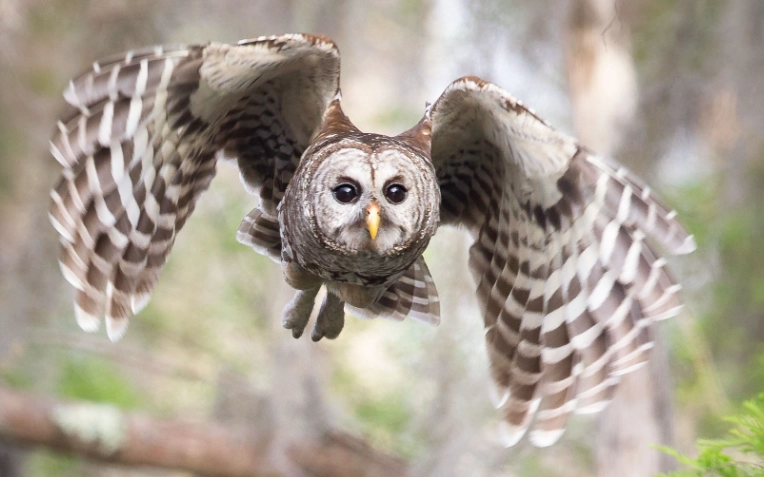
The coloring is where they get their name. Their underparts are a creamy white or pale gray, crossed with neat, vertical brown bars. It looks like someone carefully drew lines down its chest and belly. Their back is a mottled brown and white, which is perfect camouflage against tree bark. The face is another giveaway—it's framed by a large, dark brown or blackish disk, and inside that are their deep, almost black, eyes. No yellow eyes here. That dark-eyed gaze is pretty unique among common North American owls.
Barred Owl ID Cheat Sheet: Round head (no ear tufts), dark brown eyes, vertical brown bars on belly, horizontal bars on chest, mottled brown back. If it has yellow eyes and ear tufts, it's not a barred owl.
Barred Owl vs. Spotted Owl: The Look-Alike Showdown
This is where things get tricky and politically charged. Out west, there's the northern spotted owl, a threatened species that's been the poster child for old-growth forest conservation for decades. The barred owl, originally an eastern bird, has been marching westward across the continent for over a century. Now their ranges overlap, and they look really similar. Telling them apart is crucial for conservationists.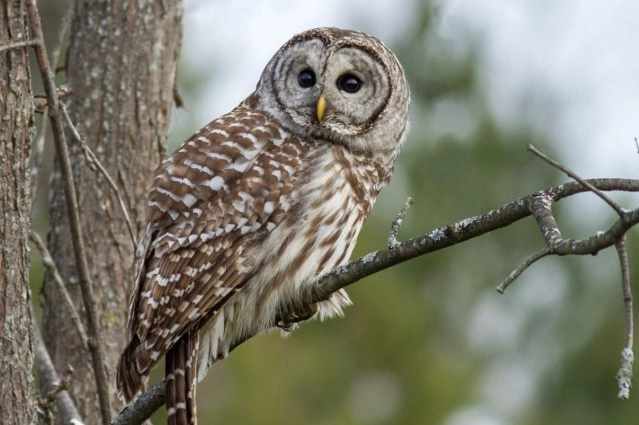
The main difference is in the, well, spots. The spotted owl has... spots. Its chest and belly are marked with roundish, white spots against a brown background. The barred owl, as we know, has vertical bars. The barred owl is also generally larger, heavier, and more aggressive. Its call is completely different—the spotted owl's call is a series of clear, mellow hoots, not the raucous "Who cooks for you?"
Here’s a quick table to break it down. I find visuals helpful, but since we can't show pictures, a detailed list of contrasts is the next best thing.
| Feature | Barred Owl | Northern Spotted Owl |
|---|---|---|
| Plumage Pattern | Vertical brown bars on belly. Horizontal bars on chest. | Round, white spots on chest and belly. |
| Eye Color | Dark brown, almost black. | Dark brown. |
| Size & Build | Larger, stockier, more aggressive. | Smaller, slightly more slender. |
| Primary Call | "Who cooks for you? Who cooks for you-all?" (8-note hoot). | Series of 3-4 mellow, clear hoots. |
| Native Range | Eastern North America (historically). | Pacific Northwest old-growth forests. |
| Conservation Status | Least Concern (population stable/increasing). | Threatened (population declining). |
The invasion of the barred owl into spotted owl territory is a massive problem. Barred owls are adaptable, they eat a wider variety of prey, and they outcompete the more specialized spotted owls. It's a direct threat to the spotted owl's survival. Agencies like the U.S. Fish and Wildlife Service are actively studying and managing this conflict, sometimes through controversial barred owl removal programs. It's a messy, no-win situation in conservation circles.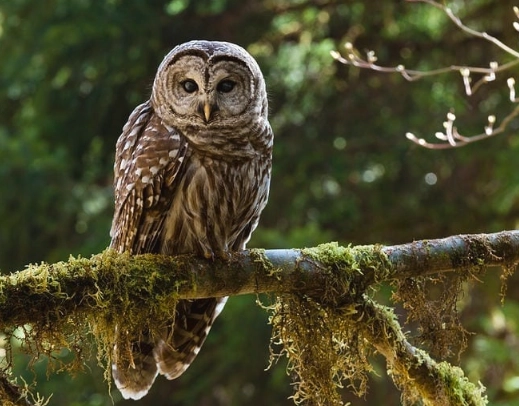
The Voice of the Forest: Understanding Barred Owl Sounds
If looks are its resume, its voice is its personality. The barred owl call is legendary. That classic eight-note hoot is actually a mnemonic. It really does sound like "Who cooks for you? Who cooks for you-all?" with the last note dropping in pitch. It's a territorial call, mostly used by males, and you'll hear it year-round, but especially during fall and late winter as breeding season kicks off.
But that's just the headline act. Barred owls have a whole repertoire. They make monkey-like cackles, barks, and gurgles. Sometimes it sounds like maniacal laughter. Hearing that for the first time in a dark forest is an experience you won't forget. They can also make a single, explosive hoot when alarmed. The Cornell Lab of Ornithology's All About Birds page has fantastic recordings that really bring this to life. Go listen—it's worth it.
Where Do Barred Owls Live? (Hint: Look for Water)
Barred owls are creatures of the forest, but not just any forest. They have a real thing for water. You'll find them in dense, mature deciduous or mixed forests, almost always near a swamp, river, or pond. They like big, old trees with natural cavities for nesting. This affinity for wet woodlands is a key part of their identity.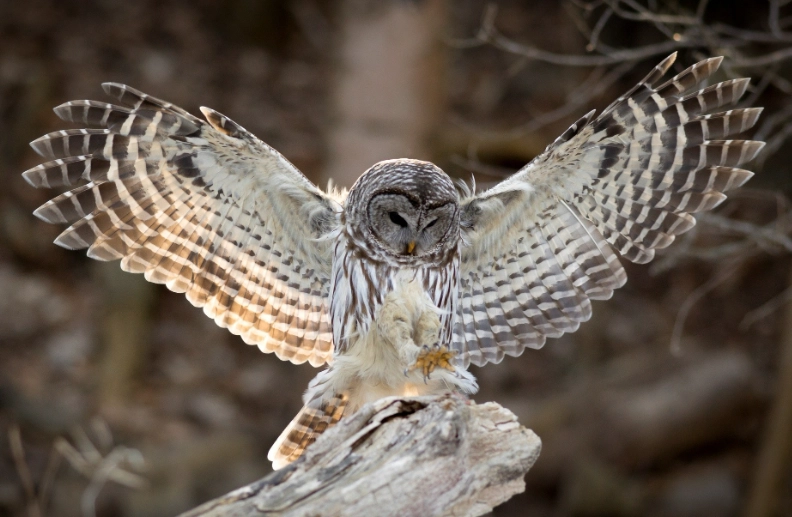
Their original range was the eastern half of the U.S. and southern Canada. But over the last 100+ years, they've done something remarkable. They've expanded northwest across Canada's boreal forest and then south down the Pacific Coast. Theories suggest human changes to the landscape—like fire suppression and tree planting—created corridors they could use. Now, they're firmly established from the Atlantic to the Pacific, much to the dismay of the spotted owl.
The Life of a Barred Owl: Diet, Family, and Behavior
So what does a barred owl do all night? It hunts. It's a sit-and-wait predator, perching on a branch and using its incredible hearing (those facial disks funnel sound to its ears) to locate prey. Then it swoops down silently, thanks to specially adapted fringed feathers on its wings.
Their diet is a classic "generalist" menu. They'll eat whatever is abundant and catchable:
- Small Mammals: This is the main course. Voles, mice, shrews, and even young squirrels or rabbits.
- Birds: They're not picky. They'll take anything from woodpeckers to jays, sometimes plucking them off roosts at night.
- Amphibians & Reptiles: Remember the water connection? Frogs, salamanders, and snakes are common prey, especially in wet areas.
- Invertebrates: Crayfish, large insects, earthworms. They're not above a crawdad dinner.
I once found an owl pellet under a roost tree (a pellet is the indigestible fur and bones they cough up). It was full of mouse skulls and frog leg bones—a perfect snapshot of their varied diet.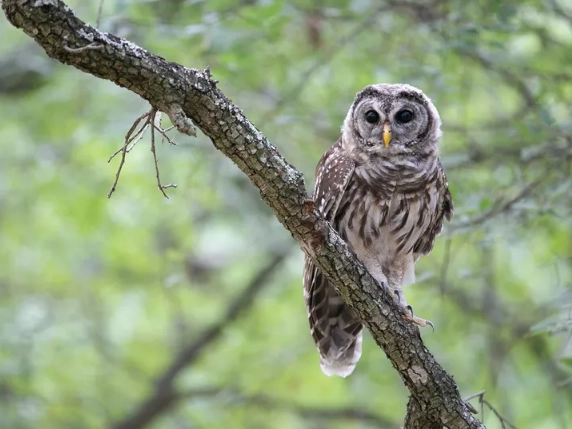
Nesting and Raising a Family
Barred owls are monogamous and often pair for life. They don't build their own nests. Instead, they're cavity nesters, taking over old holes made by pileated woodpeckers or using natural hollows in big trees. Sometimes they'll even use a large nest box if you put one up.
Breeding starts early. You might hear their duetting calls in late winter. The female lays 2-3 pure white eggs and does almost all the incubating for about a month. The male brings her food. Once the owlets hatch, they're helpless little white fluffballs for a few weeks. Then they get adventurous. It's common to see fat, fuzzy barred owl fledglings sitting on branches long before they can fly well, still begging loudly from their parents. The family unit stays together through the summer and often into fall.
A quick aside: While it's tempting to think a fledgling on the ground needs help, it usually doesn't. The parents are almost always nearby, still feeding it. The best thing to do is leave it alone or, if it's in immediate danger (like a road), move it to the base of a nearby tree. Don't try to raise it yourself—it's illegal without permits and rarely ends well for the owl.
Barred Owls and Humans: Coexistence and Conflicts
For most of us in the East, barred owls are a welcome part of the environment. They control rodent populations and their calls add a wild soundtrack to the night. You can even attract them by leaving large, dead trees (snags) standing for potential nest cavities or by installing a specially designed barred owl nest box.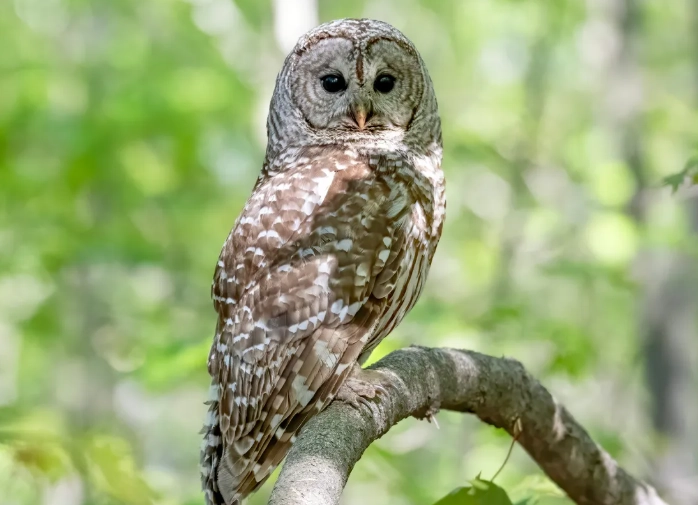
But there are occasional conflicts. Their adaptability means they sometimes move into suburban areas with large trees. A barred owl might decide your backyard bird feeder is an all-you-can-eat buffet, which isn't great for the songbirds. In very rare cases, a territorial barred owl might swoop at a person during nesting season if it feels its nest is threatened. These are defensive acts, not attacks. If it happens, just wave your arms and leave the area. It's their home, after all.
The major human conflict, as we touched on, is on the West Coast. The barred owl's success is the spotted owl's disaster. Managing this involves intense research and difficult decisions. It's a stark reminder that in nature, a "successful" species in one area can be an invasive threat in another.
Conservation Status: Are Barred Owls in Trouble?
Globally, and in their native eastern range, barred owls are doing just fine. The International Union for Conservation of Nature (IUCN) lists them as Least Concern. Their population is widespread and appears stable, even increasing in many areas due to their adaptability.
Their conservation story is really two stories. In the East, they're a success. Protecting mature forests and wetlands benefits them directly. In the West, they're viewed as an invasive species threatening the native spotted owl. From a purely barred owl perspective, they're thriving. From an ecosystem perspective in the Pacific Northwest, their presence is a serious management challenge. It's a complex picture without easy answers.
The barred owl is more than just a bird with a cool call. It's a resilient survivor, a skilled hunter, and an unwitting player in a major ecological dilemma. Next time you're in the woods at night and hear that unmistakable series of hoots, you'll know you're listening to one of North America's most successful and vocal forest dwellers. Just listen. Maybe don't answer its question about who's cooking dinner.
And if you're out west, listening might be part of a much bigger story about the future of an entire forest ecosystem. The barred owl doesn't know any of this, of course. It's just living its life, hunting in the woods, and calling out into the dark.
Reader Comments