You’re out in the woods just after dusk, and you hear it—a series of low hoots from the deep shadows. Was that a Great Horned Owl? A Barred Owl? The uncertainty is part of the thrill, but also the frustration. Owl species identification feels tricky because we’re trying to see fine details in near darkness, and most guides overwhelm you with every species under the sun. Let’s cut through that. This isn’t an encyclopedia. It’s a field method, born from years of missed IDs and quiet victories, that will help you narrow down the possibilities quickly and confidently.
What’s Inside This Guide?
How to Identify Owls: A Step-by-Step Field Method
Forget trying to memorize 200 species at once. In the field, you need a filter. Follow this sequence. It works.
Step 1: Listen First. Your ears are your best tool at night. Before you even lift your binoculars, stop and listen for a full minute. Is it a hoot, a screech, a whistle, or a series of rapid notes? The call is often the fastest route to an ID. The Barred Owl’s “Who cooks for you-all?” is unmistakable. But here’s the nuance beginners miss: location matters. A series of deep hoots in a California oak woodland is more likely a Great Horned Owl, but the same pattern in a Maine spruce forest could be a Great Gray Owl. Sound gives you a shortlist.
Step 2: Assess Silhouette and Size. Can you see its outline against the twilight sky? This is critical. Size is relative, so use known objects. Is it crow-sized (Screech-Owl), goose-sized (Great Horned), or larger? Look for the head shape. Does it have prominent ear tufts (Great Horned, Screech-Owl) or a smooth, round head (Barn Owl, Barred Owl)?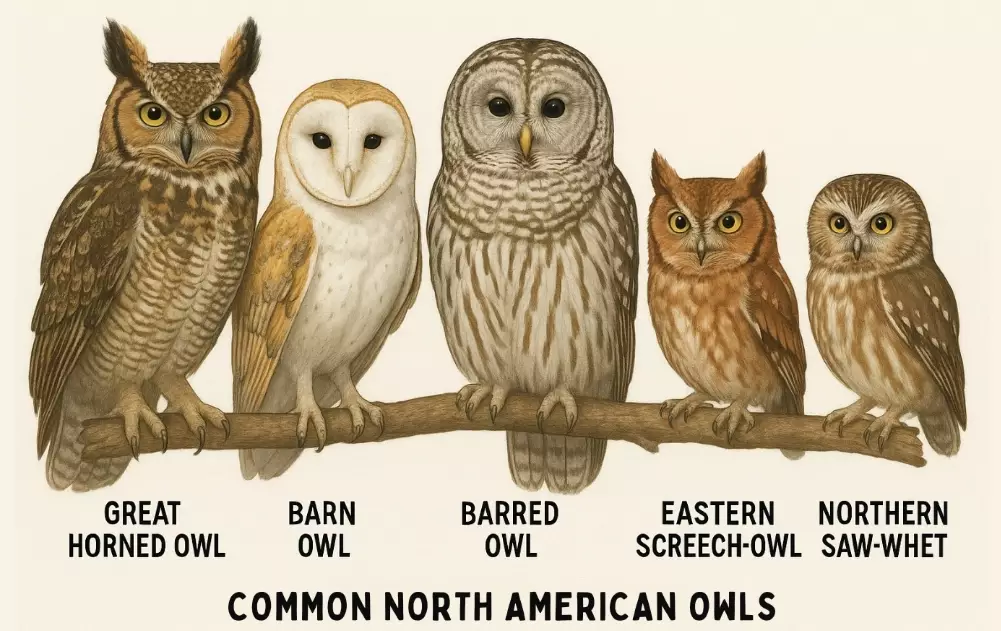
Quick Tip: “Ear tufts” are just feathers. They have nothing to do with hearing. Their real function? Break up the owl’s outline for better camouflage and express mood. An alert owl will raise its tufts.
Step 3: Zoom In on Key Features. Now, if you have a decent view, look for these three things in order of importance:
Facial Disc: Is it a stark, white heart-shape (Barn Owl), a well-defined pale gray circle (Great Gray), or less distinct? The disc funnels sound to their ears.
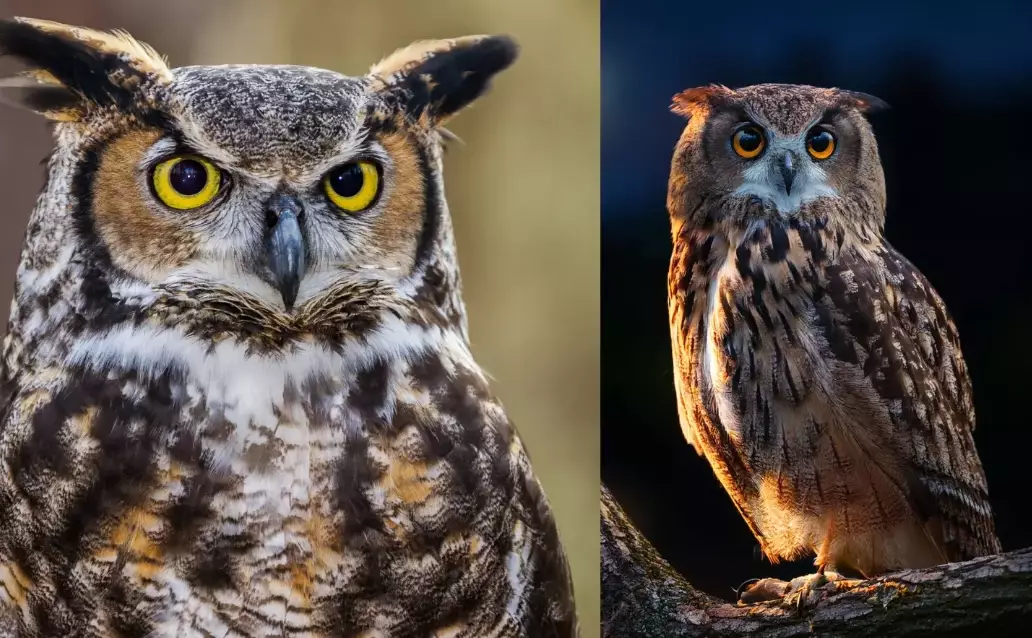
Eye Color: This is surprisingly reliable. Yellow eyes (Great Horned, Barred), dark brown/black eyes (Barn Owl, Spotted Owl), or orange eyes (Eurasian Eagle-Owl, though less common in NA).
Plumage Color & Pattern: Last on the list because light is bad. Is it overall pale (Barn Owl), mottled gray/brown (Great Horned), or heavily barred horizontally across the chest (Barred Owl)?
Step 4: Lock It Down with Habitat and Behavior. This is the clincher. You think you see a Barn Owl? Is it in an open field, grassland, or barn loft (makes sense), or is it deep in a closed-canopy forest (almost impossible)? Behavior helps too. Is it perched stoically on an open branch, or actively fluttering moth-like over a meadow?
Key Features for Owl Identification (Forget the Obvious)
Everyone talks about eyes and tufts. Let’s go deeper.
The Overlooked Giveaway: Feet and Legs
Most guides ignore this. Is the leg feathered all the way to the toes (an adaptation for cold climates, like the Great Gray or Snowy Owl), or are the lower legs and toes bare (like many warmer-climate owls)? If you see a large, pale owl on a fence post in winter with fully feathered feet, you’re almost certainly looking at a Snowy Owl, not a light-colored Great Horned.
Flight Profile: Silhouette in Motion
How does it fly? The Barn Owl has a distinctive, buoyant, moth-like flight with long, dangling legs. A Barred Owl has a direct, purposeful flight with deep wingbeats. A Northern Saw-whet Owl has a rapid, woodpecker-like bounding flight. Seeing an owl move can instantly rule out several species.
A Common Pitfall: Don’t rely solely on “commonness” in your region. Range maps show averages, not absolutes. During irruption years, Snowy Owls appear far south of their “normal” range. I once spent 20 minutes convincing myself a rare Short-eared Owl was just a weird-looking Barred Owl because I was in “Barred Owl territory.” The habitat—an open marsh at dusk—told me otherwise. Trust the habitat.
Side-by-Side: Five Common North American Owls
Let’s apply the method. This table compares the core ID points for five widespread species. Use it as a quick-reference cheat sheet.
| Species | Size (Relative) | Silhouette (Ear Tufts?) | Key Visual Mark | Classic Call | Prime Habitat |
|---|---|---|---|---|---|
| Great Horned Owl | Large (Goose) | Yes, very prominent | Yellow eyes, mottled gray-brown, white throat patch | Deep, spaced hoots: “Who’s awake? Me too.” | Woodlands, forests, swamps, even urban parks |
| Barred Owl | Medium-large (Crow++) | No (Round head) | Dark brown eyes, vertical streaks on belly, horizontal bars on chest | Series of hoots ending in “you-all?”: “Who cooks for you?” | Dense, moist forests, wooded swamps |
| Eastern Screech-Owl | Small (Robin) | Yes (but small) | Small stature, comes in gray or red (rufous) morphs | Not a screech! A haunting, quavering whinny or a soft trill. | Woodlands, suburban yards with mature trees |
| Barn Owl | Medium (Crow) | No (Heart-shaped) | Ghostly white underside & heart-shaped face, dark eyes | Long, raspy shriek (not a hoot) | Open country, farms, grasslands, barns |
| Northern Saw-whet Owl | Very Small (Sparrow) | No (Round head) | Tiny, oversized head, brown with white streaks on forehead | Repetitive, mechanical “toot” like a truck backing up | Dense coniferous or mixed forests |
See how habitat is a core column? It’s not an afterthought.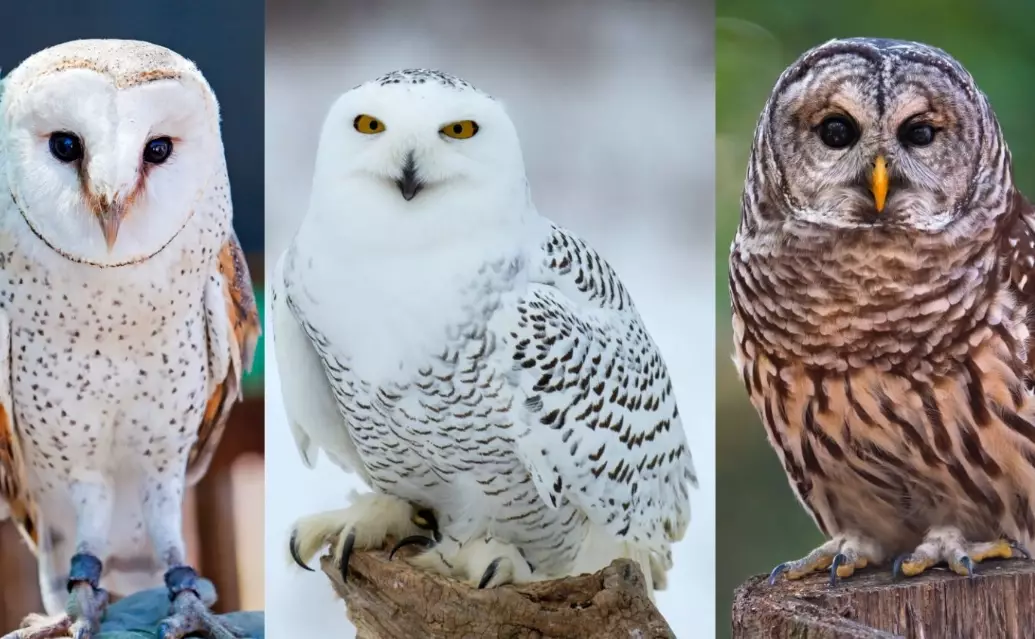
Where and When to Look: Habitat is Half the Battle
You can’t find what isn’t there. Knowing where to go saves hours of fruitless searching.
Forest Edges and Open Woodlands: This is prime real estate for Great Horned and Barred Owls. Look for them on high perches along the tree line at dusk. Barred Owls often prefer wetter areas within the woods.
Suburban Neighborhoods: Don’t underestimate your backyard. Eastern Screech-Owls thrive here if there are old trees with natural cavities or nest boxes. Listen for their calls on calm spring evenings.
Open Grasslands and Farms: This is Barn Owl and Short-eared Owl country. Search at the last light of day, scanning fence posts, hay bales, and old structures. Short-eared Owls have a distinctive, floppy moth-like flight low over the grass.
When? The hour after sunset and the hour before sunrise are peak activity periods. But on overcast days or in deep woods, owls can be active during daylight. Winter is fantastic for owl spotting—leaves are down, improving visibility, and owls are vocal during courtship (late winter).
The Pro’s Corner: Tips You Won’t Find in a Textbook
After a decade, you pick up a few things the field guides gloss over.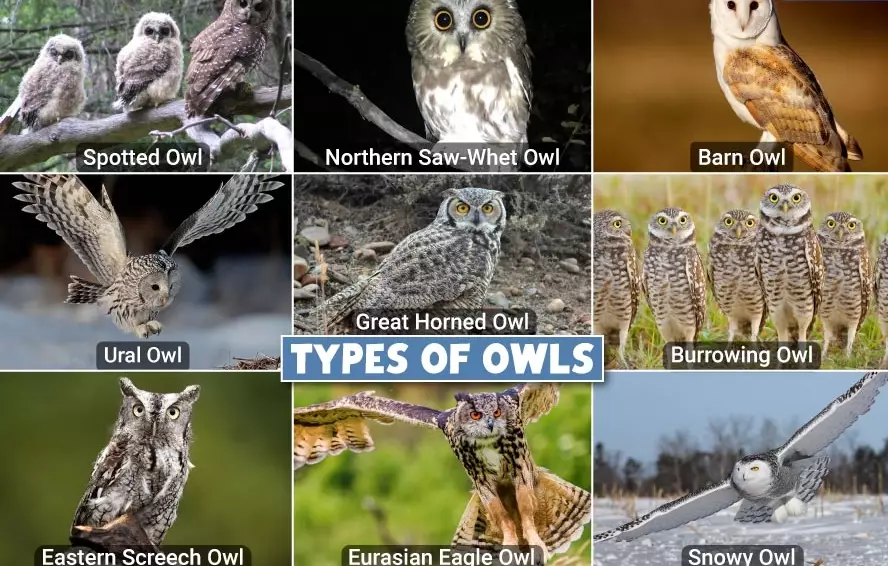
1. The “GISS” Principle (General Impression of Size and Shape): Birders use this for hawks, but it’s gold for owls. Before you note a single detail, what’s your gut impression? Is it stout and powerful (Great Horned) or slender and elongated (Barn Owl)? Your subconscious brain is good at this. Trust the first silhouette impression.
2. Pellets and Poop are Clues. Seriously. Found large, furry pellets full of mammal bones under a pine tree? Likely a Great Horned Owl. Smaller, compact pellets with tiny bones near a woodpecker hole? Think Screech-Owl. Whitewash (droppings) on a tree trunk or barn beam marks a favorite perch.
3. Playback Ethics – Just Don’t. It’s tempting to use a call app to lure an owl in. This stresses the birds, especially during nesting season. It can draw them into conflicts with other owls or away from their young. Observe passively. The find is more rewarding.
4. Your Biggest Enemy: Low Light. Your eyes need 20-30 minutes to fully adapt to darkness. Use a red-light headlamp to check guides. Avoid white light—it ruins your night vision and disturbs wildlife.
Your Owl ID Questions, Answered
 Can habitat alone help me identify an owl?
The path to mastering owl identification isn’t about memorizing a catalog. It’s about building a detective’s toolkit: your ears, an understanding of silhouettes, a keen eye for a few high-contrast features, and a deep respect for the story the habitat tells. Start with the common owls in your area. Learn their calls, their favorite haunts, their shape against the twilight. One night, you’ll hear those hoots, glance up, and just know. And that moment of quiet certainty is worth every minute spent learning.
Reader Comments