I remember the first time I truly saw one. Not a distant speck, but a close, detailed view through my binoculars. It was perched low in a wet, tangled forest edge in central Florida, its barred chest glowing russet in the morning sun. That loud, piercing “kee-yah!” call left no doubt. It was a red-shouldered hawk, and it shattered my beginner's assumption that all buteos are boring brown birds you see on highway poles. This hawk has personality, and learning its secrets turns a casual glance into a real discovery.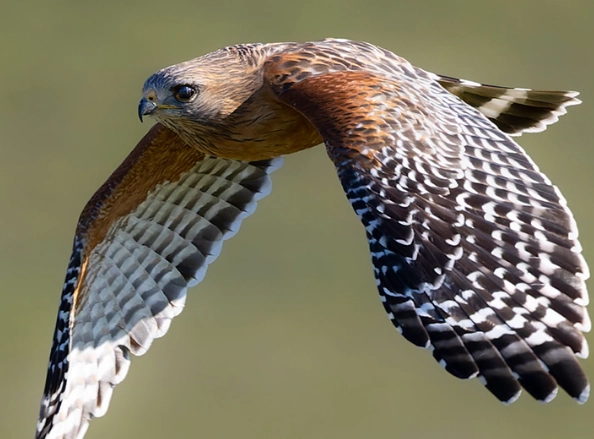
What’s in This Guide?
Spot the Difference: Red-Shouldered vs. Red-Tailed Hawk
This is the single biggest headache for new birders. You see a large hawk and default to “red-tailed.” Nine times out of ten, you're right. But that tenth time might be the more specialized red-shouldered. The trick isn't memorizing a checklist; it's learning the overall impression.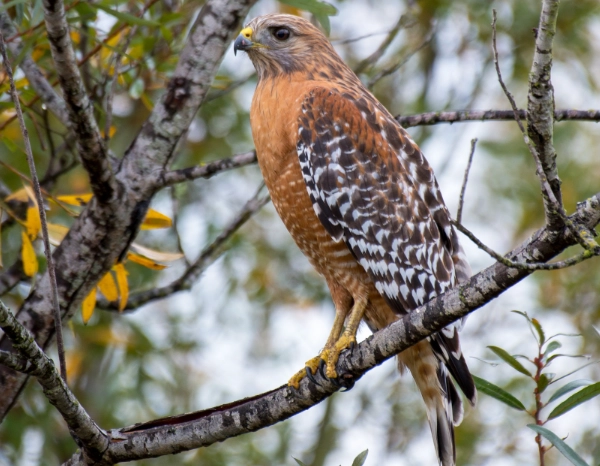
Red-tailed hawks are the generalists of open country. Red-shouldered hawks are specialists of the woods and water. Their bodies reflect that.
| Feature | Red-Shouldered Hawk | Red-Tailed Hawk |
|---|---|---|
| Overall Build | Slender, longer tail, smaller head. Looks “leaner.” | Stocky, powerful, with a shorter, broader tail. Looks “bulkier.” |
| Key Markings (Adult) | Richly barred reddish chest and belly. Black-and-white checkered wings. Pale crescent near wingtip in flight. | Classic “belly band” of dark streaks. Rich brown above. Pale chest. The namesake red tail is on adults only. |
| Tail Pattern | Narrow, dark bands of equal width. From below, it looks neatly striped. | Broad, with fewer, messier bands. The classic red top is a giveaway from above. |
| Typical Perch | Inside the forest canopy, on a horizontal branch over water. | On the very top of a tree, pole, or sign in open fields. |
| The Sound | Loud, piercing, repeated “kee-yah!” or “kee-aah.” Imitated by Blue Jays. | Hoarse, descending scream “keeeeer-r-r.” The classic “movie hawk” sound. |
Here’s the subtle mistake I see constantly: people look for the “red shoulders.” From any distance, that coppery patch on the leading edge of the wing is useless. In poor light, it's invisible. Focus instead on the body shape and the barred underparts. If it’s perched inside a swampy woods and looks slender with a candy-cane striped belly, think red-shouldered.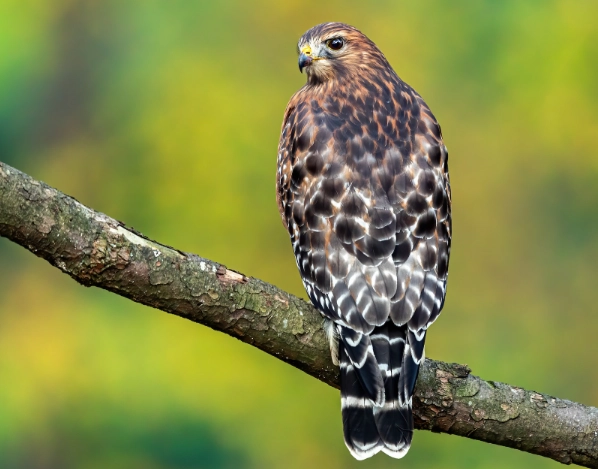
The Juvenile Trap
Young birds of both species are brown and streaky, a real challenge. The giveaway? Tail pattern and habitat. A juvenile red-tailed hawk’s tail has many thin, dark bands. A juvenile red-shouldered’s tail has fewer, wider bands. But honestly, if a young hawk is sitting in deep woods near a creek, odds are heavily in favor of red-shouldered. Red-tailed juveniles prefer open areas.
Beyond the Field Mark: Where and How They Live
Forget the field guide map for a second. Think of them as “bottomland” hawks. They need water and vertical structure. Their world is flooded hardwood forests, wooded swamps, riparian corridors (that's riverside woods), and even wet suburban woodlots with a decent creek.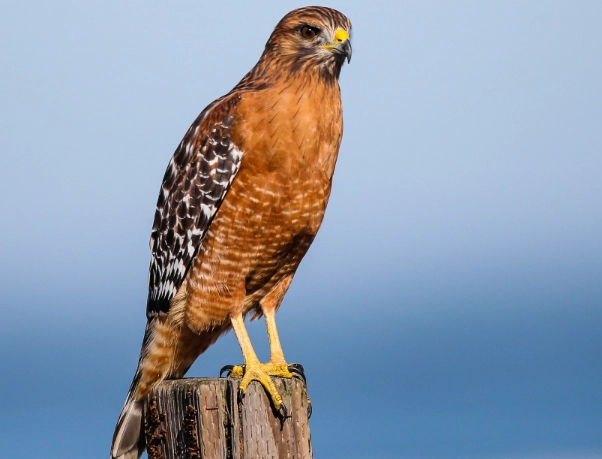
They hunt differently, too. While a red-tailed might scan a field from 100 feet up, a red-shouldered hawk employs a patient, low-perch strategy. It sits 15-30 feet up, watching the forest floor or a stream bank for movement: frogs, snakes, chipmunks, large insects. I’ve watched one drop into shallow water and come up with a crayfish.
Range Reality Check: The Eastern population is fairly common. In Florida, they’re everywhere there are trees and water. The Western population (California and Oregon) is more localized but still findable in oak woodlands and canyon bottoms. Don’t expect them in dry pine forests or the middle of a cornfield.
Their nesting habits are fussy. They often return to the same wooded tract year after year, building a bulky stick nest high in a crook of a mature tree, usually near water. The pair is noisy and obvious during courtship in late winter, with lots of circling and calling.
How to Find One: A Practical Observer's Plan
You don’t need luck. You need a strategy. Here’s exactly what I do when I want to show someone a red-shouldered hawk.
1. Location Scouting: Open Google Maps. Look for the green patches. Specifically, look for green patches that are crossed by blue lines (creeks, rivers) or have blue blobs (ponds, wetlands). Public parks with nature trails through wet woods are goldmines. State parks with boardwalks through swamps are almost guaranteed.
2. Timing is Everything: Go in the morning, just after sunrise. They’re most active then, calling and hunting. Late afternoon is a decent second choice. Overcast days can be good because they might hunt later into the morning.
3. Gear Up Right: Leave the spotting scope in the car. This is a binoculars-only mission. You need something with good light gathering for the forest gloom. An 8x42 is perfect. I’ve had great results with models like the Nikon Monarch M7 or the Vortex Diamondback HD in this role. They’re bright enough and won’t break the bank.
4. The Walk-and-Listen Method: Walk slowly. Stop every 50 yards. Just listen. That piercing “kee-yah!” call carries far. If you hear it, stop moving. Scan the mid-level branches near the water’s edge. Look for that horizontal silhouette. They often call repeatedly from a perch.
5. Look for the “Sentinel” Perch: They love a specific perch: a dead branch extending over a creek, a low snag at the edge of a marsh, a powerline crossing through a wooded corridor. Check these spots deliberately.
If you do this, your chances go from “maybe” to “probably.” In good habitat, I’d say it’s a 70% success rate on a decent morning.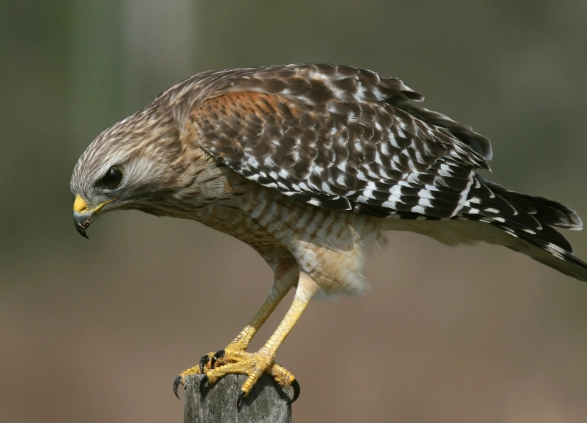
Can You Attract a Red-Shouldered Hawk to Your Backyard?
This is a common hope, but we have to be realistic. You don’t “attract” a top predator like you attract chickadees with a feeder. You make your property part of its hunting territory by providing what it needs.
Don’t: Put out meat or try to feed it. This is bad for the hawk and potentially dangerous.
Do: Cultivate a healthy, messy ecosystem. If you have a yard bordering woods or with a stream:
- Leave the leaves. A tidy lawn is a food desert. Leaf litter supports insects, worms, and amphibians—hawk food.
- Add a water feature. A simple birdbath is okay, but a small, moving water source or a pond (even a tiny one) is a magnet for frogs and dragonflies.
- Plant native. Native oaks, berry bushes, and other plants support a robust food web of small mammals and birds.
- Provide a lookout. A tall, dead tree (snag) is ideal. A tall, sturdy fence post in a semi-open area can work too.
The hawk won’t come for a handout. It will come because your yard is a productive hunting ground. I’ve seen them visit suburban yards that back up to wooded creeks, snatching chipmunks from under bird feeders. It’s about habitat, not hospitality.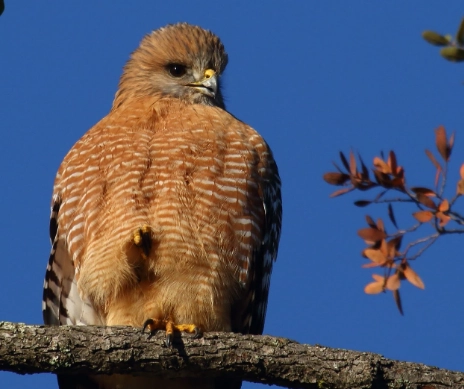
Reader Comments