Let's be honest. You've probably seen a thousand pictures of the common kingfisher – that impossible bolt of electric blue and burnt orange – and thought, "I need to see that." Then you go to a river, sit quietly, and... nothing. Maybe a distant splash, a fleeting blue blur that's gone before you can even lift your binoculars. Frustrating, right? I spent the better part of two years getting that same result before I cracked the code. This isn't just another list of kingfisher facts. This is a field-tested playbook for actually finding, watching, and appreciating one of nature's most dazzling and frustrating birds.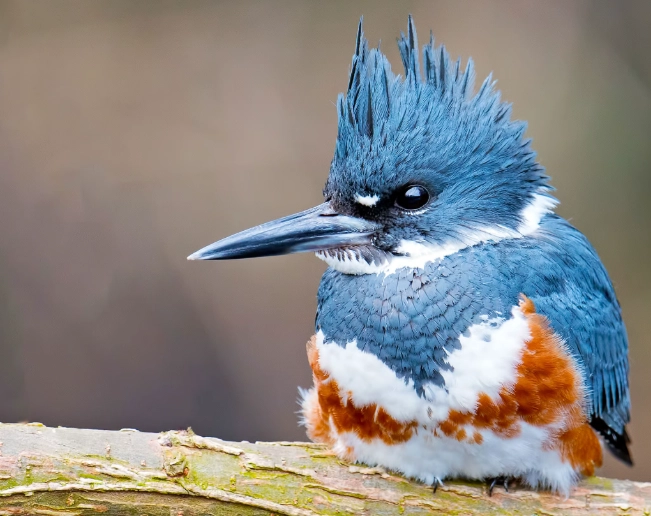
What You'll Learn in This Guide
Why Kingfishers Are Masters of Disappearing
Most guides skip this crucial bit. They tell you kingfishers live near water. Great. So do ducks, herons, and mosquitoes. The key is understanding their specific needs, which explains why they're so picky and seem to vanish.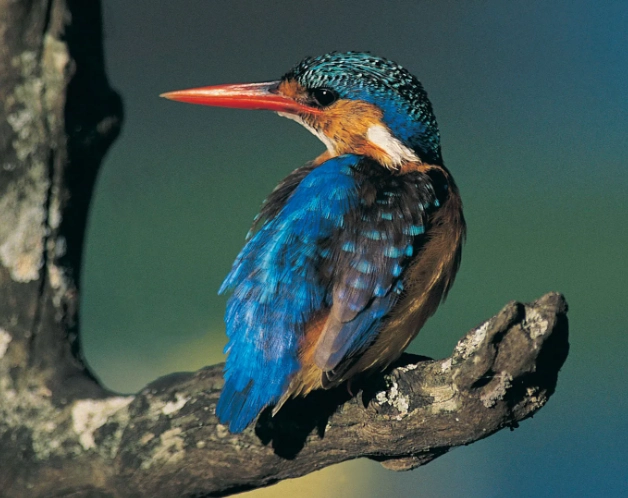
First, think like a fishing missile. A kingfisher needs a clear, unobstructed flight path over the water. That means no overhanging willow branches clogging the airspace a meter above the surface. They also need perches at the right height – usually 1-3 meters up – with a clear view of the water below. A bare branch overhanging a slow-moving, relatively clear pool is prime real estate.
But here's the subtle mistake almost everyone makes: they ignore the "contrast factor." Kingfishers hunt by sight. Murky, peat-stained water or a surface dappled with intense, shifting sun glare makes spotting small fish incredibly hard. They prefer water with good visibility and consistent lighting. That's why you often find them on slower stretches of river, canals, or sheltered lake edges, not in white-water rapids or on windswept reservoirs.
Their territory is larger than you think. One breeding pair might patrol a linear stretch of 1-2 kilometers of riverbank. If you're sitting in one spot for 20 minutes, you're only seeing a tiny fraction of their world. You're waiting for them to come to you, which is a low-percentage game.
How to Find Prime Kingfisher Habitat (Step-by-Step)
Forget vague advice. Here’s a concrete, actionable method I use, whether I'm exploring a new local stream or a nature reserve abroad.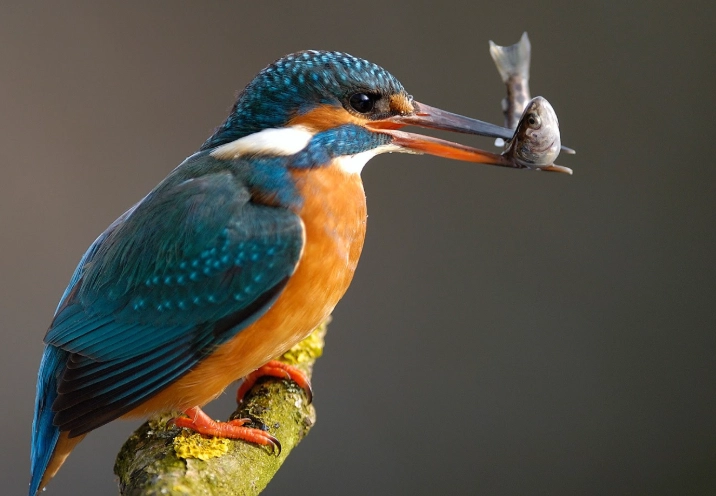
The Golden Hour (Actually, Hours)
Dawn is king. Not just for the light, but because kingfishers are hungry and active after the night. Late afternoon is a close second. Midday? They're often resting, digesting, or hidden away. Your chances plummet between 11 am and 3 pm.
Step 1: Map Reconnaissance
Before you leave home, use satellite view on Google Maps or an app like Ordnance Survey. Look for linear water features: slow rivers, canals, old mill streams, gravel pits, and park lakes. Zoom in. Look for the tell-tale bare branches or posts overhanging the water. I've marked more productive spots from my armchair than I have by aimlessly wandering.
Step 2: The Slow Scout
When you arrive, don't just plonk down. Walk slowly and quietly along the bank, stopping every 50 meters. You're not just looking for the bird; you're looking for its signs. Listen for the high-pitched, short "tsee" or "chee" call. Scan likely perches ahead of you, not just the water. Look for white droppings splashed on a perch below a branch – a classic signpost.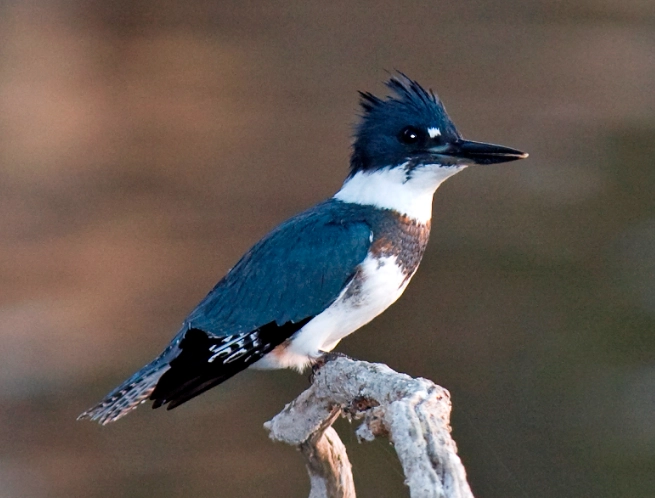
Step 3: Position and Wait (The Smart Way)
Find a spot with a good view of several potential perches and a stretch of water. Your back should be to the sun if possible (better for viewing and to avoid casting a shadow). Get settled, with your binoculars or camera ready. Now, wait for 15-20 minutes, scanning periodically. If nothing, move 200 meters downstream and repeat. This "leap-frogging" through a territory is infinitely more effective than a single long, static vigil.
I once spent 4 hours sitting at one "perfect" spot on the River Wye with no luck. The next day, using this scout-and-move method, I had three sightings in 90 minutes.
Spotting the Differences: Kingfisher Species ID
The common kingfisher (Alcedo atthis) gets all the press in Europe and Asia. But the kingfisher family is huge. In North America, you're dealing with the Belted Kingfisher, a whole different beast. Misidentifying them is easy if you're expecting the small, colorful European version.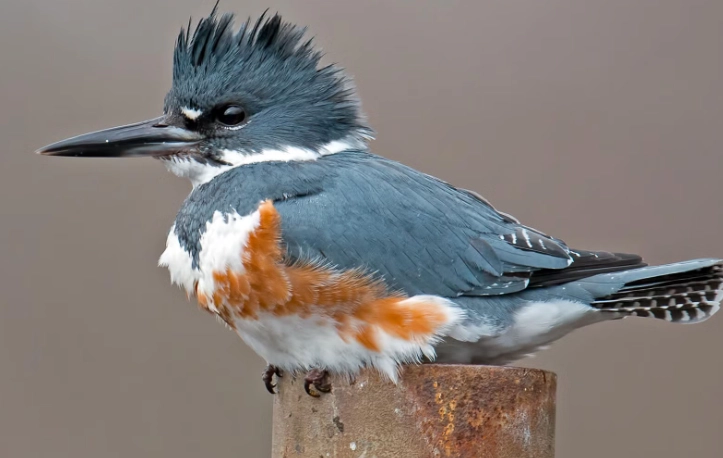
| Species | Key Features | Size & Shape | Habitat Note |
|---|---|---|---|
| Common Kingfisher (Eurasia, N. Africa) |
Stunning azure-blue back, orange underparts, short tail. Looks like a jewel. | Small (16-17 cm). Compact, dagger-like bill. | Loves smaller, sheltered waterways. Often perches low. |
| Belted Kingfisher (North America) |
Blue-gray upperparts, white collar, bushy crest. Female has a rusty belt across belly. | Large (28-35 cm). Big-headed with a shaggy crest. | Found on larger rivers, lakes, coasts. Loud, rattling call. More conspicuous. |
| Pied Kingfisher (Africa, Asia) |
Black and white plumage. Unique habit of hovering over water before diving. | Medium (25 cm). Often seen in pairs or groups. | Larger water bodies. The hovering is a dead giveaway. |
The behavioral cue is huge. A Belted Kingfisher will often announce itself with its loud, mechanical rattle. A Common Kingfisher is often silent until it zips past you. If you see a kingfisher hovering like a kestrel, you're almost certainly looking at a Pied.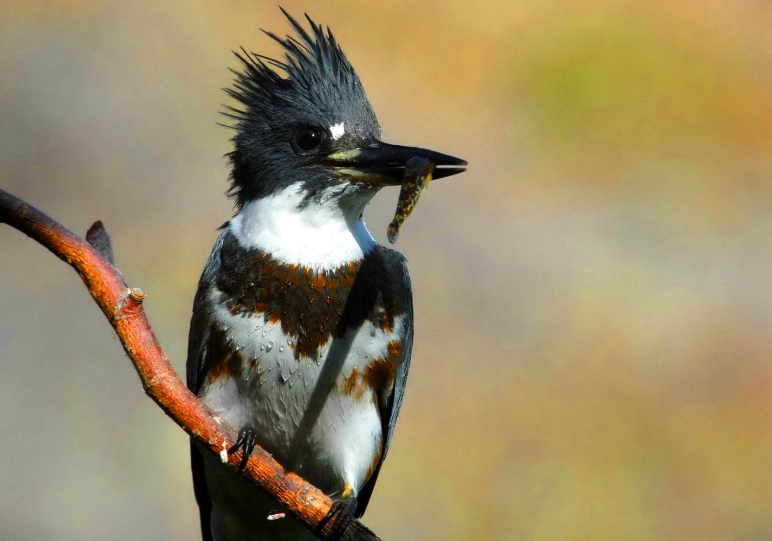
Getting the Shot: Kingfisher Photography for Mortals
You don't need a $10,000 lens, but you do need strategy. The goal isn't just a record shot; it's capturing that brilliant color and character.
Gear Realities: A 300mm lens is a starting point. 400mm or 500mm is better. A teleconverter can help. The critical factor is a fast shutter speed – aim for 1/2000th of a second or faster to freeze their movement and any water splash. Crank your ISO up to get there; a little noise is better than a blurry bird.
The Setup: This is where the habitat scouting pays off. If you find a regularly used perch, you can set up a hide (or just sit quietly at a respectful distance) and pre-focus on that spot. Use a tripod or beanbag for stability. Manual focus is tricky; I use back-button autofocus to lock onto the perch and be ready.
A Non-Consensus Tip: Don't Chase the Dive
Everyone wants the dive shot. Chasing it – trying to follow the bird as it plummets – results in 99 missed shots for one blurry one. Instead, focus on the perch and the return. A shot of a kingfisher landing on a perch with a fish, shaking water off its feathers, or whacking the fish against a branch tells a richer story and is far more achievable. The Cornell Lab of Ornithology's multimedia library showcases this behavior perfectly.
Light is everything. That iconic blue only shines when lit from the front or side. A backlit kingfisher looks like a dark, shapeless shadow. Overcast days can be great for avoiding harsh shadows and capturing even, saturated colors.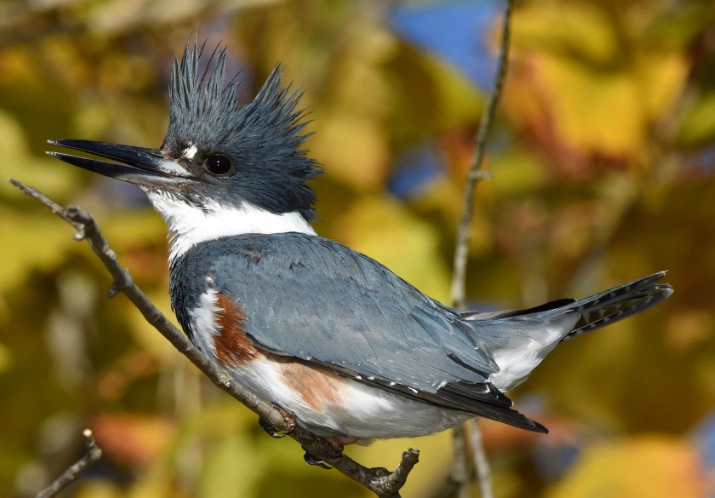
Your Kingfisher Questions, Answered
You're likely committing the "static watch" error. Kingfishers aren't statues; they patrol. Your timing might also be off. Are you going at midday? Try dawn. Also, "known" spots can go cold if there's been disturbance (like vegetation clearance, boat traffic, or a predator like a cat visiting the area). Expand your search. Move 500 meters up or downstream from the famous spot. Often, the birds shift their favored perches within their territory based on fish availability and disturbance.
A decent pair of waterproof hiking shoes or boots. Seriously. The best bankside paths are often muddy, slippery, and overgrown. Being able to comfortably and safely navigate the edge of a river, getting to those slightly more inaccessible viewing angles, makes a bigger difference than upgrading your binoculars from mid-range to premium. Comfort and access trump optics when you're dealing with a bird that chooses awkward locations.
It's very unlikely, and that's a good thing. Kingfishers need established, larger territories with a steady supply of small fish. A garden pond, unless it's enormous and connected to a natural watercourse, won't cut it. Your effort is better spent supporting healthy local waterways by volunteering with a river clean-up group. A cleaner river with good fish stocks is the ultimate kingfisher attractant. The RSPB and similar conservation bodies offer great advice on this.
Because it's not a pigment – it's structural color. The feathers have microscopic structures that reflect blue light. The intensity you see depends entirely on the angle of the light and the angle you're viewing from. Direct, front-on sunlight gives the most electric, glowing blue. Overcast light gives a softer, more cerulean blue. Backlighting makes it look dull grey. The bird itself is constantly changing color as it moves. Don't trust heavily saturated photos; the real-life effect is magical enough.
Reader Comments