Quick Navigation
- First Things First: Don't Panic and Don't Chase
- The Step-by-Step Detective Work: What to Look For
- How to Actually Report Your Find (This is the Key Step!)
- Decoding the Mysteries: What Do the Letters and Numbers Mean?
- Special Cases and Tricky Situations
- Your Burning Questions, Answered
- Why Bother? The Bigger Picture
Let's be honest, finding a bird with a little metal or plastic ring on its leg is pretty exciting. It feels like you've stumbled upon a secret message. Is it a lost pet? A scientific spy? The first thing that pops into your head is usually, "How do you identify a bird ring?" I remember the first time I saw one on a pigeon in my backyard. I spent ages squinting at it, trying to make out the tiny numbers, completely clueless about what they meant.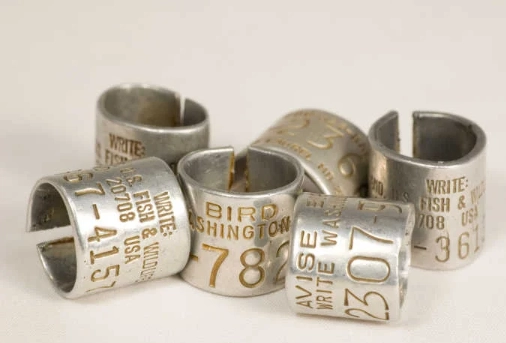
Well, after years of birdwatching and helping others figure this out, I can tell you it's not as mysterious as it seems. It's a systematic process, and once you know the steps, you can unlock a whole story about that bird's journey. This guide is the one I wish I had back then. We're going to walk through everything, from the moment you spot the ring to understanding where that bird has been.
First Things First: Don't Panic and Don't Chase
This might seem obvious, but your excitement can scare the bird away. The absolute best tool for how to identify a bird ring is a good pair of binoculars or a camera with a zoom lens. Trying to catch the bird is stressful for it, often illegal, and usually unnecessary. From a safe and respectful distance, try to get a clear view.
If the bird is deceased, you can examine the ring directly. Use gloves if you're concerned, and make a note of the location (GPS coordinates are gold) and date. It's sad, but the data from recovered bands of deceased birds is incredibly valuable for understanding mortality causes.
The Step-by-Step Detective Work: What to Look For
Okay, you've got your binoculars trained on the ring. Now what? You're looking for specific clues. Think of yourself as a detective examining a piece of evidence.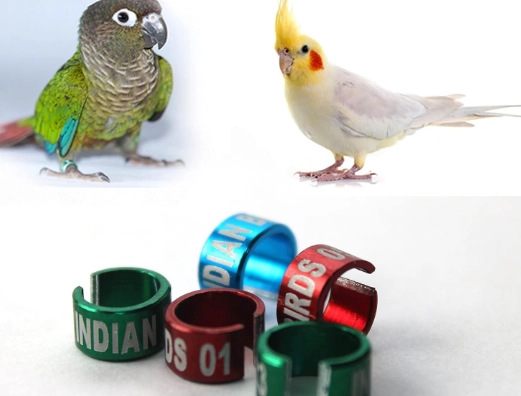
Clue #1: The Color Scheme
Color is your first big hint. It's not random. Different colors, combinations, and placements tell researchers which project the bird is part of. A single green band means something different than a green band over a metal band.
Here’s a basic rundown of what colors can often indicate (though this varies by country and project):
| Color(s) | Possible Meaning / Project Type | Common On |
|---|---|---|
| Solid Metal (Aluminum) | Standard national ringing scheme. The most common type. | All bird species |
| Plastic (Solid Color: Red, Blue, Green, Yellow) | Specific local studies, easier to spot from afar. Color may indicate year or location. | Shorebirds, waterfowl, raptors |
| Multiple Color Bands | "Color-banding." Unique combos identify individual birds without recapture. | Eagles, hawks, herons, larger birds |
| Metal + Colored Plastic ("Flag") | International projects. Flag color often shows the country/region of origin. | Migratory shorebirds & waterbirds |
I once spent a whole morning tracking a gull with a bright yellow flag. That flag alone told me it was likely from a specific European country's scheme before I even read the code.
Clue #2: The Inscription - The Numbers and Letters
This is the core of the ID. You need to read what's stamped or printed on the band. On metal bands, it's often embossed. On plastic bands, it's printed. Write down everything you see, in the exact order.
- Address: Many bands have a shortened address like "MUSEUM WASH DC" or "LONDON SW." This tells you the issuing agency.
- Unique Code: This is a combination of numbers, or numbers and letters. It might look like "123-45678" or "A1234".
- Sequence: Note if the code reads upwards, downwards, or around the band. Sometimes you only see part of it.
Get every character. A mistake in one digit makes the bird unidentifiable.
Clue #3: Location and Placement
Which leg is it on? Left or right? Is it on the upper leg (tarsus) or lower leg? Are there multiple bands? Sometimes the placement order (e.g., metal band on left leg, blue over green on right) is part of the identification code for color-banded birds. A quick sketch or photo note can save you confusion later.
How to Actually Report Your Find (This is the Key Step!)
You've collected the clues. Now, you need to send them to the right place. This is how you complete the loop and get the bird's history back. The process is surprisingly straightforward and rewarding.
- Gather Your Notes: Date, precise location (town/state/country, GPS if possible), species if you know it, and ALL band information (colors, codes, placement).
- Find the Right Reporting Website: This depends on the address on the band.
- For bands with a USGS Bird Banding Lab address (like "AVISE BIRD BAND WASH DC" or similar), you report to the USGS Bird Banding Laboratory's website. This is the main one for North America.
- For bands from other countries (e.g., "LONDON," "HELSINKI," "TOKYO"), you can use the European Union for Bird Ringing (EURING) central database. They route reports globally.
- Some countries have their own portals. A quick search for "report bird band [Country Name]" usually works.
- Submit the Report: Fill out the online form carefully. They'll ask for your contact details (they keep this private).
What happens next? The database finds the original banding record. You'll typically receive a certificate of appreciation (a really cool digital document) that tells you the bird's species, when and where it was originally banded, its age and sex at banding, and who banded it. You become part of its life story. I've gotten certificates for birds that traveled thousands of miles—it never gets old.
Decoding the Mysteries: What Do the Letters and Numbers Mean?
People often think the code is a secret cipher. It's usually not. The address points to the agency. The unique code is just that—unique. It's like a serial number in a database. The real "how do you identify a bird ring" magic happens in the database lookup, not in manually deciphering the code itself.
However, some larger projects use logical coding systems. For example, a band starting with "CA" might indicate a bird banded in California. A series of numbers might encode the year (e.g., 23 for 2023). But there's no universal standard, so don't rely on guessing.
The banding date and location on the certificate are what tell the powerful story. Seeing that the gull you spotted in Florida was banded as a chick in Newfoundland five years ago… that’s the real payoff. It connects dots on a map you wouldn't have connected otherwise.
Special Cases and Tricky Situations
Not all rings are for wild bird research. Here’s how to tell the difference.
Domestic/Pet Bird Rings (Closed Bands)
These are seamless rings put on baby birds in the nest. They often have the breeder's initials, a year, and a serial number. They're for identification in the pet trade. If you find a lost budgie or cockatiel with one, you can search for avian breeder registries or parrot rescue networks. The process for how to identify a bird ring on a pet is more about finding the breeder than contributing to science.
Colored Bands with No Visible Code
Some studies use solid color bands just for resighting. The combination of colors and positions is the code. Reporting these requires carefully describing the sequence (e.g., "left leg: light blue over dark green; right leg: metal band"). Researchers have master lists of these combinations.
Rings on Racing Pigeons
These are usually larger, with a year, club code, and unique number. They often have the owner's phone number or union details (e.g., "AU 2023 ABC 1234"). If you find a tired racing pigeon, providing it with water and shelter and contacting the owner via the union (a quick web search for the acronym) is a kind act.
Your Burning Questions, Answered
See? It's not so complicated once you break it down.
Why Bother? The Bigger Picture
You might wonder if your single report matters. It absolutely does. I used to think it was just a curiosity. Then I saw how the data is used.
Each report is a data point. Thousands of these points map migration routes with pinpoint accuracy. They show how climate change is shifting breeding grounds and wintering areas. They prove which habitats are critical and need protection. They reveal survival rates, telling us if a population is stable or in trouble.
That pigeon in your yard with a band? Its journey helps scientists understand how birds adapt to urban environments. That shorebird with a flag on a beach? Its survival informs international conservation treaties. When you figure out how to identify a bird ring and report it, you're not just solving a puzzle. You're becoming a citizen scientist. You're providing a vital service that professional researchers, with all their funding, cannot do alone—they can't be everywhere.
The next time you see that flash of metal or color on a bird's leg, you'll know exactly what to do. Grab your binoculars, note the details patiently, and send that information into the world. You'll be helping that individual bird tell its story, and in doing so, you'll help protect its entire species. That's a pretty good deal for a few minutes of detective work.
Reader Comments