In This Article
- Shifting Your Mindset: Observation is Everything
- Decoding the Desert's Feathered Residents: Key Features to Lock On To
- Meet the Cast: Common Players in the Arid Theater
- The Right Tools for the Job (And a Few You Can Skip)
- Navigating the Pitfalls: Common Mistakes in Desert Bird ID
- Answering Your Desert Birding Questions
- Taking the Next Step: From Spotter to Contributor
Let's be honest. The desert doesn't exactly scream "birding paradise" at first glance. It's hot, it's vast, and everything seems to be the color of sand or sun-bleached rock. You might think there's nothing out there. But that's the first trick the desert plays on you. The bird life here isn't loud and obvious like in a rainforest; it's subtle, clever, and incredibly tough. Mastering bird identification in desert environments isn't just about memorizing pictures. It's about learning a new way of seeing and listening. It's understanding a story of survival. I remember my first time in the Sonoran, squinting at a distant speck on a saguaro, completely clueless. Was it a hawk? A vulture? A weird cactus growth? That frustration is real, but that's why we're here.
This guide is for anyone who's felt that mix of awe and confusion under the desert sun. We're going to move past simple lists and get into the actual how-to. How do you even start looking? What should you listen for? And what are the tell-tale signs that separate one dusty-colored bird from another? We'll cover the core skills, the most common characters you'll meet, the gear that actually helps, and how to avoid the classic beginner blunders. By the end, you'll see the desert not as an empty space, but as a complex habitat where every thorny bush and rocky outcrop could be hiding a fascinating avian resident.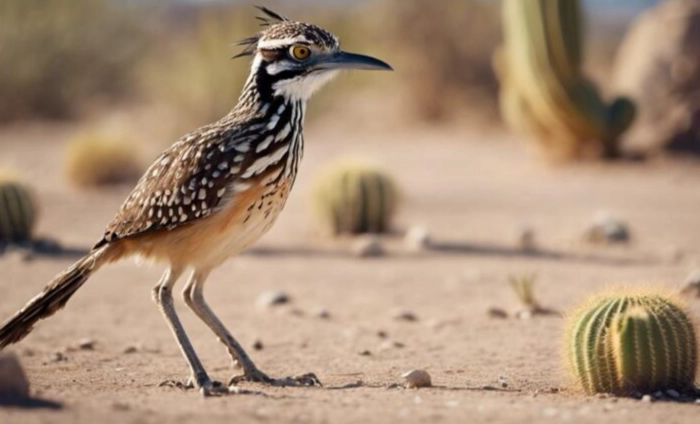
Shifting Your Mindset: Observation is Everything
Forget the lush, crowded feeders of backyard birding. The desert demands a different approach. Birds here are masters of efficiency and concealment. They don't waste energy on unnecessary flights or songs. Your success in bird identification in desert environments hinges on patience and sharpening two primary senses: sight and sound.
Visual Scanning: More Than Just a Glance
That shimmering heat haze isn't just uncomfortable; it's a visual obstacle. You need a method.
First, look for the outliers. Scan the sharp, high-contrast lines: the silhouette of a lone tree against the sky, the dark shadow of a cliff face, the top of a telephone pole. Birds often perch on these "visual platforms." Then, look for movement. Not just flight, but the tiny hop of a bird on the ground between scrub, or the flick of a tail from inside a mesquite bush. Movement against the still, baked landscape is a dead giveaway.
Finally, break the scene into layers. Don't just stare at the middle distance. Consciously check the ground cover (for quail, towhees), the mid-level shrubs and cacti (for wrens, thrashers, warblers), the taller trees and yuccas (for flycatchers, shrikes), and finally the open sky (for raptors, swifts, ravens). Doing this systematically prevents you from missing an entire category of birds.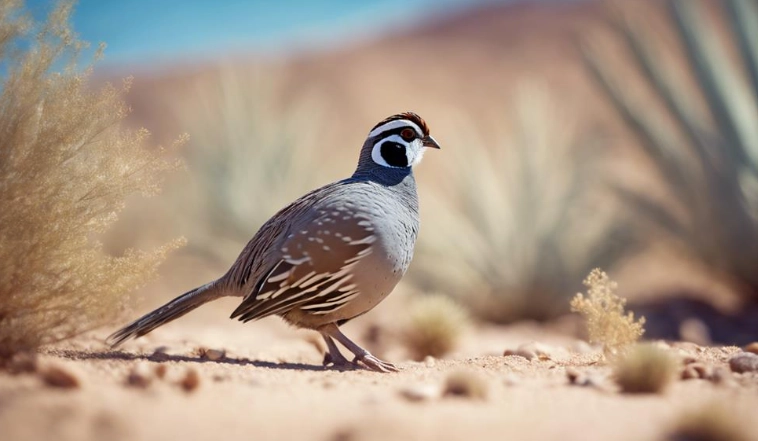
The Critical Role of Sound
In the desert, your ears are often more useful than your eyes. The air is dry and sound carries surprisingly well, especially in the cooler morning and evening hours. Many desert birds have distinctive, often harsh or buzzy calls that cut through the landscape.
Learning a few key sounds is a faster route to ID than trying to spot a well-camouflaged bird. The rattling call of a Cactus Wren, the whistled melody of a Curve-billed Thrasher, the sharp "keek" of a Gila Woodpecker – these are your audio landmarks. I can't count the number of times I've identified a bird purely by sound long before I saw it. It feels like a superpower. A great resource to start training your ear is the sound library at the Cornell Lab of Ornithology's All About Birds site. They have extensive, high-quality recordings for North American species.
Trust me on this. Spending an hour with headphones on, listening to desert bird calls, will improve your field success rate more than an hour of staring at field guide photos.
Decoding the Desert's Feathered Residents: Key Features to Lock On To
Okay, you've spotted a bird. Now what? In a forest, you might rely on a flash of color. In the desert, color can be deceiving—washed out by fierce sun or disguised by shadow. You need to rely on a combination of other, more reliable features.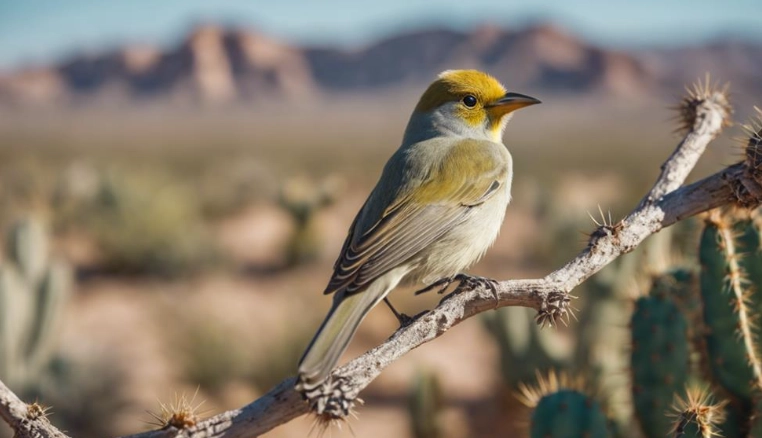
Bill Shape is a Dead Giveaway
The beak tells you the diet, and the diet tells you a lot about the bird.
- Long, curved bills belong to insect and nectar probers. Think Curve-billed Thrashers digging in the dirt or Costa's Hummingbirds sipping from ocotillo flowers.
- Short, stout, conical bills are seed-crackers. Gambel's Quail and Black-throated Sparrows have these.
- Strong, chisel-like bills are for woodpeckers like the Gila and Ladder-backed, drilling into cactus flesh and dead wood.
- Hooked, raptorial bills mean predator. This is for the Red-tailed Hawks and American Kestrels.
It sounds basic, but this one feature immediately narrows down your options by about 80%.
Silhouette and Behavior: The Dynamic Duo
How a bird sits, flies, or moves is burned into its identity.
The Cactus Wren has an arrogant posture, often holding its long tail cocked up at a sharp angle, and it's never shy about scolding you. The Verdin is a tiny, hyperactive ball of fluff, constantly flitting through thorny branches. Roadrunners are unmistakable—long tail, crest, and that comical, powerful sprint across the ground. Turkey Vultures soar with their wings held in a shallow V, teetering side-to-side. Swainson's Hawks soar with flat, steady wings.
Watch for a few minutes. Is it solitary or in a covey (like quail)? Does it fly in a direct line or undulate (like a woodpecker)? Does it wag its tail (like a phoebe)? This behavioral fingerprint is often the final piece of the puzzle for confident bird identification in desert environments.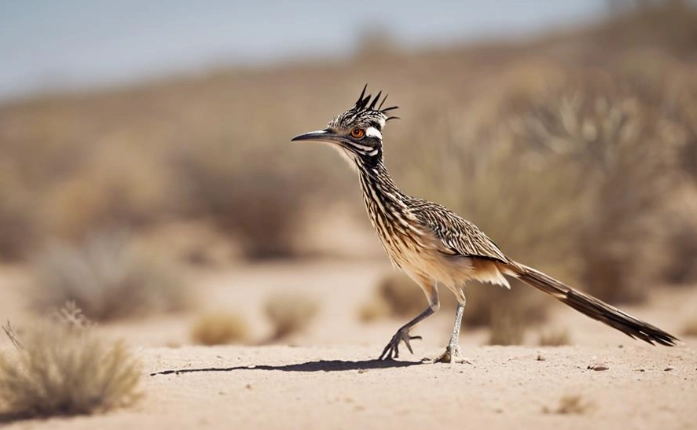
Meet the Cast: Common Players in the Arid Theater
Let's put names to faces (and songs). Here’s a rundown of some of the most widespread and characteristic birds you're likely to encounter. This isn't an exhaustive list, but mastering these will make you feel competent in most North American desert settings.
| Bird | Preferred Habitat | Key Identifying Features | Signature Sound |
|---|---|---|---|
| Cactus Wren | Dense cactus patches, especially cholla and saguaro. | Large, bold white eyebrow, heavily spotted breast, long tail cocked upward. Builds giant football-shaped nests in cacti. | A harsh, mechanical "jar-jar-jar" or rapid chattering. |
| Curve-billed Thrasher | Open areas with mesquite, cactus, and scrub. | Long, downcurved bill, orange-yellow eyes, grayish-brown body with faint spots. Often seen on the ground kicking debris. | A clear, whistled "whit-wheet!" or a series of musical notes. |
| Gambel's Quail | Brushy washes, desert foothills, suburbs. | Plump, ground-dwelling. Males have a black face and forward-curving topknot. Often in scurrying coveys. | A variety of clucks and a distinct "chi-CA-go-go" call. |
| Greater Roadrunner | Open desert with scattered brush. | Impossible to miss. Long tail, shaggy crest, powerful legs. Runs, doesn't often fly. | A slow, descending series of coos: "coo-coo-coo..." |
| Black-throated Sparrow | Open, sparse desert scrub. | Neat and crisp. Gray body with a sharp black throat and bib, and two bold white stripes on the face. | A sweet, tinkling song ending in a trill. |
| Verdin | Thorny trees and shrubs (mesquite, acacia). | Tiny, active, yellow head and chestnut shoulder patch (in adults). Builds intricate, spherical nests. | A sharp, repeated "tschep" or "tsip." |
| Gila Woodpecker | Saguaro cactus forests, desert woods. | Barred back, tan head, males have a red cap. Makes perfect round holes in saguaros for nesting. | A rolling "churr" call and a sharp "keek." |
Seeing them listed like this helps, but it's in the field where it clicks. I had a hard time with thrashers at first—they all looked like brown, streaky birds to me. It was focusing on the eye color and bill curve of the Curve-billed that finally made it stick.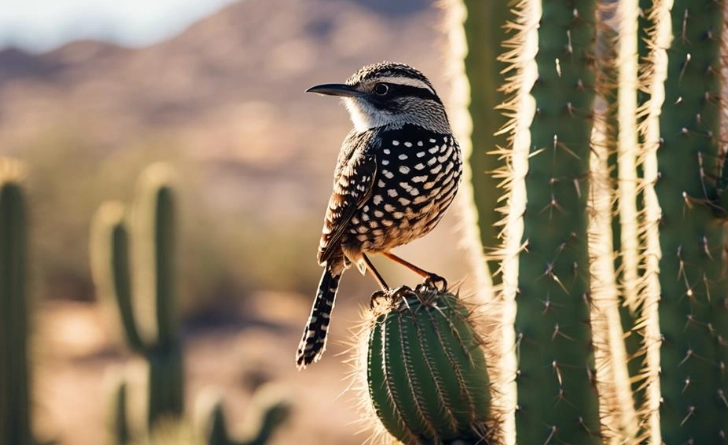
The Right Tools for the Job (And a Few You Can Skip)
You don't need a ton of fancy gear, but a few key items will transform your experience.
Binoculars are non-negotiable. An 8x42 is the perfect sweet spot for desert birding—good light gathering for dawn/dusk, wide enough field of view, and stable enough to hold steady. Don't get sucked into super-high magnification; it makes finding and tracking a small bird much harder. I made that mistake with a cheap 12x pair years ago. Terrible idea. Everything was a shaky, narrow blur.
A field guide specific to your region is your best friend. Books like "Birds of the Southwest" or the Sibley guides for Western NA are fantastic because they group similar birds together and show variations. The National Audubon Society website also has excellent, region-filterable guides online.
Now, for the game-changer: bird identification apps. These are where technology feels like magic for bird identification in desert environments.
- Merlin Bird ID (by Cornell Lab): Free and brilliant. Its photo ID and sound ID features are scarily accurate. Hear a weird call? Hit record. Merlin will give you real-time suggestions. It's not perfect, but it's an incredible learning tool. I use it to confirm tricky sounds all the time.
- eBird (also by Cornell Lab): This is more than an app; it's a global database. You can see what birds have been reported recently in exactly the desert wash or canyon you're planning to visit. It helps you know what to look for. Submitting your own checklists also contributes to citizen science.
Navigating the Pitfalls: Common Mistakes in Desert Bird ID
We all make them. Here's how to avoid some classic stumbles.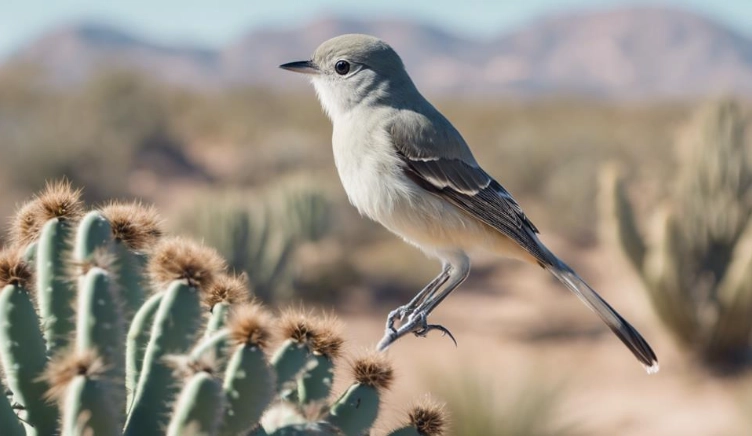
The Light Trap: The desert sun is brutal and creates extreme contrast. A bird in deep shadow can look like a black silhouette, losing all detail. A bird in full sun can be washed out, its colors bleached. Try to reposition yourself so the sun is at your back, illuminating the bird, not blinding you or casting it in shadow.
The "Generic Brown Bird" Syndrome: This is the biggest mental block. When you see a plain brown bird, don't give up and call it a "sparrow." Force yourself to go through the checklist. Bill shape? Eye ring or eyebrow? Tail length? Streaking on the breast? Ground-feeding or perched high? That "brown bird" could be a female House Finch, a Canyon Towhee, a juvenile thrasher, or any number of things. The details are there if you look patiently.
Ignoring Habitat: You won't find a Marsh Wren in the middle of a dry salt flat. Habitat is a huge clue. The Cornell Lab and American Birding Association resources often include detailed habitat preferences. A Phainopepla, that sleek black silky-flycatcher, is almost always in a mistletoe-laden mesquite tree. Knowing that tells you where to look.
Rushing: Desert birding is slow birding. If you're hiking at a brisk pace, you'll see almost nothing. Find a promising spot—a spring, a flowering ocotillo patch, a shady wash—and just sit for 15-20 minutes. Let the birds return to their normal activities. You'll be amazed at what appears.
Answering Your Desert Birding Questions
Let's tackle some specific things people wonder about when they start this hobby.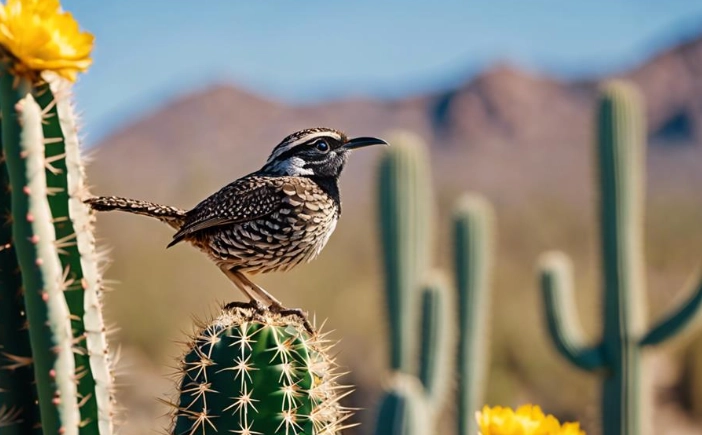
When is the absolute best time to go?
Dawn. Full stop. The first hour after sunrise is pure magic. The air is cool, the light is soft and golden, and the birds are at their most active—singing, feeding, moving about. Late afternoon, the hour or two before sunset, is a strong second. Midday? Forget it. The birds are hunkered down in whatever shade they can find, conserving energy and water. You'll be miserable, and you'll see very little. Plan your hikes and dedicated birding around these golden hours.
Do desert birds even need to drink water?
This is a fantastic question. Some are incredibly water-efficient, getting all the moisture they need from their food (insects, juicy cactus fruit, nectar, even other animals). But many do need to drink. That's why water sources are birding hotspots. A desert spring, a cattle tank, a slow-moving section of a wash after rain, even a backyard drip irrigation system—these are social hubs. Sit quietly near one (downwind, at a distance) and you might see a parade of species come in for a quick sip and bath.
What about migratory birds? Do I just see the same ones year-round?
Not at all! Deserts have their own migration rhythms. In spring and fall, many species (warblers, flycatchers, some raptors) pass through, using desert oases as crucial rest stops. A patch of trees around a desert spring can be swarming with migrants in May or September. In winter, you get different visitors escaping colder climates to the north. So the cast changes, making bird identification in desert environments a year-round challenge.
Is it ethical to use playback to attract birds?
This is a hot topic. Playing a bird's call on your phone to lure it into view is tempting, and it works. But it can also stress the bird, interrupt its feeding or nesting, and waste its precious energy. Most serious birding organizations, like the American Birding Association, have a strict code of ethics that strongly discourages the use of playback in most situations, especially near nests or for rare birds. My personal rule? I don't do it. The satisfaction of finding a bird through quiet observation is far greater, and it's better for the bird. Let's not harass these tough survivors just for a better photo.
Taking the Next Step: From Spotter to Contributor
 Once you get the hang of it, you can give back. Your observations have real scientific value. As mentioned, eBird is the platform for this. By submitting your checklists, you're adding data points that help scientists track bird populations, migration timing, and the effects of climate change and habitat loss. It's incredibly satisfying to know that your morning in the desert isn't just for fun—it's contributing to a global understanding of these birds.
You might also look into local Audubon chapters or native plant societies. They often lead expert-guided field trips, which are phenomenal ways to learn the local landscape and its birds from people who've been doing it for decades.
Bird identification in desert environments is a journey. It starts with confusion and squinting, and slowly evolves into a deep appreciation for a harsh but beautiful ecosystem and the resilient life it holds. You learn to read the landscape, to value a single drop of water, and to find wonder in the quick flash of a wing in the thorny brush. It teaches you to see not just birds, but the entire web of the desert itself. So grab your binoculars, pack more water than you think you need, head out at dawn, and just... look. Listen. The desert is waiting to share its secrets.
Reader Comments