Quick Navigation
- Why Winter is a Prime Time for Birding (No, Really)
- Top Beautiful Winter Birds to Look For (And How to Tell Them Apart)
- How to Be a Winter Bird Magnet: Your Backyard Habitat Guide
- Gear Up (Or Don't): The Low-Stress Guide to Winter Birdwatching
- Answers to Questions You're Probably Asking
- The Bigger Picture: Your Role as a Citizen Scientist
Let's be honest, winter can feel a bit... monochrome sometimes. Gray skies, bare branches, white snow. It's easy to think nature has gone to sleep. But that's where you'd be wrong. If you know where to look (and honestly, sometimes you just need to look out your kitchen window), you'll find some of the most stunning and resilient wildlife putting on a show. I'm talking about beautiful winter birds.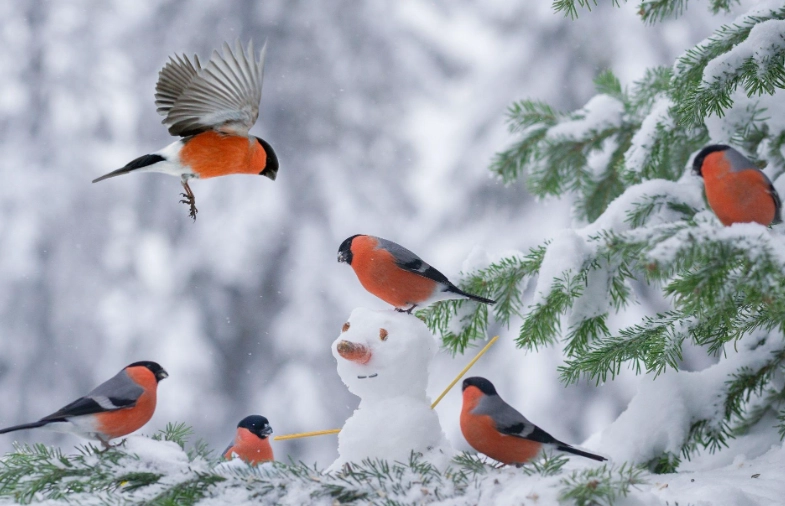
There's something magical about spotting a flash of crimson against fresh snow, or hearing the soft chatter of a flock where everything else is silent. Winter birding isn't just a hobby; it's a mood-lifter. It turns a bleak landscape into a treasure hunt. I remember one particularly gloomy February afternoon, stuck inside, feeling the winter blues. Then, a small troop of Dark-eyed Juncos, like little gray-suited gentlemen with white bellies, arrived under my feeder. Their quiet, busy pecking at the seeds scattered on the ground was so peaceful, so full of life. It completely changed my day.
Winter Birding Truth: Many people assume birds "fly south" and that's it. But the reality is far more interesting. Many species stick around, toughing out the cold. Others, called "irruptive migrants," only come down to our areas in some winters when food is scarce further north, making every season a potential surprise.
Why Winter is a Prime Time for Birding (No, Really)
You might think summer, with all its leaves and activity, is the best time. But winter has secret advantages for spotting these beautiful winter birds.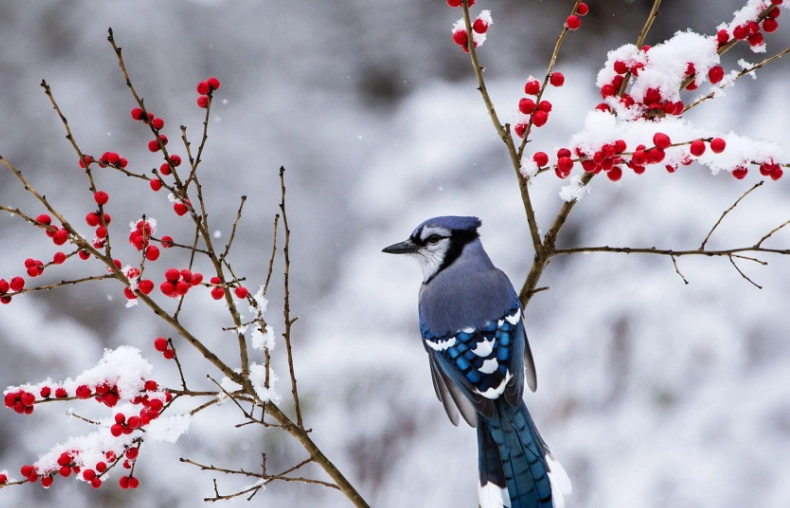
First, the obvious: no leaves. That thick green curtain that hides everything from May to October is gone. Birds are out in the open, silhouetted against the sky or sitting plainly on branches. Identification, which can be a nightmare in summer, becomes much simpler. You can see the full shape, the wing bars, the tail patterns without a single leaf in the way.
Second, birds are concentrated. Natural food sources—berries, seeds, insects—are scarce. So birds flock to reliable spots. Your backyard feeder becomes a major hub. Parks with fruit-bearing trees become bird magnets. You see more birds in one place than you might all summer.
Third, the light. The low winter sun, especially in the morning or late afternoon, casts a beautiful golden glow. It turns an ordinary Northern Cardinal into a living jewel. The contrast against snow or a gray backdrop makes colors pop in a way they simply don't in the green haze of summer.
And finally, it's quiet. The constant insect buzz and frog chorus of warmer months is absent. Bird calls and songs, though less frequent, carry clearly in the crisp air. You can hear the soft "pik" of a Downy Woodpecker or the gentle "seet" of a Golden-crowned Kinglet from much further away.
Top Beautiful Winter Birds to Look For (And How to Tell Them Apart)
Alright, let's get to the good stuff. Who are these feathered stars braving the cold? Here’s a rundown of some of the most common and breathtaking beautiful winter birds you're likely to encounter in many parts of North America. This isn't just a list—it's a field guide for your coffee break.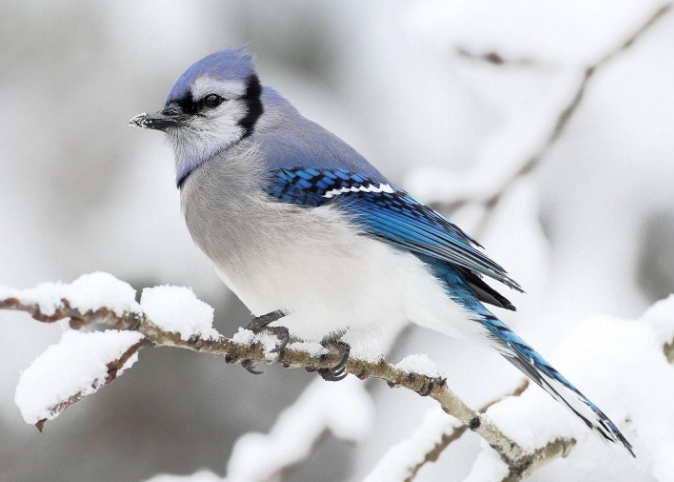
The Backyard Royalty: Cardinals, Blue Jays, and Finches
These are the birds that make feeders worth having. They're relatively common, but never common-looking.
The Northern Cardinal: The undisputed king of the winter scene. The male is a shocking, vibrant red from crest to tail, with a black face mask. The female is more subtle but just as lovely—a warm tan or olive color with reddish tinges in the wings, tail, and crest. They're year-round residents, but in winter, they're often the only splash of bright color for miles. Their sharp "chip" call is a classic winter sound. Fun fact I learned from the Cornell Lab of Ornithology's All About Birds guide: Cardinals are one of the few species where both males and females sing, and they often sing duets. How cool is that?
The Blue Jay: Loud, bold, and brilliantly blue. Some people find them bullies at the feeder, and okay, they can be. But you can't deny their intelligence and striking looks—that bright blue with white and black barring. In winter, they're often heard before they're seen, with their raucous "jay! jay!" calls. They're also hoarders, caching thousands of acorns to eat later, which helps spread oak forests.
The American Goldfinch: Here's a bird that undergoes a dramatic wardrobe change. In summer, the male is a brilliant lemon yellow. In winter, he molts into a dull, olive-brown outfit, looking almost like a different species. You can still ID them by their conical finch beak, black wings with white bars, and their distinctive, bouncy flight pattern and "po-ta-to-chip" call. Look for them clinging to thistle feeders or dried-up weed stalks.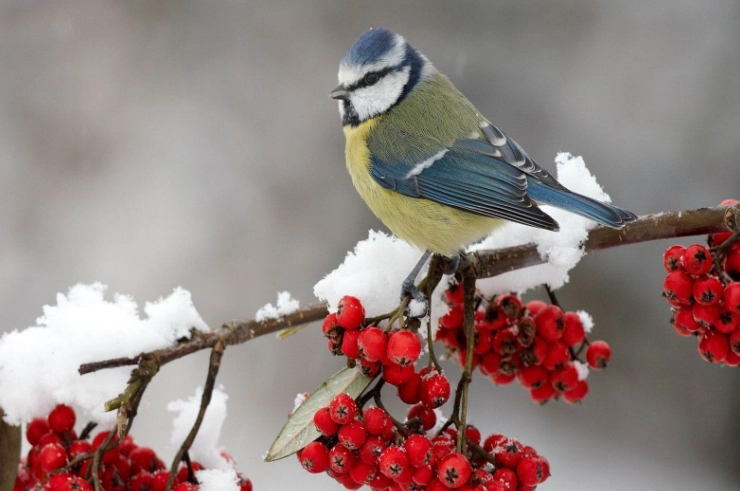
The Winter Specialists: Visitors from the North
These birds treat our "winter" as their mild south. Seeing them is a special treat that marks the season.
The Dark-eyed Junco: Often called "snowbirds," these sparrows are a true sign of winter for many. Slate-gray or brown on top with a crisp white belly, they look like they've been dipped in milk. They rarely come to tube feeders; instead, they hop around on the ground beneath them, scratching for fallen seeds. Their presence is quiet and grounding.
The Snow Bunting: If you live near open fields or shorelines, keep an eye out for these. They look like they're made of snow themselves. In winter, males and females are mostly white with rusty and brown washes on the back and head. They travel in big, swirling flocks that seem to blow across fields like living snowdrifts. It's a breathtaking sight.
“A bird is not defined by its feathers in summer, but by its resilience in winter.”
The Silent Hunters: Birds of Prey in Winter
Winter concentrates prey, making it a prime time for raptors. They are the epitome of stark, beautiful winter birds.
The Snowy Owl: The holy grail for many winter birders. These massive, almost entirely white owls irrupt south from the Arctic tundra in some winters. Seeing one perched regally on a fence post or telephone pole in a snowy field is an unforgettable experience. They're diurnal (active during the day), unlike most owls. Check reports on eBird from local wildlife areas or coastal dunes if you hear of an irruption year. Remember to observe from a great distance—they need their rest.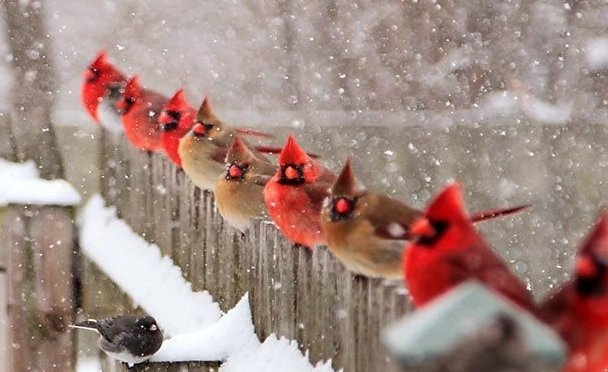
The Rough-legged Hawk: Another Arctic visitor. Look for them hovering over open fields like a giant kestrel. Key ID points are a dark belly band, dark wrists on the underside of the wings, and a white tail with a dark band at the tip. They have feathers all the way down their legs to their toes (hence the name), which is an adaptation for the cold.
| Bird | Key Winter Features | Best Place to Spot | Favorite Food (for attracting) |
|---|---|---|---|
| Northern Cardinal | Brilliant red male, crest, black face | Backyard feeders, dense shrubs | Sunflower seeds, safflower seeds |
| Blue Jay | Bright blue, white & black markings, crest | Oak trees, platform feeders | Peanuts in shell, suet, corn |
| Dark-eyed Junco | Slate-gray/brown back, clean white belly | Ground under feeders, forest edges | White millet, cracked corn (on ground) |
| Downy Woodpecker | Small, black & white, checkered wings | Tree trunks, suet feeders | Suet cakes, peanut butter mixes |
| American Tree Sparrow | Rusty cap, bi-colored bill, central breast spot | Weedy fields, brush piles | Small seeds like millet |
How to Be a Winter Bird Magnet: Your Backyard Habitat Guide
Want to turn your yard into a haven for beautiful winter birds? It's easier than you think, and you don't need a fancy, expensive setup. It's about providing the basics: food, water, and shelter.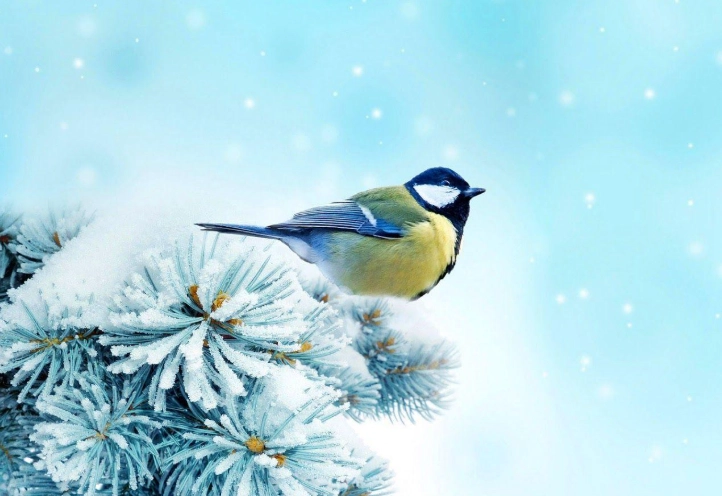
The Food Factor: It's Not Just About the Seed
Different birds eat different things. Offering a variety is the key to variety in visitors.
- Black Oil Sunflower Seeds: The universal favorite. Cardinals, chickadees, nuthatches, finches, jays—they all love it. It's the high-energy protein bar of the bird world.
- Suet: Pure, concentrated fat. This is absolute gold for insect-eating birds in winter when bugs are gone. Woodpeckers, nuthatches, chickadees, and even wrens and creepers will flock to a suet cage. You can buy commercial cakes or make your own (rendered beef fat mixed with seeds, nuts, or dried fruit).
- Nyjer (Thistle): A tiny, expensive seed, but it's the only thing that will reliably attract American Goldfinches and Pine Siskins. Use a specialized tube feeder with tiny ports.
- Leave Your Garden Messy: This is my favorite free tip. Don't deadhead all your flowers or cut down all your stalks in fall. Plants like coneflowers, sunflowers, and grasses hold seeds through winter, providing a natural, self-service buffet for finches and sparrows.
Water. This is huge. Liquid water is incredibly hard to find when everything is frozen. A simple heated birdbath or a birdbath heater you drop into a regular bath is a bigger draw than any feeder. Birds need to drink and bathe to keep their feathers in insulating condition. I splurged on a solar-heated one a few years back, and the traffic it gets is insane—from birds I never see at my seeds.
Shelter is about escape—from weather and from predators like hawks. Dense evergreen shrubs (junipers, hollies, rhododendrons), a brush pile in a back corner, or even a purpose-built roosting box (like a birdhouse but with perches inside and the entrance hole near the bottom to trap heat) can be a lifesaver. Birds will huddle together in these spots for warmth on frigid nights.
Gear Up (Or Don't): The Low-Stress Guide to Winter Birdwatching
You don't need to be a hardcore explorer. Most beautiful winter bird watching can be done from the comfort of your home.
From Your Window: Position a feeder within clear view of your favorite chair. That's it. A pair of binoculars on the windowsill completes the setup. I keep a small notebook nearby to jot down who visits and when. Over time, you'll learn the daily routines of your feathered neighbors.
For Venturing Out: If you do go for a walk, dress in layers. Forget fancy gear. The most important thing is to be quiet and move slowly. Stop frequently. Listen. Scan bare trees, the edges of fields, and shorelines. A basic pair of 8x42 binoculars is perfect for most people. I also love using the Merlin Bird ID app from the Cornell Lab—you can record bird sounds and it will suggest IDs, which is super helpful when you hear something but can't see it.
Feather Science: How do birds not freeze? Their feathers are incredible insulators. They fluff them up to trap warm air close to their bodies. Some species, like chickadees, can also enter a state of controlled hypothermia at night to save energy. Nature's own survival tech!
Answers to Questions You're Probably Asking
Let's tackle some of the practical stuff that pops up when you start paying attention to birds in winter.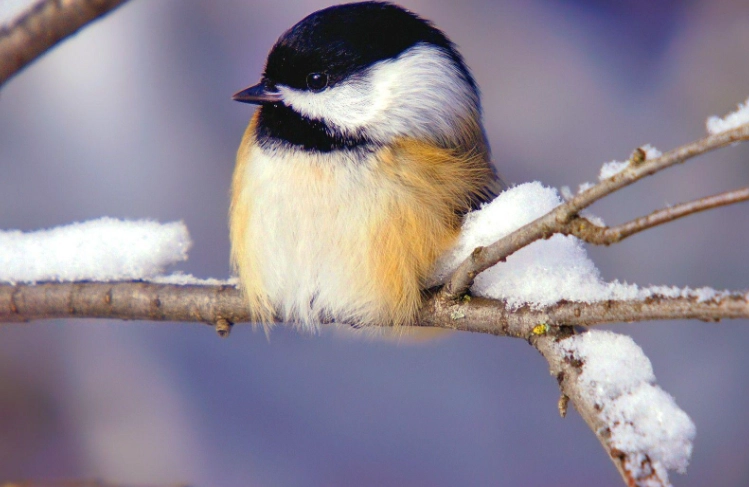
Is feeding birds in winter making them dependent?
This is the big one. Research from places like the U.S. Geological Survey suggests that backyard feeding is generally a supplement, not a primary source. Birds are opportunistic; they'll use your feeder but continue to forage naturally. Think of it as a reliable snack station that helps them conserve energy on brutally cold days, not a welfare program that ruins their survival skills. The real risk isn't dependency, but disease from dirty feeders—so clean them regularly with a vinegar solution.
What if a bird hits my window?
It happens, especially with reflections of trees or sky. It's heartbreaking. If you find a stunned bird, place it gently in a small, ventilated box and keep it in a quiet, dark place for an hour or two. Do not try to give it food or water. Often, it will recover and you can release it. To prevent strikes, break up the reflection. You can use decals, strips of tape, or even a sheer curtain on the inside. I put up some inexpensive window clings that look like frosted leaves, and the strikes stopped completely.
Why do some birds disappear in the middle of winter?
Local movements. A hawk might have moved into the area, spooking your feeder birds for a few days. Or a natural food source (like a berry-laden tree a few streets over) might have been discovered, causing a temporary exodus. They usually come back. Weather fronts can also push birds ahead of them. Don't panic if things go quiet for 48 hours.
The Bigger Picture: Your Role as a Citizen Scientist
Here's something rewarding: your observations matter. Seriously. By logging the beautiful winter birds you see, you contribute to real science. Programs like the Cornell Lab's Project FeederWatch (which runs November to April) rely on data from people just like you, watching from their homes. You report what species visit your count site each week. This long-term data helps scientists track bird population trends, understand migration shifts due to climate change, and identify disease outbreaks.
It takes maybe 15 minutes a week, twice a week. You feel less like just a spectator and more like a part of a community helping to protect these very birds. I've been doing it for three seasons now, and it gives the whole hobby a deeper purpose.
Winter can feel long and isolating. But the community of beautiful winter birds outside is a constant, active, and dazzling reminder that life thrives in all seasons. They don't just survive the cold; in their vibrant plumes and spirited behaviors, they defy it. All they ask for is a little food, some water, and a safe place to rest. In return, they offer a front-row seat to one of nature's most subtle and beautiful performances. So fill that feeder, top up the bath, and take a look outside. The show has already begun.
Trust me, once you start noticing them, you'll never see a gray winter day the same way again.
Reader Comments