You hear a car alarm, then a blue jay's shriek, followed by a perfect rendition of a Carolina wren's song—all from a single gray bird perched on your fence. That's the Northern Mockingbird. It's not just a bird; it's an experience. For birdwatchers and casual observers alike, this common yet extraordinary songbird is a source of endless fascination and, occasionally, mild frustration. Let's cut past the basic facts and dive into what you really need to know to find, identify, understand, and even peacefully coexist with North America's premier avian impersonator.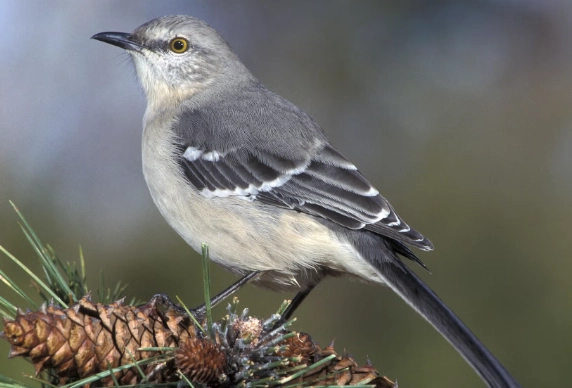
What's Inside This Guide
Where to Find Them (It's Probably Closer Than You Think)
Forget deep wilderness. The mockingbird's kingdom is the edge—the messy, productive space between human development and wild areas. They've mastered the suburban and urban jungle. Your best bets are places with open ground for foraging and dense shrubs or small trees for nesting and perching.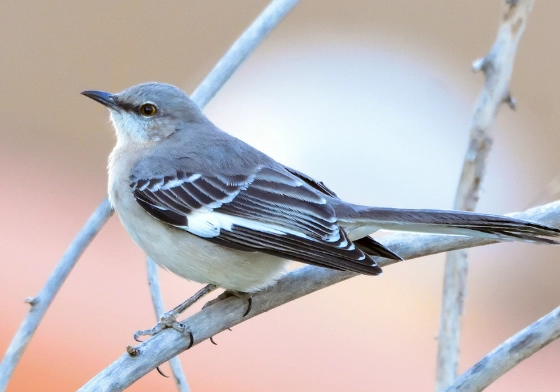
Think about your local park, especially areas with berry bushes. Schoolyards with playing fields bordered by hedges are prime territory. Even large parking lots with landscaped islands can host a mockingbird. I once found a particularly vocal male holding court in the median strip of a busy shopping center, perfectly content amidst the traffic.
Their range covers most of the contiguous United States, southern Canada, and down into Mexico. They're year-round residents across much of the southern U.S., while northern populations may shift southward in winter, though less predictably than true migrants.
Prime Mockingbird Habitat Checklist: Open lawn or short grass (for hunting insects) + Dense, thorny shrubs like pyracantha, holly, or multiflora rose (for nesting safety) + Elevated perches like fence posts, power lines, or tree tops (for singing and surveillance) + A source of berries (for winter food). If your yard has three of these four, you're likely on a mockingbird's radar.
How to Spot One: Beyond the Basic Gray Bird
At a glance, they're a medium-sized, sleek gray bird. But the devil—and the delight—is in the details. Rushing to label every gray bird as a mockingbird is a common beginner's mistake.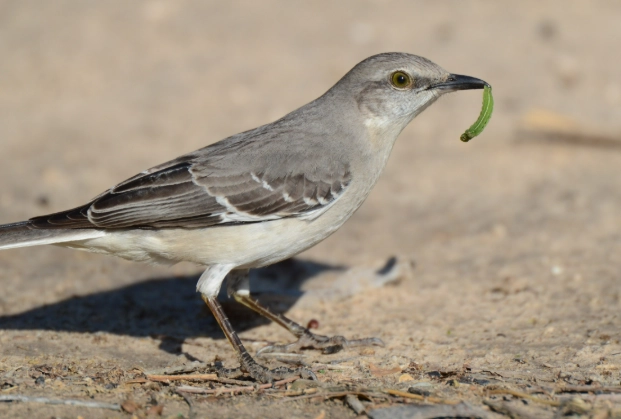
Visual Identification: The Giveaway Marks
Look for these features in combination:
- Color Palette: Pale gray above, whitish below. Not brownish, not blueish—just gray and white.
- The Wing Flash: This is the single best visual clue. In flight or when they flick their wings, you'll see large, bright white patches on the wings and white outer tail feathers. The wing patches are unmistakable.
- Long Tail: The tail is noticeably long, often longer than the body, and frequently held cocked or slightly fanned.
- Slender Bill & Legs: A thin, blackish bill and long, dark legs give them an elegant, alert posture.
Don't confuse them with the smaller, darker Gray Catbird (which has a black cap and no white wing patches) or the Brown Thrasher (which is, well, brown and streaked).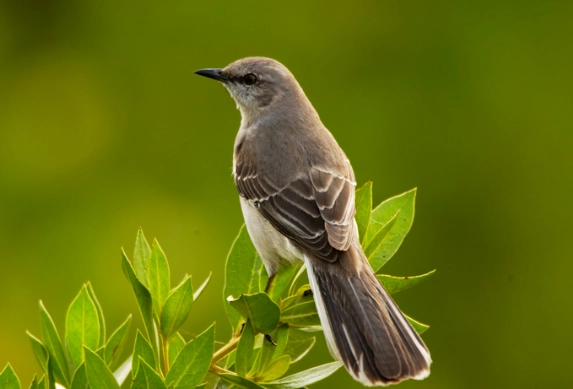
Aural Identification: Listening to the Maestro
This is where they truly shine. Their song is a loud, continuous series of phrases, each repeated 2-6 times before switching to a new sound. The variety is staggering. A single bird may have a repertoire of 50 to 200+ distinct song phrases, according to research from the Cornell Lab of Ornithology.
Listen for repetition. A mockingbird will sing "chuck-chuck-chuck, wheeep-wheeep-wheeep, trill-trill-trill". A similar mimic, the Brown Thrasher, typically says each phrase just twice. The catbird strings sounds together without repetition.
They sing both day and night, especially during a full moon or when streetlights are present. Unmated males are the most relentless nighttime singers.
Understanding the Mimic: Why They Do What They Do
It's not just for show. The mimicry serves two critical, hardwired purposes: attracting a mate and defending a territory. Think of their repertoire as a resume and a warning siren combined.
A male with a larger, more complex song library signals to females that he's experienced, resourceful, and holds a good territory. To rival males, the same songs mean "I'm strong, I've been around, and this space is taken." They're not just copying sounds randomly; they're strategically building a vocal arsenal.
One subtlety most guides miss: mockingbirds are selective mimics. They often incorporate sounds that are acoustically prominent in their immediate environment. A bird near a construction site might pick up backup beepers. One near a farm might mimic a guinea fowl. It's hyper-local adaptation in real-time.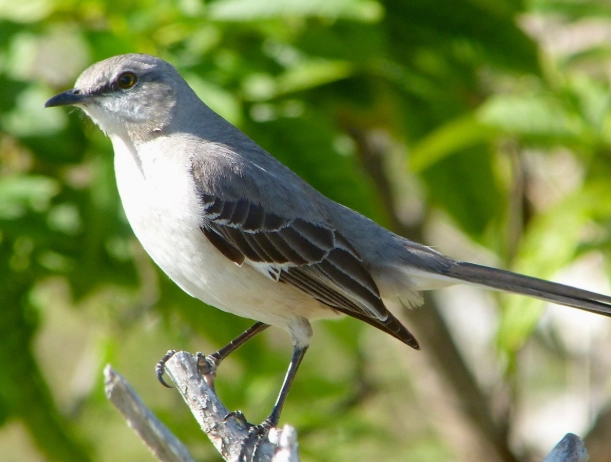
Here's a personal observation that changed how I listen: A mockingbird near my old apartment perfectly mimicked the specific two-tone chirp of my neighbor's car lock. It didn't mimic every car alarm—just that one. It told me exactly which parking space was at the center of his territory.
Dealing with the Challenges: From Dive-Bombs to Window Bumps
Their intelligence and territoriality can lead to conflicts. Understanding the why is the first step to a solution.
When Mockingbirds Attack (Or Seem To)
Spring and early summer are peak season for mock aggression. They're protecting their nest, which is usually well-hidden in a dense, thorny shrub. The attacks are almost always bluffs—loud swoops meant to scare you off, not make contact. I've been dive-bombed countless times; only once did a bird actually graze my hat.
What to do: Don't swat at them. You'll just escalate things. Simply raise an arm or an object like a newspaper above your head to break their dive trajectory. They usually aim for the highest point. Wear a hat. Most importantly, if you can identify the nest shrub, give it a wide berth for the 2-3 weeks until the chicks fledge. The parents aren't being mean; they're just insanely dedicated.
The Dreaded Window Collisions
Mockingbirds are particularly prone to attacking their own reflection in windows, car mirrors, or hubcaps, seeing it as an intruding rival. This can go on for hours, days, or even weeks.
| Problem | Why It Happens | Effective Solution |
|---|---|---|
| Attacking windows | Sees own reflection as a rival bird. | Break up the reflection. Tape strips of newspaper on the outside of the glass, use temporary window clings, or hang a sheer curtain. |
| Attacking car mirrors | Same reflection issue, focused on a small, bird-sized target. | Cover the mirrors when parked. Use mirror socks or simply drape a cloth bag over them. |
| Constant daytime singing | Unmated male defending territory or attracting a mate. | Hard to stop. Consider it a free concert. It's a seasonal behavior that will subside. |
The key is persistence. You need to keep the solution in place for several days until the bird's territorial fervor shifts or it learns the reflection is gone.
Your Mockingbird Questions, Answered
How can I stop a mockingbird from attacking my windows every morning at 5 AM?
The 5 AM assault is classic spring behavior. Temporary solutions are your friend. Apply a few sticky notes or soap scribbles on the outside of the problem window. The goal is to make the surface look less like a continuous, reflective territory. I've had good results with inexpensive static-cling window film cut into strips. It usually takes 3-5 days of consistency for the bird to give up and redirect its energy.
Is it true that mockingbirds remember people who threaten their nest?
The science suggests they can. Studies, like those referenced by the American Ornithological Society, show that mockingbirds and other corvids can distinguish between individual humans who pose a threat and those who don't. If you repeatedly approach a nest, the parents may become more aggressive specifically towards you. The flip side? If you're consistently neutral or positive (like quietly filling a bird bath), they may also learn to tolerate your presence more quickly.
What's the best way to attract mockingbirds to my yard without causing conflict?
Focus on food and water, not housing. They rarely use nest boxes. Plant native berry-producing shrubs like dogwood, serviceberry, or winterberry. A birdbath with clean, shallow water is a major draw, especially one with a gentle drip or mister. Avoid putting out mealworms or other high-value insect treats in spring if you have a territorial pair nearby—it can intensify their defense of your yard as a prime food source.
Why did the mockingbird in my neighborhood suddenly stop singing?
This is normal. Singing peaks during courtship and early nesting to attract a mate and define territory. Once the female is incubating eggs or the pair is busy feeding quiet, hungry chicks, the male sings much less to avoid drawing attention to the nest. The song will often pick up again later in summer, sometimes as the pair starts a second brood, or as young males start practicing their own songs.
Reader Comments