Quick Navigation
- Spotting the Rose-Breasted Grosbeak: A Visual Guide
- That Beautiful Song and Common Calls
- Where Do They Live and When Can You See Them?
- What's on the Menu? Diet and Feeding Habits
- How to Attract Rose-Breasted Grosbeaks to Your Yard
- Nesting and Family Life
- Conservation Status and Threats
- Frequently Asked Questions (Stuff You're Probably Wondering)
Let's talk about one of those birds that makes you stop whatever you're doing and just stare. You're puttering around in the garden, or maybe just gazing out the kitchen window with a coffee, and there it is. A flash of black and white, and then you see it—that brilliant, almost shocking splash of rose-red on its chest. The first time I saw a male rose-breasted grosbeak at my feeder, I actually dropped the bag of seed I was holding. It was that striking. I knew cardinals and blue jays, but this guy? He was something else entirely. A living piece of art.
Since that day, I've spent years trying to learn more about them, and more importantly, trying to get them to come back. And you know what? I've had some luck. I've also made plenty of mistakes. So if you're curious about this stunning bird, whether you just want to identify it or you're dreaming of having one visit your yard, I've packed everything I've learned—the good, the frustrating, and the downright fascinating—right here.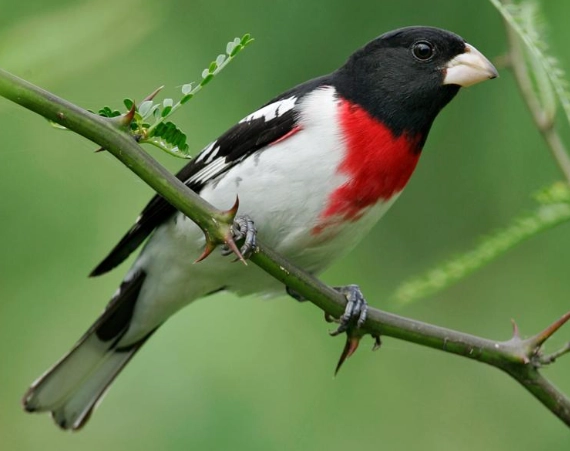
Spotting the Rose-Breasted Grosbeak: A Visual Guide
This is where most people start. You see a bird and you're not quite sure. Let's break it down so you can be confident next time.
The Showstopper: Adult Male
The male rose-breasted grosbeak is impossible to miss during breeding season. His head, back, and wings are a sleek, velvety black. His belly and a large patch under his tail are clean white. And then there's the namesake feature: a bold, triangular rose-red patch right in the center of his white breast. It looks like he's wearing a brilliant bib. In certain lights, it can look more pink than red, but it's always vivid.
His bill is the other dead giveaway. It's a heavy, cone-shaped bill that's a pale bone color. It looks almost too big for his face—that's the "grosbeak" part, meaning "large beak." He uses it like a powerful seed cracker.
I remember one cloudy afternoon, the red on a male at my feeder looked almost muted, more of a deep maroon. It wasn't until he turned just right that the color popped. So lighting matters!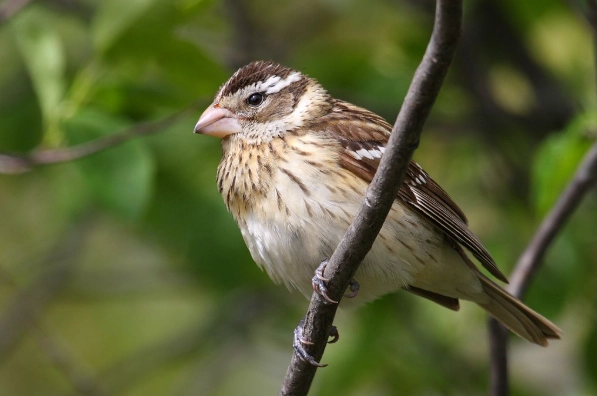
The Understated Beauty: Female and Juvenile
Now, here's where a lot of new birdwatchers get tripped up. If you're looking for that flashy red, you'll completely overlook the female. And that's a shame, because she's gorgeous in her own right.
The female rose-breasted grosbeak looks like a large, super-streaked sparrow at first glance. Her body is mostly brown and white with heavy, dark streaks all over her breast, sides, and back. But look closer. She has a bold white stripe over each eye (a supercilium, if you want the technical term) and another whitish stripe down the center of her crown. Her underparts are buffy with thick brown streaks. Her wings are dark with two distinct white wing bars, and when she flies, you might see little patches of pale rose or yellow in her wingpits (the axillaries, technically).
Her bill is that same large, pale, conical shape. That's the best clue. You see a big-billed, heavily streaked bird with a strong face pattern? Think female grosbeak.
Juveniles look a lot like the female but are even streakier and messier-looking. Young males will start to show little flecks of black and maybe a hint of rosy pink on their breast by their first fall.
| Feature | Male (Breeding) | Female | Key Similar Birds (Don't Get Fooled!) | |
|---|---|---|---|---|
| Primary Colors | Black, white, bright rose-red breast patch | Brown, white, heavy dark streaks | Male: Black-headed Grosbeak (Western US, has orange/rust coloring instead of red) | |
| Head & Back | Solid black | Brown with dark streaks | Female: Large sparrows like the Fox Sparrow (no wing bars, different head pattern) | |
| Underparts | White with bold red triangle | Buffy/white with thick brown streaks | Purple Finch (male is raspberry red all over, not just a patch; smaller bill) | |
| Bill | Large, pale, conical | Large, pale, conical | American Robin (similar size/shape, but solid red breast, yellow bill, different behavior) | |
| Best Single Field Mark | The large, triangular rose patch on white breast | The large pale bill on a heavily streaked bird | Always check the bill size first! |
That Beautiful Song and Common Calls
Okay, so you might hear a rose-breasted grosbeak before you see one. And what a treat that is. People often say the male's song sounds like a robin who took voice lessons—it's richer, more fluid, and more melodious.
To me, it's a hurried, cheerful warble that rises and falls. It doesn't have the robin's repetitive phrases. It's more of a continuous, bubbly outpouring. He'll sing from a high perch, often hidden in the leaves of a tall tree. You can listen to perfect examples of the rose-breasted grosbeak song on the Cornell Lab of Ornithology's All About Birds guide. It's an incredible resource for bird sounds.
Both males and females sing, which is pretty cool and less common in the bird world. The female's song is similar but shorter and softer, often heard when she's on the nest and the male is nearby.
Then there are the calls. The most common one is a sharp, metallic "eek!" or "chink" sound. It's like two small stones being tapped together. You'll hear this all year round. It's a great clue that grosbeaks are in the area, even if they're hiding.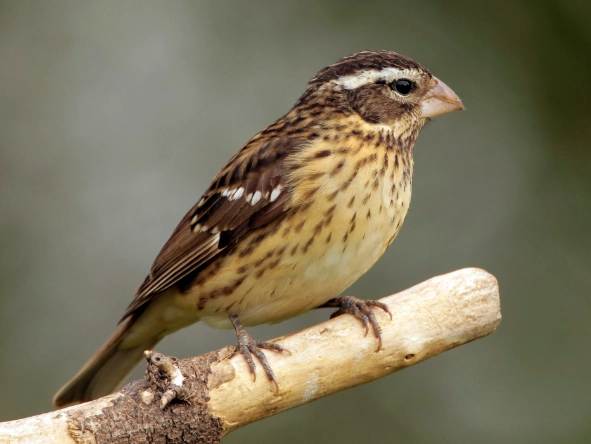
Where Do They Live and When Can You See Them?
Rose-breasted grosbeaks are classic long-distance migrants. They spend our winter (the Northern Hemisphere's winter) way down in Central and northern South America. Think southern Mexico through Panama, and into parts of Colombia and Venezuela. Then, as spring rolls around, they make the incredible journey north.
Their breeding range covers a huge swath of eastern North America. Draw a line from the northeastern British Columbia across to Nova Scotia, south to the edge of the Great Plains (eastern Kansas, Oklahoma, Texas), and back up to New Jersey. If you live within that area, you have a shot at hosting them in the summer.
Timing is everything. In most of the U.S. and southern Canada, they arrive in late April and May. I start watching my feeders and listening for that song around the last week of April here. They head south again from late August through October.
During migration, they can turn up almost anywhere, even outside their normal range. People in the western U.S. sometimes get a rare treat when one visits. They're not super picky during migration—they'll use parks, suburban yards, and forest edges.
Preferred Summer Hangouts
When they're looking for a place to raise a family, rose-breasted grosbeaks like deciduous or mixed forests. They often choose spots near openings—like a road, a stream, or a meadow edge. They seem to love second-growth woods and areas where taller trees are mixed with shrubs. I've had the most luck seeing them in places like that, rather than deep, dark, unbroken forest.
They also don't mind human presence if the habitat is right. A backyard with lots of mature trees, especially oaks and maples, can absolutely attract a breeding pair. That's my goal, and it's worked once!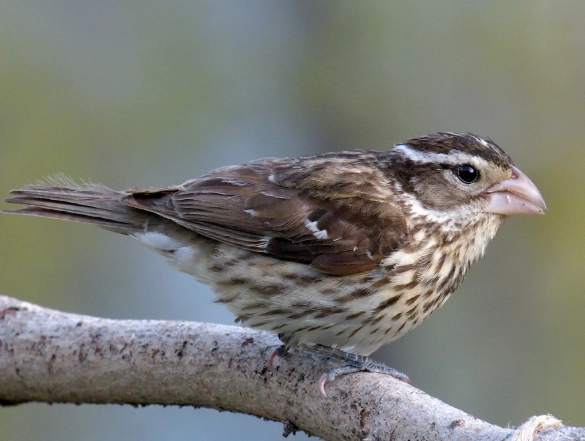
What's on the Menu? Diet and Feeding Habits
This is key if you want to attract them. Rose-breasted grosbeaks are omnivores, but their diet shifts with the season.
In spring and summer, they eat a ton of insects and other invertebrates. We're talking beetles, caterpillars (they love butterfly and moth larvae), bees, ants, and even snails. This protein is crucial for feeding their growing chicks. I've watched them meticulously hunt through the leaves of my oak trees.
Come late summer, fall, and especially during migration, they switch heavily to seeds and fruits. This is where that massive beak shines. They can crack open seeds that smaller birds can't touch.
They have a particular fondness for the seeds of trees like elms, tulip trees, and of course, sunflowers. They'll also eat berries from plants like elderberry, blackberry, and juneberry.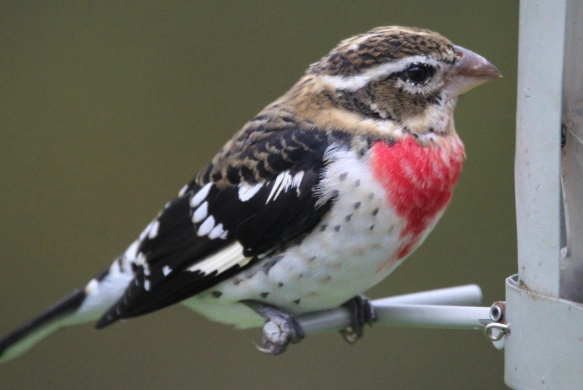
How to Attract Rose-Breasted Grosbeaks to Your Yard
This is the million-dollar question, right? After that first sighting, you want them to come back. Here's what has worked for me and what I've learned from talking to other birders.
Offer the Right Food
This is your biggest lever to pull.
- Black Oil Sunflower Seeds: This is the number one, hands-down best food to offer. Put them in a large platform feeder or a hopper feeder with a big tray. Those big bills need space. They'll also happily eat from tube feeders with large perches.
- Safflower Seeds: A great second option. Cardinals love them too, and squirrels usually don't, which is a bonus.
- Shelled Peanuts: Chopped or broken pieces in a tray feeder are a high-energy treat, especially during migration.
- Fruit: Try offering orange halves, chopped apples, or raisins in a fruit feeder. They might go for it, especially in late summer.
- Live Mealworms: If you're really dedicated, offering a few mealworms in a dish during spring might catch the eye of a pair scouting for a nest site. It shows you have "insects."
I made the mistake of only using small tube feeders at first. The grosbeaks would awkwardly try to perch, knock seed everywhere, and often give up. Once I switched to a big, open platform feeder, they became regulars during migration.
Plant a Grosbeak-Friendly Garden
Food from feeders is great, but natural food sources are what might convince them to stay and nest.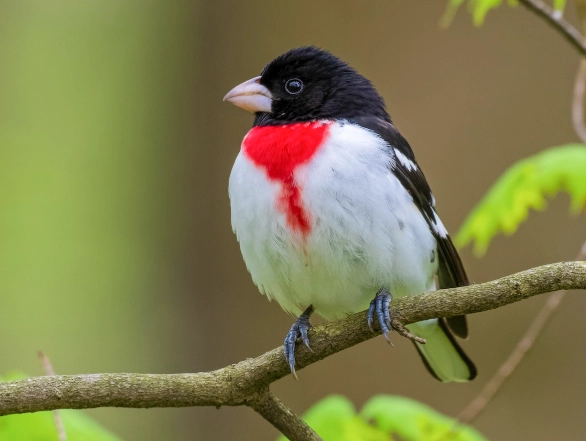
- Sunflowers: Plant a patch! Let the flowers go to seed and don't deadhead them. You're creating a natural feeder.
- Native Berry Producers: Elderberry, Serviceberry, Dogwood (especially Gray Dogwood), Mulberry, and Black Cherry.
- Insect-Hosting Trees: Oak trees are absolute powerhouses for caterpillars, a key food source. Cherries, willows, and birches are also excellent.
- Provide Water: A birdbath, especially one with a gentle mister or dripper, is incredibly attractive. They need to drink and bathe.
Create Safe, Layered Habitat
If you have the space, think in layers. Tall trees (for singing posts and nesting), a middle layer of smaller trees and tall shrubs (for foraging and nesting cover), and a lower layer of native plants and grasses (for insects). This mimics their preferred forest-edge habitat.
And this is critical: keep your cats indoors. This is my biggest frustration with my neighborhood. Ground-feeding birds like grosbeaks are incredibly vulnerable to outdoor cats. It's the number one human-caused threat to birds. Creating a safe yard means keeping predators at bay. The American Bird Conservancy has a great Cats Indoors program with all the reasons why this is so important.
Nesting and Family Life
If you're lucky enough to have a pair stay, their nesting habits are fascinating. The female builds a loose, cup-shaped nest, usually in the fork of a tree or large shrub, between 5 and 20 feet off the ground. It's so loosely woven that you can sometimes see light through the bottom from below!
She'll lay 3-5 pale blue or green eggs with reddish-brown spots. Both parents incubate the eggs—the male often takes a daytime shift, which is unusual for songbirds. Both also feed the chicks. They're devoted parents.
The young leave the nest after 9-12 days but stay close, following their parents and begging for food with loud chirps. You might see a frazzled-looking adult being trailed by two or three clumsy juveniles.
Conservation Status and Threats
Thankfully, the rose-breasted grosbeak is still considered a species of Least Concern by the IUCN, meaning its overall population is relatively stable. But that doesn't mean there aren't worries.
Their numbers have seen some declines, like so many migratory birds. The main threats are habitat loss on both their breeding and wintering grounds. Tropical forests in Central and South America are being cleared, and forests in North America are fragmented.
They are also frequent victims of window collisions, especially during migration. If you have large windows, consider applying decals or using other bird-safe window treatments. Another major threat, as mentioned, is predation by outdoor cats.
Climate change is a big unknown. Shifting weather patterns could affect insect hatches (their food) and the timing of migration.
What can you do? Support organizations that protect habitat across the Americas, like the National Audubon Society. Make your yard a safe haven. Participate in citizen science projects like eBird to help scientists track their populations. Every little bit helps.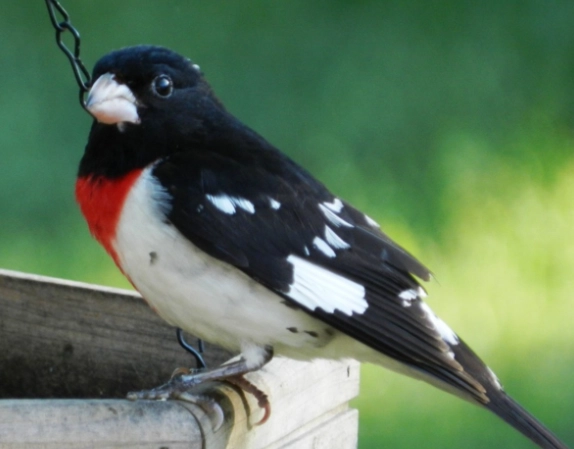
Frequently Asked Questions (Stuff You're Probably Wondering)
At the end of the day, the rose-breasted grosbeak is more than just a pretty bird. It's a symbol of the incredible journey migratory birds make, a reminder of the interconnectedness of ecosystems from Canada to Colombia. Hearing that rich, robin-like song in a spring woodland, or seeing that flash of rose on a gray feeder on a fall morning, is a special kind of magic.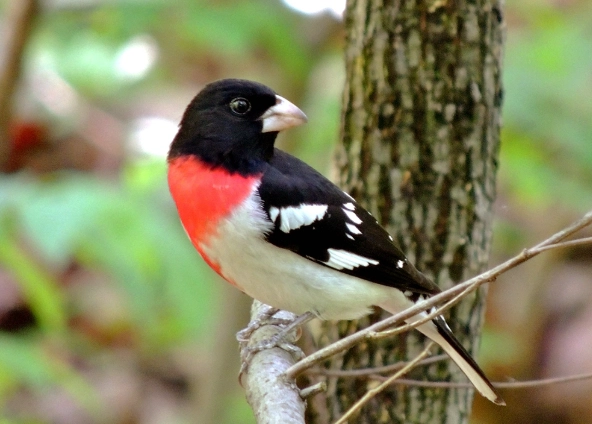
It takes a bit of patience and the right setup to bring them into your world. You might not get a nesting pair—I've only managed it once—but seeing a migrating flock refuel at your sunflower feeder is a reward in itself. It makes all the effort worth it. Start with a big feeder full of black oil sunflower seeds, add some water, and be patient. You never know when that striking black, white, and red visitor might decide your yard is the perfect pit stop.
Reader Comments