You're standing at the edge of a salt marsh, binoculars in hand, scanning a flock of white wading birds. They all look the same from a distance, right? That's what I thought too, until I spent a frustrating morning misidentifying a great egret for the much smaller snowy egret. It's a common rookie mistake. The snowy egret (*Egretta thula*) isn't just another white bird; it's a study in elegant contrast and hyperactive foraging behavior. Getting to know this bird transforms a muddy wetland into a stage for one of nature's most entertaining performers.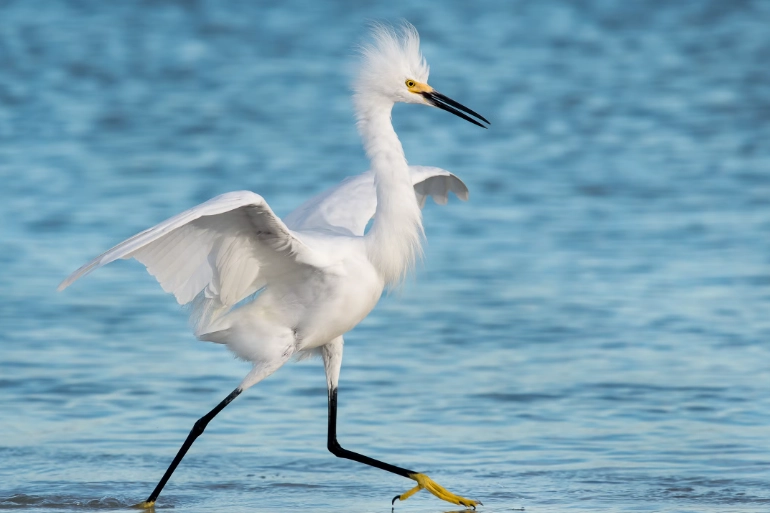
In This Article You'll Discover
How to Tell a Snowy Egret Apart From Other White Waders
This is where most guides give you the basic checklist: black bill, black legs, yellow feet. That's correct, but it's useless in poor light or when the bird is standing in deep water hiding its famous "golden slippers." You need a hierarchy of clues.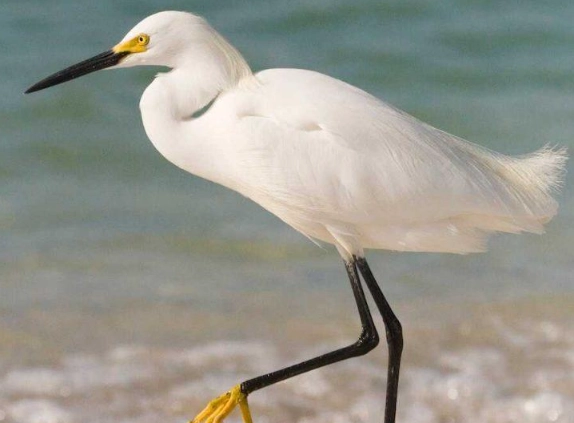
First, judge the size and posture. Think of a snowy egret as the compact, energetic cousin. It's about 24 inches tall—significantly smaller and more delicate than the statuesque great egret. The great egret has a kink in its neck when at rest, like it's perpetually looking down its beak. A snowy egret's neck appears smoother, often pulled into a tight S.
Second, focus on the face. In breeding season, snowy egrets grow long, wispy plumes on their head, chest, and back. It looks like they're wearing a fancy lace boa. More reliably, look at the lore—the skin between the eye and the bill. On a snowy egret, it's bright yellow. On a great egret, it's greenish-yellow, and on a cattle egret (which is smaller and stockier), it's yellow or reddish during breeding. This facial patch is a killer field mark in decent light.
The most common confusion is with the immature little blue heron, which is all white for its first year. The bill gives it away: an immature little blue has a pale bill with a dark tip (a two-toned look), while the snowy's bill is all black. The legs are also grayer, not the stark black of a snowy.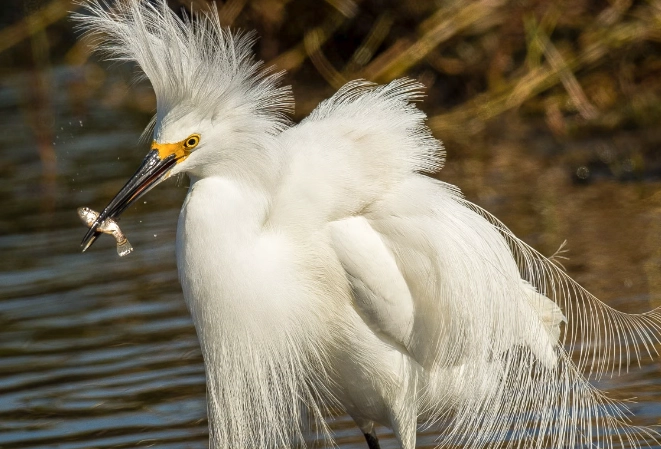
The Behavioral Giveaways: It's All in the Motion
Snowy egrets rarely stand still for long. They are nervous, active feeders. You'll see them running, hopping, and flapping their wings to startle prey. Great egrets are the patient ambush predators; they move with slow, deliberate steps. A hyperactive white bird in the shallows is almost certainly a snowy. This behavioral ID works at distances where color details fade.
Where to Find Snowy Egrets: Prime Locations and Timing
Snowy egrets are coastal birds at heart, but they've adapted beautifully to inland life. You won't find them in deep forests or dry fields. Think water edges with shallow, slow-moving water and plenty of small fish.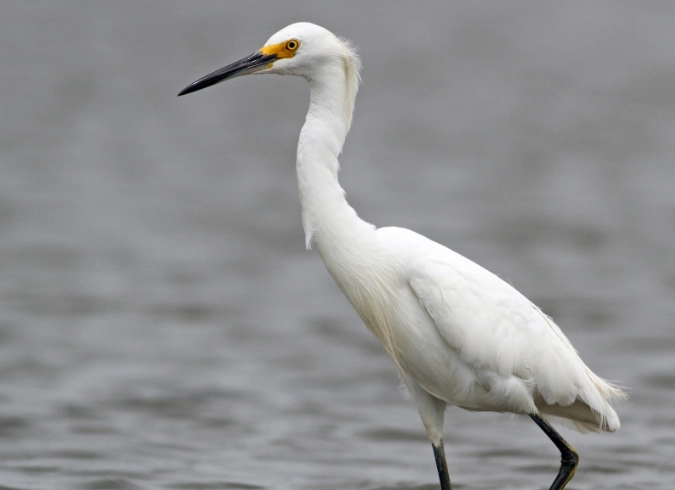
Their range covers most of the Americas. According to data from the Cornell Lab of Ornithology's eBird platform, they are year-round residents along the southern Atlantic and Gulf coasts of the US, the Pacific coast of California and Mexico, and throughout Central and South America. In summer, they expand northward throughout the entire continental US and into southern Canada.
Timing is straightforward. In the northern parts of their range, look for them from April through September. In the southern US and beyond, they're a permanent fixture. The best time of day is early morning or late afternoon when they are most actively feeding.
| Habitat Type | What to Look For | Best US Regions to Try |
|---|---|---|
| Salt Marshes & Tidal Flats | Shallow, brackish water with cordgrass. Check areas exposed at low tide. | Everglades (FL), Cape May (NJ), San Francisco Bay (CA) |
| Freshwater Marshes & Pond Edges | Weedy margins of lakes, slow rivers, and irrigation ditches. | Great Lakes shores, Mississippi River delta, Central Valley (CA) |
| Managed Wetlands & Wildlife Refuges | Impoundments with controlled water levels. Reliable and accessible. | Any National Wildlife Refuge with marsh habitat (e.g., Bombay Hook, DE; Laguna Atascosa, TX) |
My personal favorite spot isn't a famous refuge. It's a small, overlooked drainage canal near an agricultural field in central Florida. Because it's not on the official "birding trail," it gets less traffic, and the egrets are less skittish. Always scout the unglamorous edges—ditches, farm ponds, and flooded fields. Snowies are opportunists.
How to Photograph Snowy Egrets: Beyond the Basic Shot
You've got the ID down. Now you want a photo that captures their spirit, not just a white blob on a stick. The biggest mistake I see? Photographers using the wrong shutter speed and getting a blurry mess of motion.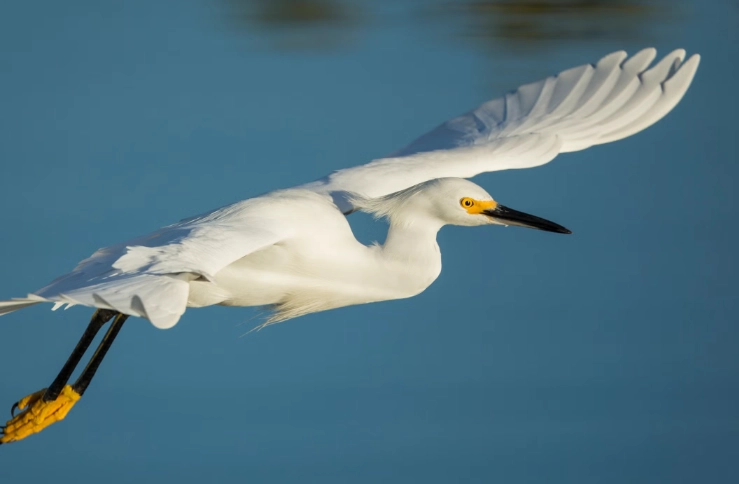
Gear Doesn't Matter as Much as Technique. Sure, a long lens (300mm+) helps, but I've gotten my favorite snowy shots with a 200mm lens by patiently waiting for them to come closer. A lens with image stabilization is a huge bonus for handholding in low light at the water's edge.
Camera Settings for the Win:
• Shutter Speed: This is critical. Freeze their rapid foot-stirring or wing-flapping with at least 1/1000s. For walking shots, 1/500s might suffice. If the light is low, don't be afraid to crank the ISO. A grainy, sharp action shot is better than a blurry, clean one.
• Aperture: Use a wide aperture (f/4 to f/5.6) to isolate the bird from a busy background. But if you're close and want the entire bird sharp from bill to tail, stop down to f/8.
• Focus: Use continuous autofocus (AI-Servo for Canon, AF-C for Nikon/Sony) and a single, flexible focus point placed over the bird's eye. Their eyes are dark and can be hard for cameras to lock onto, so aim for the high-contrast area where the black bill meets the white feathers.
The Light Makes the Bird. Harsh midday sun blows out the brilliant white plumage and creates ugly, deep shadows. The magic hours—early morning and late afternoon—give the feathers a warm glow and reveal texture. Overcast days are also fantastic; they act like a giant softbox, providing even, shadowless light perfect for capturing detail.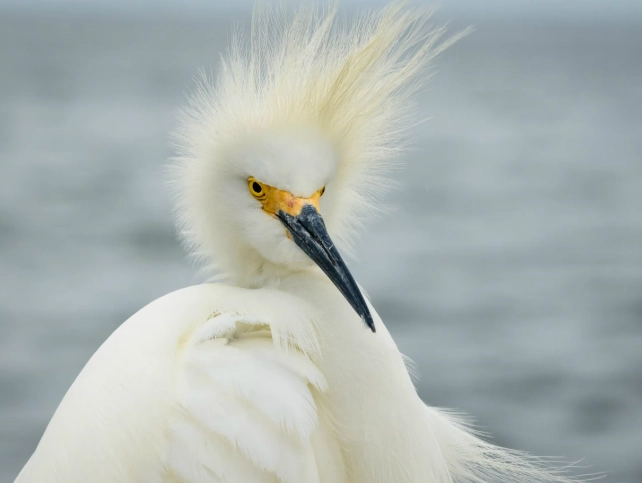
Get low. Shooting from eye level or slightly below creates a more intimate, engaging perspective than the typical "looking down" shot from a boardwalk. It also often gives you a cleaner, watery background.
Frequently Asked Questions About Snowy Egrets
What's the best way to approach a snowy egret for photos without scaring it off?
Move slowly and indirectly. Never walk straight toward one. Use natural cover like reeds or a gentle slope to break up your silhouette. If you're on a boardwalk, stop moving well before you're in what you think is range. Let the bird get used to your presence. Often, if you stay still, they'll resume feeding and even move closer. Their comfort zone is usually about 50 feet, but a nervous bird might flush at 100. Watch its body language—if it stops foraging and stares intently at you, freeze.
I see snowy egrets with dull, greenish legs. Is that a different species?
Nope, that's still a snowy egret. The vibrant black legs and yellow feet are most pronounced in breeding adults. Outside of the breeding season, and especially in younger birds, the legs can fade to a greenish-yellow or dull grayish-black, and the yellow on the feet can become less intense. This is a major source of confusion. Always fall back on the combination of size (small), bill (all black), and active behavior to confirm the ID when the leg color isn't textbook.
Are snowy egrets aggressive to other birds?
They can be surprisingly feisty for their size. In mixed-species colonies, they hold their own. I've watched them squabble with larger herons over prime nesting branches. Their aggression is mostly about defending a small, immediate foraging territory or a nest site. They're not bullies that chase other species over long distances, but they won't back down easily from a direct challenge at the dinner table.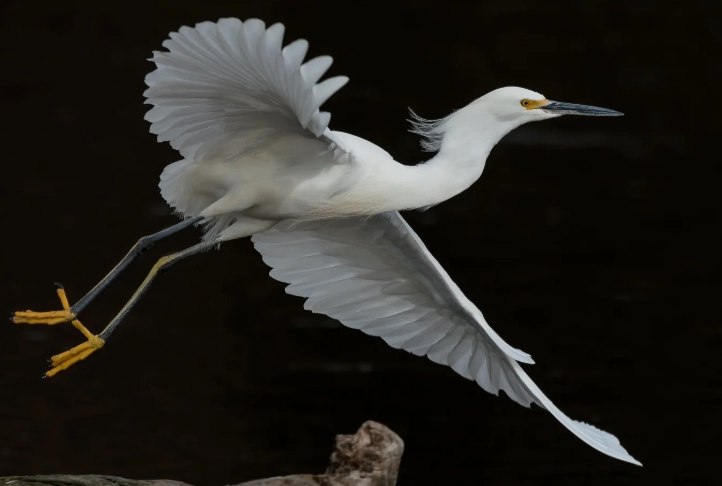
Why did snowy egret populations crash in the past?
Their beautiful breeding plumes, called "aigrettes," were once worth more than gold by weight for the millinery trade in the late 1800s. Hunters nearly wiped them out. It's a sobering chapter in conservation history. The public outrage over this slaughter, fueled by early conservationists and photographers, directly led to the formation of the first Audubon societies and stronger wildlife protection laws. Their recovery is one of the early great successes of the conservation movement.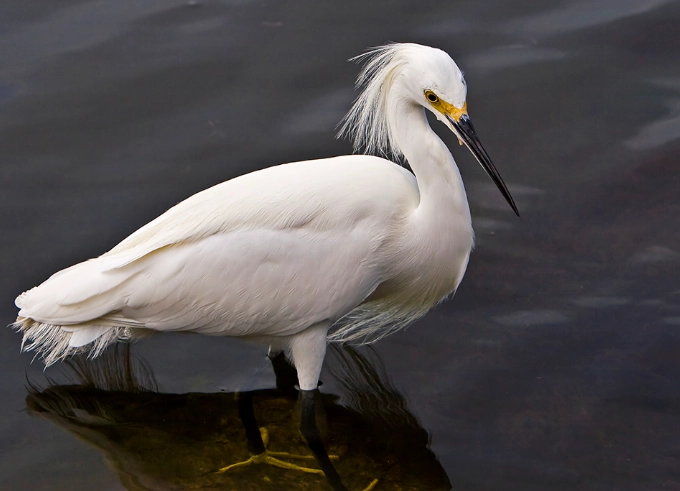
Reader Comments