In This Guide
- Why Bother Learning Bird Silhouettes Identification?
- The Core Four: What Your Eyes Need to Learn to See
- When Birds Take Flight: Silhouettes in Motion
- Putting It Into Practice: Your Silhouette Birding Toolkit
- Answering Your Silhouette Birding Questions (The Real Ones)
- Building Your Mental Library: Silhouettes of Common Bird Families
Let's be honest. Most bird identification guides throw you into the deep end with a rainbow of colors. Scarlet tanagers, blue jays, goldfinches—it's dazzling, sure. But what about that fleeting dark shape against a bright sky at dawn? Or the silent shadow that zips past your window at dusk? When color and detail vanish, you're left with the pure, unadorned form. That's where the real magic—and the real challenge—of bird silhouettes identification begins.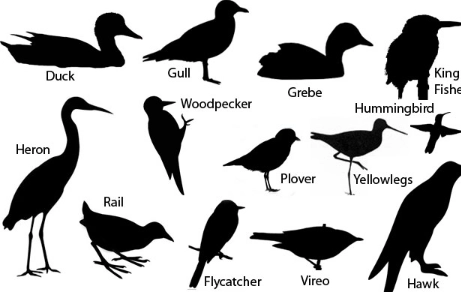
I remember the first time it clicked for me. I was on a lake at sunrise, fog hanging low. This tall, statuesque figure was standing perfectly still in the shallows. No color, just a dark cutout against the grey water. But the shape was unmistakable: that long, S-curved neck, the spear-like bill, the patient, stilt-like legs. A great blue heron, rendered in simple black. I didn't need to see the blue-grey plumage. The silhouette told the whole story. It felt like learning a secret language.
Why Bother Learning Bird Silhouettes Identification?
You might think, "My fancy binoculars and field guide app have me covered." And they do, most of the time. But batteries die. Light fades. Birds move fast. Relying solely on color is like trying to recognize a friend only by their shirt. Take the shirt away, and you're lost.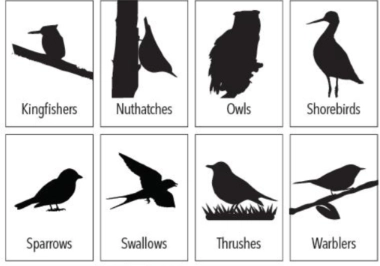
Mastering bird identification by silhouette solves real problems. It's your go-to tool during the "golden hours" of dawn and dusk when birds are most active but light is worst. It's essential for spotting distant raptors circling high on thermals. It's the key for identifying those fast-moving swifts and swallows zipping overhead, where all you get is a fleeting impression of shape and flight style. Frankly, many popular bird apps are terrible at this. They ask for color you can't see and details that are just blurry smudges. Silhouette identification puts the power back in your eyes and your brain.
The Core Four: What Your Eyes Need to Learn to See
Breaking down a silhouette feels overwhelming at first. Is that a hawk or a falcon? A crow or a raven? To make sense of the shadow, you need to deconstruct it into four manageable pieces. Think of it as a checklist you run through in a split second.
1. Body Shape & Size (The Overall Silhouette)
This is the big picture. Is the body plump and rounded like a feathered ball (think sparrows, warblers), or sleek and torpedo-shaped (like cormorants or loons)? Is it vertical and upright (like a woodpecker on a tree), or horizontal and elongated (like a duck on water)?
Size is tricky without a reference point. You're often comparing relative size. "Was it sparrow-sized, robin-sized, crow-sized, or goose-sized?" This is where knowing common local birds as benchmarks is priceless. A silhouette of a bird perched on a power line immediately gives you scale.
2. The Bill: Nature's Multi-Tool
The bill's shape is a dead giveaway, a direct clue to the bird's diet and lifestyle. In a silhouette, it's a stark black extension from the head.
- Short & Thick (Conical): Seed crackers. Finches, sparrows, cardinals. Built for crushing.
- Long & Spear-like: Fish hunters. Herons, kingfishers, egrets. Built for stabbing.
- Hooked: Meat shredders. Hawks, eagles, owls, falcons. Built for tearing.
- Slender & Insect-sized: Flycatchers, warblers. Built for snatching bugs out of the air.
- Flat & Broad: Aerial plankton nets. Swallows, swifts, nightjars. Built for scooping.
I can't tell you how many times I've confused a crow with a raven at a distance until I remember to look for the raven's heavier, more massive beak in its profile.
3. Tail Shape & Length
The tail is the punctuation mark at the end of the bird. Is it long and elegant (Scissor-tailed Flycatcher), short and squared (a woodpecker), deeply forked (a Barn Swallow), or fan-shaped (a towhee)? A red-tailed hawk's trademark is actually its pale belly band, which you can't see in a silhouette—but that short, wide tail is still a great clue.
4. Legs & Posture
Often overlooked, but so telling. Are the legs long and visible (waders like herons, shorebirds), or short and barely noticeable (perching birds)? How does the bird carry itself? A killdeer has a horizontal, alert posture. An American robin stands more upright. A black-crowned night-heron hunches its neck and looks grumpy even as a shadow.
When Birds Take Flight: Silhouettes in Motion
This is where bird silhouettes identification graduates from a skill to an art form. A static shape is one thing. A shape moving through the air, with a specific rhythm and style, is a whole new layer of information.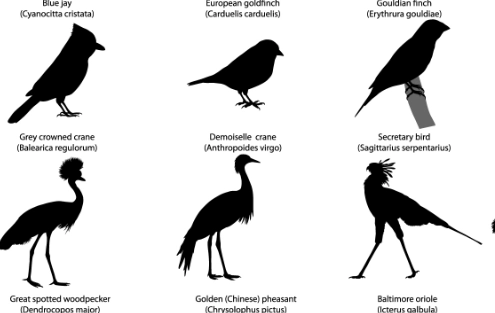
Flight style is like a bird's gait or dance. Some birds flap with steady, rowing beats (crows, ravens). Others use rapid, frantic bursts followed by glides (woodpeckers). Raptors like buteos (Red-tailed, Red-shouldered Hawks) often soar in wide, lazy circles with their wings held in a shallow "V." Falcons (Peregrine, Merlin) have more pointed wings and tend to flap with quick, powerful strokes or stoop (dive) with terrifying speed.
Dabbling ducks (like Mallards) have faster wingbeats. Diving ducks (like Scaup) have more rapid, whistling wingbeats. It's subtle, but with practice, you can hear the difference in the wing sound too.
Here’s a quick comparison table that might help untangle some common high-flyers. Remember, these are generalizations—birds don't read the rules!
| Bird Group | Wing Shape in Flight | Typical Flight Pattern | Common Silhouette "Vibe" |
|---|---|---|---|
| Buteo Hawks (Red-tailed, Red-shouldered) |
Broad, rounded wings; fan-shaped tail. | Soaring in wide circles; deep, methodical flaps. | Sturdy, patient, soaring tank. |
| Falcons (Peregrine, Merlin, Kestrel) |
Long, pointed wings; long tail. | Fast, powerful direct flight; rapid wingbeats; famous for high-speed dives (stoops). | Streamlined, agile, fighter jet. |
| Vultures (Turkey Vulture, Black Vulture) |
Very long, broad wings; small head. | Rocking, unsteady soaring; rarely flap. Turkey Vultures hold wings in a distinct dihedral (V-shape). | Effortless, teetering glider. |
| Eagles (Bald Eagle) |
Long, broad, plank-like wings; large head & bill. | Powerful, steady soaring and flapping; wings held flat. | Majestic, powerful, flying barn door. |
| Crows & Ravens | Fingered primary feathers, fairly broad wings. | Steady, rowing flap; rarely soar for long. | Direct, purposeful, and clever. |
Putting It Into Practice: Your Silhouette Birding Toolkit
Okay, theory is great. But how do you actually get good at this? You practice, but you practice smart. Here's what worked for me, after a lot of fumbling around.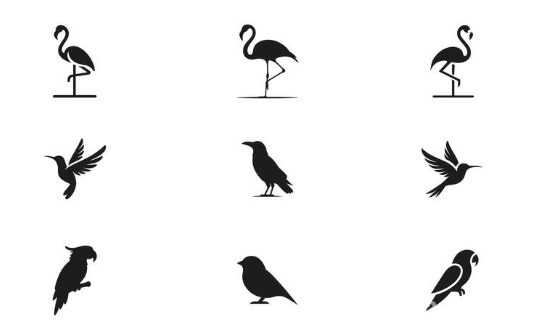
Start With the Usual Suspects. Don't try to identify every mystery raptor on day one. Begin with the common birds in your backyard or local park. Learn the silhouette of your local crow, pigeon, mourning dove, and blue jay. Know them so well you could draw their shadow from memory. This builds your mental library of baseline shapes.
Use the Sky as Your Background. The best way to practice is to look for birds backlit against a bright sky. Perched on telephone wires, flying overhead, sitting on bare tree branches in winter. Sunset is a perfect time—birds become beautiful, intricate black cutouts.
Play the "Guess Before the Glasses" Game. When you spot a bird, force yourself to make a silhouette identification before you raise your binoculars. Take a mental snapshot: body shape, bill, tail, posture. Make your guess. *Then* lift your binoculars to check the colors and confirm. This reframes your brain to prioritize shape.
Leverage Amazing Free Resources. I'm a huge fan of the All About Birds guide from the Cornell Lab of Ornithology. It's an absolute treasure. For many species, they have "Similar Species" comparisons that often include silhouette views. It's a trusted, authoritative source. Another fantastic, more specialized resource for flight shots and shapes is the Raptor Research Foundation site, which has links to great identification papers focusing on shape and flight.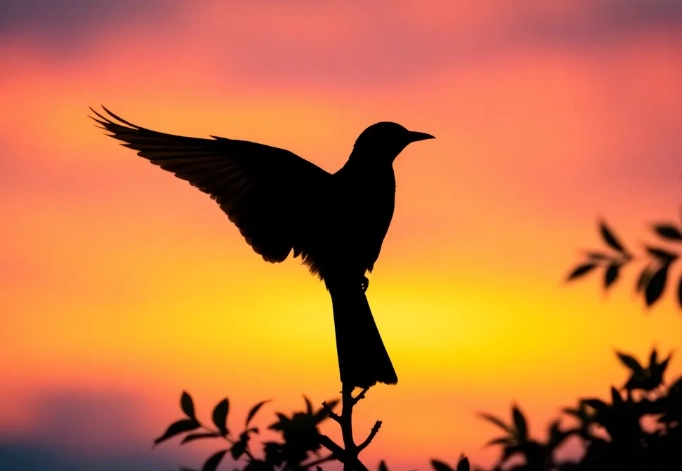
Answering Your Silhouette Birding Questions (The Real Ones)
Let's tackle some of the specific questions that pop up when people dive into bird silhouettes identification. These are the things that caused me frustration, so maybe I can save you some time.
"How can I tell a crow from a raven just by shape?"
Ah, the classic. From a distance, both are just large, black birds. But look closer at the silhouette. Ravens are noticeably larger (think hawk-sized vs. pigeon-sized). A raven's bill is heavier and more Roman-nosed. In flight, a raven's tail is wedge-shaped, while a crow's is more squared or slightly rounded. Ravens also have more shaggy throat feathers, giving their head a bigger, more robust look. Crows tend to flap more steadily; ravens often mix flaps with glides and even somersaults!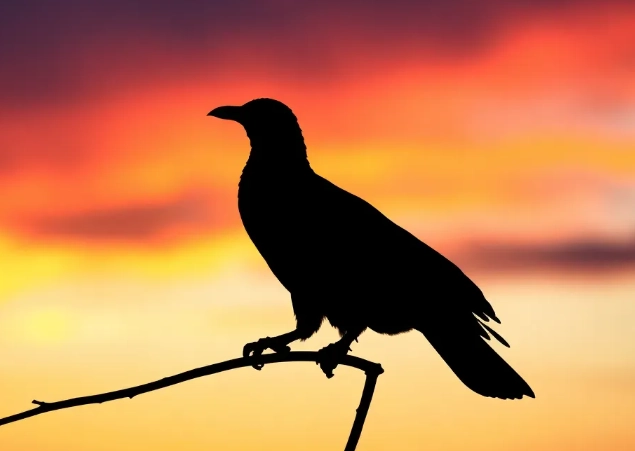
"What's the fastest way to tell hawks apart in the sky?"
For soaring birds, wing shape and proportions are key. Remember the table? Buteos (like Red-tails) are the chunky ones with broad wings and short, wide tails. Accipiters (like Sharp-shinned and Cooper's Hawks) have shorter, rounded wings and long tails—built for maneuvering in forests. Falcons have the long, pointed wings. And then there's the Osprey, which has a distinct crook in its wings, making an "M" shape.
"Do I need expensive gear for silhouette birding?"
Absolutely not. In fact, you need less gear. This skill is about using your naked eye and your brain. Binoculars can sometimes make a silhouette harder to see by magnifying a blurry, dark image. The best tool is a good field guide that includes silhouette profiles. The Sibley guides are famous for this—David Allen Sibley is a master at depicting the essence of a bird's shape. His drawings teach you how to see.
"Is this skill really that useful, or just for experts?"
It's incredibly useful for everyone. Think about it. How many times have you seen "just a little brown bird" or "just a hawk"? Silhouette identification moves you from vague categories to specific guesses or even confident IDs. It makes birding possible in more places and more times of day. It turns frustrating non-views into satisfying puzzles.
Building Your Mental Library: Silhouettes of Common Bird Families
Let's walk through some broad categories. This isn't an exhaustive list, but a starting point to organize your thinking.
- Ducks on Water: Look for body profile and tail position. Dabbling ducks (tails up when feeding) vs. diving ducks (lower, sleeker profiles).
- Perching Birds (Passerines): This is a huge group. Focus on bill shape and tail action. Is the tail constantly moving (wrens, phoebes)? Is the bird clinging vertically to a tree trunk (nuthatches, creepers)?
- Woodpeckers: The upright, braced posture is key. Stiff tail feathers press against the tree. Strong, chisel bill.
- Waders (Herons, Egrets): Long legs, long neck, long bill. The neck posture is everything—straight and extended in flight, coiled when hunting.
- Gulls & Terns: Gulls are generally heavier, with thicker bills and broader wings. Terns are more delicate, with thinner, pointed bills and more angular, frantic wingbeats.
The goal of bird silhouettes identification isn't to have a perfect answer every single time. It's to narrow the possibilities from "every bird in the world" to "maybe a hawk" to "probably a Buteo" to "that wing shape and tail look just like a Red-shouldered Hawk." Each step is a victory.
So next time you're out, and the light is fading, or the bird is just a speck in the sky, don't give up. Don't just write it off as "unidentified." Take a breath. Look at the shape. Run through your mental checklist. Make your best guess. That's how you learn the language of shadows. And honestly, it makes every bird you see, even the common ones, a fresh challenge. You start seeing the architecture beneath the feathers, the engineering behind the beauty. And that, to me, is even more fascinating than color alone.
Reader Comments