Quick Guide to Sections
- More Than Just a Pretty Red Breast: Spotting and Identifying Your Robin
- The Secret Life of Your Lawn: Diet and Feeding Habits
- The Nesting Chronicles: From Egg to Fledgling in Your Backyard
- The Great Migration Mystery: Do They All Go South?
- How to Make Your Yard a Robin Paradise (And Maybe Get Them to Nest)
- Straight Answers to Your Robin Questions (FAQ)
- A Bird Worth Watching
You see them every spring, hopping across your lawn with that familiar, jerky gait, head cocked to the side. The American Robin is arguably North America's most recognized bird. But here's the thing – most of us know surprisingly little about them beyond the basics. We see them as a sign of spring, watch them pull worms, and that's about it. I used to be the same way. Then I spent a few seasons really paying attention to the pair that nests in the crabapple tree by my garage, and let me tell you, their story is way more interesting than just "red breast, eats worms."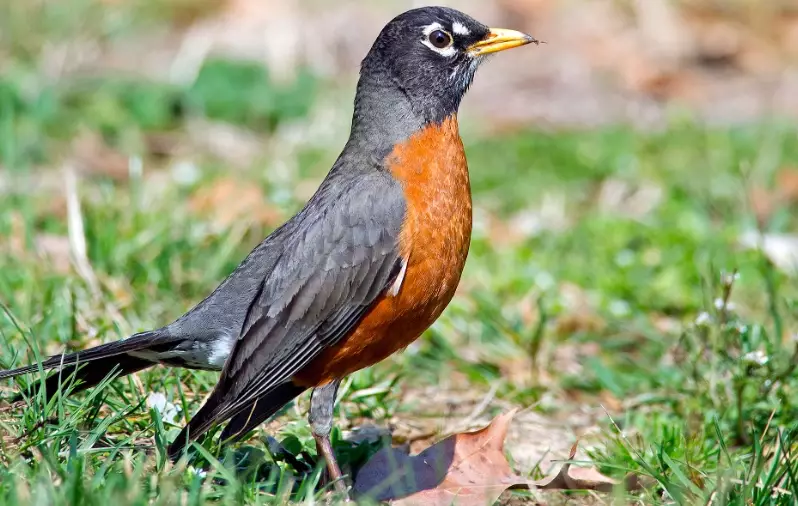
This isn't just another dry bird fact sheet. Think of this as your backstage pass to the life of Turdus migratorius (their surprisingly scientific name). We're going to dig into the stuff that actually matters if you enjoy having them around. Why do they sometimes stick around in winter? How can you tell the males from the females (it's not as obvious as you think)? What's the deal with their famous, but often misunderstood, migration? And honestly, are they as good for your garden as everyone says?
More Than Just a Pretty Red Breast: Spotting and Identifying Your Robin
Okay, let's start with the obvious. Yes, they have a reddish-orange belly. But if you're just looking for a flash of red, you might miss a lot. I once spent ten minutes trying to identify a "mystery bird" in a tree before realizing it was just a female American Robin facing away from me. Their backs are a much more subdued gray-brown, perfect for blending in.
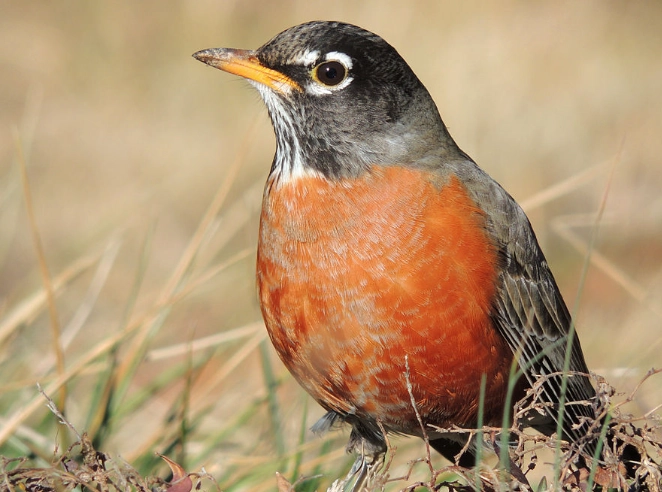
The Quick ID Cheat Sheet: Look for a medium-sized bird (about 10 inches long) with a dark head that often looks black, a broken white eye-ring that gives them a slightly alert or surprised expression, and a yellow bill. The tail is dark with white corners, especially noticeable when they fly away from you. Juveniles are spotted below, like little thrush versions of their parents, which makes sense because that's exactly what they are.
Now, telling males and females apart. This is where people get tripped up. The classic field guide line is "male brighter, female duller." That's technically true, but it's a spectrum, not a rule. In bright sunlight, a mature male's head can look almost jet black, and his breast is a rich, brick red. The female's head is more charcoal gray, and her breast is closer to a warm orange. But in cloudy light or during a bird's first year, the differences can be subtle. I find the best clue is often the contrast – the male's colors are just more sharply defined.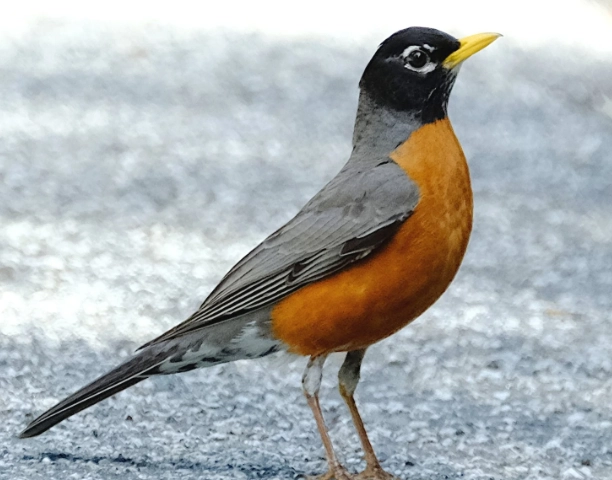
| Feature | Male American Robin | Female American Robin |
|---|---|---|
| Head Color | Dark slate to nearly black | Lighter charcoal or brownish-gray |
| Breast Color | Vivid, brick-red to rust-orange | Duller, paler orange or reddish-orange |
| Overall Contrast | High contrast between dark head and bright breast | Lower contrast; colors appear more washed together |
| Best Time to Compare | During spring breeding season when plumage is freshest | Same period, often seen together foraging or at nest |
Listen for them, too. Their song is a familiar, caroling string of clear, whistled phrases – often described as "cheerily, cheer up, cheer up, cheerily." But they have a whole repertoire of calls, from a rapid, scolding "tut-tut-tut" when a cat's around to a thin, high-pitched "see-lip" note used in flight. Once you learn it, you'll hear them everywhere.
The Secret Life of Your Lawn: Diet and Feeding Habits
Here's the biggest myth: American Robins live on earthworms. It's the image we all have, right? The robin on the lawn, listening, then yanking out a wriggler. And yes, they love worms. Their large eyes are positioned to give them excellent binocular vision for spotting movement in the grass. But worms are just the spring and summer menu.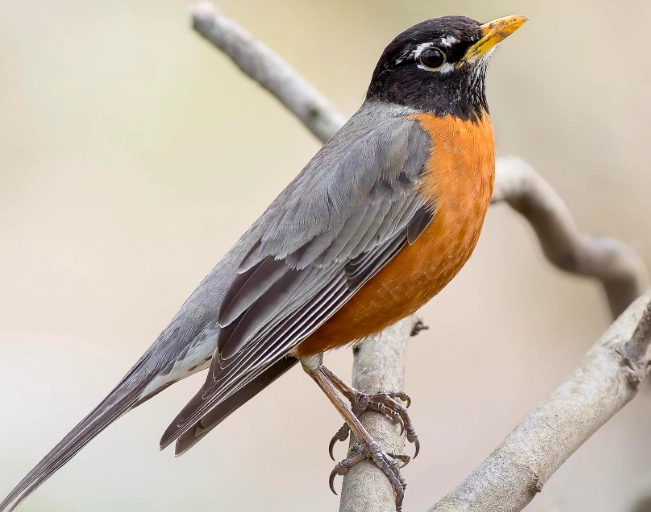
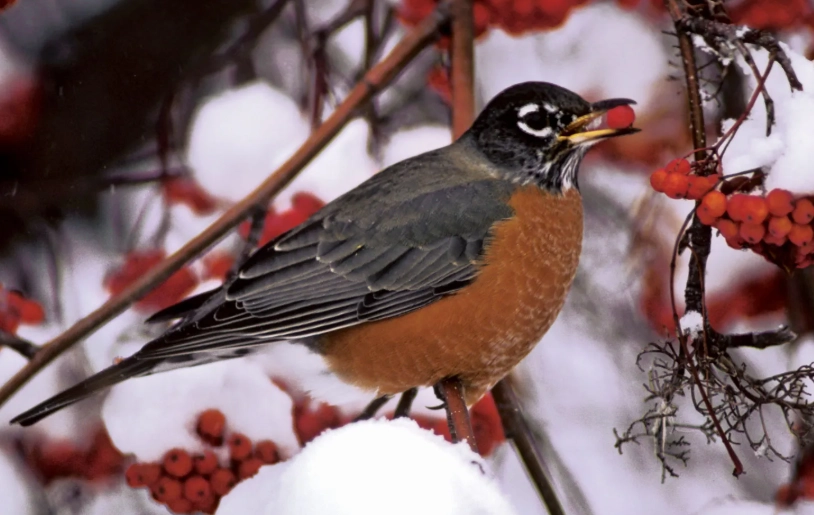
What do they eat when the ground is frozen solid? This was the question that really changed how I saw them. I used to think they all just flew south. Then I noticed a small flock in a mountain ash tree in my neighbor's yard in January, gorging on berries. Their diet shifts massively with the seasons.
During fall and winter, the American Robin becomes primarily a frugivore – a fruit-eater. They devour berries from trees like juniper, holly, crabapple, and hawthorn. This is a critical adaptation that allows some populations to winter much farther north than we typically expect. The fruit ferments sometimes, and I've seen what look like tipsy robins wobbling on a branch, which is... amusing, if not great for the bird.
Their summer diet is incredibly varied. Beyond worms, they'll eat:
- Insects: Beetles, grubs, caterpillars (they are fantastic for gypsy moth control), grasshoppers.
- Other Invertebrates: Snails, spiders, even small crayfish if they're near water.
- Fruit: Even in summer, they'll take advantage of early berries.
This varied diet is key to their success. It means they can exploit different food sources across a huge range. Watching them forage is a lesson in technique. On the lawn, it's the classic "run-stop-tilt-head-pull." In a tree, they become agile climbers and reachers, sometimes hanging almost upside down to get a berry.
The Nesting Chronicles: From Egg to Fledgling in Your Backyard
This is where you get a front-row seat to nature's drama. American Robins are prolific nesters, often raising two, sometimes three broods a season. The female does most of the construction, building a sturdy cup of grass, twigs, and mud. That mud is crucial – it's the cement that holds it all together. She lines the cup with fine, dry grass. The whole process takes about a week, and the nest location can be... creative.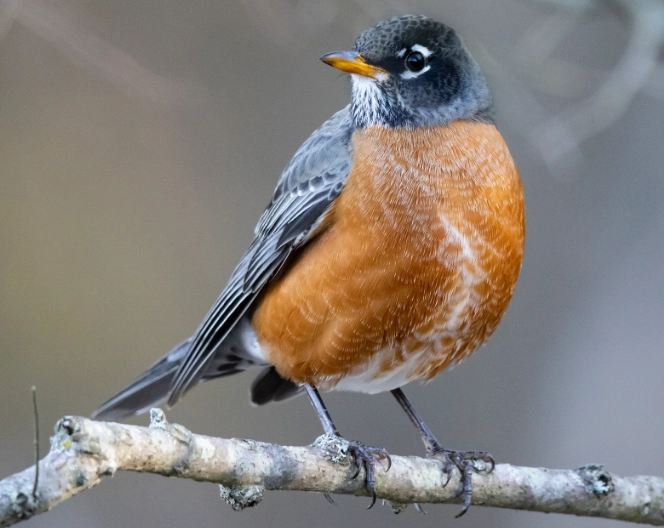
I've seen them build on exterior light fixtures, window ledges, the crook of a downspout, and of course, in tree branches. They seem to favor a fork about 5-15 feet off the ground. The one in my crabapple tree is about eye-level, which has given me an almost intrusive view of the whole process (I keep my distance with binoculars, don't worry).
The Egg Stage: Those Famous Blue Eggs
The eggs are arguably the most famous thing about the American Robin – that beautiful, unmarked robin's-egg blue. The color comes from a pigment called biliverdin. A typical clutch is 3-5 eggs. The female incubates them for about 12-14 days. During this time, the male's job is to guard the territory and bring her food. He's very attentive. I've watched the male in my yard deliver mouthfuls of worms to the sitting female like a dutiful waiter.
Hatchlings and the Feeding Frenzy
The chicks hatch blind and nearly naked. They grow at an astonishing rate, fueled by a non-stop delivery of food from both parents. This is the most exhausting period for the adult birds. For two weeks, they are in constant motion, searching for caterpillars, worms, and other soft insects. The nest gets crowded and messy. The chicks become little feathered dinosaurs, gaping with bright yellow mouths whenever a parent approaches.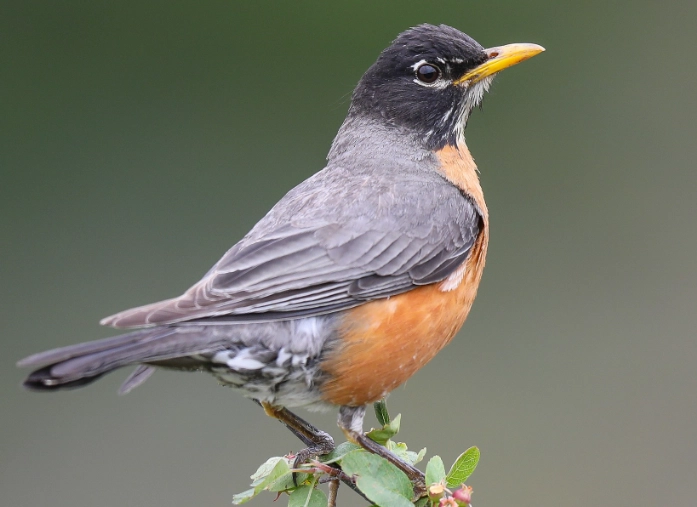
What if you find a baby robin on the ground? This is super common. Often, fledglings leave the nest before they can fly well. They spend a few days on the ground, hiding in bushes while their parents continue to feed them. If it's fluffy and mobile, leave it alone! The parents are nearby. Only intervene if the bird is in immediate danger (like on a road) or is truly naked and helpless (a nestling that fell out). In that case, if you can safely reach the nest, put it back. The old myth about parents rejecting human-scented babies is just that – a myth.
After about two weeks, the chicks fledge. The first flights are clumsy and heart-stopping. They often end up in a shrub or on a low branch. The parents continue to care for them for another few weeks, teaching them how to find food. Meanwhile, if it's early enough in the season, the female is often already starting a second nest, sometimes reusing material from the first.
The Great Migration Mystery: Do They All Go South?
This is the most persistent piece of misinformation about the American Robin. We're taught they are a sure sign of spring because they "return" from the south. The reality is far more nuanced and interesting. American Robin migration is not a simple all-or-nothing, north-south journey. It's a complicated, population-based shift.
Many robins are migratory. Those that breed in Canada and the northern U.S. do move south for the winter, some traveling as far as the Gulf Coast and Mexico. But here's the twist: many robins are also partial migrants or even year-round residents. In much of the lower 48 states, especially in areas with reliable winter food (berry bushes!), you can find robins all year. They might not be in your specific yard, but they're around, often forming large, nomadic flocks that move from one fruit source to another.
So, the robin you see in January in Pennsylvania might be a local bird that just shifted from your lawn to a nearby park filled with berry trees, or it could be a migrant from further north that finds your region balmy enough. Tracking data from organizations like the Cornell Lab of Ornithology has been invaluable in understanding these patterns. Their BirdCast migration tools show massive robin movements on weather radar on spring and fall nights.
The migration is triggered by food availability, not temperature. When worms become inaccessible and insects die off, the switch to fruit begins, and the urge to move kicks in. The flocks you see in fall can be huge, containing hundreds of birds. It's a different side of their personality – less the solitary lawn-forager, more a social, flocking creature.
How to Make Your Yard a Robin Paradise (And Maybe Get Them to Nest)
Want more American Robins around? It's not just about throwing out some seed (they rarely eat traditional bird seed). You need to think about their complete needs: food, water, shelter, and nesting sites.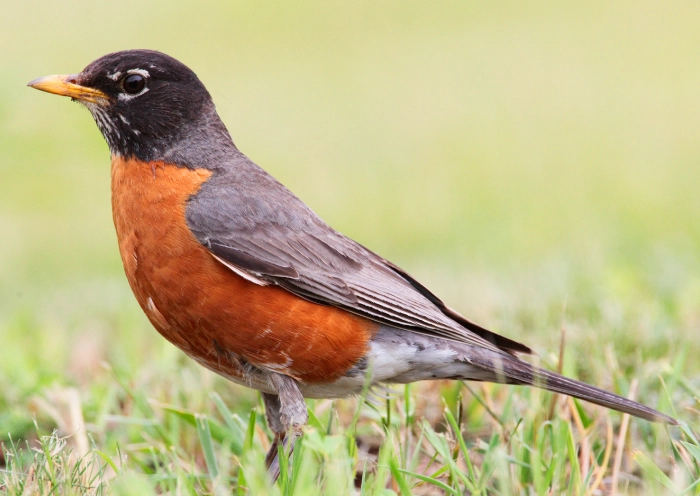
What should you feed them? In a platform feeder or on the ground, try:
- Chopped fruits: Apples, raisins (soaked in water first), berries.
- Mealworms: Live or dried. They go nuts for these, especially during nesting season when they need protein.
- Suet blends: Especially ones with fruit or insects mixed in.
Planting native berry-producing trees and shrubs is the best long-term strategy. Think serviceberry, dogwood, winterberry holly, hackberry, and crabapple. You're providing a natural food source that will also attract other wildlife.
What about water? A birdbath is a robin magnet. They love to drink and bathe. Keep it clean and fresh. I've noticed they prefer baths that are on the ground or on a low pedestal, maybe because it feels more natural to them.
How can you encourage nesting? Provide mud! In early spring, keep a small patch of soil moist. They need it for nest construction. Offer nesting platforms or shelves in sheltered spots (under eaves, on a porch beam). They might use them. Mostly, ensure you have trees or large shrubs that provide secure forks for nesting. And please, keep cats indoors. It's the number one threat to nestlings and fledglings.
Straight Answers to Your Robin Questions (FAQ)
A Bird Worth Watching
So there you have it. The American Robin is so much more than a seasonal billboard or a simple worm-eater. It's a complex, adaptable survivor with a fascinating double life as a summer insectivore and a winter frugivore. Its migration is a secret spectacle on the weather radar, and its nesting habits are a drama playing out in countless backyards.
Next time you see one, take a second look. Is it a bright male or a subdued female? Is it listening for worms or scanning for berries? Is it a year-round resident or a traveler from thousands of miles away? That familiarity you feel is the starting point, not the end, of the story. Grab a pair of binoculars, maybe put out a few mealworms or plant a serviceberry bush, and enjoy having one of North America's most successful and interesting birds right outside your window.
Reader Comments