Quick Guide
You know that feeling. It's a crisp, clear winter morning, maybe a bit after a fresh snowfall. The world is quiet, almost hushed. Then you see it—a massive silhouette against the gray sky, or a huge shape perched stoically on a bare branch. That's the thrill of spotting large winter birds. They're not just bigger; they feel like the true monarchs of the bleak season, creatures built to not just survive but command the cold landscapes.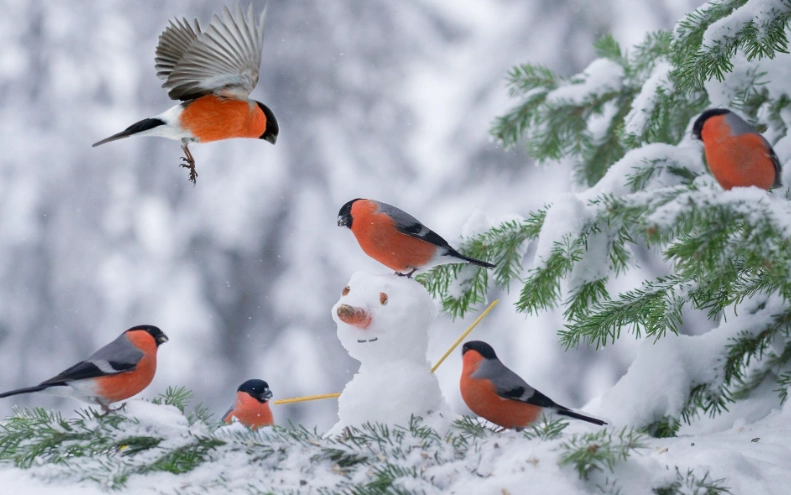
I remember one January, driving along a rural highway, I saw a shape on a telephone pole that made me pull over. It was a Rough-legged Hawk, just sitting there, scanning the white fields. It looked utterly unbothered by the wind. That's when I really got hooked. These aren't your backyard chickadees. They're a different league entirely.
So, what exactly do we mean by "large winter birds"? We're talking about bird species with a significant wingspan or body mass that are commonly observed during the winter months in temperate regions like North America. Some live here year-round, toughing it out. Others are winter specialists, migrating south from the Arctic just to spend the "mild" season with us. Their size is a key adaptation—it helps them conserve heat and tackle larger prey or forage in challenging conditions. Spotting one can turn a mundane winter walk into something memorable.
North America's Top Large Winter Birds: Who's Who
Let's get to the good stuff. Which of these impressive birds are you most likely to see? This isn't just a random list. I've based this on frequency of winter reports, visibility, and that sheer "wow" factor they bring to a gray day. You'll notice raptors (birds of prey) are well-represented—winter is a fantastic time for hawk and owl watching.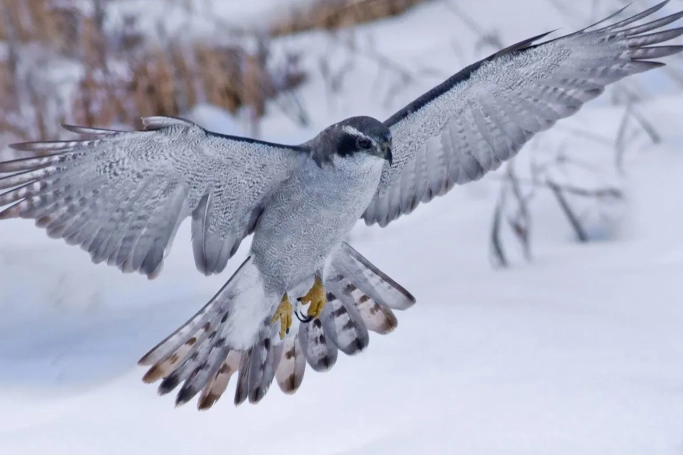
Bald Eagle
The symbol of the nation is also a quintessential large winter bird. Forget just summer lakes—in winter, Bald Eagles congregate near open water, especially along major rivers and reservoirs where fish are accessible. I've seen dozens at a time near dam tailwaters in the Midwest. Their stark white head and tail against a dark brown body are unmistakable, even from a distance. Juveniles are trickier, mostly brown and mottled for their first few years. They're bigger than you think, with a wingspan that can push 7 feet. Watching one tear into a fish on an ice floe is a raw, powerful scene.
Snowy Owl
The ghost of the winter fields. These stunning owls irrupt south from the Arctic tundra in some winters, a phenomenon called an "irruption year," driven by lemming population cycles up north. Not every winter is a big one, but when it happens, birders lose their minds. They're diurnal, meaning they hunt day and night, so you might see one sitting regally on a fence post, dune, or even the roof of a barn in broad daylight. Pure white males are breathtaking, but females and younger birds have dark barring. A word of caution from experience: give them space. They're under enough stress as it is. The Cornell Lab of Ornithology has a great project, eBird, where you can track recent sightings, which is super helpful for owls.
Great Horned Owl
If the Snowy is the special guest, the Great Horned Owl is the permanent resident boss. These are the classic "hoot owls," and they start nesting incredibly early, often in January or February. You can hear their deep, resonant hooting on cold winter nights. They're incredibly adaptable, living in forests, swamps, deserts, and even city parks. Look for their bulky silhouette, the prominent ear tufts (which aren't ears at all), and those fierce yellow eyes. They're powerful predators, taking everything from mice to skunks to other birds. Finding one requires looking for whitewash (droppings) on the ground and beneath trees, and scanning for large, dark shapes in evergreen trees during the day.
Sandhill Crane
Okay, they might not be *strictly* winter-only in all areas, but massive congregations of these prehistoric-looking birds are a winter spectacle in specific locations. Think places like Nebraska's Platte River (more of a spring staging) or, famously, central New Mexico's Bosque del Apache National Wildlife Refuge. In winter, thousands gather in wetlands and agricultural fields. Their loud, rattling calls fill the air. They're tall, gray birds with a red crown, and watching thousands take off at sunrise is one of North America's greatest wildlife events. It's less about finding a solitary one and more about witnessing the awe of the flock.
Golden Eagle
The Bald Eagle's more reclusive, mountain-dwelling cousin. Identifying them takes a bit more work. They're dark brown overall, with a golden wash on the back of the head and neck. In flight, look for the smaller head relative to the Bald Eagle, and the wings that are slightly raised in a gentle "V." Their legs are feathered all the way to the toes, unlike the Bald Eagle's bare legs. They hunt open country—ridges, plains, and alpine areas—for mammals like rabbits and ground squirrels. Out west, you might see them year-round, but in the east and midwest, winter is your best bet as some move south from Canada. The U.S. Fish and Wildlife Service has monitoring data that shows their winter ranges quite clearly.
Other notable mentions? Sure. You've got the Rough-legged Hawk, a beautiful Buteo from the Arctic that hovers over fields. Northern Goshawks are fierce forest hunters, but they're shy. Large winter birds like Common Ravens are always around, their deep croaks a classic winter sound. And in some coastal areas, you might find Great Blue Herons stubbornly fishing in icy shallows.
| Bird Species | Key Winter Identification Features | Typical Winter Habitat | Size (Wingspan approx.) |
|---|---|---|---|
| Bald Eagle | White head & tail, dark brown body. Massive yellow bill. Juveniles are mottled brown/white. | Rivers, lakes, reservoirs with open water. Often near dams. | 6 - 7.5 ft |
| Snowy Owl | Mostly white (males) to heavily barred (females/juveniles). Round head, no ear tufts. Bright yellow eyes. | Open fields, airports, coastal dunes, shorelines. Anywhere that mimics tundra. | 4 - 5 ft |
| Great Horned Owl | Large, bulky body. Prominent ear tufts. Yellow eyes. Heavily barred underparts. | Woodlands, forest edges, parks, often in dense conifers or on old hawk nests. | 3.5 - 5 ft |
| Sandhill Crane | Tall, gray body. Red crown. Loud, rattling call. Often in huge flocks. | Shallow wetlands, marshy areas, and adjacent grain fields. | 6 - 7 ft |
| Golden Eagle | Dark brown overall. Golden nape. Feathered legs to toes. Wings held in slight "V" in flight. | Open mountains, hills, cliffs, and expansive rangeland. | 6 - 7.5 ft |
How to Identify Large Winter Birds: A Practical Guide
You see a big bird. Is it a hawk? An eagle? An owl? Let's break down the thought process. It's not just about color—it's about shape, behavior, and context. This is where birding gets fun, like solving a puzzle.
Is it perched upright like an owl or eagle, or more horizontal like a heron? Are the wings long and pointed (falcons, eagles in flight) or broad and rounded (Buteo hawks like the Red-tailed)? In flight, is it soaring in circles, flapping steadily, or hovering in one spot? A Rough-legged Hawk hovering over a field is a dead giveaway.
Size and Scale is Everything
This is the biggest hurdle. Without a reference, it's easy to misjudge. A Red-tailed Hawk is big, but a Golden Eagle is massive. A crow is sizable, but a Common Raven is noticeably larger with a wedge-shaped tail. Try to compare it to a familiar object in the scene—a fence post, a road sign, a known tree species. Remember, many large winter birds, like eagles and vultures, often appear smaller when soaring very high up.
Key Markers to Look For
- Head & Bill: Is the head bright white (adult Bald Eagle)? Does it have ear tufts (Great Horned Owl)? Is the bill huge and hooked (eagles) or smaller (hawks)?
- Wings & Tail: In flight, are the wings held flat or in a V? Are the wingtips "fingered"? Is the tail long, short, rounded, or wedge-shaped? Dark bands on the tail?
- Legs & Feet: Are the legs bare (Bald Eagle) or feathered (Golden Eagle, Rough-legged Hawk)? This is a clutch detail for distant raptors.
- Behavior: What is it doing? Sitting motionless for hours (owls)? Soaring endlessly (eagles, vultures)? Walking in a field (cranes)? Diving for fish?
Honestly, I still mess this up. Just last month, I excitedly called a distant perched bird a young Bald Eagle. Got closer... it was a Turkey Vulture with its wings folded in a weird way. It happens. The key is to note multiple features, not just one.
Where and How to Find Them: Winter Birding Strategy
You can't just step into your backyard and expect a Snowy Owl (unless you live on a prairie, maybe). Finding large winter birds requires a bit of strategy and knowing what habitats they prefer when the temperature drops.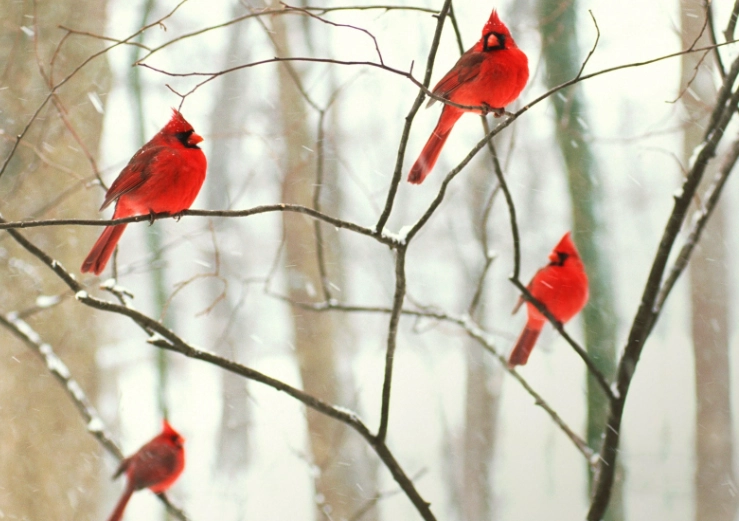
Think about resources. In winter, it's all about food and shelter.
Prime Winter Habitats to Explore
- Open Water: This is the number one magnet. Unfrozen rivers, dam spillways, spring-fed ponds, and patches of open water on lakes. This is where you'll find Bald Eagles, gulls, waterfowl, and the herons that stick around. Scan the edges of the ice and look for birds perched in nearby trees.
- Agricultural Fields: After harvest, fields of corn stubble, soybeans, or winter wheat offer spilled grain for geese and cranes, and attract rodents, which in turn attract hawks and owls. Rough-legged Hawks and Northern Harriers love these areas. Drive the back roads slowly and scan the fence lines.
- Coastal Areas & Large Lakeshores: These can be productive for a mix of species. You might find sea ducks, loons, and grebes on the water, and raptors like eagles and falcons along the shore. Dunes and beaches are classic Snowy Owl territory during irruptions.
- Forested Areas & Woodlots: Especially coniferous forests. They provide shelter from wind and snow for Great Horned Owls, Barred Owls, and various hawks. Check where the forest meets a field or wetland—these edges are hunting hotspots.
Timing and Technique
Dawn and dusk are active times for many predators, including owls and eagles. But on cold days, the middle of the day can be good too, as birds sun themselves or are more active when it's slightly warmer. Overcast days can actually be better for viewing than bright, glaring days with deep shadows.
Move slowly. Stop often. Use your car as a blind—many birds are accustomed to vehicles and will tolerate a slowly approaching car more than a person on foot. Get a good pair of binoculars (8x42 is a great all-around choice). A spotting scope is fantastic for scanning distant fields or water bodies.
And for heaven's sake, dress warmly. You can't focus on identifying large winter birds if you're shivering and miserable. Layers, warm boots, hand warmers—treat it like a winter hike.
The Ethics of Observing Large Winter Birds
This is non-negotiable. Winter is a stressful time. Calories are scarce, and survival is a daily challenge. Our excitement should never add to their burden.
If you see a bird—especially an owl or a roosting eagle—and it starts staring at you intently, fidgeting, or worse, flying away, you are too close. Back up immediately. Use your binoculars or scope to get a closer view, not your feet. For sensitive species like Snowy Owls or nesting Great Horned Owls, keep a very wide distance. Respect area closures at wildlife refuges; they're there for a reason.
Never use playback calls to lure owls or other birds in winter. It agitates them and wastes their precious energy. Share locations responsibly, especially on social media. Consider using vague location descriptors (e.g., "County Park," not "on the third pine tree north of the parking lot") to prevent a crowd from descending on a single stressed animal.
The American Birding Association's Code of Birding Ethics is an excellent resource to internalize. It's not about rules to spoil fun; it's about ensuring the birds are still there, thriving, for the next person to enjoy.
Frequently Asked Questions About Large Winter Birds
I get a lot of questions from folks just getting into winter birding. Here are the ones that come up again and again.
Why do some large birds stay for the winter instead of migrating?
It boils down to energy economics. Migration is incredibly risky and consumes a huge amount of energy. If a bird can find reliable food (carrion for eagles, rodents for owls, fish in open water) and has the physical adaptations (dense plumage, ability to fast) to withstand the cold, staying put might be the better strategy. Some, like the Rough-legged Hawk, are actually adapted to the cold and migrate south *to* our winter because the Arctic winter is too extreme even for them!
What's the biggest threat to large winter birds?
Habitat loss is always number one. But in winter, specific threats include collisions (with vehicles, windows, or power lines), poisoning from lead ammunition in gut piles scavenged by eagles, and human disturbance. A repeatedly flushed owl on a cold day can burn through the fat reserves it needs to survive the night.
How can I help large winter birds in my area?
- Provide habitat: Leave standing dead trees (snags) if safe, as they provide perch and nest sites.
- Advocate for and support the protection of wetlands and open spaces.
- If you feed birds, keep it clean to prevent disease, and be aware it may attract bird-eating predators like hawks—this is natural, don't try to interfere.
- Make your windows bird-safe to prevent collisions. You can find simple solutions from groups like the American Bird Conservancy.
- Report injured birds to a licensed wildlife rehabilitator.
Are large winter birds dangerous to pets?
It's extremely rare. Large raptors like eagles and Great Horned Owls are capable of taking small animals, but pets are not typical prey. A small dog or cat left unattended in an area with large open-country raptors could theoretically be at risk, but the danger is vastly overstated. It's far more important to keep pets leashed to protect ground-nesting birds and other wildlife.
What's the best resource for tracking winter bird sightings?
Hands down, eBird, run by the Cornell Lab of Ornithology. It's a real-time, citizen-science checklist program. You can see hotspots near you, find out what species have been reported recently (crucial for tracking irruptive species like Snowy Owls), and contribute your own sightings. Their free Merlin Bird ID app is also a fantastic tool for identification help.
Winter doesn't have to be a downtime for nature lovers. It's a season with its own cast of charismatic giants. The challenge of braving the cold, the sharp clarity of the air, and the reward of spotting a majestic eagle or a cryptic owl against the winter starkness—it's a unique kind of magic. So grab your warmest coat, your binoculars, and a bit of patience. Head to a river, a field, a lakeshore. Look up, look around. You might just be surprised by the size of the company you keep.
The world of large winter birds is waiting.
Reader Comments