In This Guide
- Unmistakable Looks: Breaking Down the Hooded Warbler's Appearance
- The Sound of Summer: Decoding the Hooded Warbler Song
- Home Sweet Home: Where to Find Hooded Warblers
- Hooded Warbler vs. The Look-Alikes: A Quick ID Cheat Sheet
- Answers to Your Top Hooded Warbler Questions
- The Life Cycle of a Hooded Warbler: From Nest to Migration
- Conservation Status: The Bigger Picture
Let's talk about one of the most instantly recognizable birds in the eastern woods. If you've spent any time hiking in a moist forest from May to August and heard a loud, clear "weeta-weeta-weetee-o" ringing out, chances are you've been in the presence of a Hooded Warbler. This little bird packs a big personality, and its bold black-and-yellow plumage is a sight that stops birders in their tracks. I remember the first time I saw one clearly—not just a flash of yellow in the understory, but a full-on view. It was like a tiny, feathered superhero with its black hood pulled up, zipping through the saplings. That moment is what hooked a lot of us on birding.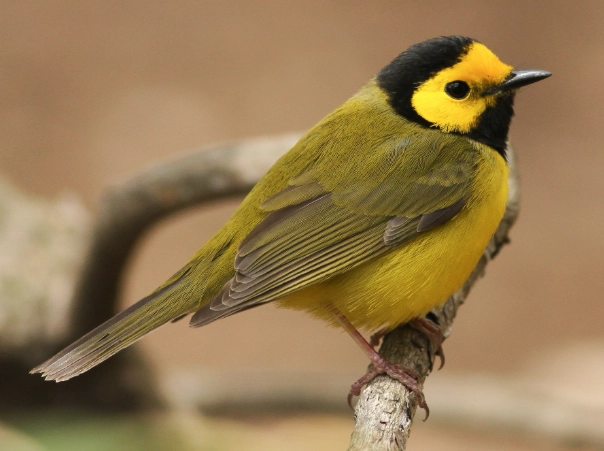
Unmistakable Looks: Breaking Down the Hooded Warbler's Appearance
You can't really confuse an adult male Hooded Warbler in breeding plumage with anything else. It's that distinctive.
The signature feature is, of course, the namesake black "hood" that encircles the head and throat. It's not just a cap; it's a full balaclava-style mask that contrasts sharply with the bird's brilliant yellow face. That face is pure sunshine. The underparts—the chest, belly, and under the tail—are also a clean, bright yellow. Flip the bird over (figuratively, please), and you'll see the olive-green back and wings. The outer tail feathers have large white patches that are super obvious when the bird fans its tail, which it often does while flitting around.
But Wait, What About the Females and Young Birds?
This is where some folks get tripped up. The female Hooded Warbler isn't as starkly patterned. Honestly, she can be a bit confusing if you're not expecting it. Her hood is more of an olive-green or a dusky gray, often just outlining where the male's black hood would be. Sometimes it's just a shadow of a hood. Her yellow is also slightly duller, but it's still very much there on the face and underparts. First-fall males and females can look quite similar, showing only a faint suggestion of the hood.
I've seen beginners mistake a female for a different warbler species entirely. The key is to look at the overall pattern: the yellow face framed by something darker, the white tail spots, and the habit of staying low. If it looks like a washed-out version of the classic male hooded warbler image, it probably is one.
The Sound of Summer: Decoding the Hooded Warbler Song
You'll often hear a Hooded Warbler long before you see it. Their song is a loud, ringing, and unmistakable part of the eastern forest soundscape. The classic mnemonic is "weeta-weeta-weetee-o." Say it out loud. It has a definite rhythmic, two-part quality. Some people hear "tawee-tawee-tawee-tee-o." The last note, the "tee-o," often sounds like it has a little upward flick at the end.
It carries really well through dense vegetation.
Males sing persistently to establish territories and attract mates. A fun fact? Research suggests their songs can vary slightly by region—a little like a bird dialect. You can listen to crystal-clear recordings of these variations on the Cornell Lab of Ornithology's All About Birds page for the Hooded Warbler. It's an incredible resource to train your ear.
They also have calls. A sharp, metallic "chip" is common, used for contact or to signal alarm. Learning this call can help you locate a foraging group or a family in late summer.
Home Sweet Home: Where to Find Hooded Warblers
This isn't a bird you'll find just anywhere. The Hooded Warbler is a habitat specialist, and knowing its real estate preferences is 90% of the battle in finding one.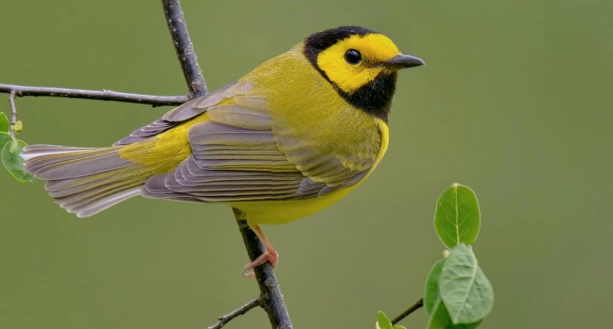
They are birds of the deciduous or mixed forest understory. Think dense, shrubby areas with a lot of saplings, vines, and a relatively closed canopy above. They love ravines, floodplains, the edges of streams or swamps—anywhere that's moist and produces a tangle of vegetation at eye-level or below. They're not typically up in the high canopy like some warblers. They're down in the thick of it, often between 1 and 10 feet off the ground.
Why this specific setup? It's all about foraging strategy. They're famous for being "flush-pursuit" feeders. They perch, watch for a flying insect to get stirred up, then dart out to snatch it mid-air, often returning to the same or a nearby perch. That dense understory provides the perfect launchpad and hiding spot.
The Hooded Warbler Range: A Map in Your Mind
Their breeding range is squarely in the eastern United States. It stretches from the southern parts of the Great Lakes region (like Ohio and southern Michigan) down through the Appalachian Mountains and into the Gulf Coast states. They are generally absent from the higher elevations of the central Appalachians and the drier pine forests of the coastal plain.
Come winter, they perform a remarkable migration, flying across the Gulf of Mexico to winter in Central America and southern Mexico. They spend those months in similar shady, understory habitats, just in tropical forests instead of temperate ones.
For a precise visual, the U.S. Geological Survey's Breeding Bird Survey data, often visualized by partners like the Audubon Society, provides the most scientifically rigorous range maps. The Audubon Guide to the Hooded Warbler incorporates this data into an easy-to-use map that shows both breeding and wintering areas, as well as how climate change might shift those ranges.
Hooded Warbler vs. The Look-Alikes: A Quick ID Cheat Sheet
Okay, let's address the common confusions. You see a flash of yellow in the bushes. Is it a Hooded Warbler? Here’s a breakdown of the usual suspects.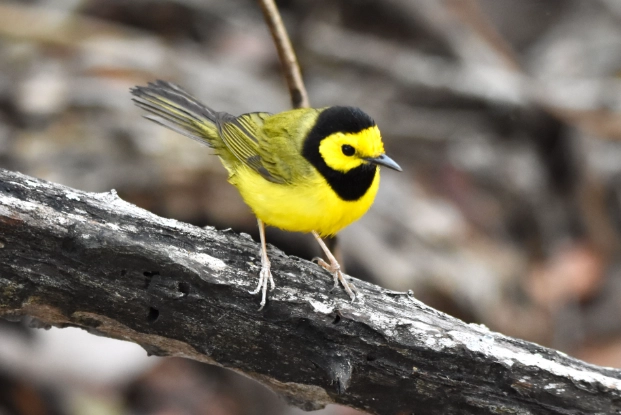
| Bird Species | Key Differences from Male Hooded Warbler | Habitat & Behavior Clues |
|---|---|---|
| Wilson's Warbler | Has a black *cap* (not a full hood), lacks the yellow face ring. Smaller, more active, often tail-pumps. | More likely in wet thickets, willows, and can be found across North America (not just east). |
| Kentucky Warbler | Has black *sideburns* on a yellow face, with a black cap that connects behind the eye. No full hood. Less white in tail. | Similar understory habitat, but often forages on the ground. Song is a rolling "churry-churry-churry." |
| Female/Immature Hooded Warbler | Fainter, olive-gray "shadow" of a hood. Duller yellow. | Same habitat and behavior as the male. Look for white tail spots and face pattern. |
| Common Yellowthroat | Male has a black mask across the eyes on a *white* face, not a yellow one. Female is plain brownish with yellow only on the vent. | Loves marshes, wet fields, and dense reeds. Often skulks lower to the ground. |
The table helps, but in the field, it's the combination of field marks that seals the deal. For a Hooded Warbler, always ask: 1) Is there a full hood framing a yellow face? 2) Are the underparts yellow? 3) Can I see white in the tail? 4) Is it in the right low, dense habitat? If you get three or four yeses, you've got your bird.
Answers to Your Top Hooded Warbler Questions
The Life Cycle of a Hooded Warbler: From Nest to Migration
Let's follow a year in their life. It's a pretty intense schedule.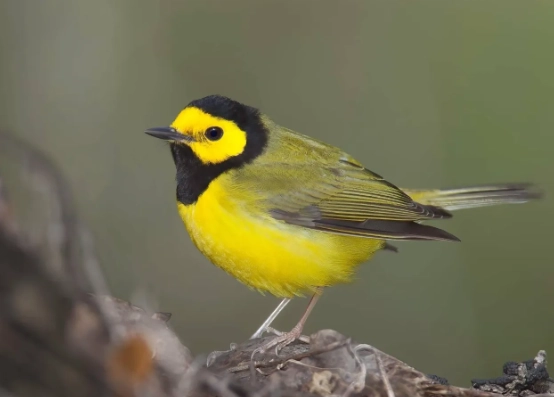
They arrive on their breeding grounds in the eastern U.S. from late April through May. Males get there first to set up territories with that relentless song. Once paired, the female gets to work building a nest. It's a lovely, compact cup of dead leaves, bark strips, and plant fibers, usually lined with finer grasses or hair. She almost always sites it on or near the ground, hidden in a clump of ferns, at the base of a shrub, or in a low sapling. I've never found one, but friends who have say it's incredibly well-camouflaged.
She'll lay 3-5 creamy white eggs with brown speckles. She does most of the incubating for about 12 days. Both parents then feed the hungry chicks, which fledge (leave the nest) in another 8-10 days. But here's the thing—the fledglings can't fly well yet. They'll stay hidden in the understory, being fed by the parents for several more weeks. This is a vulnerable time. If you see a scruffy-looking young warbler with a yellow wash being attended by anxious adults in July, it's likely a Hooded Warbler family.
By late August and through September, they start their incredible journey south. They fatten up on insects and then, on a favorable night, take off. Many make a non-stop flight of 500-600 miles across the Gulf of Mexico. That's a marathon for a bird that weighs less than half an ounce.
Conservation Status: The Bigger Picture
So, the Hooded Warbler isn't on the brink, but its future isn't guaranteed either. The population appears relatively stable, maybe even increasing slightly in some regions according to long-term data like the Breeding Bird Survey. But stable numbers can mask underlying problems.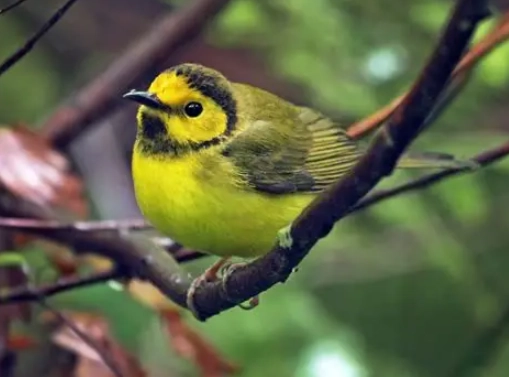
The fragmentation of eastern forests creates more "edge habitat," which can actually benefit Hooded Warblers to a point. But it also increases their exposure to nest predators (like raccoons, cats) and the Brown-headed Cowbird. The bigger threat is likely the wholesale conversion of forests to other uses, and the degradation of their tropical wintering habitats in places like the Yucatán Peninsula.
What can you do? Support land trusts and conservation organizations that protect large, contiguous tracts of forest. Keep your cats indoors—this is a huge one. And if you own wooded land, talk to a forester about managing it in a bird-friendly way, promoting a healthy understory. Every little bit of connected, healthy habitat helps a migrating Hooded Warbler find its way home.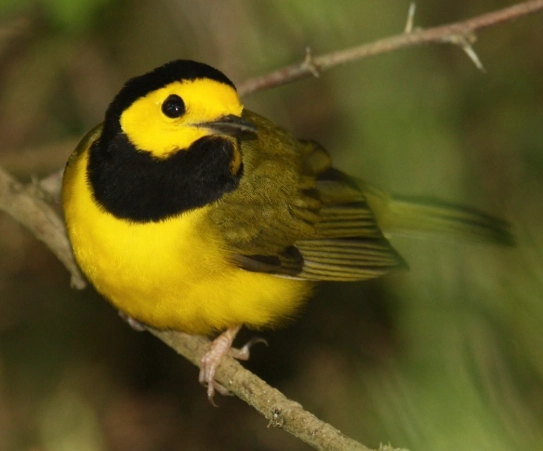
Ultimately, the Hooded Warbler is a symbol of the interconnectedness of the Americas. Protecting it means caring for forests from the Great Lakes to the Gulf of Mexico to Central America. It's a lot of work, but for that flash of black and yellow in the green summer shadows, it's worth it.
The song says it all: weeta-weeta-weetee-o. Here I am. This forest is home.
Reader Comments