I remember the first time I saw one. It was a brutally cold January morning in Ontario, the kind where the air hurts your face. I was scanning a frozen agricultural field, my fingers numb, thinking about giving up. Then, a lump on a fence post resolved into a shape. Pure white, round head, piercing yellow eyes staring right through me. A snowy owl. The thrill was instant, and it’s a feeling every birder chases. But finding them isn't just luck. It's about knowing where to look, when to go, and how to behave when you get there.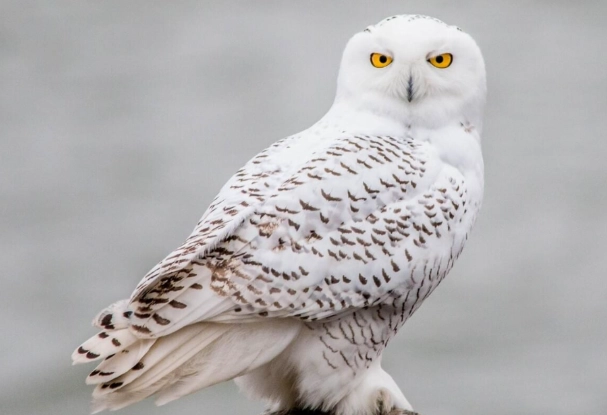
What’s Inside This Guide
Where and When to Find Snowy Owls
Let's get the big myth out of the way: snowy owls don't just live at the North Pole. Their true breeding grounds are the Arctic tundra, but in winter, many migrate south. These movements, called "irruptions," are unpredictable and linked to lemming populations up north. A good lemming year means lots of owlets, and more birds push south looking for food.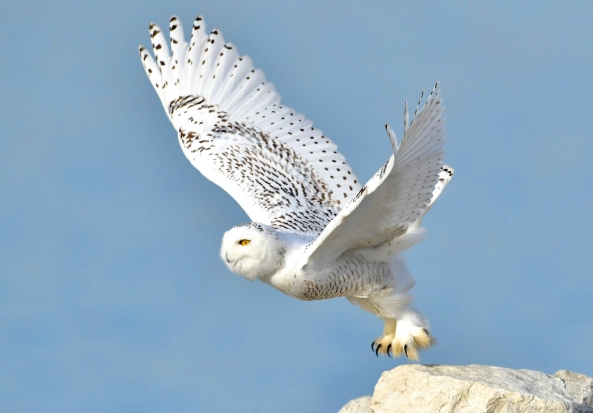
Geography matters. In North America, your odds skyrocket in:
- Canada: Southern provinces like Ontario, Quebec, and the Prairie provinces are regular wintering grounds. Places like Boundary Bay in British Columbia are legendary.
- Northern U.S.: States bordering the Great Lakes, New England, and the Northern Plains. I've had consistent luck in upstate New York and along the Lake Michigan shoreline.
- Specific Hotspots: Names like Plum Island (MA), Bombay Hook (DE), and the Sax-Zim Bog (MN) come up repeatedly in birding circles. Check local birding forums or eBird hotspots for recent sightings—this is your best real-time tool.
Timing is everything. The window is typically November through March, with peak activity often in January and February. Go during daylight hours; they are diurnal hunters, especially in winter. Early morning and late afternoon light are not only magical for photos but also active hunting times.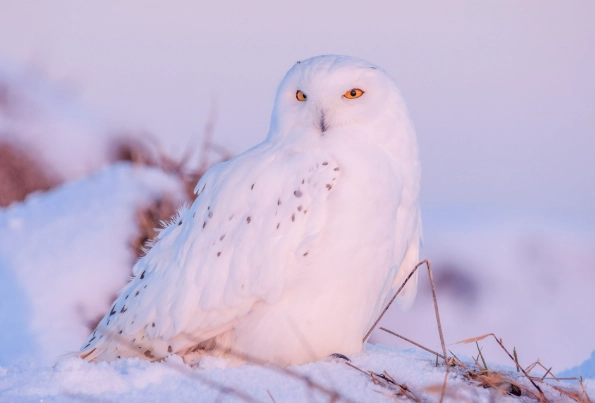
How to Identify Snowy Owls: Males, Females, and Juveniles
Not all snowy owls look the same. Their plumage tells a story about their age and sex, which is more useful than just ticking a box on a list. It helps you understand what you're seeing.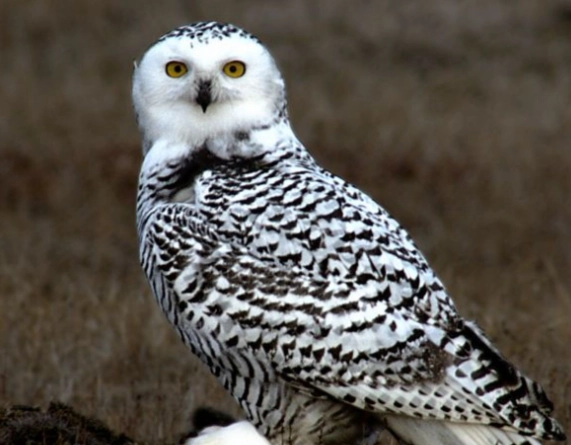
Adult Males: These are the classic "ghosts of the tundra." They become increasingly white as they age. Old males can be almost purely white, with perhaps a few faint dark bars on the tail and wings. Their yellow eyes are vivid.
Adult Females: They retain more dark barring throughout their lives. Think of a white bird heavily marked with dark horizontal bars across the body, wings, and tail. The barring provides crucial camouflage on the nest. They are also larger than males, a common trait in birds of prey.
Juveniles: Young birds, especially in their first winter, are the most heavily marked. They are dark brownish-black and white, with a heavily barred appearance. Telling a juvenile female from a juvenile male is tricky, but generally, the darkest birds are females.
| Plumage Type | Key Identification Features | Common Lookalike Mistake |
|---|---|---|
| Adult Male | Very white, few dark marks, bright yellow eyes. | A distant gull or plastic bag on a post (it happens!). |
| Adult Female | White with distinct, heavy dark barring across entire body. | Sometimes confused with a very pale Short-eared Owl from afar, but Snowies are bulkier and perch more upright. |
| Juvenile | Heavily barred dark brown and white, less "clean" look. | Can be mistaken for a hawk or other large raptor at a quick glance. |
Photography Tips for Snowy Owls: Gear and Ethics
Getting a great shot of a snowy owl is a bucket-list item for many. But doing it responsibly is non-negotiable. A stressed owl is a hungry owl, and winter is hard enough.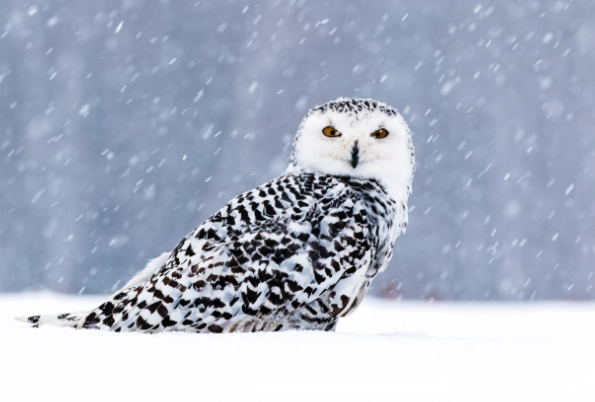
Camera Gear and Settings
You need reach. A telephoto lens of 400mm or longer is ideal. Cropped-sensor cameras help. I shoot with a 500mm lens and often wish for more. A sturdy tripod is essential for sharp images, especially in low winter light.
Settings? Start here and adjust: Aperture wide open (f/5.6-f/8) to blur backgrounds. Shutter speed fast (1/1000s or higher) to freeze motion. Auto ISO. Exposing for white feathers is tricky; use exposure compensation (+1 to +2 stops) to avoid gray, muddy whites. Focus on the eye.
The Golden Rule of Ethics: Distance is Everything
This is where many enthusiasts, eager for that frame-filling shot, go wrong. If the owl is looking directly at you constantly, you're too close. If it flushes (flies away), you've failed. Use your lens to zoom, not your feet.
Stay in your car if possible—it acts as a blind and causes less disturbance. Never use playback of calls to attract them. It wastes their precious energy. Organizations like the American Birding Association have strong guidelines on ethical photography that are worth memorizing.
Understanding Snowy Owl Behavior and Ecology
Knowing a bit about their lives makes seeing one far more meaningful. Their diet in the Arctic is dominated by lemmings. An adult can eat more than 1,600 lemmings a year! On wintering grounds, they switch to waterfowl, rabbits, and rodents.
They are solitary and territorial. Seeing two close together in winter is rare. Their famous "silent flight" is due to specialized feather edges that break up turbulence, a fact detailed in research from institutions like the Cornell Lab of Ornithology.
Conservation is a concern. The IUCN Red List classifies them as Vulnerable. Climate change is altering their Arctic breeding habitat, and on wintering grounds, they face threats from vehicle collisions, power lines, and human disturbance. Citizen science helps; reporting your sighting to eBird provides valuable data for researchers.
Your Snowy Owl Questions Answered
Can snowy owls be kept as pets?
What's the biggest mistake people make when trying to see a snowy owl?
How can I tell if a snowy owl is stressed or I'm too close?
Do snowy owls come to bird feeders?
Why do I sometimes see snowy owls at airports?
Seeing a snowy owl is more than just a bird sighting. It's a connection to the remote Arctic, a lesson in patience, and a test of our ability to enjoy wildlife on its terms. Do your homework, pack your warmest clothes and your longest lens, and always put the bird's welfare first. The memory of that silent white ghost on the frozen field will stay with you long after the cold has left your bones.
Reader Comments