You're at the local park pond, or maybe a wildlife refuge. The water is dotted with ducks. Some are stunning, with iridescent green heads and chestnut chests. Others are various shades of brown and gray, looking... well, kind of the same. You want to know what they are, but it feels overwhelming. Field guides show perfect portraits, but the real ducks are moving, diving, and sitting in awkward shadows.
I get it. I spent my first year of birding calling every brown duck a "Mallard hen" and every black-and-white duck a "Bufflehead" (they usually weren't). This guide is your friendly starting point for duck identification. We'll skip the encyclopedia approach and focus on a simple, field-tested system. You'll learn to see ducks differently.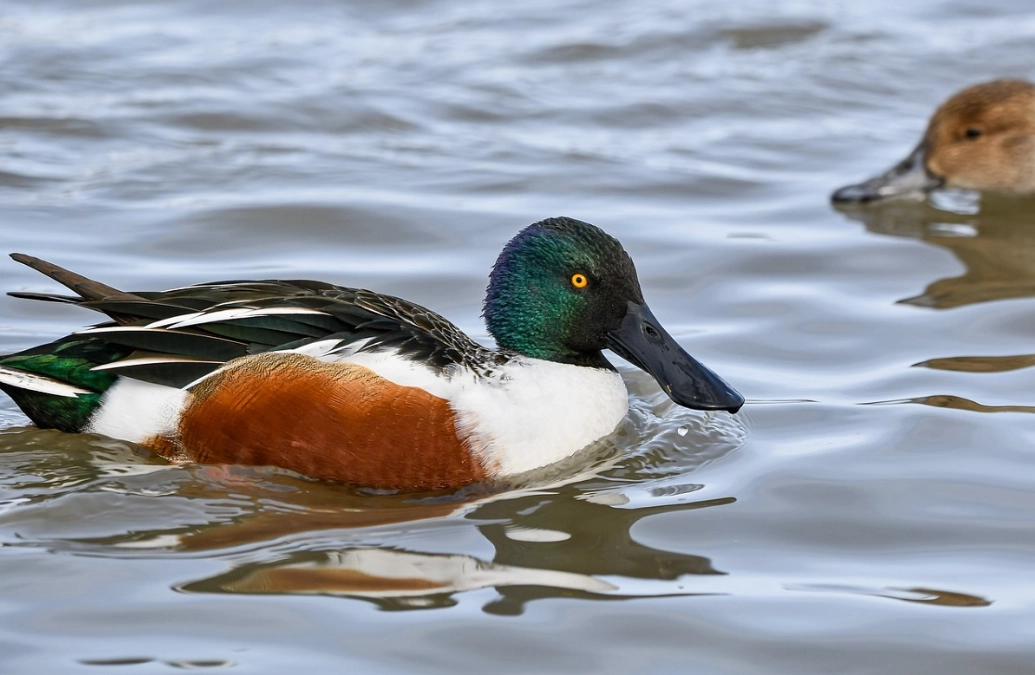
What You’ll Learn in This Guide
The Four-Pillar System: Your Duck ID Blueprint
Forget trying to memorize every feather pattern at once. When you see a new duck, run through these four pillars in order. It works.
1. Size & Shape (The Silhouette)
This is your foundation. Before color, look at the duck's profile.
Is it large and heavy like a floating loaf of bread? Think Mallard or Muscovy. Is it small, compact, and almost round? That points to teal or a Bufflehead. Look at the bill—is it long and broad (a "shovel") like a Northern Shoveler's, or is it short and stubby? Does the head have a distinct shape? A Canvasback has a long, sloping forehead that meets the bill in a straight line, giving it a distinguished look.
Shape doesn't change with the light or distance. It's the most reliable first clue.
2. Color Pattern (The Paint Job)
Now, add color. But be smart about it.
Don't just note "brown." Look for specific patterns. Is there a bold white ring around the base of the bill? A distinct eye stripe? A bright patch of color (a speculum) on the wing? On males, look for the most prominent block of color: a green head, a rusty chest, a black rear end.
3. Behavior (What It's Doing)
How a duck acts tells you a lot about its family.
Does it tip forward, tail in the air, to feed in shallow water? That's the classic move of a dabbling duck. Does it vanish completely, popping up 30 feet away seconds later? That's a diving duck. Is it walking comfortably on land in a park? Likely a dabbler. Does it sprint across the water surface to take off? Dabblers do that. Diving ducks need a longer, pattering takeoff.
4. Voice (The Bonus Clue)
This can be tricky, but some ducks are unmistakable. The high, squeaky whistle of a Wood Duck. The soft, conversational quack of a Mallard hen (the classic sound). The raspy, almost reptilian croak of a Common Merganser. When you hear something unique, let your ears guide your eyes.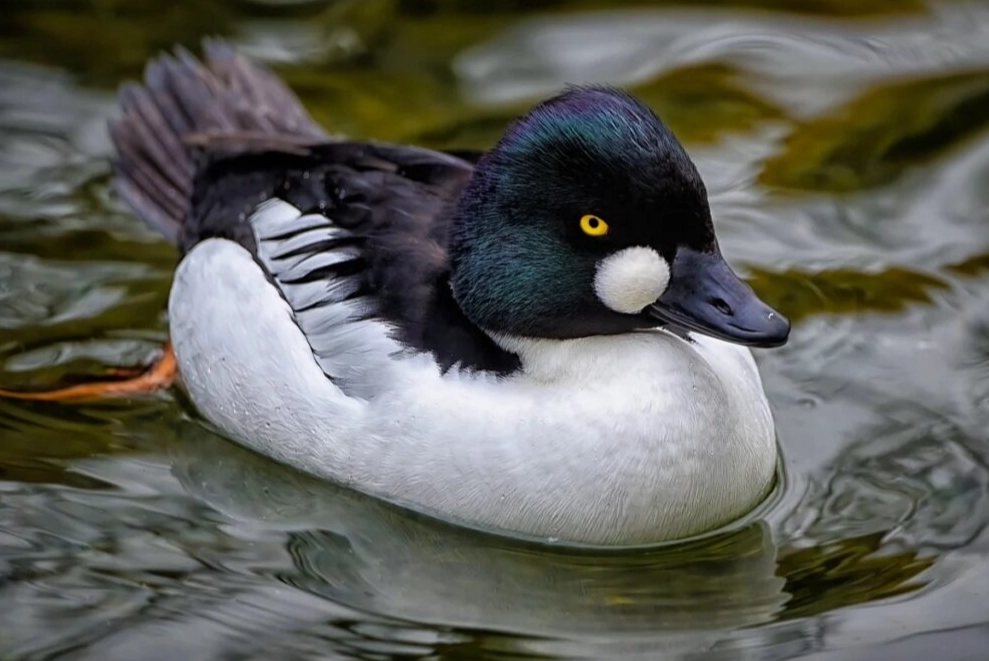
The Big Split: Dabbling Ducks vs. Diving Ducks
This is the single most useful classification. Get this right, and you've eliminated half the possibilities instantly.
| Feature | Dabbling Ducks (Puddle Ducks) | Diving Ducks |
|---|---|---|
| Feeding Style | Tip-up in shallow water. Graze on land. | Dive completely underwater to feed. |
| Leg & Foot Placement | Legs centered for easy walking on land. | Legs set far back, awkward on land. |
| Takeoff | Spring directly into the air. | Run along water surface to become airborne. |
| Typical Habitat | Ponds, marshes, flooded fields, parks. | Larger lakes, bays, coastal waters. |
| Common Examples | Mallard, Northern Shoveler, American Wigeon, Wood Duck. | Canvasback, Ring-necked Duck, Bufflehead, Ruddy Duck. |
See a duck walking on a lawn? It's a dabbler. See one that looks like it's constantly doing underwater gymnastics? It's a diver. Simple.
Your First Five Ducks: A North American Starter Pack
Let's apply the system. Here are five widespread ducks you're incredibly likely to see. Learn these cold.
1. Mallard
The classic duck. The male's (drake) glossy green head and yellow bill are unmistakable. Look for the chestnut chest and gray body. The female (hen) is mottled brown with an orange bill that has a black spot in the center. That bill detail is your cheat code. They dabble everywhere—parks, ponds, marshes.
2. Northern Shoveler
You can't miss the bill. It's huge, spoon-shaped, and looks almost comical. The drake has a green head (duller than a Mallard's), white chest, and rusty sides. The hen is mottled brown but carries the same massive bill. They often feed in groups, swinging those bills side-to-side in the water to filter food. Classic dabblers.
3. American Wigeon
The drake has a bold, white crown stripe on a green head patch and a distinctive high-pitched whistling call. Look for a gray body with a white patch on the wing. The hen is warm brown with a gray head. They're often seen grazing on grass like geese and are known for stealing food from diving ducks. Another dabbler.
4. Bufflehead
A tiny, spunky diving duck. The drake looks like he's wearing a tuxedo with a huge, puffy white head patch that looks iridescent purple/green in good light. The hen is dark with a single small white cheek patch. They dive constantly with a quick pop. You'll see them on small ponds and large lakes.
5. Canada Goose (Honorary "Duck")
Okay, it's not a duck. But beginners constantly ask about them. Long black neck, white "chinstrap," brown body. They honk loudly, graze in fields, and leave droppings everywhere. Knowing what they are lets you focus on the actual ducks.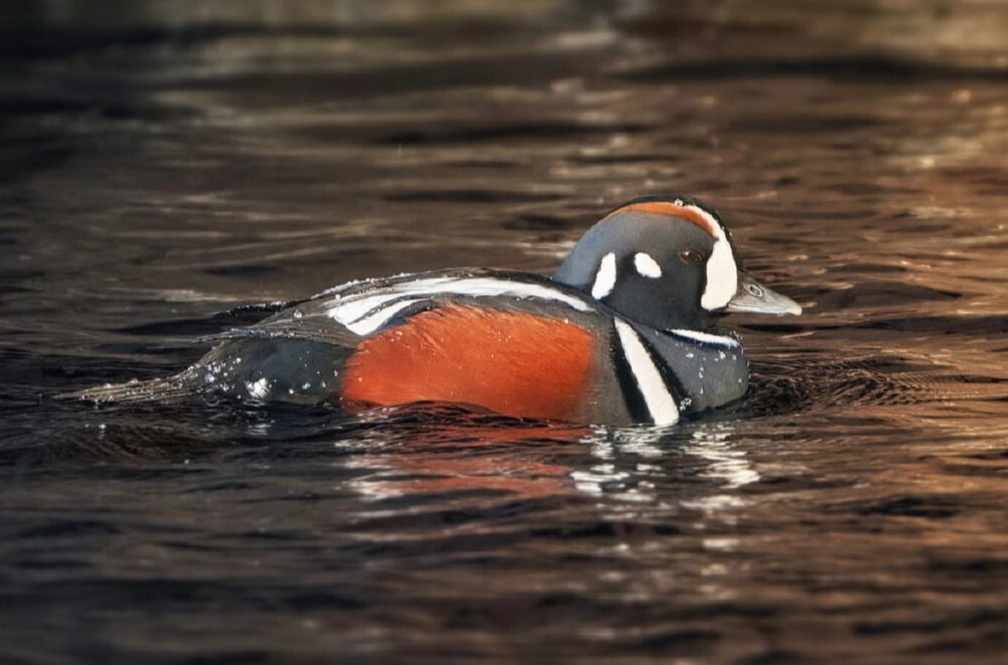
How to Practice Duck Identification in the Field: A Scenario
Let's walk through a real situation. It's a Saturday morning at your local reservoir.
You see a group of ducks out in the middle. They keep disappearing. Behavior first: They're diving. So, they're diving ducks, not dabblers. Good start.
Size & Shape: They're medium-sized, with a rounded head and a fairly short bill. Not the long, sloping profile of a Canvasback.
Color Pattern (through your binoculars): The males are mostly black on the front and back with a bright white ring around the middle (on the breast). The females are brown with a white ring around the base of their bill.
That's a Ring-necked Duck. (Funny enough, the ring on the neck is almost impossible to see; the breast ring is the key mark). See? System applied.
Now you see some ducks closer to shore, tipping up. Dabblers. One has a bright green head and yellow bill. Easy—Mallard drake. Another has a huge, spoon-shaped bill. Northern Shoveler. You're identifying ducks.
Gear Choices & The Pitfalls to Avoid
You don't need fancy gear to start. A decent pair of 8x42 binoculars is the gold standard. More magnification (like 10x) can be shakier without a tripod. Brands like Vortex or Nikon offer great entry-level options. The most important thing is to use them.
For guides, I'm old-school. I learned with a physical book—David Sibley's guide is fantastic. The act of flipping pages helps cement images in your mind. That said, the Merlin Bird ID app from the Cornell Lab of Ornithology is a game-changer for beginners. Its photo ID feature can get you in the ballpark, and its sound ID is pure magic. Use it as a learning aid, not a crutch.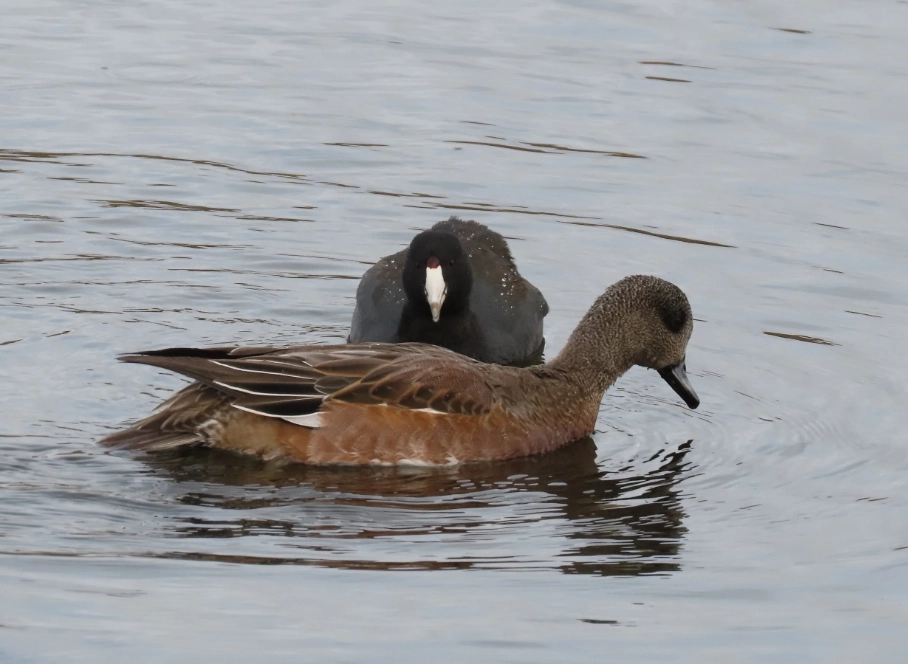
The biggest gear mistake? Buying a huge, heavy spotting scope for your first pond visit. Start simple. Your eyes and binoculars are enough.
The real pitfall isn't your gear—it's your expectations. You won't identify every duck on the first try. Some will be too far away. Some will be in eclipse plumage (when drakes molt into drab female-like feathers in late summer). That's fine. Note what you can see: "small black-and-white diving duck," "large dabbler with white forehead." Write it down. The learning is in the process.
Duck identification opens up a whole new layer to being outdoors. That anonymous brown blob on the water becomes a Gadwall with a subtle gray elegance. That flash of white becomes a Wood Duck fleeing into the trees. It's a puzzle that's always new. Grab your binoculars, head to the nearest water, and start looking. Really looking.
What is the most common mistake beginners make when trying to identify ducks?
How can I tell ducks apart in muddy or low-light conditions when colors are hard to see?
 Are duck identification apps reliable for beginners, or should I stick with a book?
What one piece of gear, besides binoculars, made the biggest difference in your duck ID skills?
Reader Comments