I remember the first time I confidently identified a Hermit Thrush. It wasn't in a pristine forest; it was in a scrappy patch of woods behind a gas station. The light was terrible, the bird was partially hidden, and for a solid minute, my brain flickered between "Swainson's?" "Veery?" "Just a weird robin?" Then it pumped its tail—that slow, deliberate lift of its rusty-colored tail. The penny dropped. That one behavioral tick, combined with a faint eye ring I finally noticed, sealed the deal. That moment changed how I look at thrushes. It's not about memorizing pictures. It's about building a system.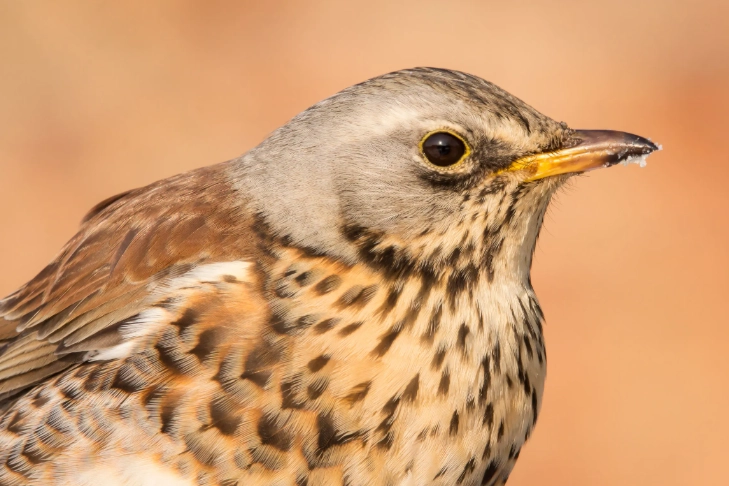
Thrush species identification trips up more birders than almost any other family in North America. You're not alone if you've squinted at a brown bird with spots and felt a wave of frustration. The standard advice—"look at the spots"—isn't wrong, but it's wildly incomplete. It's like trying to identify cars by saying "look at the color."
Your Quick Guide to Thrush ID
Visual Identification: Beyond Just Brown
Forget "brown bird" as your starting point. That's a dead end. You need a mental checklist of structural features that hold up in bad light and at a distance.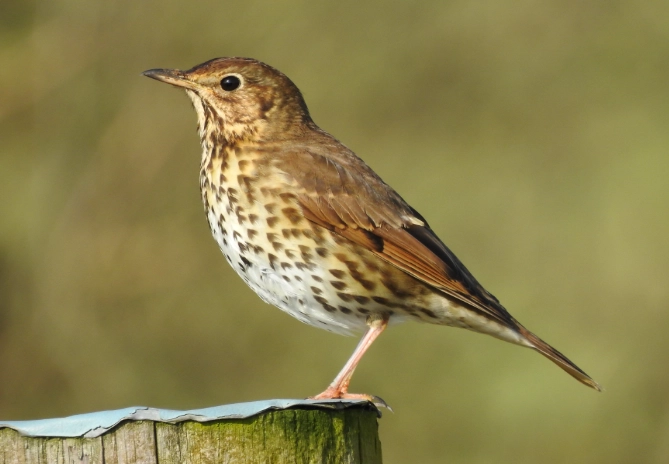
The Four Pillars of Field Marks
1. The Eye Ring (or Lack Thereof): This is your anchor. Is it bold and buffy, like spectacles (Swainson's)? Is it thin, crisp, and white (Wood Thrush)? Is it faint or barely there (Gray-cheeked, Hermit)? Or is it completely absent (American Robin, Varied Thrush)? Train yourself to see this first.
2. Spotting & Breast Pattern: Don't just note "has spots." Look at the quality. Are the spots sharp, dark blackish chevrons on a clean white background (Wood Thrush)? Are they softer, blurrier brown spots on a buffy background (Hermit Thrush)? Do they extend all the way down the flanks, or are they concentrated on the upper breast? A Veery has faint spotting that often looks more like a wash than distinct spots.
3. Tail & Rump Contrast: This is a game-changer for Hermit Thrush. The tail is distinctly rufous (reddish-brown), contrasting with its olive-brown back and rump. No other common spotted thrush in North America has this. When it pumps that tail, the contrast is unmistakable.
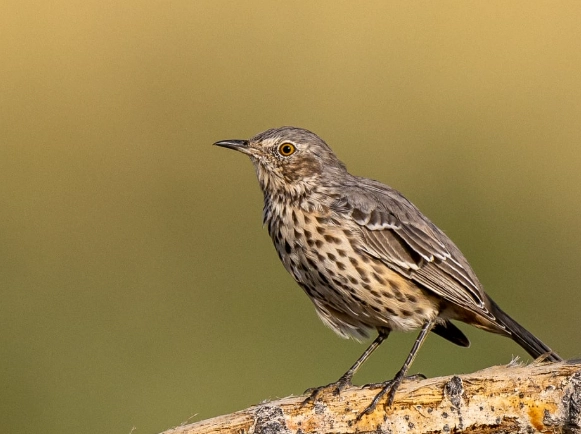
4. Wing & Face Color: Look for warmth or coolness. Swainson's Thrush often has a buffy wash on its face and wings. Gray-cheeked lives up to its name—duller, grayer cheeks. The Townsend's Solitaire (a thrush cousin) has bold white eye arcs and wing bars, breaking the "no markings" rule.
Pro Tip from the Field: In fall, young birds and molting adults can be extra confusing. Spots can be messier, colors duller. In these cases, fall back harder on structural features—eye ring shape, tail contrast, overall posture—and, critically, the habitat and location. A "weird" thrush in a coastal alder thicket in October is more likely a vagrant than a misidentified common species.
| Species | Key Visual Marker | Most Common Confusion | Habitat Clue |
|---|---|---|---|
| Hermit Thrush | Rufous tail contrasting with brown back, constant slow tail-pump. Faint eye ring. | Swainson's Thrush, young American Robin | Forest floors, shady undergrowth. Often solitary. |
| Swainson's Thrush | Bold, buffy "spectacled" eye ring. Buffy face and breast. | Gray-cheeked Thrush, Hermit Thrush | Dense, moist thickets. A migrant through many areas. |
| Wood Thrush | Bold, black spots on clean white breast. Strong white eye ring. Reddish head. | None, really. Its spotting is the most dramatic. | Mature, moist deciduous forests. |
| American Robin | Gray back, brick-red breast (males). No eye ring. Yellow bill. | Spotted female/juvenile confused for other thrushes. | Lawns, open woodlands, everywhere. |
| Varied Thrush | Orange and black pattern with an orange eyebrow and breast band. Striking. | From a distance, a weird robin. | Pacific NW forests, especially in winter. |
The Crucial Role of Song and Call
If you're ignoring sound, you're identifying with one hand tied behind your back. For thrushes, song is often the definitive ID tool, especially in dense foliage.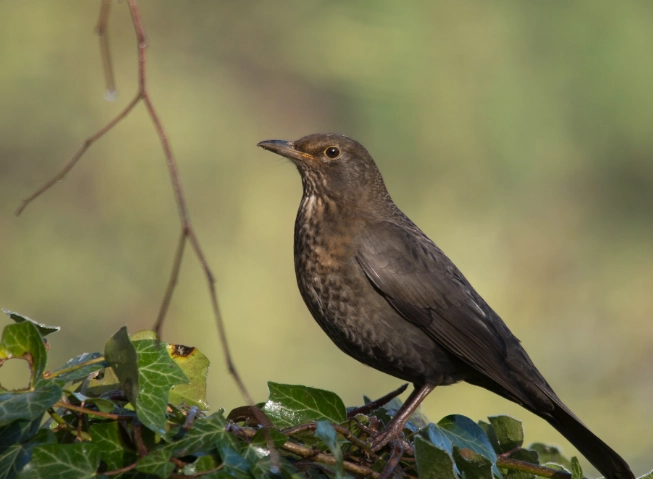
The Wood Thrush's song is an ethereal, flute-like series of phrases, often described as "ee-oh-lay." The Hermit Thrush's song is similar but higher, thinner, and always starts on a single clear note before spiraling upward. It gives me chills every time.
But here's the subtlety most guides miss: the call notes.
A Swainson's Thrush gives a distinct, liquid "whit" or "peer" call. A Hermit Thrush's call is a low, soft "chuck" or a cat-like "meew." Learning these contact calls is huge, especially during migration when birds are silent but still call to keep in touch. I've identified more thrushes by their low "chuck" in a bush than by getting a perfect visual.
Spend time on the Cornell Lab of Ornithology's Macaulay Library. Don't just listen to the pretty songs. Find the "call" recordings. Play them until you can hear the difference between a Hermit's "chuck" and a Swainson's "whit." It's a superpower.
Habitat & Behavior: The Context Clue
A bird's address and habits are huge clues. You wouldn't look for a beach towel in a library.
Hermit Thrush prefers the forest floor, hopping on leaf litter, often in drier woods than you'd expect. That tail-pump is a huge behavioral tell—it's deliberate, not a twitch.
Swainson's and Gray-cheeked Thrushes are often in denser, wetter thickets, especially during migration. They're more likely to be seen at eye-level in a tangle of branches than on the ground.
Wood Thrush needs larger tracts of mature, moist forest. Hearing one is more common than seeing one, but they do come to the ground.
American Robin is the generalist. Lawns, parks, forests, cities. If it's running across your grass, it's almost certainly a robin, even if it's a spotted juvenile.
Season is critical. Seeing a potential Gray-cheeked Thrush in New York in January is a major red flag—they're in the tropics. It's almost certainly something else (like that spotted young robin). The eBird.org range maps and bar charts are indispensable for checking what's possible in your location and month.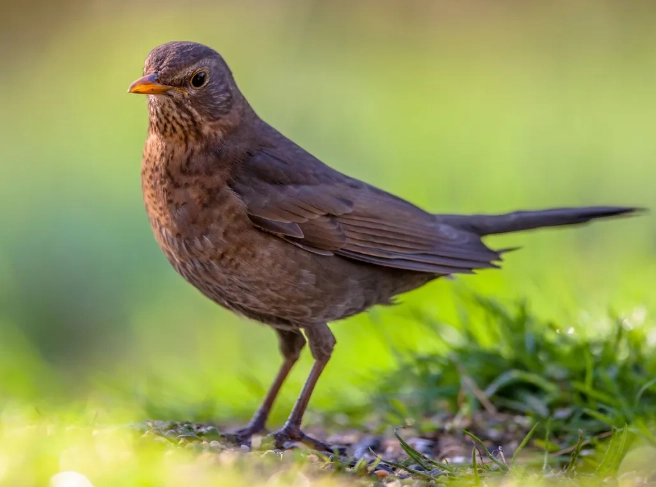
A Common Pitfall: Don't overcomplicate a common bird. In most of the US and Canada, the brown, spotted thrush hopping on your leafy lawn in summer is, 9 times out of 10, an American Robin juvenile. Start with the common, then rule it out before jumping to rarer thrushes.
Essential Tools & Resources
Your gear matters, but your resources matter more.
Binoculars: You don't need $2000 ones. You need ones that are bright enough for dim forests (an exit pupil of 4mm or more is good) and that focus quickly. Practice getting them on a bird fast.
The Merlin Bird ID App: This free app from the Cornell Lab is revolutionary. Its sound ID feature can listen and suggest thrush species in real-time. Use it as a learning tool, not a crutch. When it suggests "Hermit Thrush," look at the bird and ask yourself: "What is it seeing that made it say that?"
eBird: Already mentioned, but it's worth repeating. Checking recent sightings in your area can tell you what's being seen. Its "Explore Species" maps prevent you from trying to identify an impossible bird.
A Good Field Guide: Sibley, National Geographic, Peterson. Pick one and learn its shorthand. Sibley's illustrations of tail pumps and comparative silhouettes are particularly helpful for thrushes.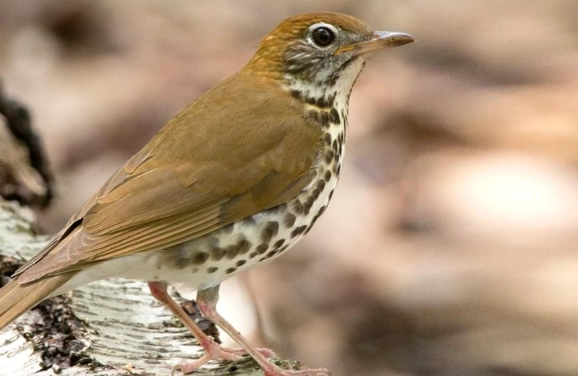
Walking Through Common Scenarios
Let's apply this system.
Scenario 1: A brown, spotted bird in a mountain forest (Colorado, July). You see faint spots, a faint eye ring. It flicks its tail. Think: Spotted thrush in western forest in summer. Hermit? Swainson's? Check the tail. Is it distinctly redder than the back? Yes? Hermit Thrush. No clear contrast? Look at the eye ring. Buffy and bold? Swainson's. Faint and grayish? Could be Gray-cheeked, but check range—less likely in Colorado in summer. Listen. A beautiful, ascending flute song? That's a Hermit Thrush confirming the ID.
Scenario 2: A plain brown bird with no spots in an Alaska spruce forest (June). No spots rules out the common spotted thrushes. It has bold white eye arcs and wing bars. That's not a typical thrush pattern. Think: Townsend's Solitaire. Check behavior—often perches upright on tall conifer tops. Song is a long, continuous warble. Match confirmed.
The process is always: Location/Season -> Silhouette/Structure -> Key Field Mark (Eye ring, Tail) -> Song/Call -> Final Confidence.
Your Thrush ID Questions Answered
Thrush identification is a puzzle, but the pieces are all there. Stop looking for a single magic mark. Build the system: filter by habitat and season, scan for structural features like the eye ring and tail, let behavior like tail-pumping guide you, and let song be your final arbiter. It takes practice. You'll still get stumped sometimes. I do. But the moments of clarity—when the pieces snap together and you know it's a Hermit, not a maybe—make every moment of frustration worth it. Grab your binoculars, open your ears, and head outside. The thrushes are waiting.
Reader Comments