You’re hiking in a mountainous national park, or maybe driving through a remote coastal stretch. A large, jet-black bird glides overhead, its deep, guttural croak echoing off the cliffs. “Is that a crow?” you wonder. Chances are, you’ve just encountered the Common Raven (Corvus corax) – the true ‘corax bird’ and a master of the skies.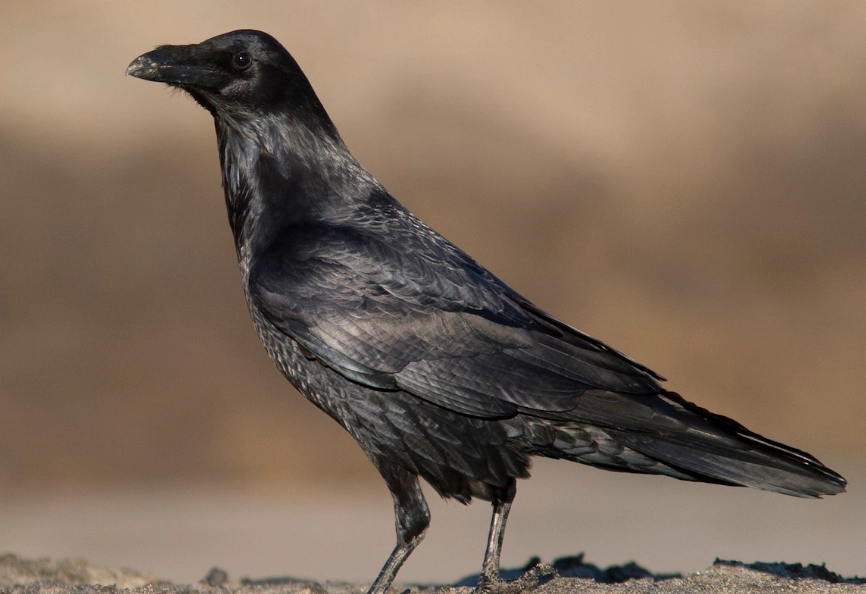
Ravens are more than just bigger crows. They’re arguably the most intelligent birds on the planet, with complex social lives and problem-solving skills that rival primates. Yet, for many birdwatchers and nature lovers, they remain a source of confusion and mystery. This guide cuts through the noise. We’ll move beyond basic facts and dive into the practical details that separate a casual sighting from a true understanding. From the subtle field marks that experts rely on to the best locations and seasons for observation, consider this your manual to appreciating one of nature’s most remarkable avian minds.
What’s Inside This Raven Guide?
Telling Raven from Crow: A Practical Field Guide
Let’s be honest: most online guides give you a neat list of differences that fall apart the moment you see a bird at a distance, backlit, or in flight. I’ve spent countless hours in the field, and here’s the reality: context is everything.
First, establish location. Are you east of the Rocky Mountains? If you’re in an eastern city or suburb, that big black bird is almost certainly an American Crow. Ravens are far less common in urban areas east of the Rockies. In the West, or anywhere in Canada, the game changes.
Now, let’s talk about the three pillars of raven ID: size, sound, and shape.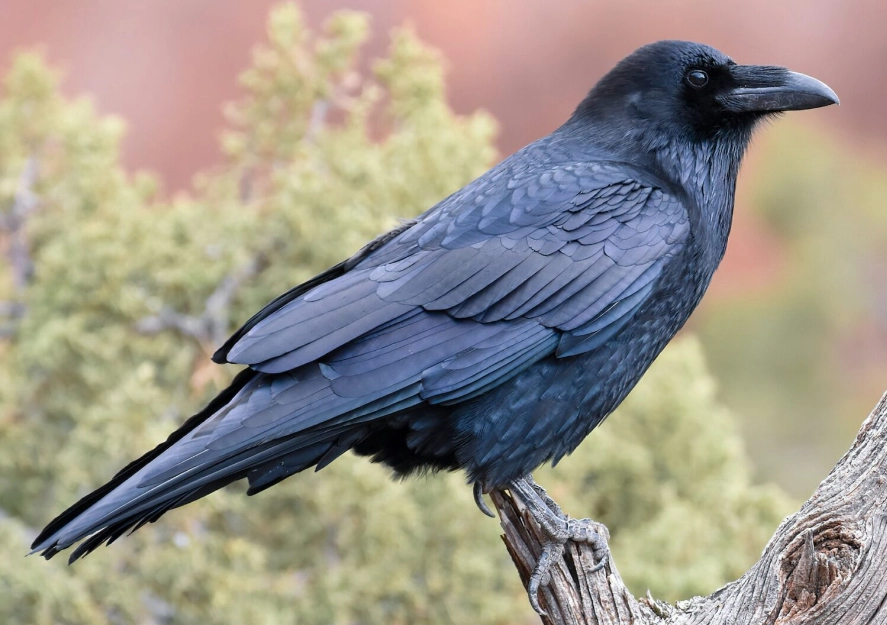
Size & Presence
A Common Raven is massive. We’re talking hawk-sized. With a wingspan pushing four feet and a body length of over two feet, it dwarfs an American Crow. But size is relative. It’s more about presence. A raven has a heavier, more powerful bill – it looks like it could crack a walnut. Its head is larger, its neck thicker. When it flies, you feel its size.
The Unmistakable Voice
Forget the crow’s familiar “caw-caw.” A raven’s vocalizations are lower, richer, and more varied. The classic call is a deep, resonant croak, often described as a “gronk-gronk” or “wonk-wonk.” They also make an incredible array of clicks, gurgles, and bell-like notes. If you hear something that sounds like a dripping tap or a wooden knock, it might be a raven. The Cornell Lab of Ornithology’s Macaulay Library has excellent recordings that are worth studying.
Shape & Flight: The Expert’s Tell
This is where the magic happens. In flight, a crow’s tail is fan-shaped. A raven’s tail is distinctly wedge-shaped or diamond-shaped. But from a distance, that’s hard to see. Look instead at the head and wings.
A flying raven often appears to have a “beard” – shaggy throat feathers that puff out. Its head looks larger, and its bill heavier. The wings are longer and more pointed, with longer “fingers” at the tips.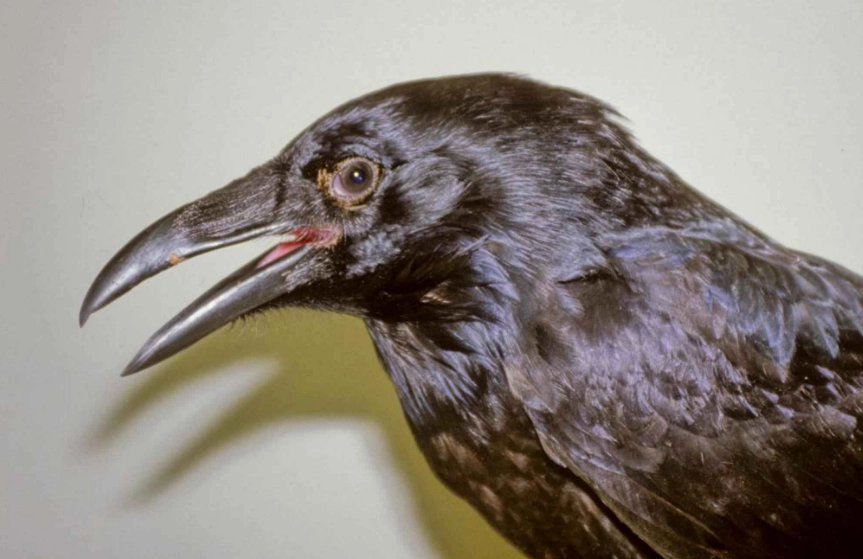
Now, the flight pattern. Crows flap steadily, almost like they’re rowing. Ravens are masters of the air. They soar, they tumble, they ride thermals. Their wingbeats are slower, more deliberate. They’ll often mix flapping with long glides. If you see a big black bird doing acrobatics or soaring like a hawk, it’s a raven.
| Feature | Common Raven | American Crow |
|---|---|---|
| Size | Hawk-sized: 24" length, 53" wingspan | Pigeon-sized: 17" length, 39" wingspan |
| Bill | Massive, heavy, curved upper ridge | Smaller, straighter |
| Tail Shape | Wedge-shaped (diamond) | Fan-shaped |
| Throat Feathers | Shaggy, often appear ruffled | Smooth |
| Flight Pattern | Soaring, gliding, acrobatic | Steady, rowing wingbeats |
| Voice | Deep croak (“gronk-gronk”), varied clicks & knocks | Familiar “caw-caw” |
| Typical Habitat | Remote wilderness, mountains, coasts | Urban, suburban, agricultural areas |
Pro Tip: Beginners often get hung up on tail shape. From a distance, focus on flight style and sound. A soaring, croaking bird is a raven. A steadily flapping, cawing bird is a crow.
Mind of the Raven: Behavior & Intelligence Explained
If you think ravens are just scavengers, you’re missing the story. I once watched a pair work as a team to distract a nesting peregrine falcon. One bird would dive-bomb the cliff, drawing the furious falcon away, while its mate swooped in to steal an egg from the unprotected nest. This wasn’t random; it was a coordinated, intelligent plan.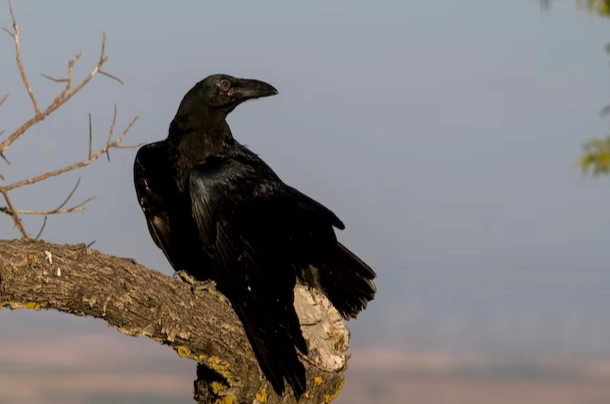
Their intelligence is staggering. Studies, like those referenced by researchers at the University of Cambridge, show ravens can solve complex puzzles, use tools, and even plan for the future – a cognitive ability once thought unique to humans and great apes.
Their social lives are complex. They form lifelong pair bonds, and mated pairs defend large territories. Young ravens often form juvenile gangs, roaming and learning together before settling down.
And their playfulness? It’s a sign of that big brain. I’ve seen them slide down snowbanks on their backs, just for fun. They’ll pick up a stick, fly high, drop it, and swoop down to catch it mid-air. They play with other animals, too, sometimes tugging the tails of wolves or foxes to get a reaction.
Their communication is equally sophisticated. They have a vast repertoire of calls, and research suggests they can refer to specific objects or events. That deep crook might be a territorial warning, while a series of soft knocks could be a contact call to a mate.
Where & When to Find Ravens: Habitat & Distribution
Ravens are birds of wild spaces. Forget city parks. To find them, think big, open, and often rugged.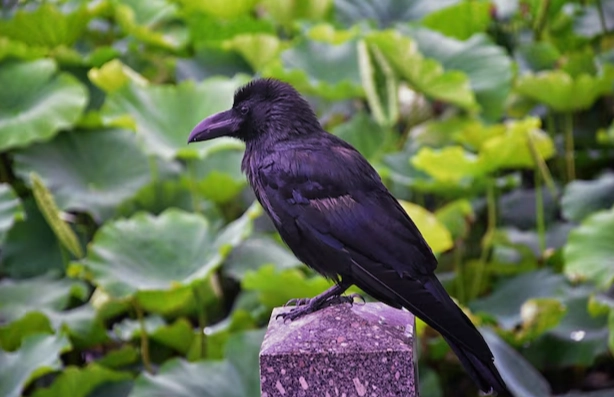
Their range is immense: across the entire Northern Hemisphere, from the Arctic tundra to the deserts of the American Southwest. In North America, they’re found year-round from Alaska and Canada, down through the Western United States, and increasingly in the Northeast as they recolonize old territories.
Here are the types of places where your chances are highest:
Mountain Ranges & National Parks: The Rockies, Sierra Nevada, Cascades, and Appalachians (especially in the North) are raven strongholds. Think Yellowstone, Yosemite, Glacier, or the Great Smoky Mountains. Cliff faces for nesting and open areas for foraging are ideal.
Remote Coastlines: The rugged coasts of Maine, the Pacific Northwest, or Scotland are perfect. Sea cliffs provide nest sites, and the ocean offers a bounty of carrion (seal carcasses, dead fish).
Open Expanses: Tundra, high desert (like the Mojave or Sonoran), and large agricultural areas can support ravens, especially where there are ranch operations (providing potential carrion).
Best Times & Viewing Tips
Ravens are year-round residents, but you’ll have more luck outside of the dense breeding foliage. Late fall, winter, and early spring are prime times. The leaves are down, visibility is up, and ravens are more active during the day.
For the best experience:
Visit areas with known nest sites on cliffs. Find a comfortable spot to sit at a distance – bring binoculars or a spotting scope. Early morning is often active as pairs engage in social behaviors and territorial flights.
Listen. Often, you’ll hear a raven’s deep croak before you see it. Scan the skies for large, soaring birds. And be patient. The reward of observing their natural behaviors – a courtship flight, a playful interaction, a successful hunt – is well worth the wait.
A final piece of advice: if you want to attract them for observation or photography, do it responsibly. Occasional, unsalted food like raw peanuts or meat scraps left in an open area can work. But never feed them regularly. You don’t want them to become dependent or a nuisance.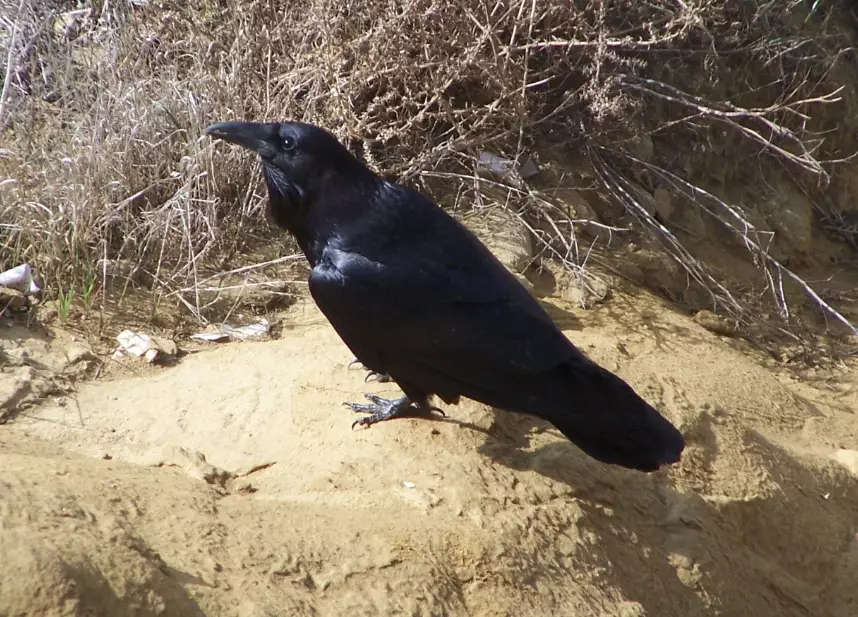
Reader Comments