Quick Guide
- When "Defensive" Looks a Lot Like "Aggressive"
- Barred Owls vs. Pets and Other Animals: A Different Story?
- How Dangerous is a Barred Owl Attack, Really?
- A Comparison: Are Barred Owls More or Less Aggressive Than Other Owls?
- Why You Might Be Seeing More Barred Owls (And Why They Seem Bold)
- Practical Guide: What to Do If You Encounter a Barred Owl
- Myths vs. Facts: Clearing Up the Confusion on Barred Owl Aggression
- Your Questions Answered: The Barred Owl Aggression FAQ
So you're out for an evening walk in the woods, and you hear that classic call – "Who cooks for you? Who cooks for you-all?" It's unmistakably a Barred Owl. It sounds close. Maybe too close. And a thought pops into your head: are Barred Owls aggressive? Could this beautiful bird actually be a threat? I've been there, frozen in my tracks, wondering the same thing. The short answer isn't a simple yes or no. It's a lot more interesting than that.
Let's get one thing straight right off the bat. Barred Owls (Strix varia) aren't out looking for a fight. They're not like some birds of prey that might see you as competition. Their primary goals in life are pretty basic: find food, raise chicks, and avoid becoming food themselves. Calling them inherently "aggressive" is like calling a parent who yells at someone getting too close to their toddler "aggressive." It's defensive, not offensive. But here's where it gets tricky. In certain, very specific situations, a Barred Owl can display behaviors that feel incredibly aggressive, especially if you're on the receiving end.
Key Takeaway: Barred Owls are defensive, not predatory, towards humans. Their "aggression" is almost always a protective response, not an attempt to hunt you.
When "Defensive" Looks a Lot Like "Aggressive"
To really understand if Barred Owls are aggressive, you need to step into their world. Imagine you're a large owl, sitting on a nest full of eggs or fluffy, helpless owlets. You can't just pick up and move. Your entire genetic legacy is in that nest. Then, a giant, noisy, two-legged creature (that's us) comes lumbering through your territory. From the owl's perspective, this is a massive, potential predator. Its options are limited. It can flee, abandoning its young. Or it can stand its ground and try to scare the threat away.
This is the core of almost every reported incident where people ask, "Are Barred Owls aggressive?" It's nesting season, and someone got too close to a nest without even knowing it. The owl's response isn't about anger; it's about pure, instinctual defense.
The Telltale Signs of a Stressed or Defensive Barred Owl
They usually don't just launch a silent attack. They give warnings. If you know what to look for, you can avoid a confrontation altogether.
- Vocalizations: Beyond their classic call, they make a series of loud, harsh barks, shrieks, and gurgles when agitated. It sounds chaotic and angry.
- Body Language: They'll click their beak loudly. They might puff up their feathers to look bigger. You might see them leaning forward on their perch, staring intently.
- Dive-Bombing: This is the big one. A defensive owl will swoop down low, often aiming for the highest point on the intruder – usually the head. They rarely make contact on the first pass. It's a bluff. They're trying to scare you off. But sometimes, those razor-sharp talons do connect.
I remember talking to a park ranger who had been tagged on the scalp by a Barred Owl. He said it was less painful than surprising a wasp nest, but the shock and the sight of blood were unforgettable. He admitted he'd wandered off-trail in a known nesting area. The owl was just doing its job.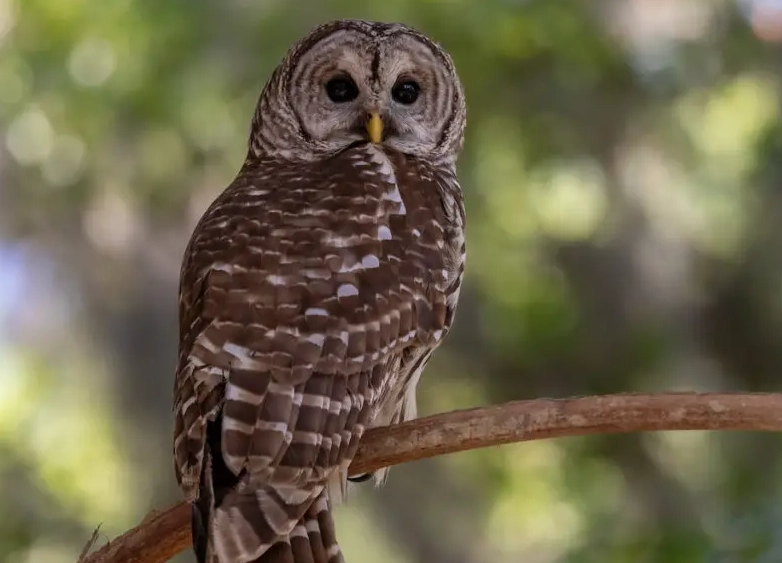
Barred Owls vs. Pets and Other Animals: A Different Story?
This is where the question "Are Barred Owls aggressive?" takes a different turn. Towards other animals, particularly small ones, Barred Owls are absolutely predators. This isn't aggression; it's their job description. They are skilled hunters of the forest night.
Pet Owners, Listen Up: A Barred Owl may see a small dog, cat, or rabbit not as a pet, but as potential prey. This is especially true at dawn and dusk. Letting a tiny pet out unsupervised in wooded areas where Barred Owls live is a genuine risk. It's not malice; it's ecology.
Their diet is a messy list of what's available: mice, voles, shrews, frogs, crayfish, insects, and yes, sometimes other birds. They're opportunistic. This brings us to a controversial topic – their interactions with the endangered Spotted Owl in the Pacific Northwest. Here, the question of Barred Owl aggression is a huge conservation issue. Barred Owls, being more adaptable and generalist, have moved into Spotted Owl territory. Research suggests they don't just compete for food and space; they sometimes directly attack and even kill Spotted Owls. Scientists with the U.S. Geological Survey have documented this competitive aggression, which is a major factor in Spotted Owl decline. It's a complex, human-aided ecological mess (you can read more about this difficult management issue from the U.S. Fish and Wildlife Service).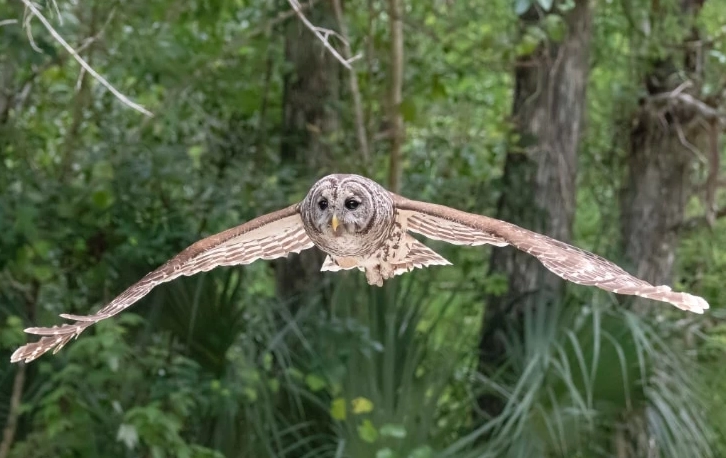
How Dangerous is a Barred Owl Attack, Really?
Let's be practical. If a Barred Owl does make contact, how bad is it? For a human, the danger is minimal but not zero. Their talons are sharp and can cause lacerations on the scalp or face. The primary risks are:
- Injury to the eyes: This is the most serious potential risk from any bird strike.
- Infection: Any animal scratch or bite can introduce bacteria.
- Secondary injury: The surprise of being struck could cause you to fall or stumble.
The psychological shock is usually worse than the physical injury. It's a startling, violating experience. But you are in no danger of being carried off. An adult Barred Owl typically weighs between 1 and 2.5 pounds. You are not on the menu.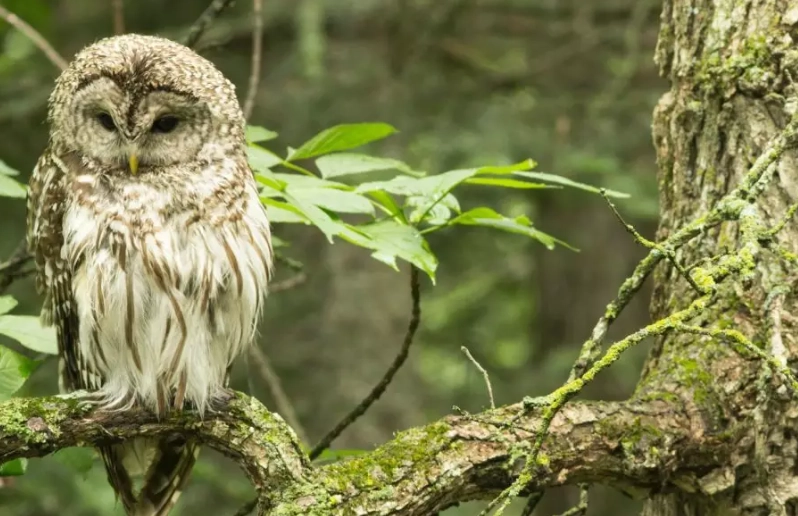
If you are dive-bombed, don't swat at the owl. That can escalate things. Instead, calmly but quickly leave the area. Wave an arm over your head if you have to. Protect your eyes. The owl's territory likely only extends 100-200 yards from the nest. Once you're out of that zone, you'll be fine.
A Comparison: Are Barred Owls More or Less Aggressive Than Other Owls?
It's useful to put Barred Owl behavior in context. They aren't the only owls known for defending their nests fiercely.
| Owl Species | Nest Defense "Aggression" Level | Primary Triggers | Notes |
|---|---|---|---|
| Great Horned Owl | VERY HIGH | Close approach to nest, perceived threat to young. | Often called the "tiger of the sky." Will attack humans and large animals with little warning. Their size makes them potentially more dangerous. |
| Barred Owl | MODERATE to HIGH | Close approach to nest (especially during incubation/early brooding). | Will vocalize and dive-bomb persistently. More likely to give warning signs than Great Horned Owls. |
| Snowy Owl | MODERATE | Approach on ground nest (tundra). | Ground-nesting makes them feel very vulnerable. Will dive-bomb but often distract by feigning injury away from nest. |
| Eastern Screech-Owl | LOW | Direct physical disturbance of nest cavity. | Small size. Usually relies on camouflage and will sit tight rather than confront. |
| Barn Owl | LOW | Very direct threat to nest. | Generally shy and elusive. More likely to flee than fight. |
Looking at this, Barred Owls are definitely on the more defensive end of the spectrum, but they aren't the absolute most confrontational. That dubious honor goes to the Great Horned Owl. What makes Barred Owl encounters seem more common is their adaptability to live near humans in suburban and urban woodlots, increasing the chances of overlap.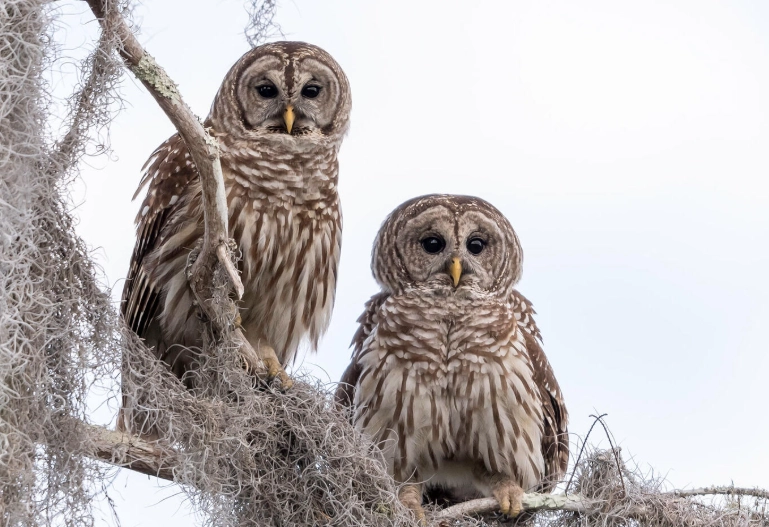
Why You Might Be Seeing More Barred Owls (And Why They Seem Bold)
Their range has been expanding, particularly westward across North America. They're incredibly adaptable birds. A patch of woods near a neighborhood, a river corridor in a city park – these can be perfect Barred Owl habitat. More owls living closer to people naturally leads to more encounters. Sometimes, a Barred Owl staring at you from a backyard tree isn't being aggressive; it's just curious or assessing whether you're a threat. Their large, dark eyes can feel incredibly intense, which we often misinterpret as aggression.
Also, think about bird feeders. They attract rodents like mice and voles. What eats mice and voles? Barred Owls. So, in a way, we're setting the dinner table for them. An owl hunting at the edge of your yard isn't stalking you; it's taking advantage of an easy food source you inadvertently provided. The Cornell Lab of Ornithology's eBird data shows this range expansion clearly, with more and more suburban sightings logged every year.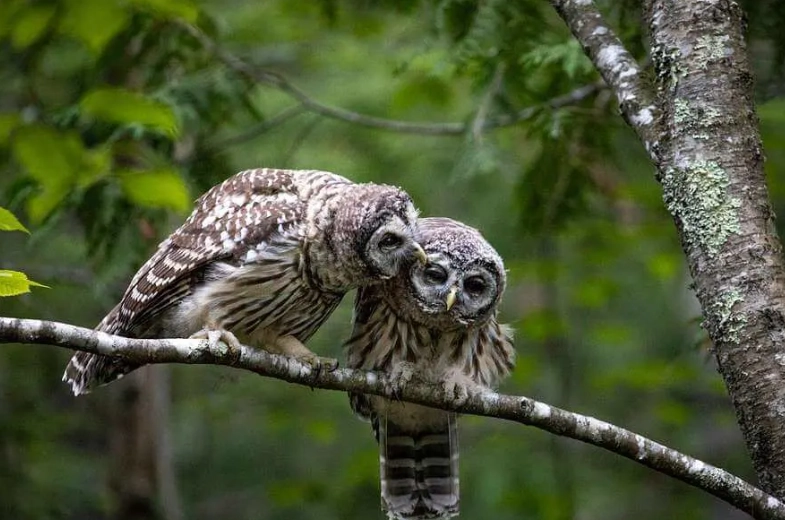
Personal Note: I once had a Barred Owl regularly perch on my fence at dusk. For a few weeks, it felt like a magical visitor. Then I found the pellets (regurgitated fur and bones) below the perch and realized it was using my yard as a fast-food restaurant for the local vole population. The magic was still there, just a bit more... digestible.
Practical Guide: What to Do If You Encounter a Barred Owl
Let's get down to brass tacks. You're in a situation where you think a Barred Owl might be acting aggressively. What are the steps?
- First, Don't Panic. The owl is scared, not evil.
- Identify the Trigger. Are you near a large tree with a cavity or an old hawk/squirrel nest? You might be near a nest. Back away the way you came.
- Make Yourself Known. If you're just walking and an owl seems to be following or watching you intently, talk calmly. Let it know you're a human, not a sneaking predator. Sometimes, just looking up at it and acknowledging it can break the "stalker" mode.
- Protect Your Head. If dive-bombing starts, put a hat on, hold a backpack over your head, or use your arm. The goal is to make your head a less appealing target.
- Leave the Area Calmly. Don't run. Walk purposefully out of the woods or away from the tree line. The defensive behavior will stop once you're a sufficient distance away.
- Report Persistent Issues. If an owl is repeatedly defending a nest on a heavily used public trail, contact your local parks department or a state wildlife agency. They might post temporary signs or advise on a slight detour.
It's all about coexistence. We're in their space.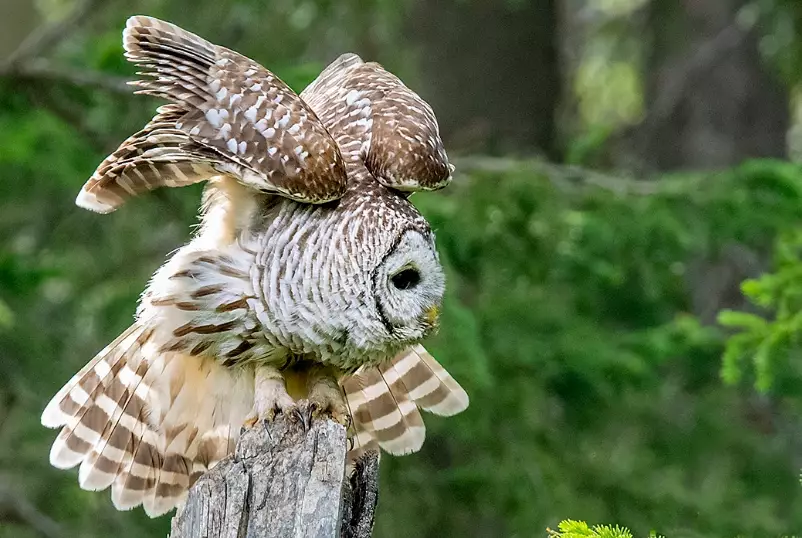
Myths vs. Facts: Clearing Up the Confusion on Barred Owl Aggression
There's a lot of folklore and fear out there. Let's bust some myths.
Myth: Barred Owls are aggressive omens or bringers of bad luck.
Fact: They are birds, not psychics. Their presence indicates a healthy, wooded ecosystem.
Myth: If a Barred Owl follows you, it's planning to attack.
Fact: It's more likely curious or assessing you as a potential threat (or a very unlikely potential meal). It's keeping an eye on you, not plotting.
Myth: Barred Owls will carry off small children.
Fact: This is physically impossible and a complete fiction. Their lifting capacity is a few pounds at most.
Myth: All Barred Owls are aggressive during the day.
Fact: Seeing one active during the day isn't a sign of rabies or aggression. They often hunt or tend to young in daylight, especially in deep woods or on overcast days.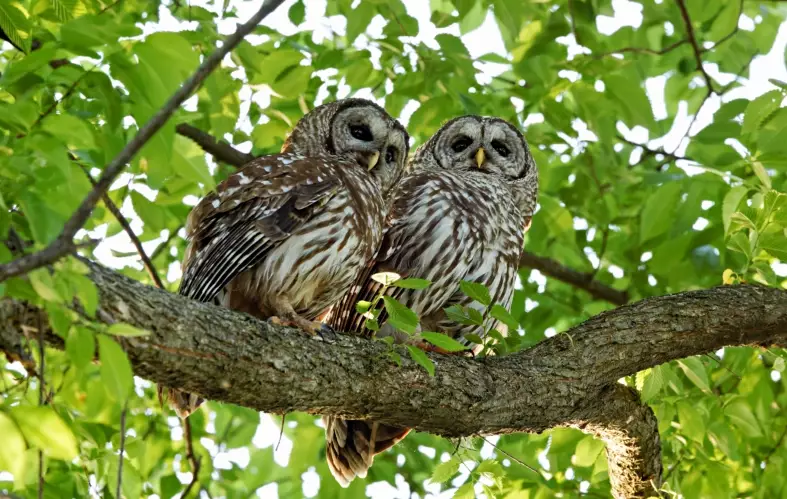
Your Questions Answered: The Barred Owl Aggression FAQ
I've gotten a lot of questions from readers over the years. Here are the most common ones tied directly to the fear that Barred Owls are aggressive.
The question "Are Barred Owls aggressive?" needs a nuanced answer. No, they are not aggressive in the sense of seeking out conflict or attacking without reason. They are, however, fiercely and effectively defensive of their homes and young. In the specific context of the nesting season, they can and will behave in ways that are startling and physically confrontational to humans who wander too close.
Understanding this distinction is everything. It moves us from fear to respect. It changes the narrative from "a scary bird attacked me" to "I accidentally threatened a bird's family, and it asked me to leave." That shift in perspective is crucial for living alongside wild neighbors like the Barred Owl.
The next time you hear that haunting call in the woods, you can appreciate it for what it is: the sound of a wild, capable creature doing its best to survive in a world we increasingly share. Just maybe give that particular patch of woods a little extra space until the owlets have flown the coop. You'll both be happier for it.
Reader Comments