In This Guide
- The Number One, Can't-Miss Clue: The Flight Style
- Breaking Down the Silhouette: Wings, Tail, and Head
- Color and Plumage: Not Just Black and White
- Behavioral Giveaways: What Are They Actually Doing?
- Tricky Situations and Common Pitfalls
- Your Field Checklist: A Step-by-Step Approach
- Digging Deeper: Resources to Build Your Expertise
I remember the first time it happened to me. I was out hiking, feeling all proud of myself for spotting this majestic, huge bird circling way up high. "An eagle!" I announced to my friend, who nodded along, equally impressed. Then, as it banked slightly, the sun hit its wings just right, and I saw it – the distinct, almost ragged-looking wingtips and that slight wobble in its glide. My heart sank a little. It wasn't an eagle. It was a turkey vulture.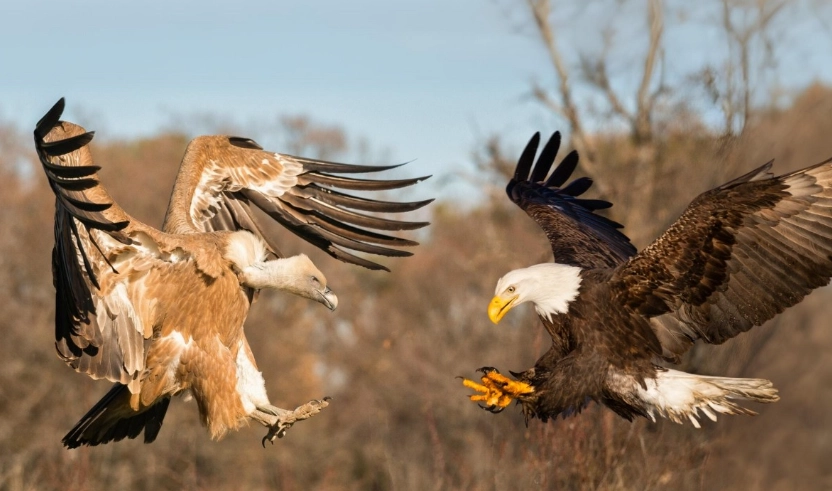
That moment of confusion is incredibly common. From a distance, especially to the untrained eye, large soaring birds can look surprisingly similar. But once you know what to look for, the differences become as clear as day. Knowing how to tell the difference between an eagle and a vulture in flight isn't just about birding bragging rights (though that's a nice bonus). It changes how you see the sky. It adds a layer of understanding to the ecosystem playing out above you.
This guide is the one I wish I'd had. We're going to move beyond vague descriptions and get into the nitty-gritty, practical details that actually work when you're squinting at a speck in the sky. We'll break it down step by step, starting with the most obvious giveaway and moving to the finer points. By the end, you'll have a mental checklist that works.
The Number One, Can't-Miss Clue: The Flight Style
Forget color for a minute. Forget exact size. The single most reliable way to answer the "how to tell the difference between an eagle and a vulture in flight" question is to watch how it flies. This is your first and best filter.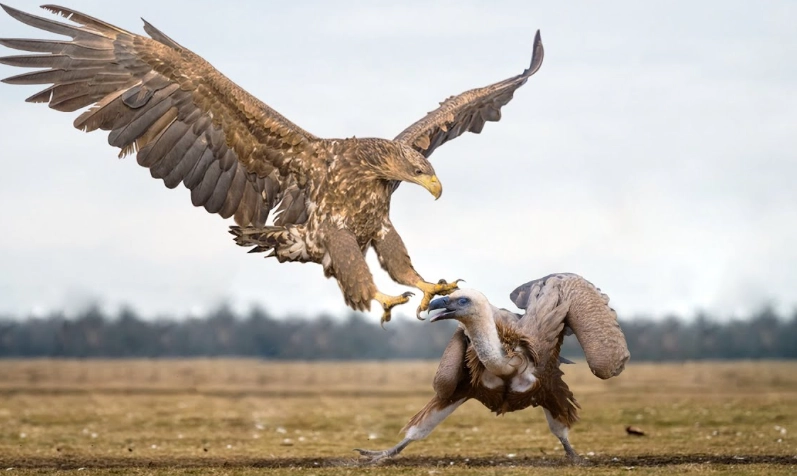
Vulture Flight: The "Teetering" Glider
Imagine a shallow "V" shape held up in the wind. Now imagine that V rocking ever so slightly from side to side, as if it's unsteady. That's your classic turkey vulture flight posture. They hold their wings in a pronounced dihedral (that V-shape) and their flight often looks wobbly or unsteady. It's not that they're bad fliers—far from it. This posture and motion are incredibly efficient for low-energy soaring, allowing them to ride thermal air currents for hours without a single wing flap, scanning the ground for carrion. Their flight looks effortless, lazy, and a bit tipsy.
Eagle Flight: The "Plank" or "Flat" Glider
In stark contrast, eagles (like Bald and Golden Eagles) typically soar with their wings held flat, like a plank, or sometimes in a very slight, shallow V. Their flight is steady, powerful, and direct. There's no teetering. When they glide, it's a smooth, purposeful cut through the air. You can sense the latent power in their wingbeats, which are deep and strong, not the frantic flapping of a smaller bird. An eagle in flight looks like a ruler held against the sky; a vulture looks like a rocking chair.
I can't stress this enough. On a windy day, a vulture's teeter can be exaggerated. On a calm day, an eagle might hold its wings with the faintest dihedral. But 95% of the time, this single characteristic—steady plank vs. wobbly V—will give you the right answer instantly.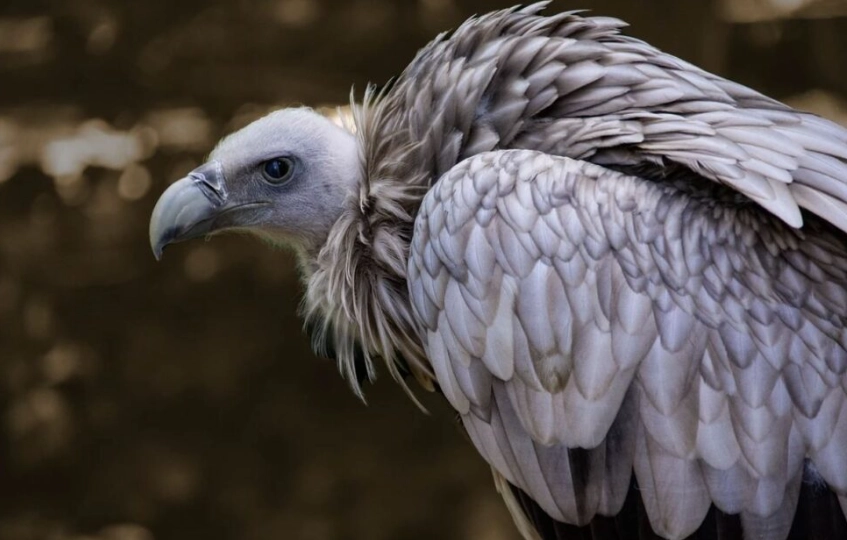
Breaking Down the Silhouette: Wings, Tail, and Head
Once you've registered the flight style, zoom in on the shape. Silhouette is king when the bird is backlit or far away. Here’s where the details matter.
Wing Shape and Proportion
Vulture wings are long, broad, and often appear somewhat "fingered" at the tips. The primaries (those feathers at the wingtip) look separated, almost like long fingers. The wings are built for soaring, not rapid pursuit. An eagle's wings are also broad and long, but they tend to look more rectangular, with a straighter trailing edge. The "fingers" are less pronounced. Think of a vulture's wing as a long, elegant rectangle with frayed ends; an eagle's as a solid, powerful board.
The Tail Tale
This is a big one, especially for distinguishing a Golden Eagle from a vulture. A turkey vulture has a relatively long, rounded tail that often fans out noticeably. From below, it can look quite prominent. A Bald Eagle has a medium-length, wedge-shaped or slightly rounded tail that's pure white in adults (a dead giveaway, but juveniles are trickier). A Golden Eagle has a longer tail than a Bald Eagle, but it's more of an elongated rectangle, often with a faint pale band at the base and a dark terminal band. It never has the same rounded, fan-like quality of a turkey vulture's tail.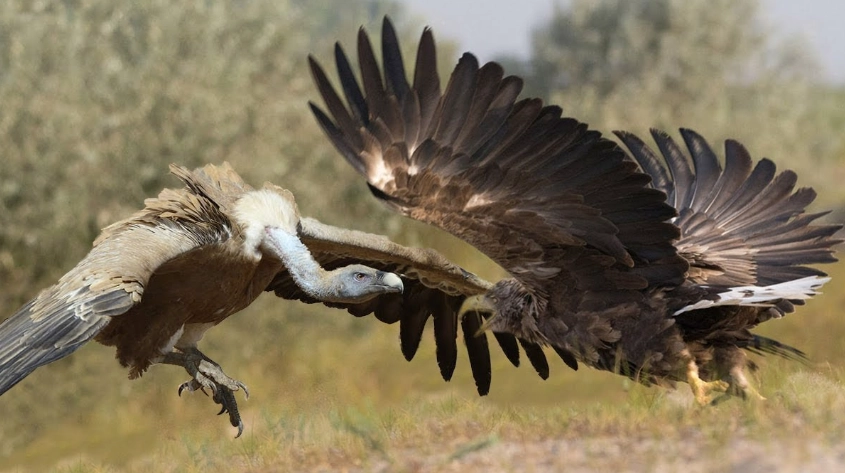
Head Projection
Look at how much head sticks out in front of the wings. A vulture has a very small head relative to its body and wings. In flight, the head often looks tiny and tucked in, barely projecting. An eagle, in contrast, has a large, powerful head and a substantial beak. The head projects noticeably forward, giving the front end of the bird a heavier, more substantial look. This is a subtle but excellent clue.
Color and Plumage: Not Just Black and White
Color can be helpful, but it's highly dependent on light, age, and species. Relying on color alone will trip you up.
Key Insight The classic image is a black vulture and a white-headed eagle. Reality is messier.
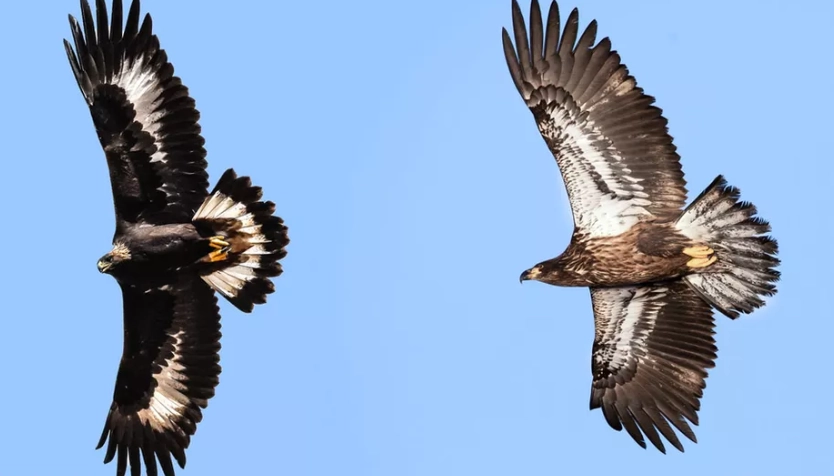
Adult Bald Eagles are unmistakable with their bright white head and tail against a dark brown body. But a juvenile Bald Eagle is a whole different ball game. For its first four to five years, it's mostly a mottled, messy brown from head to tail, with varying amounts of white splotching underneath. A juvenile Bald Eagle can look remarkably similar to a Golden Eagle or even a large, dark hawk from below.
Turkey Vultures, from below, are two-toned. Their body and the leading half of their wing (from the body out) are dark. The trailing half of their wing, from the "wrist" back to the wingtip, is distinctly silvery-gray. This two-toned look is very distinctive in good light. Black Vultures, on the other hand, are black all over with silvery-white wingtips (only the very outermost primaries). Their tail is also much shorter than a turkey vulture's.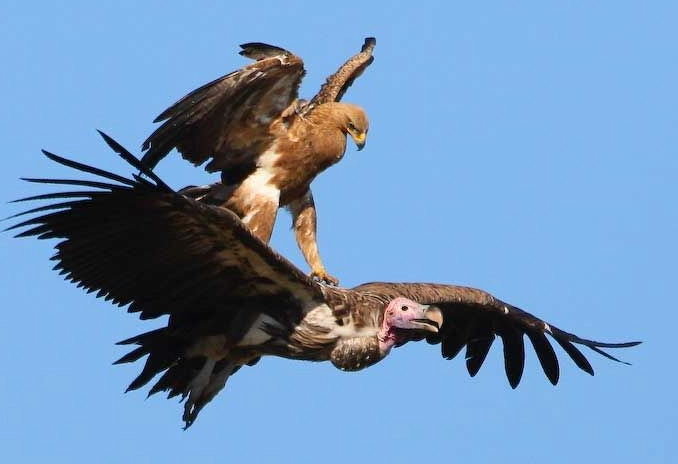
Golden Eagles are a rich, dark brown, often with a golden sheen on the back of the head and neck (hard to see in flight). Their most consistent marking from below is a white patch at the base of the tail and a dark band at the tip. Juveniles often show more white in the wings and tail.
| Feature | Turkey Vulture | Bald Eagle (Adult) | Golden Eagle |
|---|---|---|---|
| Flight Posture | Pronounced V-shape (dihedral), teetering. | Flat or slight V, steady & powerful. | Flat or slight V, steady & powerful. |
| Wing Shape | Long, broad, "fingered" tips. | Long, broad, rectangular. | Long, broad, slightly pinched at base. |
| Underwing Color | Two-toned: dark front, silvery rear half. | Dark body, white head/tail. Juvenile: mottled brown/white. | Dark with possible white tail base band. Juvenile has white wing patches. |
| Tail | Long, rounded, often fanned. | Medium, wedge-shaped, white (adult). | Long, rectangular, dark with pale base band. |
| Head in Flight | Very small, barely projects. | Large, prominent, white (adult). | Large, prominent, dark. |
| Typical Behavior | Soars for hours, rarely flaps. Nose-down when searching. | Direct flight, powerful flaps. Often near water. | Swift, agile flight over open terrain. May hunt. |
Behavioral Giveaways: What Are They Actually Doing?
Birds don't just fly; they act. Their behavior is a huge clue.
Vultures are scavengers. They are often seen circling low and slow over a particular area, sometimes tilting from side to side with their head pointed down, intently scanning the ground. You'll frequently see them in groups, called a "kettle" when soaring together. They rarely flap unless taking off or in very still air. Seeing a group of large, teetering birds circling is almost certainly a vulture committee at work.
Eagles are predators. Their flight is more direct and purposeful. A Bald Eagle might be flying straight from a perch to a fishing ground. You might see one plunge toward water feet-first to grab a fish. Golden Eagles often hunt over open country, flying with powerful, controlled wingbeats interspersed with glides. They are more often seen alone or in pairs (especially during breeding season) than in large, social groups. If you see a large bird actively pursuing another bird or diving, it's almost certainly an eagle or another raptor, not a vulture.
Tricky Situations and Common Pitfalls
Okay, theory is great. Let's talk about the messy reality that makes you second-guess yourself.
- The Far-Away Speck: At extreme distances, all you have is shape and flight style. Focus on the wing hold. Is it a flat line or a wobbly V? That's your best bet.
- Backlit Against the Sun: Color is gone. Pure silhouette. Look for head projection and tail shape. A tiny head and long, fanned tail scream vulture. A large head and wedge-shaped tail suggest eagle.
- Juvenile Bald Eagles: This is the number one cause of misidentification. A mottled brown juvenile Bald Eagle lacks the white head and tail. It can look very dark and uniform. Check the flight style (steady), wing shape (broad, rectangular), and look for any uneven white patches in the wings or body, which are common in juveniles.
- Other Large Birds: Don't forget about hawks! A Red-tailed Hawk is much smaller, but a high-flying one can be confused. Look for the shorter, broader wings and the trademark red tail (when visible). Ospreys fly with a distinct crook in their wings, like a stretched-out "M," and are almost always associated with water.
How to tell the difference between an eagle and a vulture in flight often comes down to a gut feeling built from combining these clues. You see the teeter, you note the two-toned wings, you see the small head—bam, vulture. You see a steady glide, a large projecting head, a powerful build—likely an eagle.
Your Field Checklist: A Step-by-Step Approach
When you spot that big bird, run through this mental list. It gets faster with practice.
- Flight Style First: Wobbly V or steady plank? This narrows it down massively.
- Check the Silhouette: Look at the wings. Fingered tips? Long, fanned tail? Tiny head? (Points to vulture). Rectangular wings, wedge tail, big head? (Points to eagle).
- Look for Color Patterns: If light permits. Two-toned wings? Vulture. Clear white head and tail on a dark body? Adult Bald Eagle. Dark with a possible white tail band? Golden Eagle or juvenile Bald Eagle.
- Observe the Behavior: Circling low in a group? Probably vultures. Flying direct, alone or in a pair, possibly near water or hunting? Think eagle.
Questions Birders Actually Ask (And The Real Answers)
Digging Deeper: Resources to Build Your Expertise
This guide gives you the foundation, but the learning never stops. I highly recommend cross-referencing with these authoritative sources. They have vast libraries of images, videos, and detailed species accounts that let you see the variations.
For comprehensive, science-based information on all North American birds, the Cornell Lab of Ornithology's All About Birds site is unbeatable. Their pages on Turkey Vulture, Bald Eagle, and Golden Eagle include flight videos and comparison tools that are priceless.
For understanding migration patterns and population trends, which can help you know what to expect in your area and when, the National Audubon Society website is a fantastic resource. Their local chapters often host guided bird walks where you can learn from experts.
If you're curious about the legal protections for these birds (both eagles and vultures are protected under federal law in the U.S.), the U.S. Fish and Wildlife Service website provides official information. Eagles have additional, stronger protections under the Bald and Golden Eagle Protection Act.
The sky is full of drama.
Learning how to tell the difference between an eagle and a vulture in flight is your ticket to watching it. It starts with that one big clue—the teeter versus the steady glide—and builds from there. You'll get it wrong sometimes. I still do, especially with distant juveniles. But the moments you get it right, when you confidently name that soaring shape for what it is, make every moment of confusion worth it. It turns a blank sky into a living map of hunters and scavengers, of territory and survival. Go look up.
Reader Comments