Quick Guide
- From Shakespeare's Plays to Your Backyard: A Bizarre Introduction
- Spotting a Starling: How to Tell Them Apart
- Why the European Starling is a Problem
- Managing Starlings: What Actually Works (And What Doesn't)
- The Other Side of the Coin: Are They Good for Anything?
- Your European Starling Questions, Answered
- Wrapping It Up: Living with the Invader
You've definitely seen them. A cloud of dark, chattering birds swirling over a field at dusk, or maybe a dozen of them squabbling noisily at your backyard feeder, bullying the cardinals and chickadees out of the way. That's the European starling (Sturnus vulgaris), one of the most common, successful, and frankly, controversial birds on the continent. Love them or hate them, their story is incredible. It involves a bizarre bit of historical trivia, incredible biological adaptability, and a massive impact on ecosystems they were never supposed to be in.
I remember first really noticing them not by sight, but by sound. It was early spring, and a loud, wheezy, almost mechanical whistling was coming from my roof vent. It wasn't a song sparrow's sweet tune or a robin's cheerful carol. It was a chaotic mix of clicks, rattles, and imitations. That's a starling's song. Some people find it fascinating – they're incredible mimics, sometimes copying car alarms or other birds. For me, at 6 a.m., it was mostly just annoying.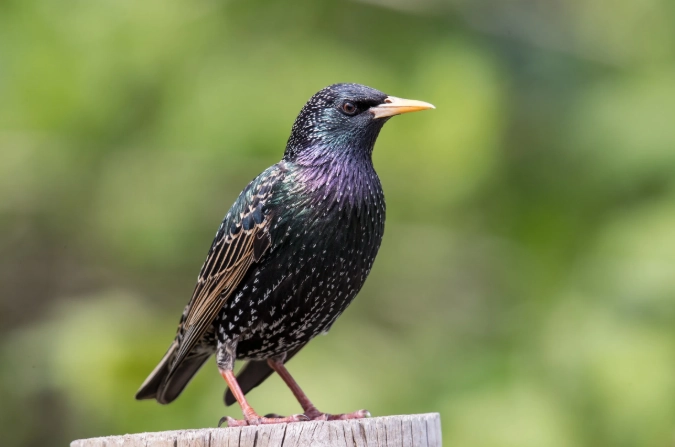
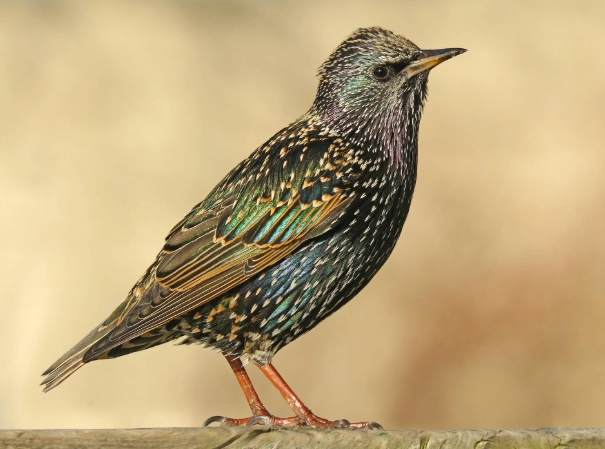
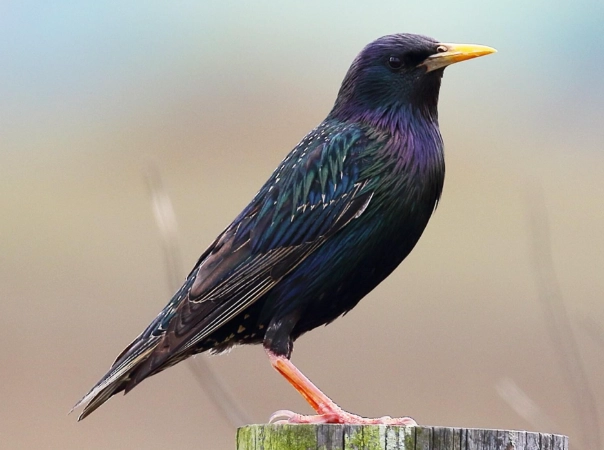
Quick Take: The European starling is a small to medium-sized songbird, about 8-9 inches long. It's stocky with a short tail and long, pointed beak. Up close in good light, its black feathers aren't just black – they're covered in a stunning, iridescent sheen of purple and green, speckled with white or cream spots (especially in winter). From a distance, they just look like chunky, dark birds.
From Shakespeare's Plays to Your Backyard: A Bizarre Introduction
Here's the part that always blows people's minds. Every single one of the roughly 200 million European starlings in North America today can trace its lineage back to about 100 birds released in New York City's Central Park in 1890 and 1891. The man behind it? Eugene Schieffelin, a wealthy drug manufacturer and eccentric who was a member of the American Acclimatization Society. Their goal was to introduce every bird mentioned in the works of William Shakespeare to North America.
Let that sink in. One of the most prolific invasive species on the continent is here because of a literary fan club's project. Schieffelin released the starlings, and they didn't just survive – they exploded. They found a continent full of wide-open habitats (thanks to agriculture and deforestation), plenty of nesting cavities, and few natural predators or competitors for their niche. By 1950, they had spread to the Pacific Coast. It's one of the most rapid and successful vertebrate invasions ever documented. You can read more about this unusual historical account from resources like the U.S. Geological Survey, which tracks invasive species data.
 Talk about unintended consequences.
Spotting a Starling: How to Tell Them Apart
So, you think you see a European starling. How can you be sure? It's easy to confuse them with other blackbirds, especially from a distance. Here’s a breakdown to help you identify them with confidence.
Key Identification Features
Bill: This is a big one. In spring and summer, the bill of a European starling is a bright, lemon yellow. In fall and winter, it darkens to black. It's always straight, sharp, and pointed – perfect for probing into the ground.
Color & Iridescence: Never call them just "blackbirds." Their plumage is a metallic, oily-looking black that shimmers with purple and green in sunlight. In fresh winter plumage, their body is heavily speckled with white or buffy spots. These spots wear away by spring, leaving the breeding adults mostly glossy and dark with less spotting.
Shape & Flight: They have a triangular, short-tailed silhouette, especially in flight. Their wings are pointed and triangular. In flight, they look direct and fast, not soaring or gliding much. In massive flocks (called murmurations), their movements are synchronized and fluid, creating those mesmerizing, shape-shifting clouds in the sky.
| Feature | European Starling | Common Grackle | Brown-headed Cowbird | American Crow |
|---|---|---|---|---|
| Size | 8-9 inches (Robin-sized) | 11-13 inches (Larger) | 6-8 inches (Smaller) | 16-21 inches (Much Larger) |
| Bill Color | Yellow (summer), Black (winter) | Dark, with pale eyes | Short & dark, finch-like | Large, thick, and all black |
| Tail Shape | Short & square | Long, keel-shaped | Short & square | Fan-shaped, rounded |
| Key Markings | Iridescent purple/green, white spots in winter | Iridescent blue/purple head, bronze body | Brown head (male), plain gray-brown (female) | All black, no iridescence |
| Voice | Wheezes, clicks, rattles, mimics other sounds | Harsh, rusty gate "chack" sound | Liquid gurgles and whistles | Loud, classic "caw-caw" |
That table should help clear up most confusion. The grackle's size and long tail are dead giveaways. Cowbirds are duller and smaller. Crows are, well, huge in comparison.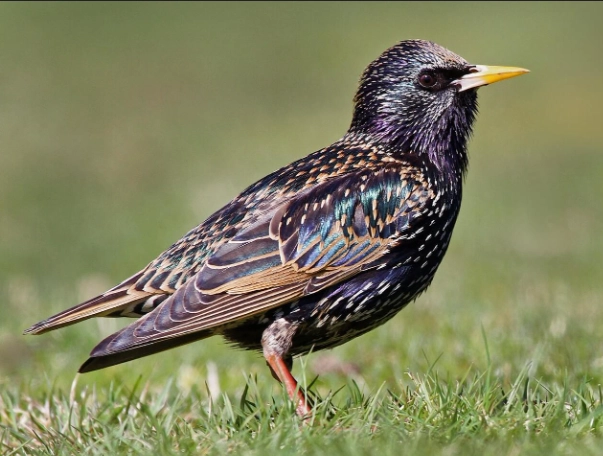
Why the European Starling is a Problem
Okay, so they're here. They're adaptable. Big deal, right? Well, it is a big deal for native wildlife. The success of the European starling comes at a direct cost to other species. The U.S. Department of Agriculture classifies them as an invasive pest species, and for good reason.
The Core Issue: European starlings are cavity-nesters. They don't build open-cup nests in trees. They need holes. And in North America, there's a finite supply of prime tree cavities and nest boxes. They aggressively compete for these spots with native birds that also need them to raise their young.
Direct Impacts on Native Birds
- Eastern Bluebirds, Tree Swallows, Purple Martins: These are the classic victims. A starling will simply take over a nest box, destroying eggs or young and claiming the cavity. Their aggressive nature often deters these smaller, less aggressive natives from even trying. I've seen bluebirds circling a nest box for days, too nervous to enter because a starling is lurking nearby.
- Woodpeckers: Even larger birds like Northern Flickers and Red-headed Woodpeckers can be evicted from their own excavated holes by persistent gangs of starlings.
- General Competition: At feeders, their large, gregarious flocks can quickly deplete food sources, out-competing smaller songbirds.
Agricultural and Economic Damage
This is where the problem hits people's wallets. Massive flocks of European starlings descend on farms, particularly:
- Dairies and Feedlots: They contaminate cattle feed with droppings, which can spread diseases like E. coli and Salmonella. The feed they spoil or eat represents a direct economic loss.
- Orchards and Vineyards: They have a sweet tooth. They peck at and ruin high-value fruit like cherries, grapes, blueberries, and olives. A single flock can devastate a small orchard's yield in an afternoon.
- Grain Farms: They feed on newly planted seeds and mature grain crops.
The USDA's Wildlife Services program spends significant resources managing starling damage. They estimate starlings cause hundreds of millions of dollars in agricultural damage annually. You can find detailed reports on their economic impact through USDA APHIS publications.
 It's not just about birds; it's about farms, food, and money.
Health and Nuisance Concerns
Large roosts of European starlings (sometimes numbering in the tens or even hundreds of thousands) in urban areas create major problems:
- Disease: Their droppings can accumulate and foster fungal spores that cause histoplasmosis, a respiratory disease in humans.
- Structural Damage & Safety: Acidic droppings corrode buildings, bridges, and monuments. Slippery droppings on sidewalks are a hazard. The weight and moisture from a large roost can damage trees.
- Noise: The constant chatter and noise of a large roost near homes is a significant quality-of-life issue for residents.
Managing Starlings: What Actually Works (And What Doesn't)
So, you're convinced the European starling is a problem in your yard, farm, or community. What can you do about it? It's a tough question because they're so smart and adaptable. Complete eradication is impossible and not the goal. The goal is management and exclusion to protect specific, high-value areas.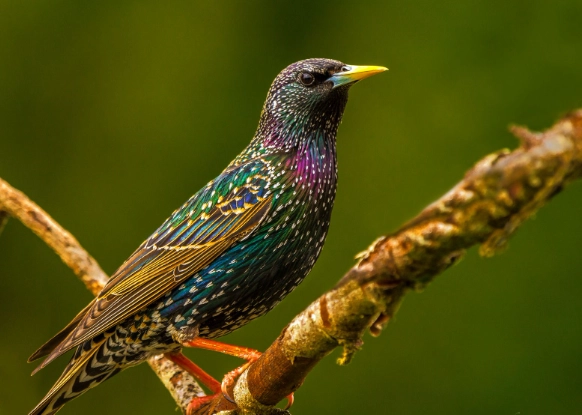
First Principle: Stop Attracting Them. The most effective control is making your property less appealing. If you have a bird feeder, you are likely feeding starlings. They love cheap seed mixes, especially those with millet, cracked corn, and wheat. They'll gobble up suet cakes in seconds.
Strategies for Backyard Birders
If you want to feed songbirds but not starlings, you need to be strategic.
- Food Choice: Switch to foods starlings dislike or can't eat. Use safflower seed in tube feeders. Starlings find it bitter. Use nyjer (thistle) seed in specialized finch feeders—their beaks aren't built for it. Offer whole, in-shell peanuts or black oil sunflower seeds in feeders that require birds to hang or cling.
- Feeder Design: Use feeders with weight-sensitive perches that close the feeding ports under the weight of a heavy starling. Smaller birds like chickadees are light enough to keep them open. Use caged feeders that only allow small birds inside.
- Suet Solutions: Put suet cakes in upside-down feeders or caged suet feeders. Starlings are clumsy at hanging upside-down, while woodpeckers and nuthatches are pros.
- Nest Box Exclusion: Use nest boxes with entrance holes exactly 1.5 inches in diameter. This is large enough for bluebirds and swallows but too small for a European starling to squeeze through. Monitor boxes regularly and remove any starling nesting material immediately.
I switched to safflower and caged tube feeders a few years ago. The starling visits dropped by 90% almost overnight. The downy woodpeckers and finches didn't mind a bit.
For Farmers and Property Managers
On a larger scale, management becomes more complex and often requires a combination of tactics.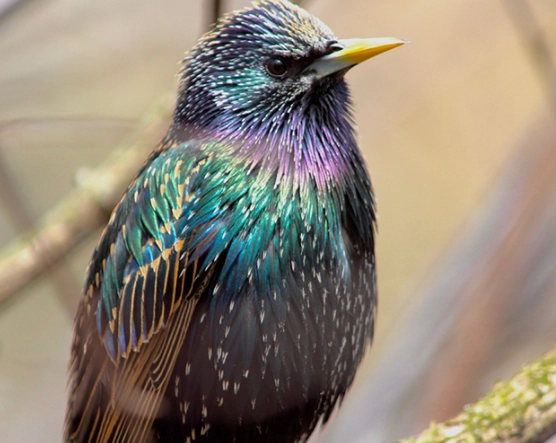
- Exclusion: Netting over high-value fruit crops or sealing buildings to prevent roosting access is the most permanent solution.
- Habitat Modification: Remove standing water, trim trees near buildings to break up flight paths, and manage waste that might attract them.
- Professional Deterrents: This includes visual scare devices (like reflective tape, predator balloons), auditory devices (propane cannons, distress call players), and employing trained birds of prey (falconry). These require constant rotation to prevent starlings from getting used to them.
- Population Management: In specific agricultural settings, lethal control by licensed professionals using toxicants (like DRC-1339, which is restricted) may be permitted under federal permit. This is a last-resort option strictly regulated by the U.S. Fish and Wildlife Service under the Migratory Bird Treaty Act (which, ironically, protects most native birds but lists the starling as an unprotected, non-native species).
It's a constant battle of wits. What works this month might not work next month.
The Other Side of the Coin: Are They Good for Anything?
Even I have to admit, it's not all bad. The European starling story has some fascinating, even beneficial, angles.
Insect Control: Their diet is heavily insect-based during spring and summer. They eat vast quantities of lawn grubs, caterpillars (including some gypsy moth larvae), and other invertebrates. In this role, they can be beneficial to gardens and lawns.
Aerial Phenomenon: The murmuration—the coordinated flight of thousands of starlings at dusk—is one of nature's most breathtaking spectacles. It's a defense mechanism against predators like falcons, and the swirling, fluid patterns are a wonder of collective animal behavior. You can't help but be impressed, even if you know the birds creating it are invaders.
Scientific Value: Their rapid spread and adaptation have made them a textbook case study in invasion biology, population ecology, and evolutionary science. Researchers have learned a tremendous amount about how animals colonize new areas by studying them.
Your European Starling Questions, Answered
Let's tackle some of the specific things people are typing into Google about these birds.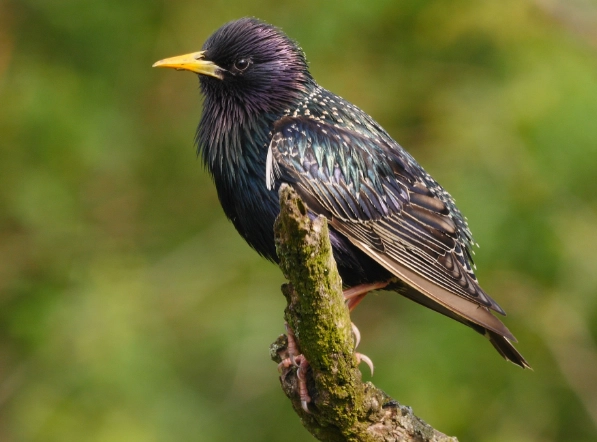
Are European starlings good or bad?
They're both, depending on your perspective. Ecologically, in North America, they are considered harmful due to their negative impact on native cavity-nesting birds. Agriculturally, they are a significant pest. However, they are incredible survivors, provide free insect control, and create awe-inspiring natural displays. Most wildlife agencies and conservationists classify them as a damaging invasive species.
What is the best way to get rid of European starlings?
The "best" way is the most targeted, humane way that solves your specific problem. For a backyard, that's exclusion through feeder and nest box modification. Don't try to poison or shoot them without understanding local and federal regulations. Often, simply changing your bird food is enough to make them go bother your neighbor instead.
Can you eat European starlings?
Technically, yes. They are not protected, and there are historical recipes for starling pie. However, given their diet from urban and agricultural areas, they may bioaccumulate pesticides or other contaminants. I wouldn't recommend it. There are tastier and safer wild game options.
Why are they called "European" starlings?
Because that's where they are native! Their natural range spans across Europe, into western Asia, and northern Africa. They belong there as part of a balanced ecosystem with natural predators and competitors. The name distinguishes them from other, unrelated North American birds sometimes called "starlings" (like the extinct Crested Myna) and highlights their origins.
How long do European starlings live?
In the wild, typically 2-3 years, though they can live longer. The record is held by a banded bird that lived over 15 years. Their high mortality rate is balanced by high reproductive success—they often raise two broods of 4-6 chicks per year.
What should I do if I find a baby European starling?
The same as any baby bird. If it's naked or barely feathered and on the ground, try to find the nest and put it back. If it's fully feathered and hopping around (a fledgling), leave it alone. The parents are almost certainly nearby feeding it. Remember, they are an abundant species. While the instinct to help is good, wildlife rehabilitators are often overwhelmed with native species and may not accept invasive European starlings.
Wrapping It Up: Living with the Invader
The European starling isn't going anywhere. After 130+ years, they're a permanent part of the North American landscape. The question isn't how to erase them, but how to manage their negative impacts while acknowledging their place in our shared environment.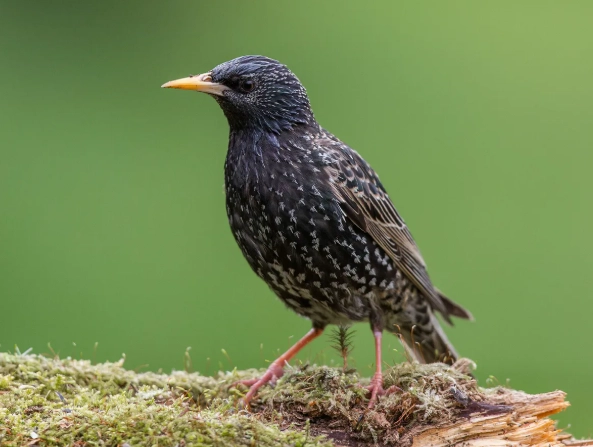
For me, it's about mindful stewardship in my own backyard. I choose bird food that supports the natives I want to see. I maintain nest boxes with the right-sized holes. I take a moment to appreciate the incredible, oily sheen on a starling's feathers when one lands close by—they really are beautiful up close. And then I shoo it away from the safflower feeder.
Understanding the European starling—its history, its biology, and its impact—is the first step in making informed decisions, whether you're a farmer protecting your crops, a city manager dealing with a roost, or just a curious person wondering about the noisy birds at the feeder.
They're a reminder of how a single, seemingly small human action can ripple through an ecosystem for over a century. And they're a testament to the raw, relentless power of nature to adapt, survive, and thrive, even where it doesn't belong.
Reader Comments