That flash of brilliant yellow, the cheerful, bouncing flight, and that distinctive "po-ta-to-chip" call—if you've seen an American Goldfinch, you know it. But there's a lot more to this bird than just pretty feathers. I've spent over a decade watching them in my Illinois backyard and across the Midwest, and I'm still surprised by their habits. Most guides tell you they like nyjer seed (true) and are bright yellow in summer (also true). But they often miss the subtle, practical details that make the difference between casually spotting one and truly understanding—and reliably attracting—this wild canary.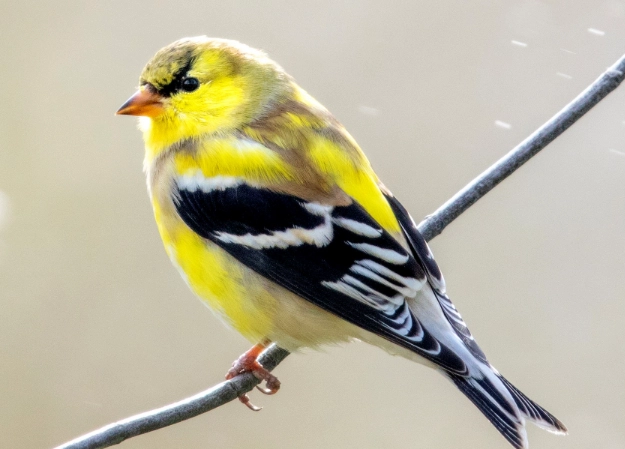
Your Quick Guide to the American Goldfinch
Identifying the American Goldfinch: Beyond the Yellow
Let's get the basics out of the way. The American Goldfinch (Spinus tristis) is a small finch, about 4.5-5 inches long. They're the only finch in North America that goes through a complete molt twice a year, which explains their dramatic wardrobe change. This is where most new birders get tripped up—they look for the summer male year-round and miss the bird entirely in other seasons.
Here’s the seasonal breakdown that most field guides gloss over too quickly:
| Season | Male Appearance | Female Appearance | Key Field Mark (Often Missed) |
|---|---|---|---|
| Spring/Summer | Vibrant lemon-yellow body, black forehead, black wings with white bars. | Duller yellow-olive, with brownish wings. | Both have conical, pinkish bills perfect for seeds. The white patches under the tail are always visible. |
| Fall/Winter | Dulls to a brownish or olive tone, resembling the female. Black cap disappears. | Becomes a plain, unstreaked brownish-gray. | Look for the consistent wing bar pattern (white bars on black wings) and undulating flight. This is the #1 winter ID clue. |
Male vs Female: Spotting the Difference
In summer, it's easy. The male is the poster child. The female is more subdued. In winter, it's nearly impossible for the average observer, and that's okay. Don't stress about it. The real trick is not confusing a winter goldfinch with a similar bird, like a female House Finch (which has a streaked belly) or a Pine Siskin (heavily streaked with a sharp, thin bill).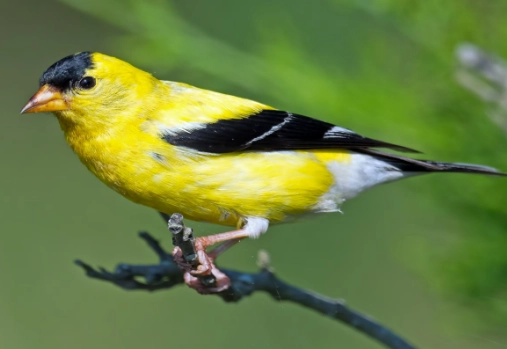
Their call is a dead giveaway. Listen for a four-syllable "po-ta-to-chip" or a sweet, rising "per-chic-o-ree" in flight. Once you know it, you'll hear them before you see them.
Pro Tip from the Field: A huge mistake I see? People spot a dull brownish bird in October and think their goldfinches have left. They haven't. They've just molted. Keep your feeders up. That plain little bird at your thistle sock in January is absolutely an American Goldfinch.
How to Attract American Goldfinches to Your Yard (The Right Way)
You can't just throw up any feeder with any seed and expect these finches. They're late nesters for a reason—they time their breeding to coincide with the peak abundance of seeds from plants like thistles. Your feeding station needs to mimic that natural preference.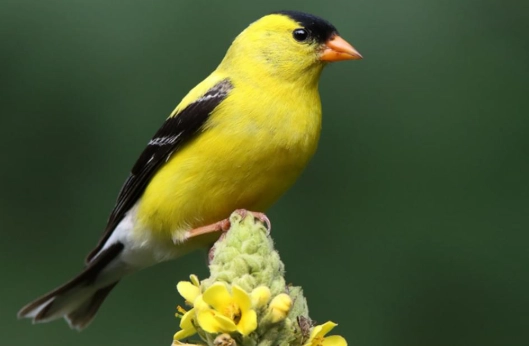
The Goldfinch Feeder Hierarchy:
Forget fancy, decorative feeders. Goldfinches want function.
- Thistle Socks (Mesh Socks): The undisputed champion. These fine-mesh bags hold nyjer seed and allow goldfinches to cling and pick naturally. They're cheap ($5-10) and goldfinches adore them. The downside? They get soggy in rain and need replacing every few months. I buy them in bulk.
- Tube Feeders with Tiny Ports: A more durable option. Get one with only nyjer seed ports (the slits are very small). Avoid mixed seed tube feeders—the ports are too big, seed spills, and you attract house sparrows and squirrels. A good quality one like a Droll Yankees Finch Flocker runs about $25-$40 and lasts years.
- Platform Feeders? Not Ideal. Goldfinches are acrobats. They prefer to hang and feed. Platform feeders expose seed to weather and less agile birds, making them a secondary choice.
The Seed is Non-Negotiable:
Buy fresh nyjer seed (sometimes sold as thistle). Old, dried-out nyjer loses its oil content and appeal. Store it in a cool, dry place. Don't use generic "finch mix" that has millet filler—they'll pick out the nyjer and waste the rest. It's a messy, expensive mistake.
Location, Location, Location:
This is the expert-level tip most blogs omit. Goldfinches are skittish. They like a clear flight path and a quick escape route. Place your feeder 5-10 feet from a tree or large shrub, not right in the thick of it. This gives them a perch to scout from and a dash to safety if a hawk appears. I moved my feeder from under a canopy to the edge of my open yard near a single serviceberry tree, and visitation doubled.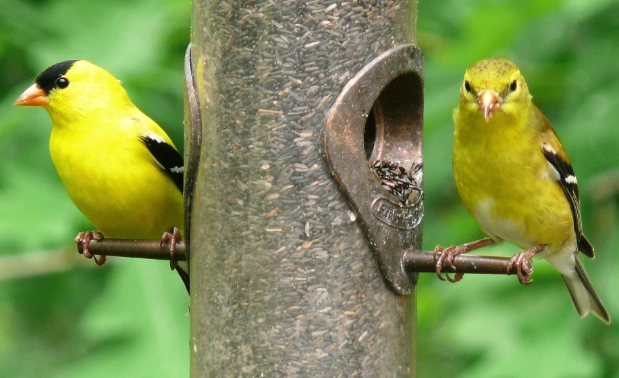
And please, offer a birdbath. A simple, shallow bath with clean, moving water (a dripper or mister) is a goldfinch magnet, especially in late summer.
Surprising Goldfinch Behaviors You Might Miss
Once they're regulars, watch for these fascinating traits that explain why they're such unique backyard birds.
They're Strict Vegetarians. Unlike chickadees or woodpeckers that feed insects to their young, goldfinch chicks get a regurgitated seed slurry. This is a major reason they nest so late (June-August)—they're waiting for seeds to ripen. You'll never see one at a suet cake.
Their Nest is a Work of Art—and Science. The female builds an incredibly tight, cup-shaped nest using plant down (thistle, cattail) and spider silk, which allows the nest to stretch as the chicks grow. It's so well-insulated she can leave the eggs for short periods. Look for nests in late-summer in the fork of a shrub in open areas.
They're Gregarious. You rarely see just one. They move in flocks, even during breeding season in a loose way. In fall and winter, these flocks can number in the hundreds. That chattering chorus at your feeder is normal social behavior.
The "Molting Misfit" Period. In early fall, you might see a patchy bird with blotches of yellow and brown. It's not sick; it's just mid-molt. It looks awkward, but it's a completely normal, if slightly goofy, stage.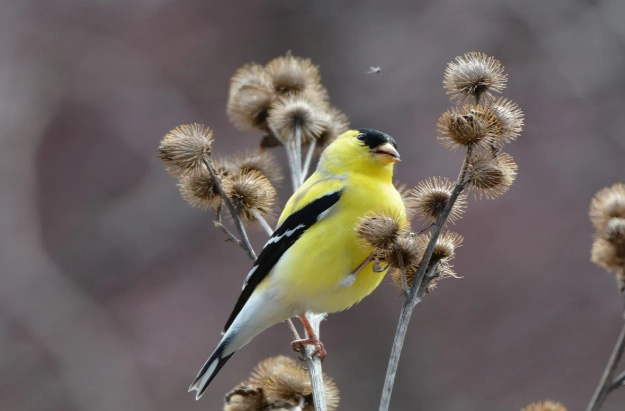
Your American Goldfinch Questions Answered
How do I attract American Goldfinches to a new feeder? They seem to ignore it.
Patience is key—it can take weeks. They find food by sight, not smell. Sprinkle a handful of bright white nyjer seed on top of the feeder and on the ground directly beneath it. This creates a visual "bullseye." Also, ensure the feeder is swaying slightly in the breeze; movement catches their eye better than a static object.
Why did my American Goldfinches disappear in late summer?
You're likely seeing their natural nesting cycle. In peak summer, adults are busy feeding nestlings and may rely more on natural weed seeds (thistle, dandelion) near the nest site, making fewer feeder trips. This is normal. Don't take the feeder down. Their activity will pick up again in early fall as families regroup and natural seeds get depleted.
What plants are best to grow to attract goldfinches naturally?
Plant a buffet they can't resist. Focus on native composites and plants that produce small seeds. Coneflowers (Echinacea), sunflowers, black-eyed Susans, and coreopsis are excellent. Let some of your garden go to seed in the fall instead of deadheading. Also, consider native thistles like Cirsium species (which are not the invasive Canadian thistle) or milkweeds, whose down they use for nesting.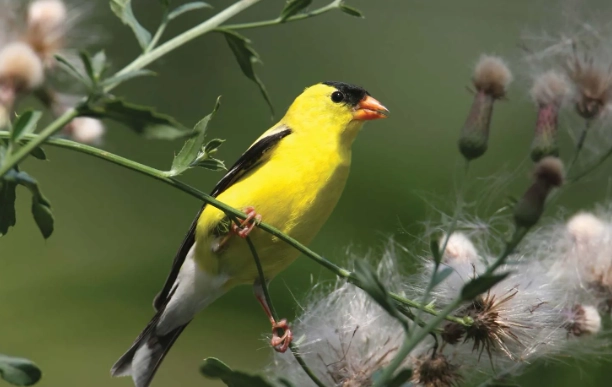
Is there a wrong time to feed American Goldfinches?
Not really. While they are less dependent in summer, a consistent food source is always helpful, especially during sudden cold snaps in spring or fall. The one critical period is late winter/early spring when natural seed stores are lowest. A reliable feeder can be a crucial energy source before their favorite weeds sprout.
How can I tell a young American Goldfinch from a female?
Juveniles in late summer look similar to winter females but are often more buff-colored and have subtly streaked breasts (females are plain). Their behavior is the biggest giveaway: they'll flutter their wings and beg noisily from a parent bird, even at the feeder, long after they look fully grown.
Reader Comments