In This Guide
- Downy Woodpecker Identification: Don't Mistake It for Its Big Cousin
- Behavior and Personality: More Than Just a Hammer
- What Do Downy Woodpeckers Eat? (It's Not Just Your Suet)
- Habitat and Where to Find Them
- Nesting and Family Life
- How to Attract Downy Woodpeckers to Your Yard
- Common Questions About Downy Woodpeckers (Answered)
I remember the first time I positively identified a Downy Woodpecker. It was at my parents' feeder, a tiny black-and-white bird clinging sideways to a suet cage, utterly unfazed by the boisterous chickadees around it. I'd probably seen dozens before but just called them "little woodpeckers." There's something special about putting a name to a face, or in this case, a species to a bird. It turns a casual glance into a moment of connection. If you're here, you're probably looking to make that same connection, to go from "what's that small woodpecker?" to confidently saying, "Ah, a Downy." Let's get into it.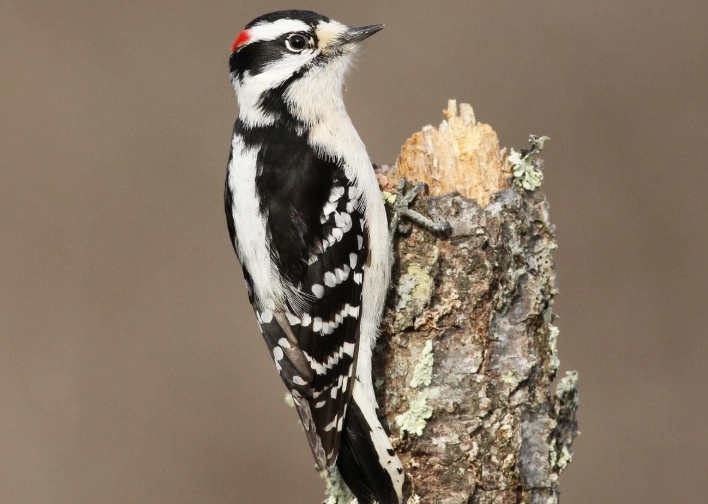
They're common, sure, but never boring. Watching a Downy Woodpecker work a tree branch is a lesson in precision and persistence. This guide isn't just a dry list of facts. I want to give you the real, practical knowledge that helps you spot them, understand them, and maybe even convince one to become a regular visitor to your own space. We'll cover everything from the nitty-gritty of identification (and how to avoid the classic mix-up) to their fascinating behaviors and what they really want from your backyard.
Downy Woodpecker Identification: Don't Mistake It for Its Big Cousin
This is where most people get tripped up. The Downy Woodpecker has a near-identical twin: the Hairy Woodpecker. They're like the sparrows and finches of the woodpecker world – easy to confuse until you know what to look for. I spent my first year of birding getting them wrong more often than I'd like to admit. The key is to look at the details, not just the overall pattern.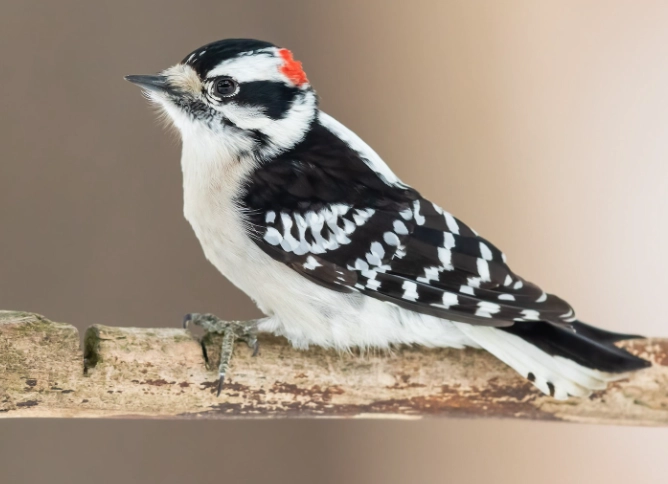
First, the classic Downy look. Picture a bird about the size of a sparrow. Its back is mostly black with a bold white stripe running right down the center. Its wings are black but checkered with neat rows of white spots. The head is strikingly striped – a broad white stripe above the eye, another below, with black running through the eye and forming a sort of "mustache" mark. Males have a brilliant red patch on the back of their head, like a little party hat. Females lack this patch; their heads are simply black and white.
Now, the Hairy Woodpecker looks almost exactly the same... but it's robin-sized. Size is terrible to judge on a lone bird, though. You need better clues.
This is the single most reliable field mark. A Downy Woodpecker's beak is short, stubby, and almost dainty. It looks like a little pick. It's about one-third the length of the bird's head. The Hairy Woodpecker's beak, in contrast, is a formidable weapon – long, chisel-like, and nearly as long as its head. It looks like a tool built for serious excavation. If the beak looks proportional and petite, it's a Downy. If it looks like a prominent, spike-like tool, think Hairy.
Here’s a quick comparison table to keep the differences straight:
| Feature | Downy Woodpecker | Hairy Woodpecker |
|---|---|---|
| Size | Sparrow-sized (~6-7 inches) | Robin-sized (~9-11 inches) |
| Beak | Short, stubby, ~1/3 head length | Long, chisel-like, ~head length |
| Outer Tail Feathers | Usually have black bars or spots | Pure white (usually) |
| Call | Softer, descending "pik" or rattle | Sharper, louder "PEEK!" |
| Drumming | Slower, irregular roll | Fast, even, powerful burst |
Behavior and Personality: More Than Just a Hammer
Once you know it's a Downy, watching its behavior is a joy. They have this endearing, almost clumsy-looking flutter flight. You'll rarely see one just sitting. They're perpetual motion machines, hopping up and down and around tree limbs, often clinging to the tiniest twigs at the very ends of branches – something their heavier cousin, the Hairy, rarely does.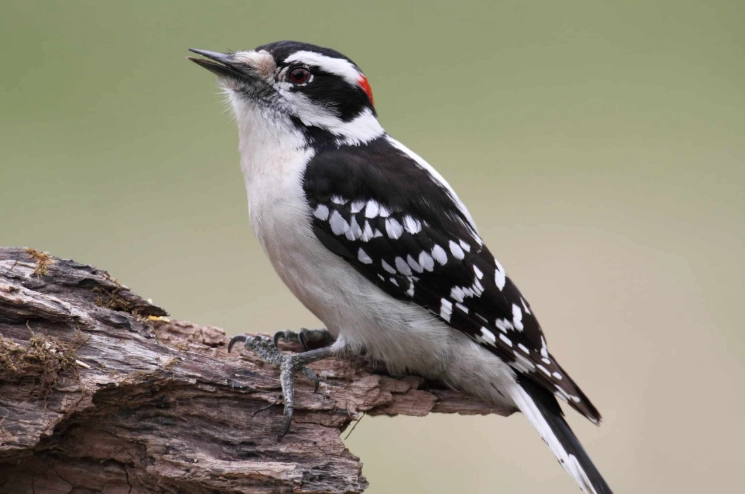
They're incredibly social for woodpeckers. It's very common to see a Downy Woodpecker tagging along with a mixed flock of chickadees, nuthatches, and titmice in the winter. There's safety in numbers, and the Downy gets to benefit from the flock's many eyes while picking off insects the other birds might flush out. I've always thought they look like the official inspector of the flock, checking the trees the others might have missed.
Their drumming isn't just about finding food. In spring, it's a territorial declaration and a love song. That rapid tattoo on a resonant dead branch says, "I'm here, this is my spot, and I'm looking for a mate." It's amazing how much communication is packed into that sound.
What Do Downy Woodpeckers Eat? (It's Not Just Your Suet)
This is key if you want to attract them. They're primarily insectivores, but they're pragmatic and adaptable eaters. Their diet shifts with the seasons, which is smart if you think about it.
- Insects & Larvae (The Main Course): This is their natural, year-round staple. They're experts at finding hidden prey. They'll expertly pick beetle larvae (like wood-boring beetles), ants, caterpillars, and spiders from bark crevices, under lichen, and inside plant galls. They have barbed tongues perfect for spearing and extracting grubs from tunnels.
- Plant Matter (The Side Dishes): They supplement their diet with berries, acorns, and grains. In my yard, they're particularly fond of the poison ivy berries in fall (a service I greatly appreciate!).
- Backyard Buffet (What You Can Provide): This is where they become easy guests. They love suet. I mean, they go crazy for it. A simple cage of plain beef suet is like a five-star restaurant. They also readily eat black oil sunflower seeds, especially from tube feeders or platforms where they can cling. Peanuts, either in the shell or shelled pieces, are another huge hit. They'll even sip from hummingbird feeders or oriole feeders for the sugar water on occasion.
Ever wonder how they eat without getting a headache? Their skulls have special shock-absorbing adaptations – spongy bone, unique muscle arrangements, and a cleverly designed hyoid bone (the tongue bone) that wraps around the skull to act as a cushion. It's a brilliant piece of natural engineering you can read more about from the National Audubon Society.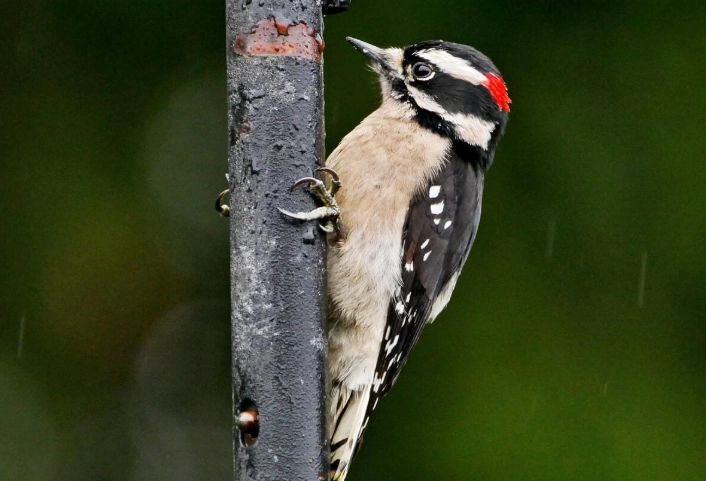
Habitat and Where to Find Them
The Downy Woodpecker's secret to success is its lack of pickiness. While many woodpeckers need large tracts of mature forest, the Downy is a generalist. You can find them just about anywhere there are trees.
Deciduous woods are their classic home, especially areas with lots of dead and dying trees (snags). These "bug hotels" are their pantries. But they've adapted beautifully to human landscapes. Parks, orchards, tree-lined streets, and of course, backyards with a few mature trees are all prime Downy real estate. I've even seen them in small woodlots in the middle of farmland.
They're resident birds, meaning they don't typically migrate. The pair you see in summer is likely staying put all winter, which is great news for us backyard watchers. They just have to work a little harder when the insect supply is dormant.
Nesting and Family Life
Come spring, the drumming intensifies. Once a pair bonds, they get down to the serious business of real estate. Both the male and female Downy Woodpecker excavate the nest cavity, which is a lot of work for such small birds. They typically choose a dead tree or a dead branch on a live tree, often between 5 and 50 feet off the ground.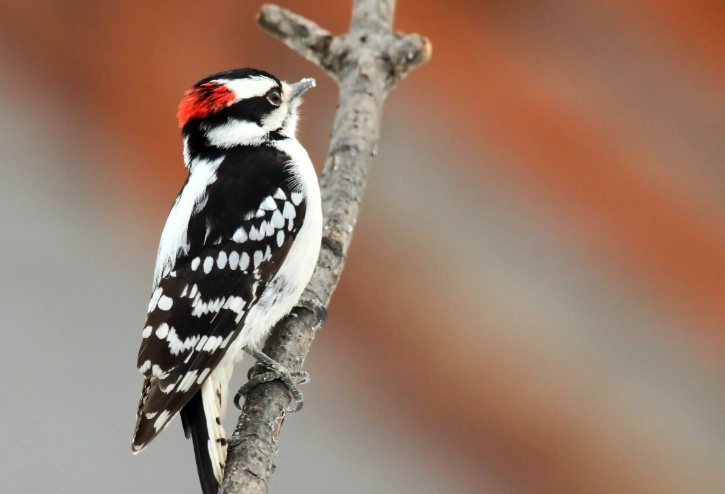
The entrance hole is a neat, perfectly round circle, usually just over an inch in diameter – just big enough for them to squeeze through. Inside, they carve out a gourd-shaped chamber. They don't add any nesting material; the wood chips from excavation form the floor.
The female lays 3-6 pure white eggs. Both parents take turns incubating them for about 12 days. Once the blind, naked chicks hatch, it's a non-stop feeding frenzy for both adults for the next 3 weeks or so. The nest gets very, very messy. After the young fledge, you'll often see the family group sticking together for a while, the juveniles following the parents and begging noisily for food as they learn to forage. It's a noisy, charming time of year.
How to Attract Downy Woodpeckers to Your Yard
Want to see a Downy Woodpecker up close? It's surprisingly straightforward. You're not trying to lure a rare tropical bird; you're just making your space a bit more welcoming to a common but delightful neighbor. Think like a Downy: they need food, water, and shelter.
- Offer the Right Food: This is your biggest draw. Hang a suet feeder. It's the single most effective thing you can do. Complement it with a feeder offering shelled peanuts or black oil sunflower seeds. A tail-prop feeder is ideal, but a simple platform or tray works too.
- Leave Dead Wood: If it's safe (not threatening your house or a path), leave a dead tree or a few dead limbs standing. This provides natural foraging sites and potential future nest sites. It tells the birds, "This is a good insect-hunting ground."
- Provide Water: A birdbath, especially one with a gentle dripper or mister, is a huge attractant. Woodpeckers need to drink and bathe too. Heated birdbaths are fantastic for winter.
- Consider a Nest Box: You can buy or build a specific Downy Woodpecker nest box. The specs are crucial: the entrance hole must be exactly 1 1/4 inches in diameter. Any larger, and starlings or other birds will take over. Mount it on a tree trunk, 10-20 feet high, facing east or north if possible. The NestWatch project has excellent, science-based plans.
- Go Natural with Pest Control: The fewer pesticides you use, the more insects (i.e., Downy food) you'll have in your yard.
Be patient. It might take a few weeks for them to discover your offerings, but once they do, they'll often become daily regulars.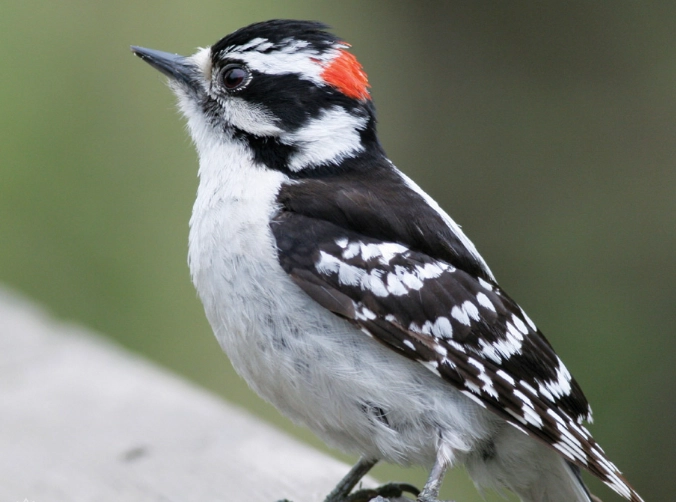
Common Questions About Downy Woodpeckers (Answered)
A Final Thought on Enjoying Them
Birding, for me, has always been about slowing down and noticing the details. The Downy Woodpecker is a perfect subject for that. It's common enough that you have a good chance of finding one, but fascinating enough to reward close observation. Listen for that soft pik call. Watch the way it hitches itself up a branch. Notice the flash of red if it's a male.
They're a resilient, adaptable little bird that has figured out how to thrive alongside us. By offering a bit of food, tolerating some dead wood, and providing clean water, we can easily invite them into our daily view. And there's something genuinely uplifting about seeing that small, busy, black-and-white bird going about its business, a tiny hammer in a world of giants.
Reader Comments