Hear a cat meowing in the bushes but see no cat? That's your first clue you've got a gray catbird nearby. These birds are everywhere in eastern North America, yet most people walk right past them. I've spent a decade tracking them, and let me tell you, once you know what to look for, they're impossible to miss. This guide cuts through the noise—no fluff, just straight facts and hard-won tips to help you identify, find, and even attract gray catbirds. We'll start with the basics, then dive into the stuff most guides skip.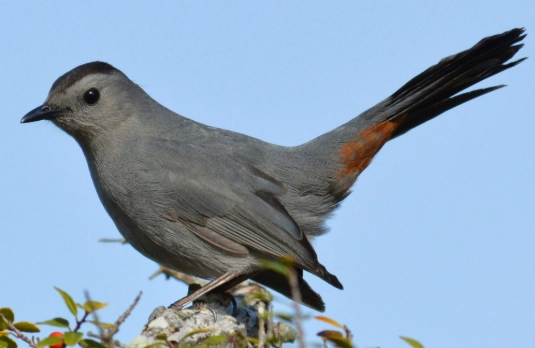
Jump Straight to What You Need
How to Identify a Gray Catbird: Beyond the Basics
Most websites say "gray bird with a black cap." True, but that's like describing a car as "red with wheels." Here's what actually works in the field.
Physical Appearance: The Details Everyone Misses
Gray catbirds (Dumetella carolinensis) are about the size of a robin, but slimmer. Uniform slate gray all over—no streaks, no spots. The black cap on the head is subtle; you need good light to see it. Under the tail, there's a rusty-red patch called the "crissum." That's your secret weapon. When the bird flies, flash that patch, and you've got a positive ID. The bill is black and thin, perfect for snagging insects.
I once watched a beginner confuse it with a juvenile northern mockingbird. The mockingbird had faint breast streaks and a longer tail. Catbirds keep it clean.
Vocalizations: The Famous Cat Call and More
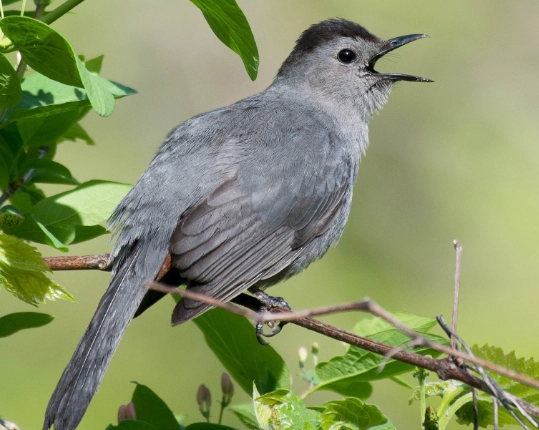
Yes, they meow like a cat. It's a nasal "mew" sound, often given when alarmed. But they're also incredible mimics. According to the Cornell Lab of Ornithology, gray catbirds can imitate over 100 different species, from warblers to frogs. The difference from a mockingbird? Catbirds mix their mimicry into longer, rambling songs without repeating phrases. Listen for a jumble of notes ending with that cat-like mew.
Pro tip: In spring, males sing from hidden perches. If you hear a bizarre soundtrack from a thicket, think catbird.
Where and When to Find Gray Catbirds (Specific Spots)
They're not picky, but they have preferences. Forget open fields; think edges and tangles.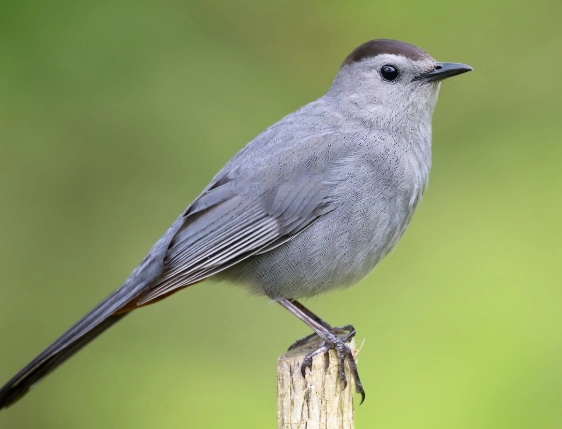
Preferred Habitats: From Backyards to Wilds
Gray catbirds love dense, shrubby areas. Overgrown fields, forest edges, stream banks, and yes, suburban gardens with lots of bushes. In the East, check places like Central Park in New York (the North Woods section) or the Morton Arboretum in Illinois. They avoid deep forests and wide-open spaces.
During breeding season (May to July), they're widespread across the eastern U.S. and southern Canada. In winter, they head to the Gulf Coast, Mexico, and Central America. Migration peaks in September—great time to spot them in coastal areas like Cape May, New Jersey.
Migration Patterns: Timing Your Observations
They arrive in the north around late April, leave by October. In the South, some stick around year-round. I've found that early morning, just after sunrise, is golden. They're foraging then, less shy. Midday? They vanish into cover.
Quick Habitat Cheat Sheet: Look for dense shrubs (dogwood, sumac), near water sources, in parks or your own backyard if it's messy. Avoid perfectly trimmed lawns.
Gray Catbird Behavior: What They Really Do All Day
These birds are secretive but curious. They forage on the ground, flipping leaves for insects. Diet is 60% insects (beetles, caterpillars) and 40% fruits (berries, grapes). In fall, they go crazy for dogwood berries.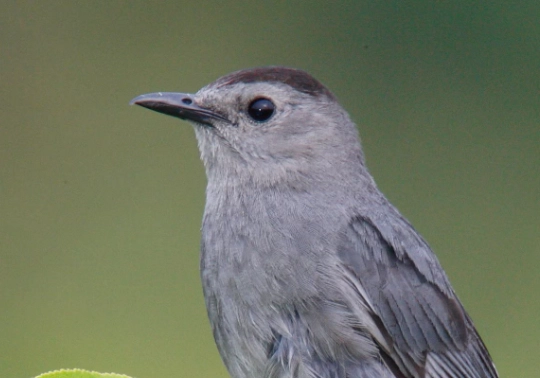
Nesting is low—usually 3-6 feet off the ground in thick bushes. The nest is a messy cup of twigs, lined with grass. Both parents feed the young. They're monogamous for the season.
One thing I've noticed: catbirds are bold around feeders once they trust the area. They'll chase off smaller birds but back down from jays.
How to Attract Gray Catbirds to Your Yard: A Step-by-Step Plan
Want them to visit? It's not about fancy feeders. It's about creating a catbird-friendly zone.
Food and Feeders: Skip the Seeds
Gray catbirds ignore traditional seed feeders. Instead, offer:
- Live mealworms: Place them in a shallow dish on the ground or a platform feeder. I use a ceramic saucer—easy to clean.
- Fruits: Chopped apples, raisins (soaked in water to soften), or berries like elderberry, mulberry, or serviceberry. A fruit feeder or just scatter on the ground.
- Water: A birdbath with fresh water, changed daily. They love to bathe and drink.
Don't waste money on suet; they might peek at it but rarely eat it.
Shelter and Nesting Sites: The Make-or-Break Factor
Plant native shrubs that provide cover and food. Examples: dogwood, viburnum, blackberry brambles. Leave some areas unpruned—catbirds need that tangled security. A brush pile in a corner works wonders.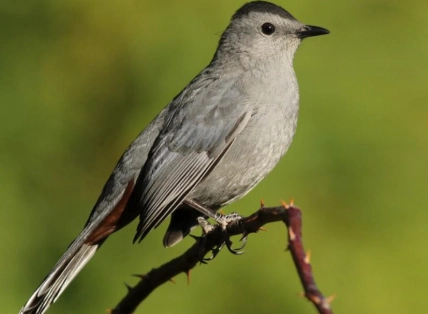
I helped a friend in Ohio transform her yard. She added a water feature and let her hedges grow wild. Within a month, catbirds showed up. Now they nest there every year.
| Attraction Element | What to Do | Why It Works |
|---|---|---|
| Food | Offer mealworms and berries | Matches natural diet; insects for protein, fruits for energy |
| Water | Install a shallow birdbath | Essential for drinking and bathing; catbirds are drawn to sound of dripping water |
| Shelter | Plant dense native shrubs | Provides hiding spots from predators and nesting sites |
| Avoid Pesticides | Go organic in your garden | Insects are their main food; chemicals reduce prey availability |
Common Mistakes Even Experienced Birders Make
Here's where I see people go wrong. First, relying too much on visuals. In low light, that gray bird could be anything. Always listen for the call. Second, assuming catbirds are rare. They're common but stealthy—you need patience. Third, trying to attract them with seed mixes. I've watched folks set up expensive feeders only to get sparrows. Save your cash.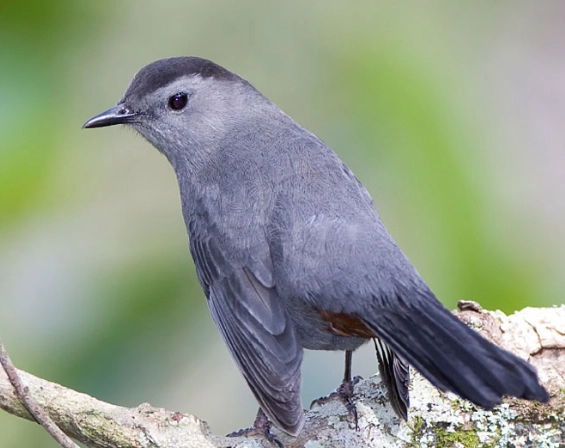
Another subtle error: misjudging habitat. Catbirds avoid pure evergreen stands; they prefer deciduous thickets. If you're in a pine forest, you're wasting time.
My own blunder: Years ago, I spent hours waiting at a feeder station with seeds. Not a single catbird. Then I moved to a brushy area with mealworms—bingo. Lesson learned: work with their habits, not against them.
Your Burning Questions Answered
Gray catbirds are more than just a gray blur in the bushes. With these tips, you'll start seeing them everywhere. Grab your binoculars, head to a local park with thickets, and listen for that meow. Happy birding!
Reader Comments