Quick Guide
- Meet the House Wren: More Than Just a Brown Bird
- The House Wren's Voice: Nature's Most Persistent Playlist
- House Wren Nesting Habits: A Story of Persistence and Peculiarity
- Attracting House Wrens to Your Yard: A How-To Guide
- Frequently Asked Questions About House Wrens
- The Bigger Picture: Conservation and Your Role
You're puttering around in the garden, or maybe just enjoying a coffee on the porch, when you hear it. It's not a melody, not really. It's more like a burst of energetic, chattering notes—a bubbly, cheerful, and almost impossibly loud song coming from a nearby bush. You peer into the foliage and see... well, not much. A tiny, plain brown bird, vibrating with energy. Congratulations, you've just met the house wren.
Honestly, if birds were judged on looks alone, the house wren (Troglodytes aedon) might get overlooked. It's small, brown, and lacks the flashy colors of a cardinal or a blue jay. But what it lacks in plumage, it makes up for tenfold in personality, voice, and sheer fascinating behavior. This little bird is a powerhouse, a master of its domain, and one of the most common yet misunderstood summer residents across the continent.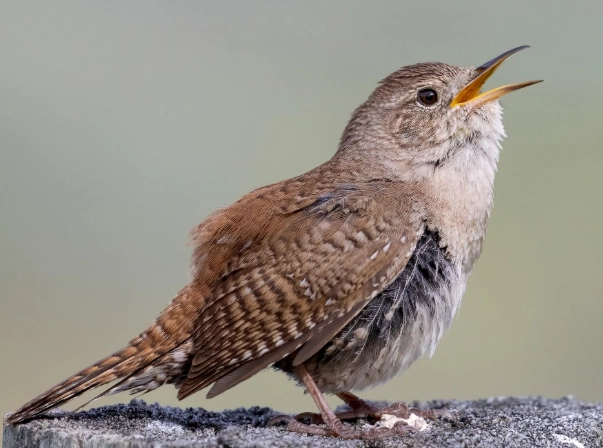
Why should you care about this little brown bird? Because understanding the house wren unlocks a whole new layer of your backyard ecosystem. It's the bird that teaches you about insect control, fierce parental instincts, and architectural quirks that are, frankly, bizarre. If you've ever wondered why a nest box you put up stays empty, or why other birds seem to avoid a certain part of your yard, the house wren might be the surprising answer.
Meet the House Wren: More Than Just a Brown Bird
Let's get the basic description out of the way. The house wren is a classic "little brown job"—a term birders use for all those small, drab, hard-to-identify birds. But once you know what to look for, it's quite distinct.
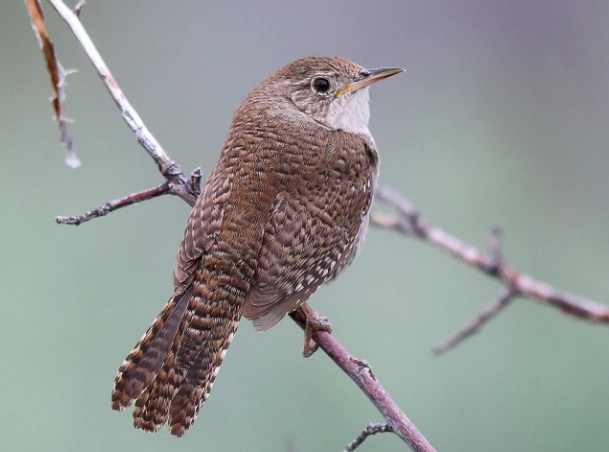
We're talking about a very small songbird, only about 4.5 to 5 inches long (roughly the size of a golf ball with a tail). Its body is a subdued brown overall, warmer and richer on the back and wings, and a bit paler and grayer on the throat and belly. The key field marks are subtle but important: fine, dark barring on the wings and tail (you often need binoculars to see this clearly), a relatively long, thin bill that curves slightly downward, and that trademark cocked-up tail. A house wren never seems to hold its tail still; it's almost always pointed upward at a jaunty angle, which gives it a perky, alert posture.
Males and females look virtually identical, which is common in wrens. Juveniles look similar but are often slightly buffer and lack the crisp barring of the adults.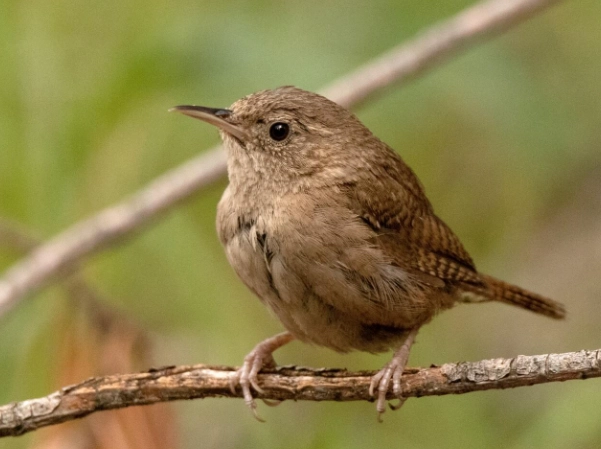
Their range is massive. According to the Cornell Lab of Ornithology's definitive guide, house wrens breed across almost the entire United States and southern Canada. They winter in the southernmost U.S. and throughout Mexico and Central America. I've seen them in suburban backyards in Ohio, scrubby fields in Colorado, and even at the edge of woodlots in upstate New York. They are incredibly adaptable.
Their preferred habitat is what ecologists call "edge habitat." They love areas where open land meets bushes and trees. Think overgrown fields, forest edges, streamside thickets, and, of course, the quintessential habitat: human-altered spaces. Parks, gardens, orchards, and backyards with a mix of lawn, flowerbeds, and shrubbery are house wren heaven. They need some open space for foraging and dense, tangled cover for nesting and hiding.
"The House Wren is perhaps the best-known and most widely distributed member of the wren family in North America." — This isn't just my opinion; it's a foundational fact stated by the Birds of the World project, the most authoritative scientific resource on birds, maintained by the Cornell Lab.
Here’s a quick visual breakdown of how to tell a house wren apart from other common small brown birds. It’s trickier than you think, especially with its cousin, the winter wren.
| Bird | Size & Shape | Key Markings | Tail Position | Common Habitat |
|---|---|---|---|---|
| House Wren | Small (4.5-5"), slender, long thin bill. | Plain brown, fine barring on wings/tail. | Often cocked up. | Backyards, shrubby edges, open woods. |
| Carolina Wren | Larger (5.5"), stockier, bold white eyebrow. | Rich reddish-brown, bold white eyebrow stripe. | Often cocked up. | Dense undergrowth, wooded suburbs. |
| Winter Wren | Tiny (4"), very short tail, almost round. | Darker brown, heavily barred all over. | Stubby, held down. | Dark, damp forests with fallen logs. |
| Song Sparrow | Larger (6"), stocky, thick seed-eating bill. | Heavily streaked breast with central spot. | Long, rounded, not cocked. | Thickets, marshes, brushy areas. |
See? The house wren is in a class of its own. That plainness is its signature.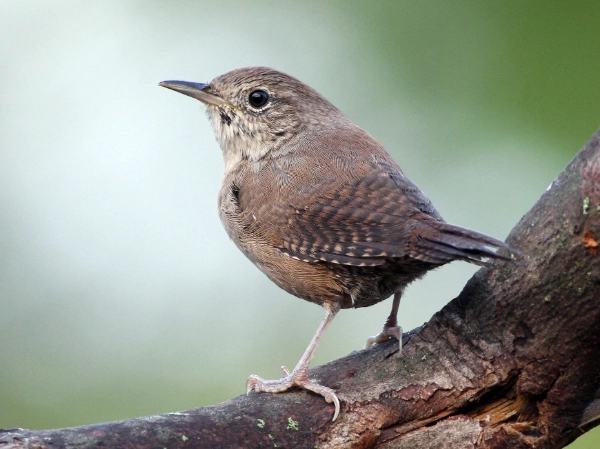
The House Wren's Voice: Nature's Most Persistent Playlist
If the look is underwhelming, the sound is anything but. This is where the house wren truly shines. The male's song is one of the defining sounds of a North American summer. It's not beautiful in a melodic, thrush-like way. It's energetic, complex, and relentless.
Close your eyes and imagine a rapid, bubbling, chattering series of notes, tumbling over each other with no apparent pattern. It's often described as a musical chatter or a effervescent burble. There's a slight gurgling quality to it. A typical song lasts 2-4 seconds but is repeated incessantly. I mean, we're talking 10-15 times per minute, from before dawn until after dusk. During the peak of the breeding season, a male house wren might sing over 500 times in a single hour. It's exhausting just thinking about it.
Why so much noise? It's all about real estate and romance. The song serves two main purposes:
- Territory Defense: It's a sonic "No Vacancy" sign to other male house wrens. The message is clear: "This tangle of bushes, this nest box, this whole corner of the yard is MINE."
- Attracting a Mate: For females, the song is an advertisement of the male's vitality and the quality of his territory. A male who can sing loudly and frequently while also gathering nesting material is showing he's a top-tier provider.
The calls are different. Both males and females use a harsh, scolding churr or check-check-check sound when alarmed or agitated. If you get too close to a nest, you'll definitely hear this raspy scold. It's a sound that once you learn it, you'll recognize instantly. It's the sound of a tiny bird telling you, in no uncertain terms, to back off.
I remember one summer, a male house wren decided the lilac bush right outside my home office window was his prime territory. For two solid weeks, his song was the soundtrack to my workday. At first, it was charming. By day three, it was impressive. By the end of the first week, I found myself muttering, "Dude, take a breath!" It was a masterclass in avian persistence. You can (and should) listen to recordings on the Macaulay Library to get the full, unrelenting effect.
House Wren Nesting Habits: A Story of Persistence and Peculiarity
This is where the house wren goes from charming to downright fascinating (and slightly controversial among bird lovers). Their nesting behavior is unique, complex, and reveals a surprisingly ruthless side.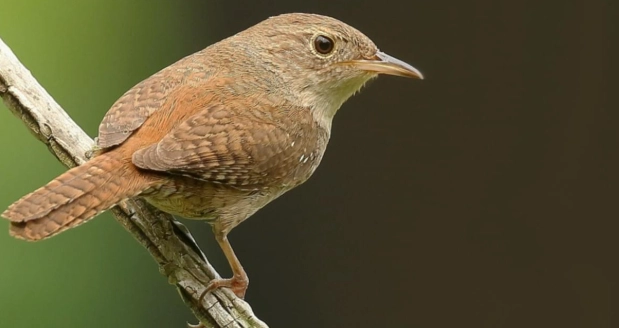
House wrens are cavity nesters. They don't build the beautiful, woven hanging nests of orioles or the mud cups of robins. They need a hole. But they're not picky about the source. Natural tree cavities, old woodpecker holes, gaps in buildings, mailboxes, coat pockets left in a shed (true story!), and, most commonly, bird nest boxes are all fair game.
The male arrives first on the breeding grounds and immediately starts claiming potential nest sites. He doesn't just claim one. He'll often stuff twigs into multiple cavities within his territory—sometimes 5, 10, or even more. These are called "dummy nests" or "cock nests." It's a way of monopolizing the real estate and keeping competitors out. The female then arrives, inspects his handiwork, and chooses one cavity to actually build the real nest in.
Now, the real nest construction begins. And it's a marvel of... well, let's call it eclectic engineering. The pair will line the chosen cavity with a soft cup made of a wild variety of materials:
- Grass, moss, and plant fibers (the basics).
- Feathers (a prized lining material).
- Snakeskin (believed to deter predators, though this is debated).
- Bits of plastic, string, cloth, or paper (they readily adapt to human debris).
- Spider egg sacs (a creepy-crawly but common find).
The female lays 5-8 tiny, speckled white eggs and incubates them for about 12-16 days. Both parents feed the voracious chicks, which fledge (leave the nest) in another 12-18 days. And here's the kicker: house wrens frequently raise two broods in a single summer, especially in the southern parts of their range.
The Controversial Side: The House Wren as a Bully
Okay, let's talk about the elephant in the room. The house wren has a dark habit. To reduce competition for their own nest sites, they are notorious for destroying the eggs and nests of other cavity-nesting birds. This behavior, called "interspecific nest destruction," is well-documented. They have been observed piercing the eggs of bluebirds, tree swallows, chickadees, and even other house wrens in neighboring territories.
It's a brutal but effective evolutionary strategy. By eliminating potential competitors' offspring, they ensure more resources for their own young. From a human, emotional perspective, it's hard to watch if you're a bluebird landlord. From a pure survival perspective, it's brutally logical. This is why you'll often hear advice to place bluebird houses and house wren boxes far apart (at least 100 feet, preferably more).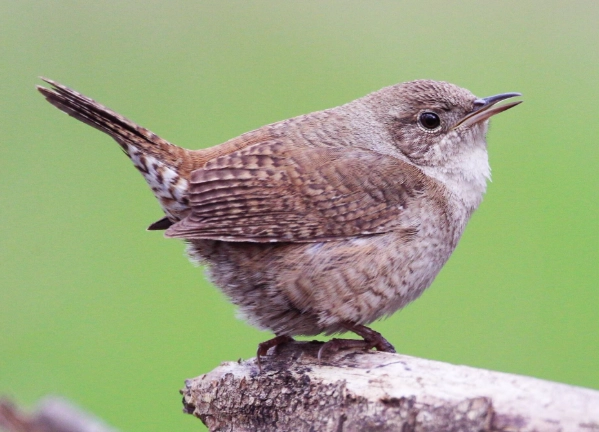
Thinking like a house wren: If you see a nest box filled to the brim with a chaotic pile of twigs, that's almost certainly the work of a male house wren claiming it. It doesn't necessarily mean they'll nest there, but it does mean they've claimed the territory.
Attracting House Wrens to Your Yard: A How-To Guide
Do you want to attract house wrens? After reading about their nest-destroying habits, you might be hesitant. But for many, their energetic presence, insect-eating prowess, and fascinating behavior far outweigh the negatives. If you want to roll out the welcome mat, here’s what you need to do.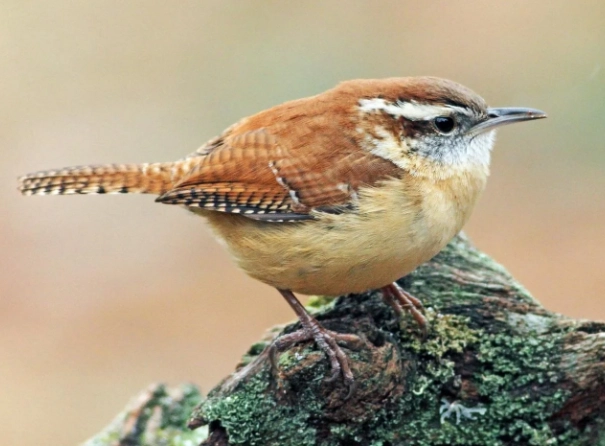
1. Provide the Right Nest Box: This is the single most effective step. A proper house wren nest box is different from a bluebird box.
- Entrance Hole: 1 to 1.25 inches in diameter. This is small enough to exclude larger birds like starlings but perfect for a wren.
- No Perch: Perches are just landing pads for predators. Leave it off.
- Placement: Mount it 5-10 feet high on a tree, fence post, or pole. Place it near or within dense shrubbery or a vine-covered trellis. They feel safer with quick cover nearby.
- No Fuss Cleaning: Unlike bluebird boxes that need meticulous cleaning, you can simply remove the old house wren nest at the end of the season. They often rebuild from scratch anyway.
2. Cultivate a "Messy" Habitat: Forget the perfectly manicured lawn. House wrens thrive in yards that are a little wild.
- Leave a brush pile in a corner.
- Plant native shrubs and bushes that create dense, tangled cover (e.g., dogwood, serviceberry, spicebush).
- Let a section of your yard grow tall with wildflowers and grasses.
3. Offer Food (Indirectly): You will never see a house wren at a seed feeder. They are 99% insectivores. Their diet is a gardener's dream:
- Spiders, beetles, caterpillars, grasshoppers, flies, and ants.
- They also eat snails and even small slugs.
The best way to "feed" them is to avoid pesticides and cultivate a healthy, bug-friendly garden. They are natural pest control. A study cited by the American Bird Conservancy highlights how vital these insect-eating birds are for controlling agricultural and garden pests.
4. Provide Water: A simple birdbath, especially one placed near cover, will be used for drinking and bathing. Keep it clean and shallow.
Do all this, and you have a very good chance of hosting a pair. Just be prepared for the non-stop soundtrack.
Frequently Asked Questions About House Wrens
Are house wrens good to have around?
Mostly, yes! They are fantastic for natural insect control. The downside is their aggressive behavior towards other cavity nesters. It's a trade-off. If your goal is biodiversity and you're trying to attract bluebirds, they can be a nuisance. If you just enjoy lively, active birds and don't mind their tactics, they're wonderful.
Why is a house wren singing all day and night?
They don't typically sing at night. Their marathon singing sessions are a daytime phenomenon, especially at dawn and dusk. If you're hearing similar sounds at night, it's likely an insect like a cricket or katydid, or a different bird like a mockingbird. The male house wren's daytime dedication is just that intense.
Do house wrens use the same nest twice?
Rarely for a second brood in the same season, and almost never the following year. The female usually builds a fresh nest for her second brood, often in a different cavity. The old nests become infested with mites and parasites, so starting fresh is healthier. Always clean out nest boxes in the fall or late winter to encourage new tenants.
What's the difference between a house wren and a winter wren?
This is a classic ID challenge. The winter wren is smaller, darker, and much more heavily barred all over its body, including the belly. Its most telling feature is its extremely short, stubby tail, which it usually holds down, not cocked up. Behaviorally, winter wrens are secretive denizens of dark, moist forests, while house wrens are bold residents of sunny backyards.
How can I discourage house wrens from taking over my bluebird box?
This is the million-dollar question for bluebird enthusiasts. Strategies include:
- Distance: Place bluebird boxes in open areas, at least 100-200 feet from dense shrubbery where wrens hunt.
- Pairing Boxes: Some people have success putting up a house wren box closer to the shrubs, hoping the wrens will choose it and leave the more distant bluebird box alone.
- Monitoring: During the early nesting season (when males are stuffing twigs), you can remove the twigs from the bluebird box daily. This can discourage the wren, as it's a lot of work for him. However, be persistent and always ensure no eggs are present before disturbing a box.
I tried the "pairing boxes" strategy one year. I put a wren box right in my overgrown raspberry patch and a bluebird box out in the open part of the yard. The wrens took the raspberry patch box immediately and completely ignored the bluebird box, which was later claimed by a pair of tree swallows. It felt like a small diplomatic victory.
The Bigger Picture: Conservation and Your Role
The good news is that the house wren is a common and adaptable species. The Partners in Flight database lists its population as stable, with an estimated global breeding population of 84 million. It's not a species of immediate conservation concern.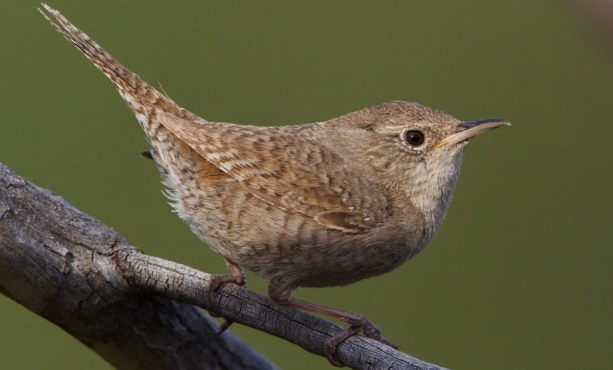
But that doesn't mean they don't face threats. The widespread use of pesticides reduces their insect food supply. The overly tidy clearing of farmland and suburban "clean-up" of brush piles and dead trees removes the very habitat they need for foraging and finding natural nest sites.
By choosing to share your space with house wrens, you're doing a few important things.
You're supporting a native insectivore. You're accepting a piece of untamed nature, complete with its complex and sometimes uncomfortable realities. You're creating a space that is more than just a lawn—it's a functioning ecosystem.
So the next time you hear that exuberant, chattering song erupt from your lilac bush, take a moment. Don't just dismiss it as background noise. Grab your binoculars, peek into the shadows of the foliage, and look for that small, brown bird with the cocked-up tail. Watch it dart after a spider or struggle to maneuver a twig twice its size into a crevice.
You're not just looking at a bird. You're witnessing a tiny, persistent, and utterly fascinating force of nature. The house wren may be common, but it is never ordinary.
Reader Comments