Let's be honest. The Orange Crowned Warbler (Leiothlypis celata) is the bird that makes even experienced birders second-guess themselves. It's not flashy. It doesn't have the bold black mask of a Common Yellowthroat or the brilliant yellow of a Wilson's Warbler. For years, I'd dismiss them as "just another drab fall warbler" or even a female Yellow-rumped Warbler. That changed one rainy April morning in a Seattle park.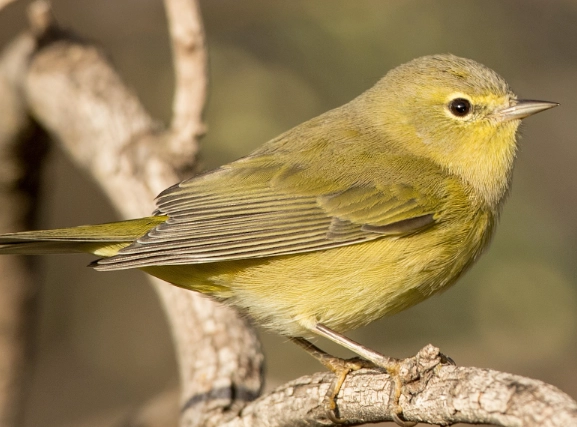
I was scanning a thicket of willows, hoping for something more exciting. A small, olive-green bird flitted down to a puddle, took a quick sip, and vanished back into the foliage. No bright markings. Just a faint, broken eye-ring and the subtlest hint of yellow under the tail. It was the definition of plain. But something about its deliberate, somewhat sluggish movement clicked. I raised my binoculars just as it turned its head, and in the perfect angle of the gray light, I saw it: a tiny, smudged patch of orange feathers on its crown. It was there for a second, then gone as the bird preened. That was my first real, confident ID of an Orange Crowned Warbler, and it taught me more about birding than a dozen textbook-perfect views of a Scarlet Tanager.
This bird isn't about a single "wow" feature. It's about the whole package—behavior, habitat, voice, and a collection of subtle clues. If you're tired of letting these birds slip by as "unknown warbler," you're in the right place. We're going to break down exactly how to find and identify them.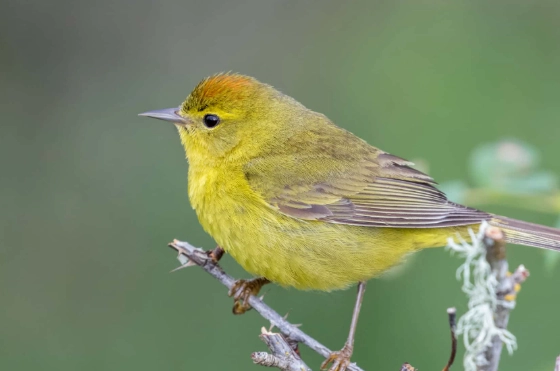
Your Quick Guide to Finding the Orange Crowned Warbler
Looks Can Be Deceiving: Key Identification Marks
Forget the name for a moment. The "orange crown" is almost never visible in the field. It's a hidden patch the bird can raise when agitated, but 99% of the time, it's concealed. Relying on it is the first mistake. Instead, build your ID on a combination of these traits.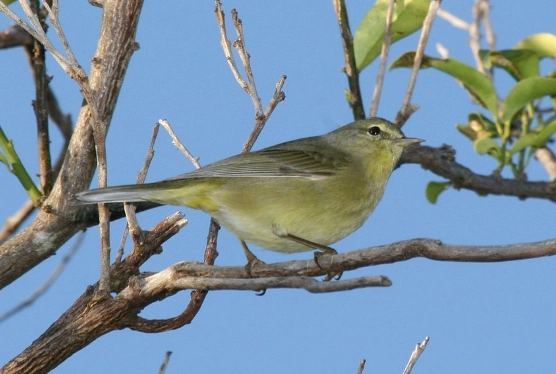
Overall, think plain.
Olive-green or grayish-green above, with a faint yellow or dull yellow wash below. The coloration is uniform, lacking strong contrast.
The underparts can have faint, blurry streaking on the breast and sides, but this is variable and often hard to see. The undertail coverts are consistently the brightest part of the bird—a clear, but not neon, yellow.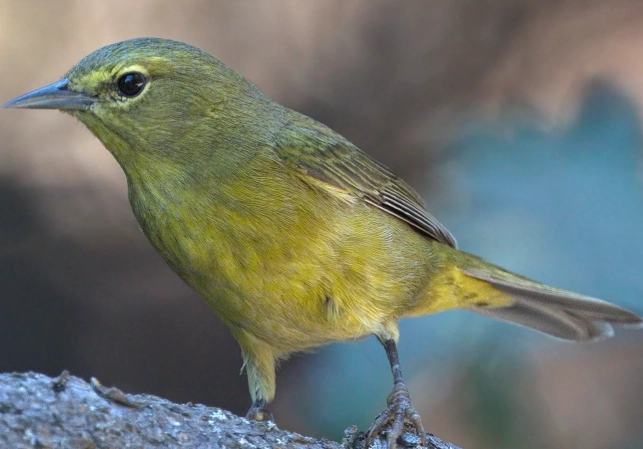
The Posture and Behavior Clue
Orange Crowned Warblers often forage lower than many other warblers. Think knee-high to head-height in dense, tangled shrubs, willow thickets, and forest understory. Their movement has a methodical, almost plodding quality compared to the hyperactive flitting of a Yellow Warbler. They'll probe curled leaves and poke into crevices. I've often seen them clinging to the side of a branch like a tiny nuthatch, which is a good behavioral hint.
Where and When to Look: Habitat & Range
This bird has a massive range, but your strategy changes drastically with location and season.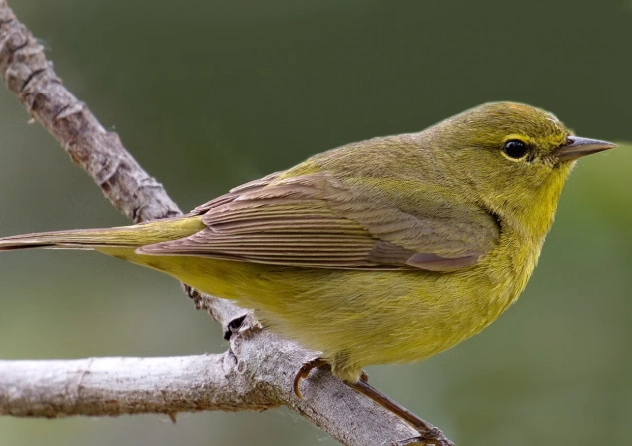
| Season | Primary Habitat | Key Regions (U.S. & Canada) | Behavior Notes |
|---|---|---|---|
| Spring/Summer (Breeding) | Dense, shrubby areas, forest edges, regenerating burns, riparian thickets. Often in moist areas with willows and alders. | Alaska, Canada, Western Mountains (down to Arizona/NM), Northern Midwest. | Territorial. Listen for song. Forages low to mid-level. |
| Fall Migration | Anywhere with dense cover: parks, gardens, hedgerows, overgrown fields. | Coast to coast. Very widespread. | Often silent. Can appear in backyards, especially in the West. |
| Winter | Similar to fall, but restricted to milder climates. Thickets, scrub, chaparral, even suburban areas. | Southern U.S. (CA to FL), Mexico. | May join mixed-species flocks. A reliable find in winter in places like coastal California. |
Here's a non-consensus tip from years of chasing them: In the eastern U.S. during migration, everyone checks the treetops for warblers. Look down. While others are craning their necks for a Blackburnian, scan the weedy, brambly edges of the field or the low, damp thickets by the creek. That's where an Orange Crowned is more likely to be, quietly gleaning insects while the showy birds get all the attention overhead.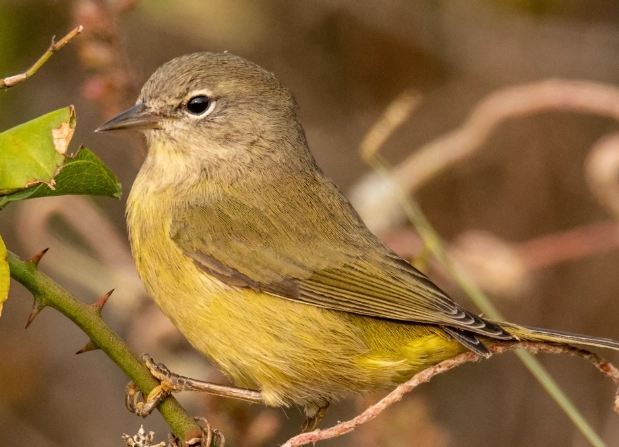
Sound is Key: Learning the Song and Calls
If the visual ID feels like a puzzle, the song is your cheat code. It's not melodious. It's a rapid, dry, mechanical trill that descends slightly in pitch at the end.
The best description I've heard is that it sounds like a ping-pong ball bouncing to a stop on a table. Trrrrrrrrrrrrrrip. It lacks the musical quality of a Pine Warbler's trill and is faster and drier than the trill of a Chipping Sparrow. Spend 10 minutes listening to recordings on the Cornell Lab of Ornithology's All About Birds or Macaulay Library. It's distinctive once you know it.
The call note is a sharp, metallic "chip" or "tsip". It's not unlike many other warbler chips, but in context, it's another piece of evidence.
Common Mistakes and Look-alikes
This is where most people get tripped up. Let's compare the usual suspects.
Female/Immature Yellow-rumped Warbler (Myrtle/ Audubon's): This is the #1 confusion species. Yellow-rumps have a bright yellow rump patch (obvious in flight), strong white throat contrasting with a yellow-ish side, and usually show at least a hint of pale wing bars. Orange Crowns have no bright rump, a dull throat, and no wing bars.
Tennessee Warbler: In fall, they can look similar. Tennessee has a sharper, more pointed bill, a cleaner white undertail (not yellow), and often a stronger supercilium (eyebrow line). They also tend to forage higher, in trees rather than shrubs.
Female Common Yellowthroat: Yellowthroats are more active, often cocking their tails, and have a longer, more rounded tail. They also frequent similar low, dense habitat but have a completely different facial pattern (no broken eye-ring/eye-line) and a yellow wash that is often brighter on the throat/breast.
Verdin or Bushtit (in the West): At a glance, size and color can be similar. But both are smaller, with very different bill shapes (Verdin has a sharp, pointed bill; Bushtit is tiny with a short bill) and behaviors.
Beyond the Field Guide: Expert Tips for Success
Field guides give you the parts list. Here's how to assemble them in the real world.
1. The "Dullness Test": When you see a plain, greenish-yellow warbler, your first question shouldn't be "What is it?" but "Is it just plain?" Mentally check for any standout features: wing bars? bright rump? strong facial pattern? If the answer is a resounding "no" to all, you're in Orange Crowned Warbler territory. Its plainness is its defining characteristic.
2. Habitat is a Filter: Don't waste energy looking for them in the high canopy of an oak forest. Use the habitat table above. In spring in Colorado, I head straight for willow carrs along streams. In fall in Ohio, I check the overgrown edges of parking lots and weedy fields. It narrows the possibilities instantly.
3. Patience Over Panic: These birds aren't show-offs. They won't often pop out and pose. You might get a two-second view before they dive back into cover. Don't chase. Stay still, watch the edge of the thicket, and wait. They often return to the same foraging circuit.
4. Use Technology, But Wisely: Playback is a controversial tool. I advise against it during breeding season as it can stress territorial birds. During migration, a very brief playback of the call note might elicit a curious response from a silent bird, but your primary tools should always be your eyes, ears, and knowledge of habitat.
5. Document the Subtle: If you're unsure, take notes or mental pictures of specific things: Was the eye-ring complete or broken? Was the yellow brightest under the tail? Did it have any streaking at all on the flanks? These details separate an Orange Crowned from its look-alikes.
Your Orange Crowned Warbler Questions Answered
Finding and identifying the Orange Crowned Warbler is a rite of passage. It moves you from just seeing birds to truly reading them. It teaches you to value subtlety, to listen closely, and to understand that the most rewarding finds aren't always the brightest. Next time you're in a damp thicket and hear a dry trill or see a plain shape moving slowly in the shadows, take a closer look. That unassuming little bird might just be the highlight of your day.
Reader Comments